Almaslamani Muath, Yang Jingyu, Kang Chi Soo, Kang Choong Mo, Park Jung Mi, Woo Sang-Keun
Division of Applied RI, Korea Institute of Radiological and Medical Sciences, Nowon-gu, Seoul, Republic of Korea.
Radiological & Medico-Oncological Sciences, University of Science & Technology, Daejeon, Republic of Korea.
EJNMMI Res. 2025 Aug 12;15(1):106. doi: 10.1186/s13550-025-01300-z.
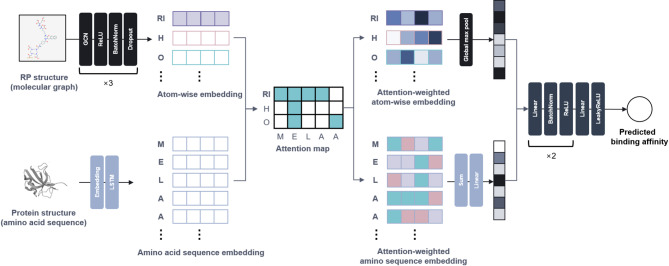
NDUFS1 is the largest subunit of OXPHOS complex I (MC-I) and mutations in this gene are associated with MC-I deficiency. This study aims to develop a graph neural network and attention mechanism-based radiopharmaceutical-protein (RP-protein) interaction prediction model for identifying an imaging candidate of mitochondrial function through targeting its core subunit NDUFS1.
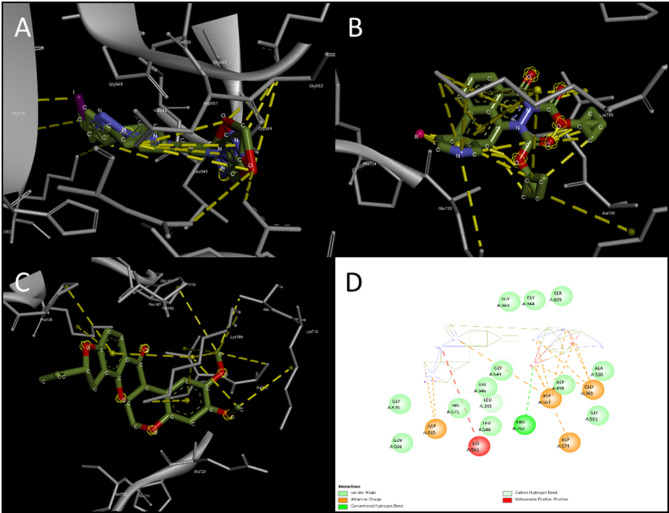
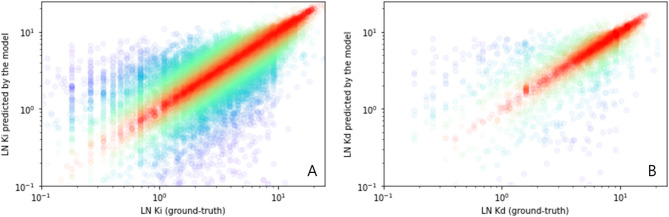
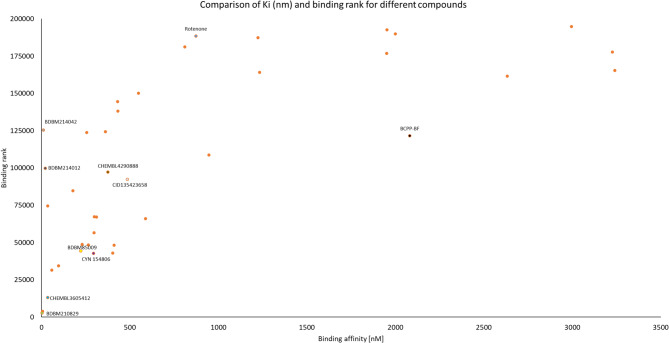
The estimated cell viability values for trastuzumab, Lu-DOTA-trastuzumab, and Ac-DOTA-trastuzumab were 290.1, 89.01, and 8.262 nM, respectively. The deep learning (DL) model was pretrained with normal compound-protein pairs. Afterwards, the model was fine-tuned with the dataset of RP-protein pairs and evaluated with five-fold cross validation. The prediction model trained with normal compound-protein pairs effectively predicted the binding affinity. The fine-tuned model incorporating radioactive properties outperformed the same model trained only on normal compounds. The model estimated the important substructure of a compound related to its binding to the target protein. NDUFS1 protein-targeting compounds were identified and BDBM210829 compound had the best binding affinities, binding rank, and LogP as it binds to the NDUFS1.
This study proposed a DL-based radiolabelled compound-protein interaction prediction model to identify a radiopharmaceutical (RP) that binds to the mitochondrial core subunit NDUFS1. The proposed model shows good performance for predicting RP-protein interaction. BDBM210829 was identified as a top candidate for radiolabeling and targeting the mitochondrial core subunit NDUFS1. This model can be used as an effective virtual screening tool for RP discovery.
The online version contains supplementary material available at 10.1186/s13550-025-01300-z.
NDUFS1是氧化磷酸化复合体I(MC-I)的最大亚基,该基因的突变与MC-I缺乏症相关。本研究旨在开发一种基于图神经网络和注意力机制的放射性药物-蛋白质(RP-蛋白质)相互作用预测模型,通过靶向线粒体功能的核心亚基NDUFS1来识别线粒体功能的成像候选物。
曲妥珠单抗、Lu-DOTA-曲妥珠单抗和Ac-DOTA-曲妥珠单抗的估计细胞活力值分别为290.1、89.01和8.262 nM。深度学习(DL)模型用正常化合物-蛋白质对进行预训练。之后,用RP-蛋白质对数据集对模型进行微调,并用五折交叉验证进行评估。用正常化合物-蛋白质对训练的预测模型有效地预测了结合亲和力。结合放射性特性的微调模型优于仅在正常化合物上训练的相同模型。该模型估计了与化合物与靶蛋白结合相关的重要子结构。鉴定出了靶向NDUFS1蛋白的化合物,BDBM210829化合物与NDUFS1结合时具有最佳的结合亲和力、结合排名和LogP。
本研究提出了一种基于DL的放射性标记化合物-蛋白质相互作用预测模型,以识别与线粒体核心亚基NDUFS1结合的放射性药物(RP)。所提出的模型在预测RP-蛋白质相互作用方面表现良好。BDBM210829被确定为放射性标记和靶向线粒体核心亚基NDUFS1的顶级候选物。该模型可作为RP发现的有效虚拟筛选工具。
在线版本包含可在10.1186/s13550-025-01300-z获取的补充材料。