Lyon Arnaud, Gunga Ziyad, Niclauss Lars, Rancati Valentina, Tozzi Piergiorgio
School of Medicine, University of Lausanne, Lausanne, Switzerland.
Service de Chirurgie Cardiaque, Centre Hospitalier Universitaire Vaudois, Lausanne, Switzerland.
Front Cardiovasc Med. 2021 Apr 28;8:645135. doi: 10.3389/fcvm.2021.645135. eCollection 2021.
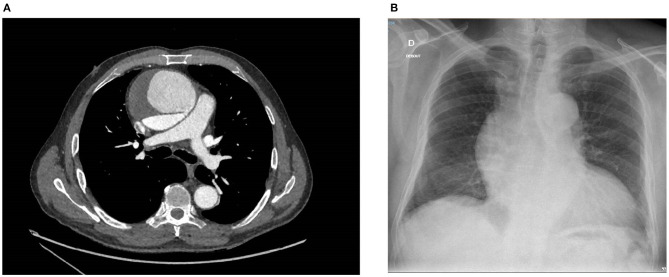
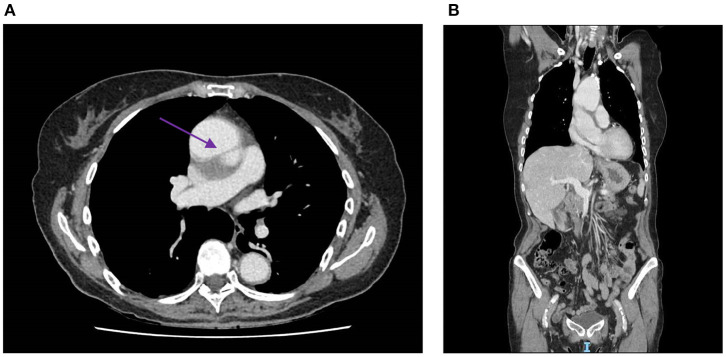
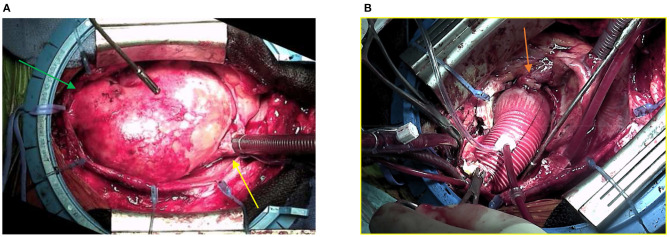
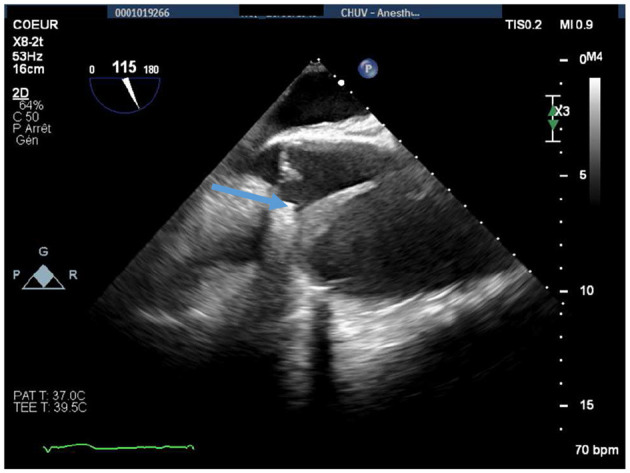
The COVID-19 (coronavirus disease 2019) pandemic is reducing health care accessibility to non-life-threatening diseases, thus hiding their real incidence. Moreover, the incidence of potentially fatal conditions such as acute type A aortic dissection seems to have decreased since the pandemic began, whereas the number of cases of chronic ascending aortic dissections dramatically increased. We present two patients whose management has been affected by the exceptional sanitary situation we are dealing with. A 70-year-old man with chest pain and an aortic regurgitation murmur had his cardiac workup delayed (4 months) because of sanitary restrictions. He was then diagnosed with chronic type A aortic dissection and underwent urgent replacement of ascending aorta and aortic root. The delay in surgical treatment made the intervention technically challenging because the ascending aorta grew up to 80 mm inducing strong adhesions and chronic inflammation. The second case report concerns a 68-year-old woman with right lower-limb pain who was diagnosed with deep vein thrombosis. However, a CT scan to exclude a pulmonary embolism could not be realized until 5 months later because of sanitary restrictions. When she eventually got the CT scan, it fortuitously showed a chronic dissection of the ascending aorta. She underwent urgent surgery, and the intervention was challenging because of adhesions and severe inflammation. Delayed treatment due to sanitary restrictions related to COVID-19 pandemic is having a significant impact on the management of potentially life-threatening conditions including type A aortic dissection. We should remain careful to avoid COVID-19 also hitting patients who are not infected with the virus.
2019冠状病毒病(COVID-19)大流行正在降低对非危及生命疾病的医疗可及性,从而掩盖了它们的实际发病率。此外,自疫情开始以来,诸如急性A型主动脉夹层等潜在致命病症的发病率似乎有所下降,而慢性升主动脉夹层的病例数则大幅增加。我们介绍两名患者,其治疗受到我们正在应对的特殊卫生状况的影响。一名70岁男性,有胸痛和主动脉反流杂音,由于卫生限制,其心脏检查延迟了4个月。随后他被诊断为慢性A型主动脉夹层,并接受了升主动脉和主动脉根部的紧急置换。手术治疗的延迟使干预在技术上具有挑战性,因为升主动脉直径增大到80毫米,导致强烈粘连和慢性炎症。第二例报告涉及一名68岁女性,有右下肢疼痛,被诊断为深静脉血栓形成。然而,由于卫生限制,直到5个月后才得以进行CT扫描以排除肺栓塞。当她最终进行CT扫描时,偶然发现了升主动脉的慢性夹层。她接受了紧急手术,由于粘连和严重炎症,手术具有挑战性。与COVID-19大流行相关的卫生限制导致的治疗延迟,对包括A型主动脉夹层在内的潜在危及生命病症的治疗产生了重大影响。我们仍应谨慎,避免COVID-19也侵袭未感染该病毒的患者。