Buchanan Danielle A, Goldstein Jody, Pfalzer Anna C, Lin Ya-Chen, Kang Hakmook, Claassen Daniel O
Department of Neurology, Vanderbilt University Medical Center, Nashville, TN.
Huntington Study Group, Rochester, NY.
Mayo Clin Proc Innov Qual Outcomes. 2020 Dec 25;5(2):265-273. doi: 10.1016/j.mayocpiqo.2020.09.014. eCollection 2021 Apr.
To identify factors associated with job satisfaction and retention, we surveyed a large cohort of clinical research coordinators (CRCs). In recent years, the clinical research coordinator has changed from a semi-permanent role to one that has a high turnover rate. The CRCs are integral to clinical research and instability in this role can cause patient stress and increase the burden on clinical teams through unnecessary delegation of resources toward hiring and retraining new talent. The cultural shift toward CRCs as a temporary position may be driven by the perspective that the role positions an individual for other health care careers, but understanding what influences low retention rates are necessary.
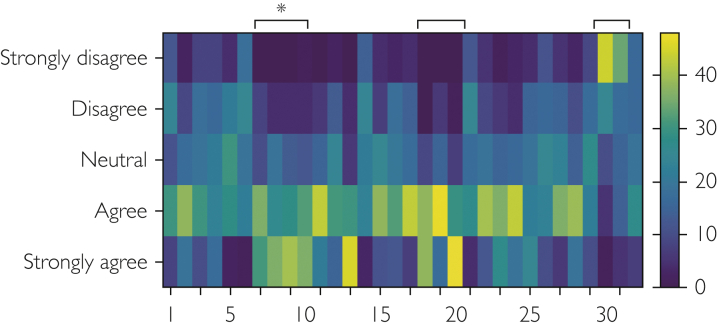
A survey containing 13 multiple choice or open-ended and 32 Likert scale questions was distributed to previous and current CRCs using REDCap. The questionnaires were self-administered and completed over a 12-month period between October 11, 2017, and September 16, 2018.
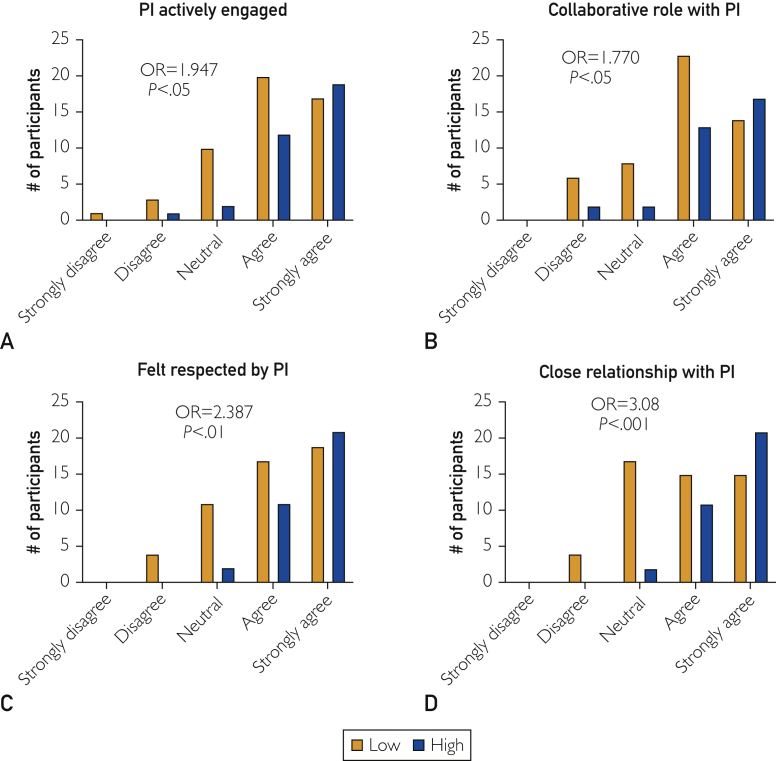
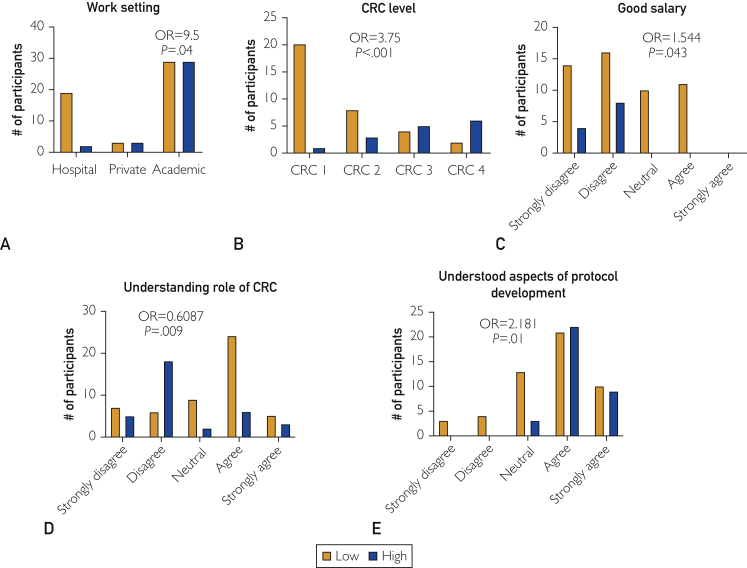
A total of 85 CRCs completed the study. From the 32 potential predictors of retention, we investigated 9 significant predictors: salary, work setting, understanding the role, level of CRC, understanding protocol development, actively engaged principal investigator (PI), having a collaborative role with PI, feeling respected by PI, and having a close relationship with PI. Adequate salary, greater respect, collaboration, and engagement from the PI were significantly associated with higher retention. Surprisingly, greater workload and lack of opportunity for professional growth were not associated with retention.
The CRCs who feel respected and engaged by the PI and are adequately compensated are more likely to have higher job satisfaction and retention.
为了确定与工作满意度和留任意愿相关的因素,我们对一大群临床研究协调员(CRC)进行了调查。近年来,临床研究协调员已从一个半永久性职位转变为一个人员流动率很高的职位。CRC对临床研究至关重要,该职位的不稳定会给患者带来压力,并通过将资源不必要地用于招聘和再培训新人才而增加临床团队的负担。将CRC视为临时职位的文化转变可能是由于这样一种观点,即该职位能让个人为其他医疗保健职业做好准备,但了解影响低留用率的因素是必要的。
使用REDCap向之前和现任的CRC发放了一份包含13个多项选择题或开放式问题以及32个李克特量表问题的调查问卷。问卷由受访者自行填写,在2017年10月11日至2018年9月16日的12个月期间完成。
共有85名CRC完成了该研究。从32个可能的留用预测因素中,我们调查了9个重要预测因素:薪资、工作环境、对职位的理解、CRC级别、对方案制定的理解、积极参与的主要研究者(PI)、与PI有协作关系、感到受到PI的尊重以及与PI有密切关系。足够的薪资、PI更多的尊重、协作和参与与更高的留用率显著相关。令人惊讶的是,更大的工作量和缺乏职业发展机会与留用率无关。
那些感到受到PI尊重和参与且得到充分补偿的CRC更有可能有更高的工作满意度和留任意愿。