Piantanida E, Boškoski I, Quero G, Gallo C, Zhang Y, Fiorillo C, Arena V, Costamagna G, Perretta S, De Cola L
Institut de Science et d'Ingénierie Supramoléculaires, CNRS, UMR 7006, Université de Strasbourg, 8 rue Gaspard Monge, 67000 Strasbourg, France.
Digestive Endoscopy Unit, Fondazione Policlinico Universitario Agostino Gemelli IRCCS, Largo Agostino Gemelli, 8 00168 Roma, Italy.
Mater Today Bio. 2021 Mar 27;10:100109. doi: 10.1016/j.mtbio.2021.100109. eCollection 2021 Mar.
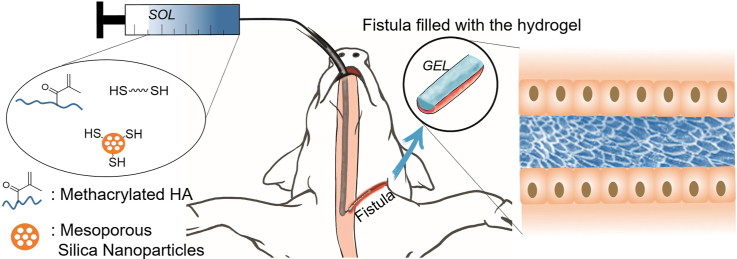
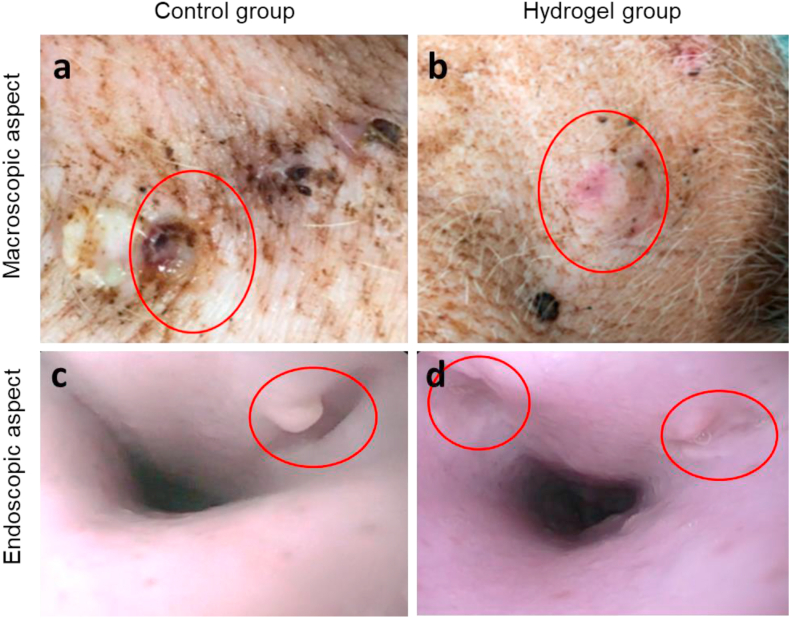
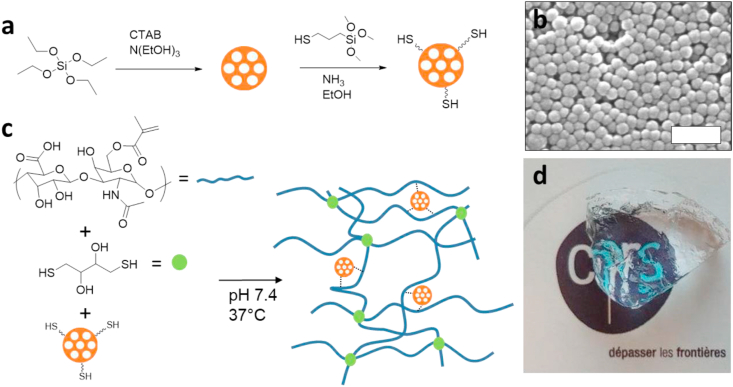
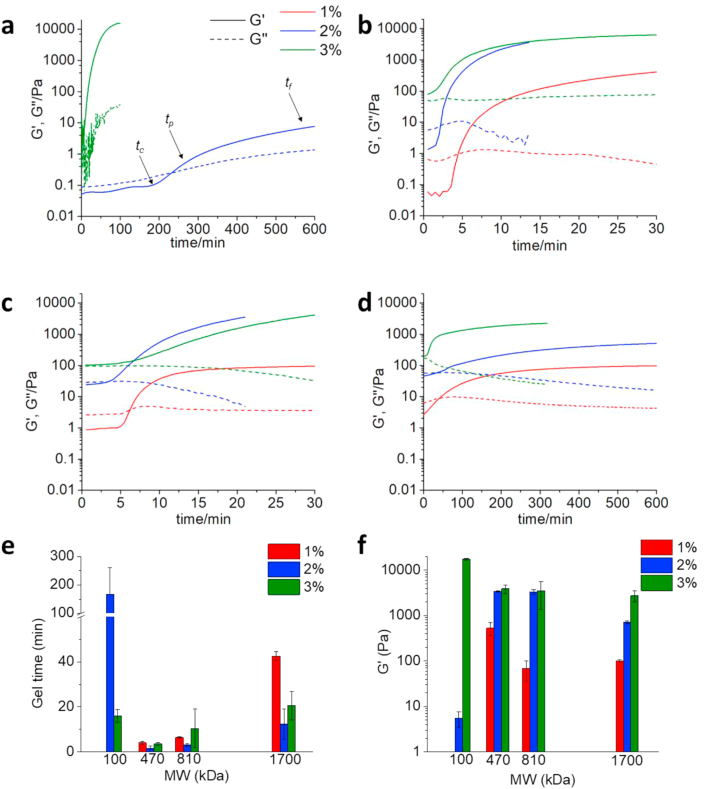
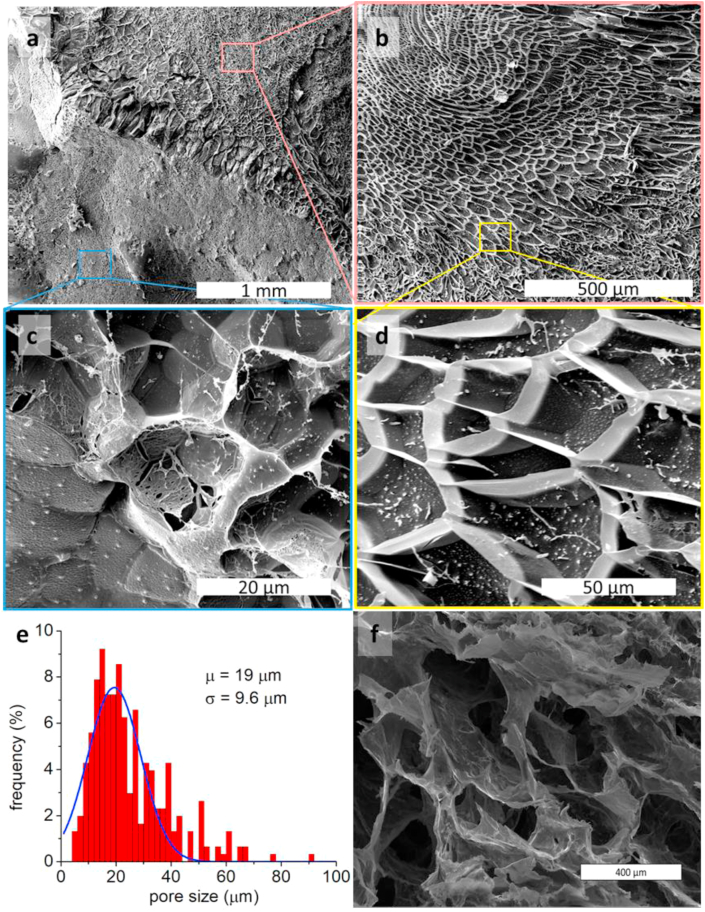
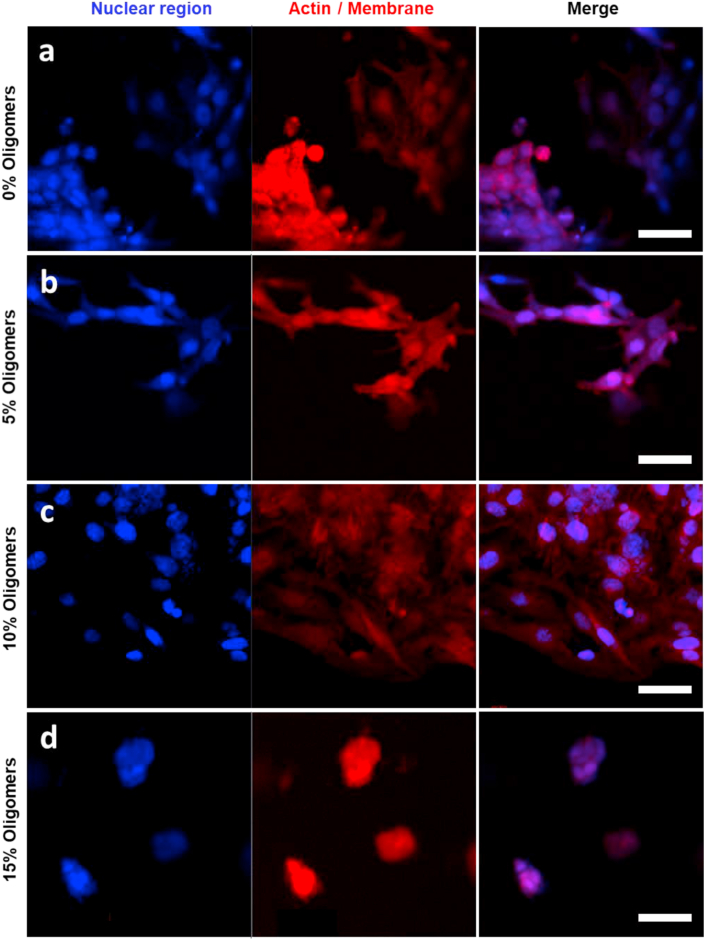
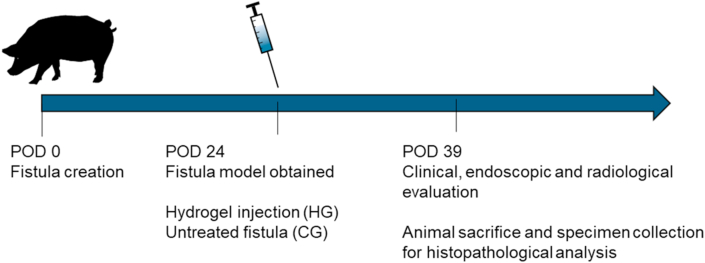
Fistulas are abnormal connections between two body parts that can impair the quality of life. The use of biological glues represents the least invasive procedure to fill the fistula; however, it is limited by the need of multiple injections, the persistence of infection and the failure in the treatment of high-output fistulas. We describe herein the use of an injectable nanocomposite hydrogel that is able to form a tissue-mimicking matrix as an innovative material for the treatment of esophageal fistulas. Injectable hydrogels that have the dual advantage of being implantable with a minimally invasive approach and of adapting their shape to the target cavity, while the introduction of mesoporous silica nanoparticles opens the possibility of drug/biomolecules delivery. The hydrogel is based on hyaluronic acid (HA), the crosslinking process occurs at physiological conditions leading to a hydrogel made of >96% by water and with a large-pore micro-architecture. The kinetic profile of the hydrogel formation is studied as a function of HA molecular weight and concentration with the aim of designing a material that is easily injectable with an endoscopic needle, is formed in a time compatible with the surgical procedure and has final mechanical properties suitable for cell proliferation. The experiments (porcine model) on esophageal-cutaneous fistulas, showed improved healing in the animals treated with the hydrogel compared with the control group.
瘘管是两个身体部位之间的异常连接,会损害生活质量。使用生物胶水是填充瘘管的侵入性最小的方法;然而,它受到需要多次注射、感染持续存在以及治疗高流量瘘管失败的限制。我们在此描述了一种可注射的纳米复合水凝胶的使用,该水凝胶能够形成一种组织模拟基质,作为治疗食管瘘的创新材料。可注射水凝胶具有微创植入和能使形状适应目标腔的双重优势,而介孔二氧化硅纳米颗粒的引入为药物/生物分子递送提供了可能性。该水凝胶基于透明质酸(HA),交联过程在生理条件下发生,形成一种含水量>96%且具有大孔微结构的水凝胶。研究了水凝胶形成的动力学曲线与HA分子量和浓度的关系,目的是设计一种易于用内镜针注射、在与手术过程相适应的时间内形成且具有适合细胞增殖的最终机械性能的材料。在食管皮肤瘘管的实验(猪模型)中,与对照组相比,用该水凝胶治疗的动物愈合情况有所改善。