Tremblay Karine, Rousseau Simon, Zawati Ma'n H, Auld Daniel, Chassé Michaël, Coderre Daniel, Falcone Emilia Liana, Gauthier Nicolas, Grandvaux Nathalie, Gros-Louis François, Jabet Carole, Joly Yann, Kaufmann Daniel E, Laprise Catherine, Larochelle Catherine, Maltais François, Mes-Masson Anne-Marie, Montpetit Alexandre, Piché Alain, Richards J Brent, Tse Sze Man, Turgeon Alexis F, Turecki Gustavo, Vinh Donald C, Wang Han Ting, Mooser Vincent
Centre Intégré Universitaire de Santé et de Services Sociaux (CIUSSS) du Saguenay-Lac-Saint-Jean, Saguenay, QC, Canada.
Department of Pharmacology-Physiology, Medicine and Health Sciences Faculty, Université de Sherbrooke, Sherbrooke, QC, Canada.
PLoS One. 2021 May 19;16(5):e0245031. doi: 10.1371/journal.pone.0245031. eCollection 2021.
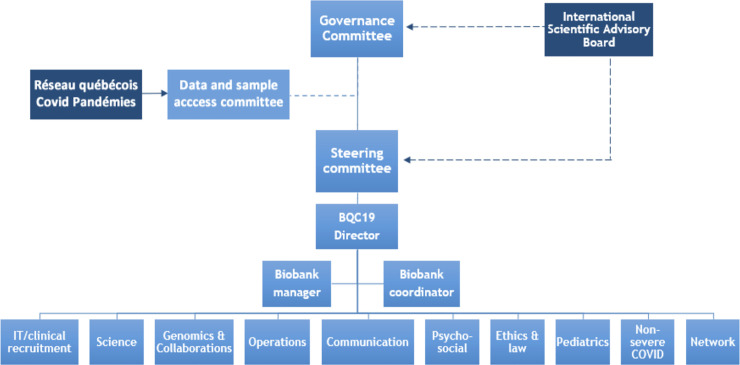
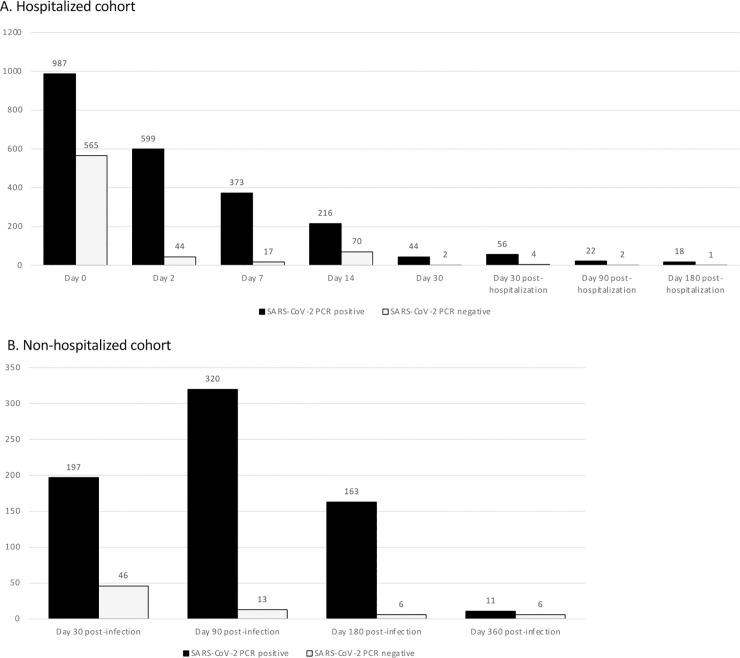
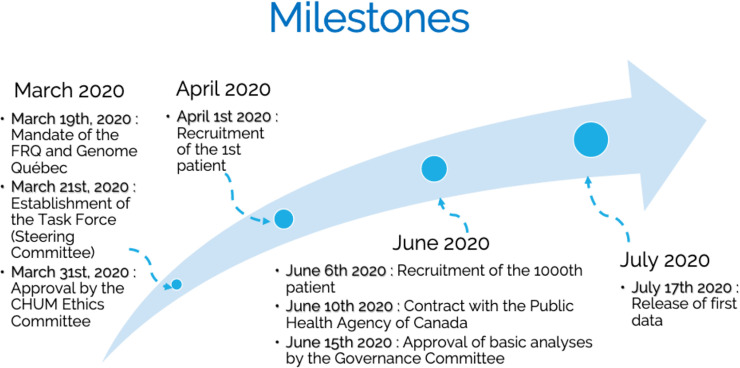
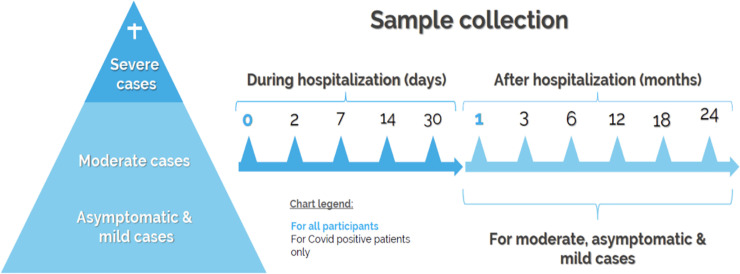
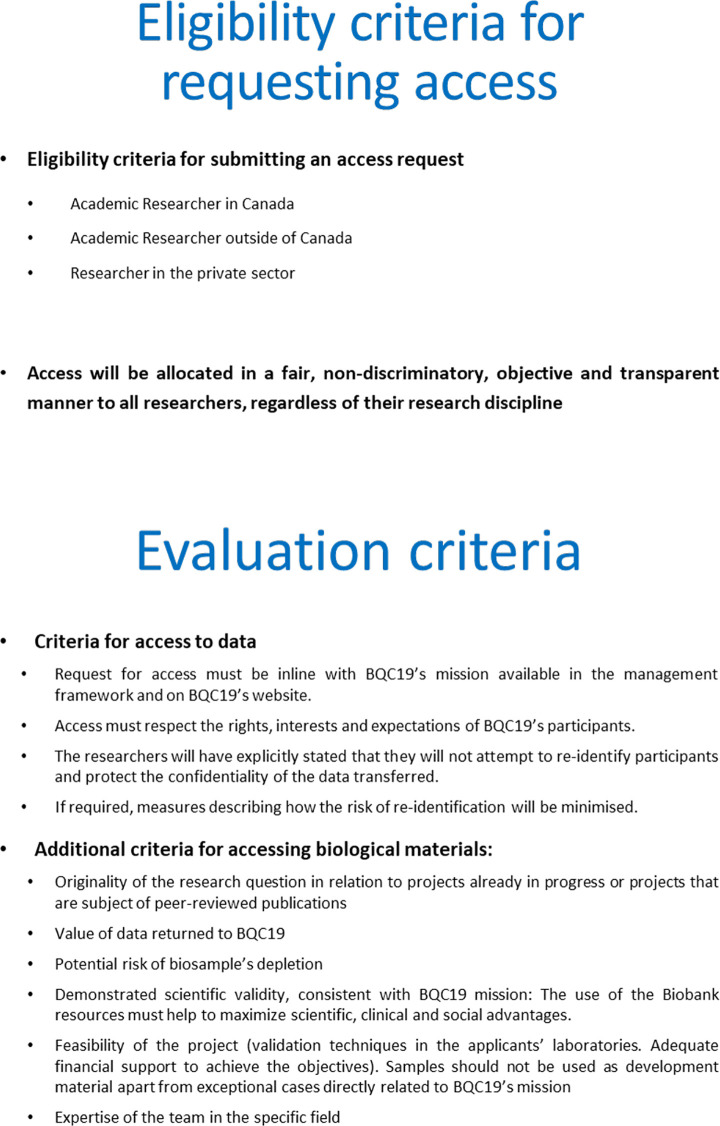
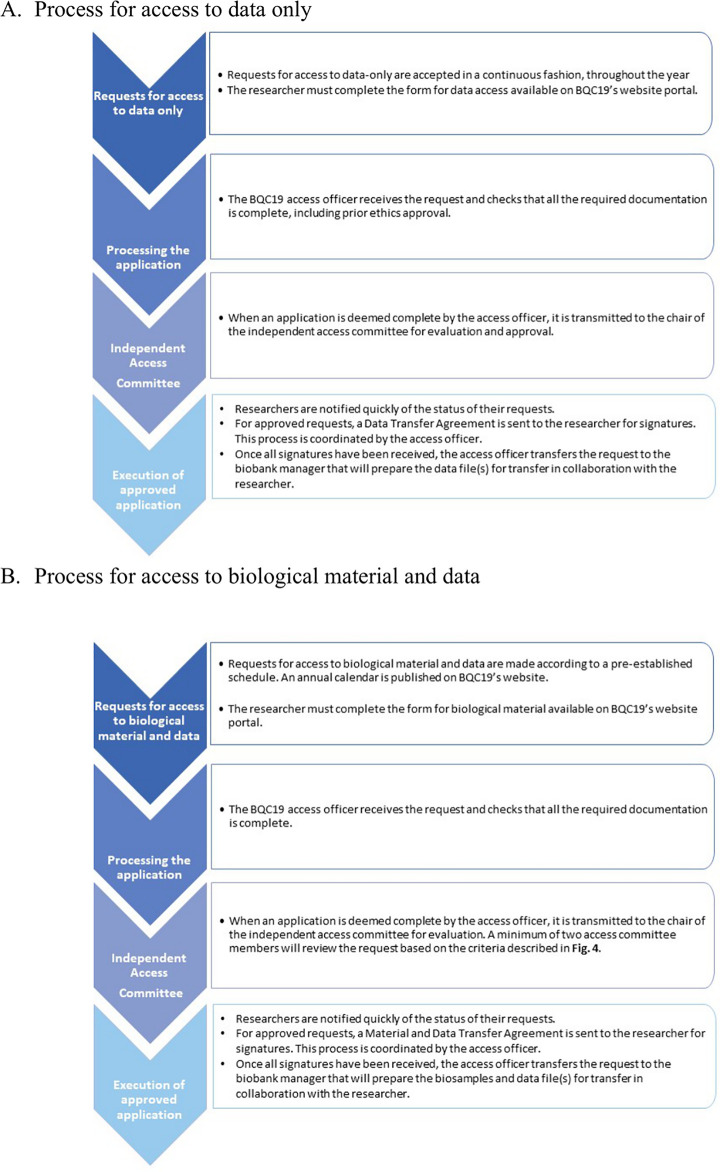
SARS-CoV-2 infection causing the novel coronavirus disease 2019 (COVID-19) has been responsible for more than 2.8 million deaths and nearly 125 million infections worldwide as of March 2021. In March 2020, the World Health Organization determined that the COVID-19 outbreak is a global pandemic. The urgency and magnitude of this pandemic demanded immediate action and coordination between local, regional, national, and international actors. In that mission, researchers require access to high-quality biological materials and data from SARS-CoV-2 infected and uninfected patients, covering the spectrum of disease manifestations. The "Biobanque québécoise de la COVID-19" (BQC19) is a pan-provincial initiative undertaken in Québec, Canada to enable the collection, storage and sharing of samples and data related to the COVID-19 crisis. As a disease-oriented biobank based on high-quality biosamples and clinical data of hospitalized and non-hospitalized SARS-CoV-2 PCR positive and negative individuals. The BQC19 follows a legal and ethical management framework approved by local health authorities. The biosamples include plasma, serum, peripheral blood mononuclear cells and DNA and RNA isolated from whole blood. In addition to the clinical variables, BQC19 will provide in-depth analytical data derived from the biosamples including whole genome and transcriptome sequencing, proteome and metabolome analyses, multiplex measurements of key circulating markers as well as anti-SARS-CoV-2 antibody responses. BQC19 will provide the scientific and medical communities access to data and samples to better understand, manage and ultimately limit, the impact of COVID-19. In this paper we present BQC19, describe the process according to which it is governed and organized, and address opportunities for future research collaborations. BQC19 aims to be a part of a global communal effort addressing the challenges of COVID-19.
截至2021年3月,严重急性呼吸综合征冠状病毒2(SARS-CoV-2)感染引发的2019年新型冠状病毒病(COVID-19)已在全球造成超过280万人死亡,近1.25亿人感染。2020年3月,世界卫生组织确定COVID-19疫情为全球大流行。这场大流行的紧迫性和规模要求地方、区域、国家和国际行为体立即采取行动并进行协调。在这项任务中,研究人员需要获取来自SARS-CoV-2感染和未感染患者的高质量生物材料和数据,涵盖疾病表现的各个方面。“魁北克COVID-19生物样本库”(BQC19)是加拿大魁北克省开展的一项全省范围的倡议,旨在收集、存储和共享与COVID-19危机相关的样本和数据。作为一个以疾病为导向的生物样本库,它基于住院和非住院的SARS-CoV-2 PCR检测呈阳性和阴性个体的高质量生物样本和临床数据。BQC19遵循当地卫生当局批准的法律和道德管理框架。生物样本包括血浆、血清、外周血单核细胞以及从全血中分离出的DNA和RNA。除临床变量外,BQC19还将提供源自生物样本的深入分析数据,包括全基因组和转录组测序、蛋白质组和代谢组分析、关键循环标志物的多重测量以及抗SARS-CoV-2抗体反应。BQC19将为科学界和医学界提供数据和样本,以更好地了解、管理并最终限制COVID-19的影响。在本文中,我们介绍了BQC19,描述了其管理和组织过程,并探讨了未来研究合作的机会。BQC19旨在成为应对COVID-19挑战的全球共同努力的一部分。