Institute of Evolutionary Biology, School of Biological Sciences, University of Edinburgh, Edinburgh, UK.
Nat Commun. 2021 May 20;12(1):2972. doi: 10.1038/s41467-021-23222-9.
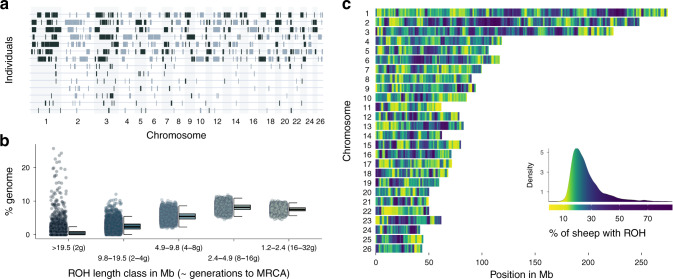
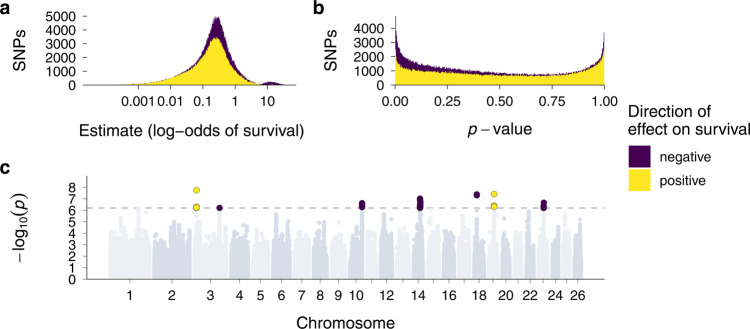
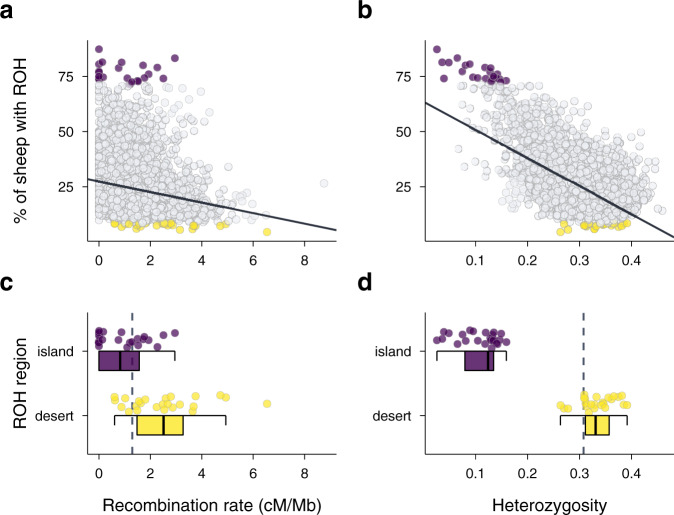
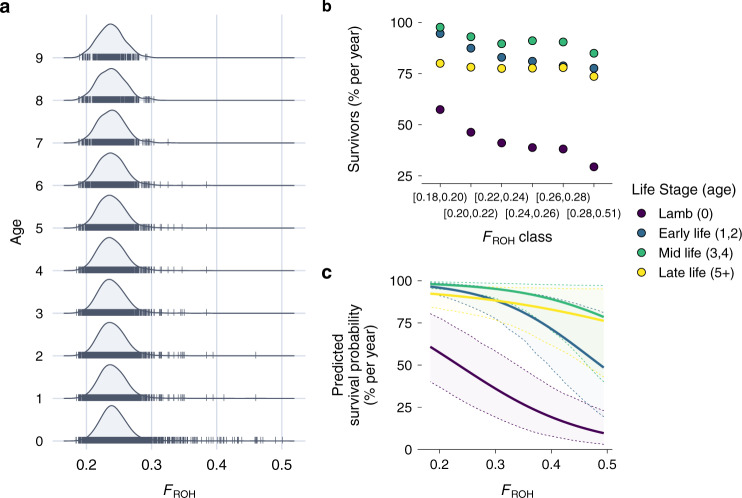
Inbreeding depression is ubiquitous, but we still know little about its genetic architecture and precise effects in wild populations. Here, we combine long-term life-history data with 417 K imputed SNP genotypes for 5952 wild Soay sheep to explore inbreeding depression on a key fitness component, annual survival. Inbreeding manifests in long runs of homozygosity (ROH), which make up nearly half of the genome in the most inbred individuals. The ROH landscape varies widely across the genome, with islands where up to 87% and deserts where only 4% of individuals have ROH. The fitness consequences of inbreeding are severe; a 10% increase in individual inbreeding F is associated with a 60% reduction in the odds of survival in lambs, though inbreeding depression decreases with age. Finally, a genome-wide association scan on ROH shows that many loci with small effects and five loci with larger effects contribute to inbreeding depression in survival.
近交衰退普遍存在,但我们对其在野生种群中的遗传结构和确切影响仍知之甚少。在这里,我们结合长期的生活史数据和 5952 只野生设得兰羊的 417K 个 SNP 基因型数据,探索了近交对关键适应度成分(即年存活率)的衰退作用。近交表现为长片段纯合子(ROH),在最近交的个体中,ROH 几乎占基因组的一半。ROH 景观在整个基因组中差异很大,有些岛屿中高达 87%的个体有 ROH,而有些沙漠中只有 4%的个体有 ROH。近交的适应度后果非常严重;个体近交 F 增加 10%,则羔羊存活几率降低 60%,但近交衰退会随着年龄的增长而降低。最后,对 ROH 的全基因组关联扫描表明,许多具有小效应的位点和五个具有较大效应的位点都对生存中的近交衰退有贡献。