Department of Medicine, Louisiana State University Health Sciences Center-Shreveport, LA, United States; Molecular and Cellular Physiology, Louisiana State University Health Sciences Center-Shreveport, LA, United States; Center of Excellence for Cardiovascular Diseases & Sciences, Louisiana State University Health Sciences Center-Shreveport, LA, United States.
Department of Medicine, Louisiana State University Health Sciences Center-Shreveport, LA, United States.
Redox Biol. 2021 Jul;43:101982. doi: 10.1016/j.redox.2021.101982. Epub 2021 May 8.
Severe acute respiratory syndrome coronavirus 2 (SARS-CoV-2) is involved in a global outbreak affecting millions of people who manifest a variety of symptoms. Coronavirus disease 2019 (COVID-19) caused by SARS-CoV-2 is increasingly associated with cardiovascular complications requiring hospitalizations; however, the mechanisms underlying these complications remain unknown. Nitric oxide (NO) and hydrogen sulfide (HS) are gasotransmitters that regulate key cardiovascular functions.
Blood samples were obtained from 68 COVID-19 patients and 33 controls and NO and HS metabolites were assessed. HS and NO levels were compared between cases and controls in the entire study population and subgroups based on race. The availability of gasotransmitters was examined based on severity and outcome of COVID-19 infection. The performance of HS and NO levels in predicting COVID-19 infection was also analyzed. Multivariable regression analysis was performed to identify the effects of traditional determinants of gasotransmitters on NO and HS levels in the patients with COVID-19 infection.
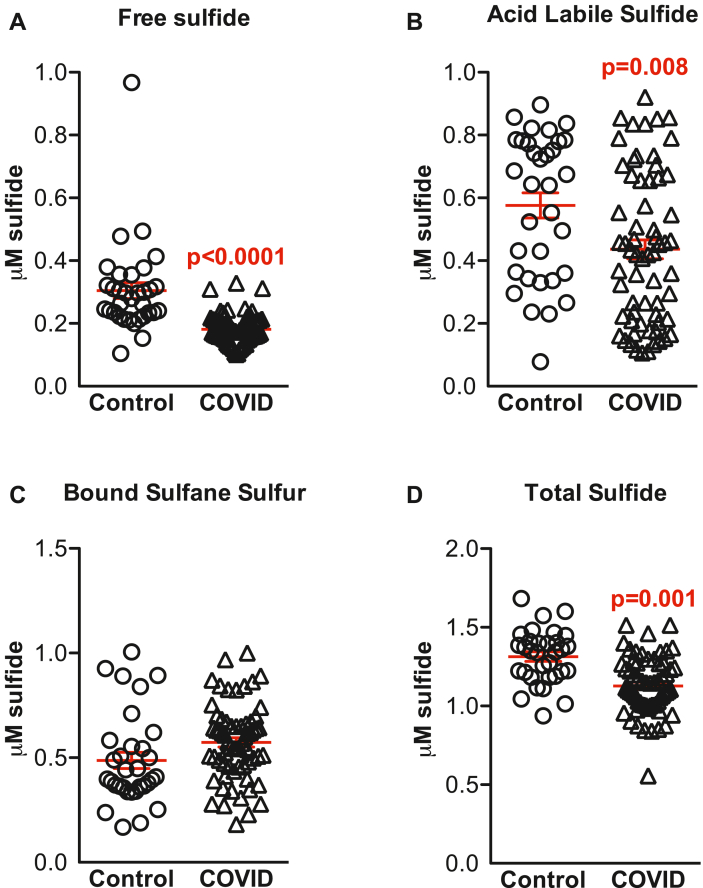
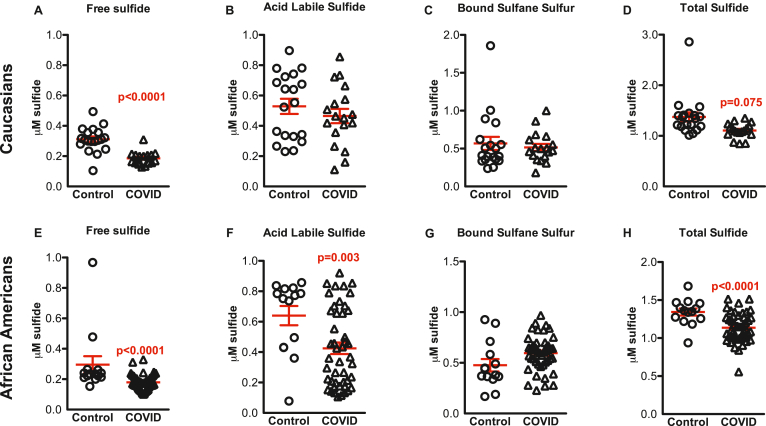
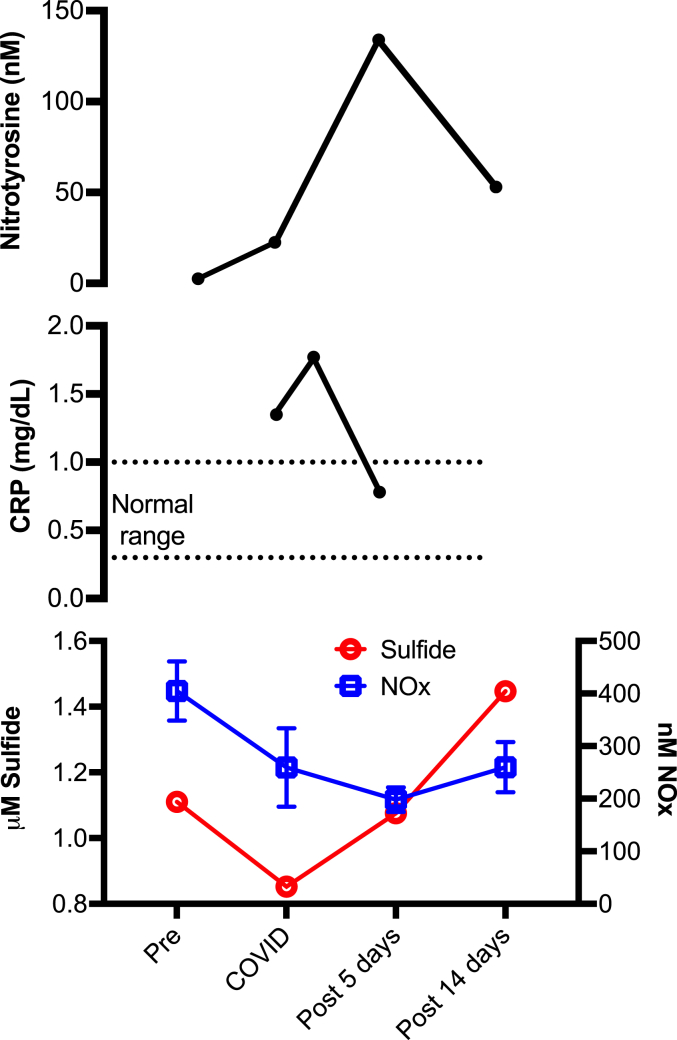
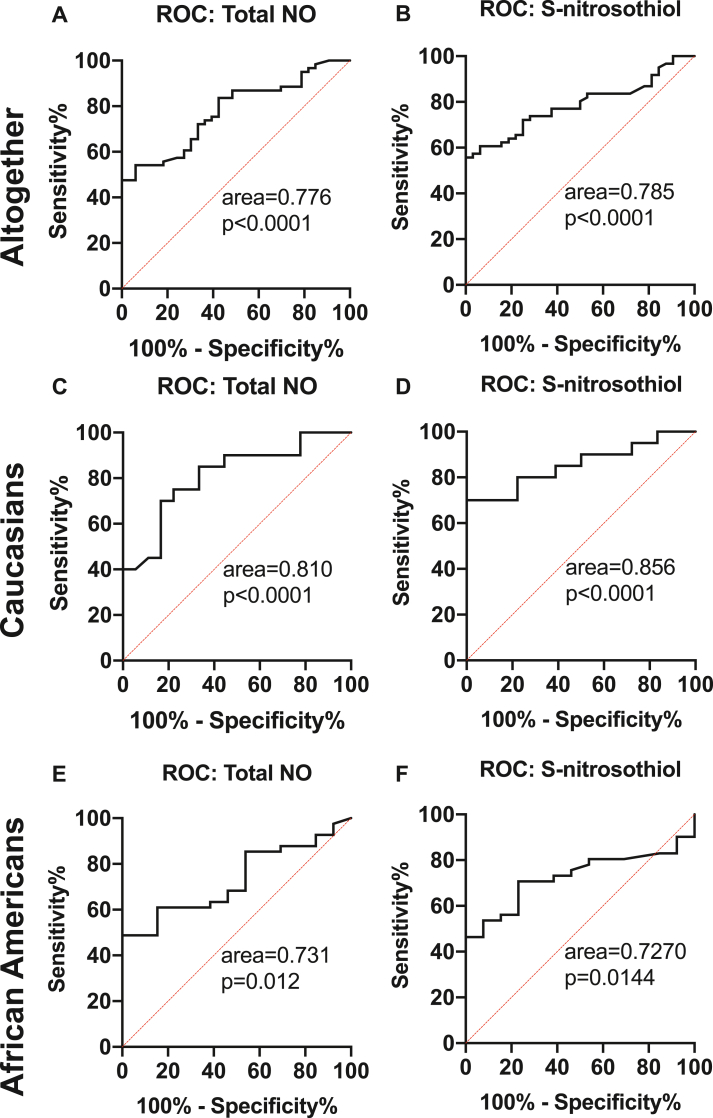
Significantly reduced NO and HS levels were observed in both Caucasian and African American COVID-19 patients compared to healthy controls. COVID-19 patients who died had significantly higher NO and HS levels compared to COVID-19 patients who survived. Receiver-operating characteristic analysis of NO and HS metabolites in the study population showed free sulfide levels to be highly predictive of COVID-19 infection based on reduced availability. Traditional determinants of gasotransmitters, namely age, race, sex, diabetes, and hypertension had no effect on NO and HS levels in COVID-19 patients.
These observations provide the first insight into the role of NO and HS in COVID-19 infection, where their low availability may be a result of reduced synthesis secondary to endotheliitis, or increased consumption from scavenging of reactive oxygen species.
严重急性呼吸综合征冠状病毒 2(SARS-CoV-2)引发了一场影响数百万人的全球疫情,这些人表现出多种症状。由 SARS-CoV-2 引起的 2019 年冠状病毒病(COVID-19)越来越多地与需要住院治疗的心血管并发症相关;然而,这些并发症的机制尚不清楚。一氧化氮(NO)和硫化氢(HS)是调节关键心血管功能的气体递质。
从 68 名 COVID-19 患者和 33 名对照者中采集血液样本,并评估 NO 和 HS 代谢物。在整个研究人群以及基于种族的亚组中比较了病例和对照组之间的 HS 和 NO 水平。根据 COVID-19 感染的严重程度和结局,检查了气体递质的可用性。还分析了 HS 和 NO 水平预测 COVID-19 感染的性能。进行多变量回归分析,以确定传统气体递质决定因素对 COVID-19 感染患者中 NO 和 HS 水平的影响。
与健康对照组相比,白人和非裔美国人 COVID-19 患者的 NO 和 HS 水平均显著降低。与存活的 COVID-19 患者相比,死亡的 COVID-19 患者的 NO 和 HS 水平显著更高。研究人群中 NO 和 HS 代谢物的受试者工作特征分析显示,基于可用性降低,游离硫化物水平可高度预测 COVID-19 感染。气体递质的传统决定因素,即年龄、种族、性别、糖尿病和高血压,对 COVID-19 患者的 NO 和 HS 水平没有影响。
这些观察结果首次提供了关于 NO 和 HS 在 COVID-19 感染中的作用的见解,其中它们的低可用性可能是内皮炎症导致合成减少的结果,或者是由于活性氧的清除而导致消耗增加。