Chirumbolo Salvatore, Valdenassi Luigi, Simonetti Vincenzo, Bertossi Dario, Ricevuti Giovanni, Franzini Marianno, Pandolfi Sergio
Department of Neurosciences, Biomedicine and Movement Sciences, University of Verona, Verona, Italy.
SIOOT, High School in Oxygen Ozone Therapy, University of Pavia, Italy; SIOOT INTERNATIONAL, Communian Clinic, Gorle Bergamo, Italy.
Int Immunopharmacol. 2021 Jul;96:107777. doi: 10.1016/j.intimp.2021.107777. Epub 2021 May 11.
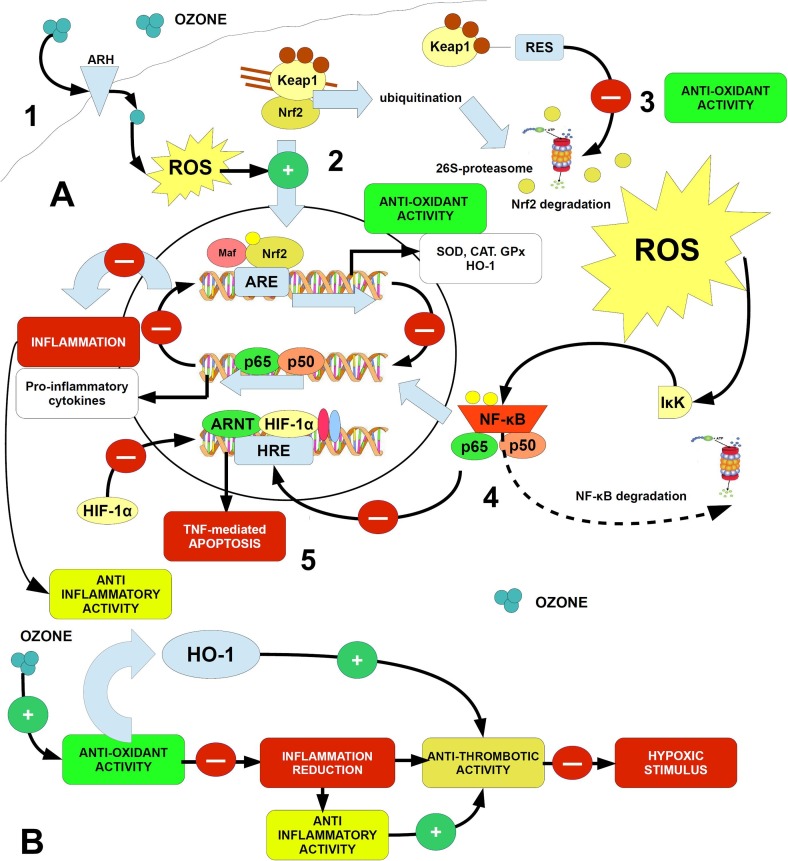
An increasing amount of reports in the literature is showing that medical ozone (O) is used, with encouraging results, in treating COVID-19 patients, optimizing pain and symptoms relief, respiratory parameters, inflammatory and coagulation markers and the overall health status, so reducing significantly how much time patients underwent hospitalization and intensive care. To date, aside from mechanisms taking into account the ability of O to activate a rapid oxidative stress response, by up-regulating antioxidant and scavenging enzymes, no sound hypothesis was addressed to attempt a synopsis of how O should act on COVID-19. The knowledge on how O works on inflammation and thrombosis mechanisms is of the utmost importance to make physicians endowed with new guns against SARS-CoV2 pandemic. This review tries to address this issue, so to expand the debate in the scientific community.
文献中越来越多的报告表明,医用臭氧(O)在治疗新冠肺炎患者方面得到了应用,且效果令人鼓舞,它能优化疼痛和症状缓解、呼吸参数、炎症和凝血指标以及整体健康状况,从而显著缩短患者的住院和重症监护时间。迄今为止,除了考虑臭氧激活快速氧化应激反应的能力(通过上调抗氧化和清除酶)的机制外,尚未提出合理的假说来概述臭氧对新冠肺炎的作用方式。了解臭氧如何作用于炎症和血栓形成机制对于让医生拥有对抗新冠疫情的新手段至关重要。本综述试图解决这一问题,以在科学界展开更广泛的讨论。