Health Research Center, Baqiyatallah University of Medical Sciences, Tehran, Iran.
Local Health Unit N. 2 "Marca Trevigiana", Public Health Department, Treviso, Italy.
Int Immunopharmacol. 2021 Mar;92:107307. doi: 10.1016/j.intimp.2020.107307. Epub 2020 Dec 21.
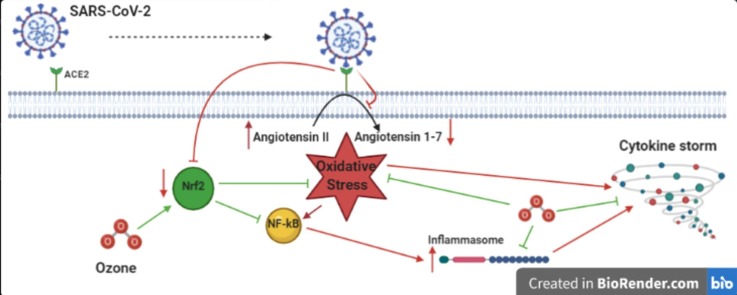
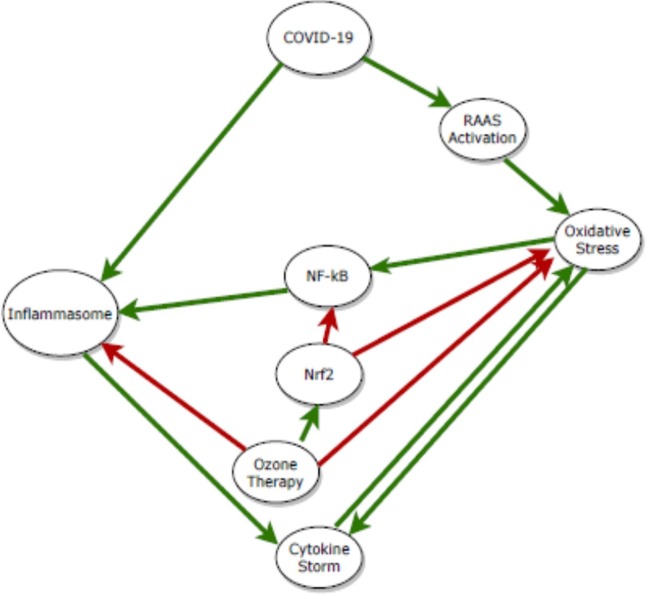
Severe forms of COVID-19 can evolve into pneumonia, featured by acute respiratory failure due to acute lung injury (ALI) and acute respiratory distress syndrome (ARDS). In viral diseases, the replication of viruses is seemingly stimulated by an imbalance between pro-oxidant and antioxidant activity as well as by the deprivation of antioxidant mechanisms. In COVID-19 pneumonia, oxidative stress also appears to be highly detrimental to lung tissues. Although inhaling ozone (O3) gas has been shown to be toxic to the lungs, recent evidence suggests that its administration via appropriate routes and at small doses can paradoxically induce an adaptive reaction capable of decreasing the endogenous oxidative stress. Ozone therapy is recommended to counter the disruptive effects of severe COVID-19 on lung tissues, especially if administered in early stages of the disease, thereby preventing the progression to ARDS.
严重的 COVID-19 可发展为肺炎,其特征是由于急性肺损伤 (ALI) 和急性呼吸窘迫综合征 (ARDS) 而导致的急性呼吸衰竭。在病毒性疾病中,病毒的复制似乎受到促氧化剂和抗氧化剂活性之间失衡以及抗氧化机制缺失的刺激。在 COVID-19 肺炎中,氧化应激对肺组织也似乎有很大的损害。虽然吸入臭氧 (O3) 气体已被证明对肺部有毒,但最近的证据表明,通过适当的途径和小剂量给药,它可以反其道而行之地引起一种适应性反应,能够减少内源性氧化应激。臭氧疗法被推荐用于对抗严重 COVID-19 对肺组织的破坏性影响,特别是在疾病早期进行治疗,从而防止其进展为 ARDS。