Department of Biomedical Engineering, Laboratory for Fluorescence Dynamics, University of California Irvine, Irvine, CA, 92697, USA.
Department of Physiology and Biophysics, Bioelectricity Laboratory, School of Medicine, University of California Irvine, Irvine, CA, 92697, USA.
Sci Rep. 2021 May 21;11(1):10719. doi: 10.1038/s41598-021-90002-2.
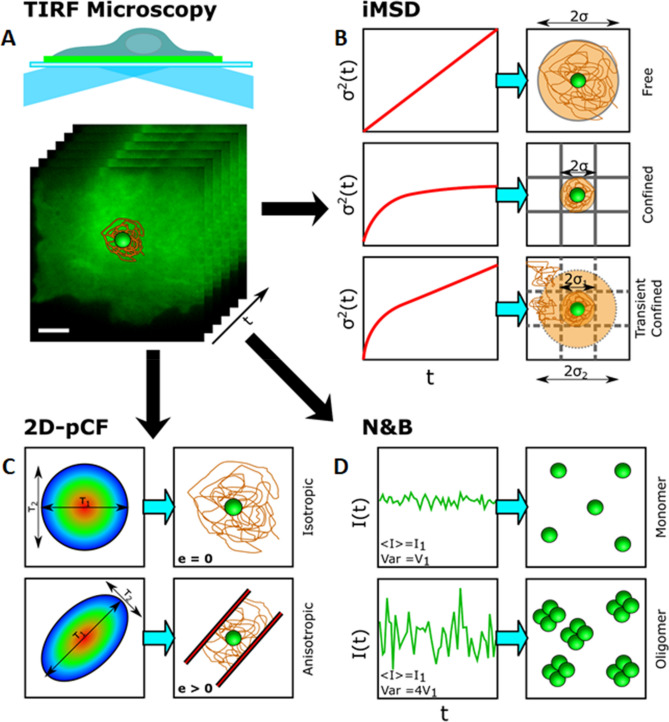
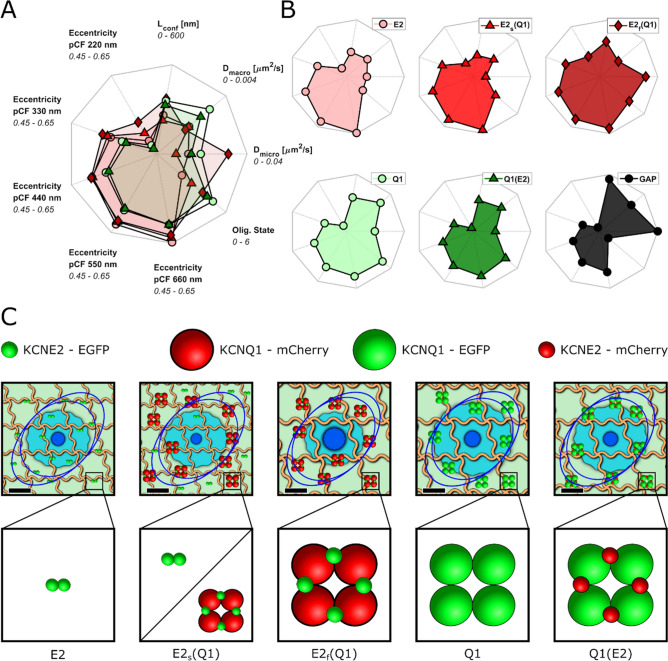
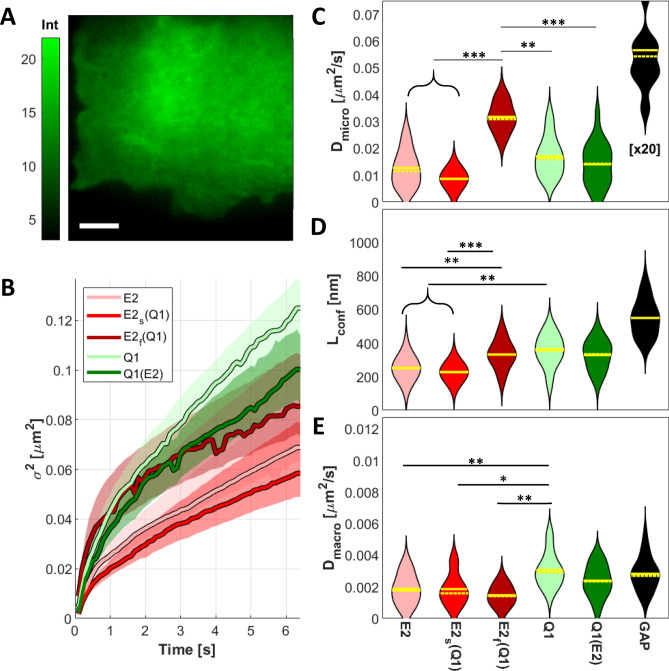
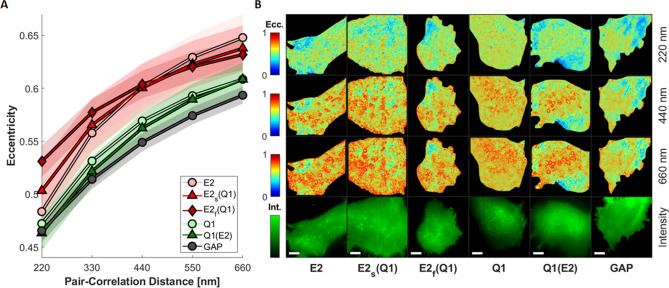
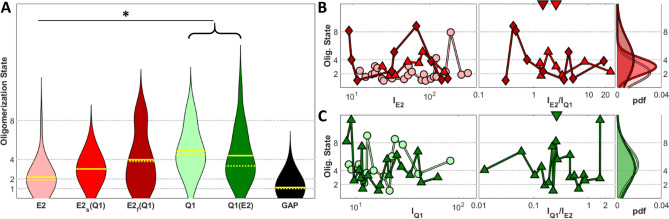
Voltage-gated potassium (Kv) channels are a family of membrane proteins that facilitate K ion diffusion across the plasma membrane, regulating both resting and action potentials. Kv channels comprise four pore-forming α subunits, each with a voltage sensing domain, and they are regulated by interaction with β subunits such as those belonging to the KCNE family. Here we conducted a comprehensive biophysical characterization of stoichiometry and protein diffusion across the plasma membrane of the epithelial KCNQ1-KCNE2 complex, combining total internal reflection fluorescence (TIRF) microscopy and a series of complementary Fluorescence Fluctuation Spectroscopy (FFS) techniques. Using this approach, we found that KCNQ1-KCNE2 has a predominant 4:4 stoichiometry, while non-bound KCNE2 subunits are mostly present as dimers in the plasma membrane. At the same time, we identified unique spatio-temporal diffusion modalities and nano-environment organization for each channel subunit. These findings improve our understanding of KCNQ1-KCNE2 channel function and suggest strategies for elucidating the subunit stoichiometry and forces directing localization and diffusion of ion channel complexes in general.
电压门控钾 (Kv) 通道是一类膜蛋白,可促进 K+离子穿过质膜扩散,调节静息电位和动作电位。Kv 通道由四个形成孔的α亚基组成,每个亚基都有一个电压感应域,它们通过与β亚基(如 KCNE 家族的亚基)相互作用而被调节。在这里,我们通过全内反射荧光(TIRF)显微镜和一系列互补的荧光波动光谱(FFS)技术,对上皮细胞 KCNQ1-KCNE2 复合物的分子计量和跨质膜蛋白扩散进行了全面的生物物理特性分析。通过这种方法,我们发现 KCNQ1-KCNE2 具有主要的 4:4 计量比,而未结合的 KCNE2 亚基在质膜中主要以二聚体形式存在。同时,我们确定了每个通道亚基独特的时空扩散模式和纳米环境组织。这些发现提高了我们对 KCNQ1-KCNE2 通道功能的理解,并为阐明离子通道复合物的亚基计量比以及指导其定位和扩散的力提供了策略。