Max-Von-Pettenkofer Institute, LMU Munich, Pettenkoferstr. 9a, Munich, Germany.
Med Microbiol Immunol. 2021 Aug;210(4):173-179. doi: 10.1007/s00430-021-00702-9. Epub 2021 May 22.
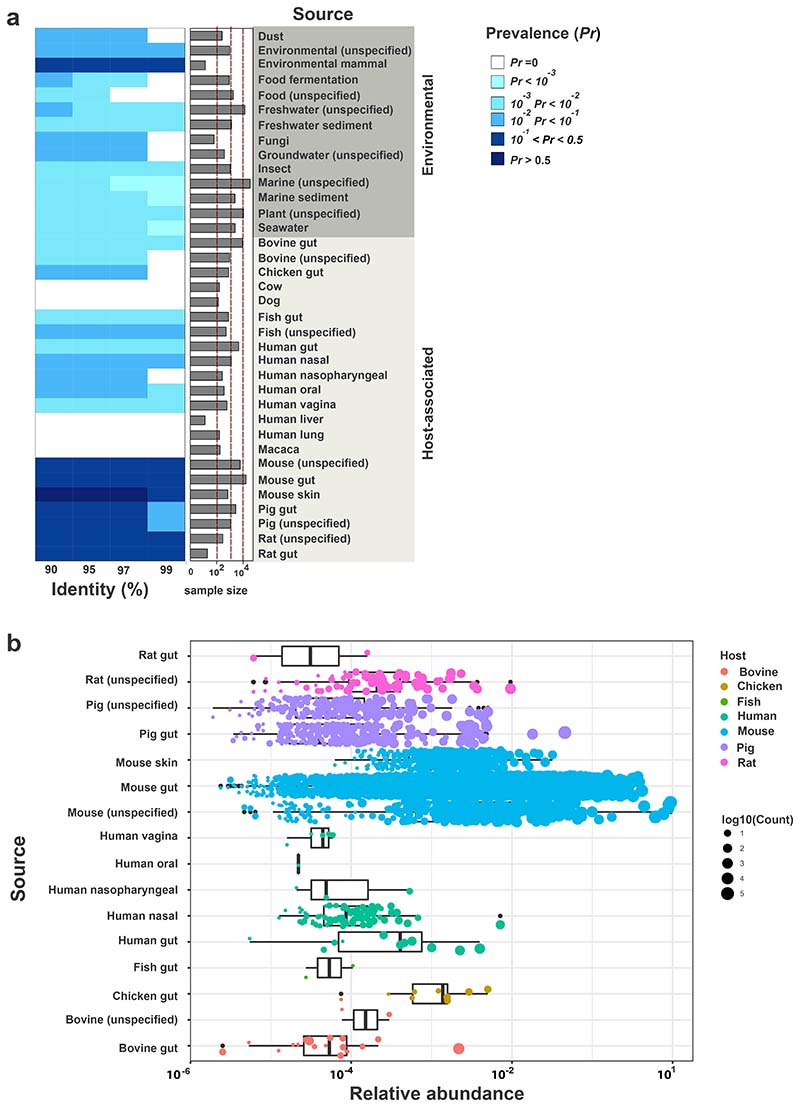
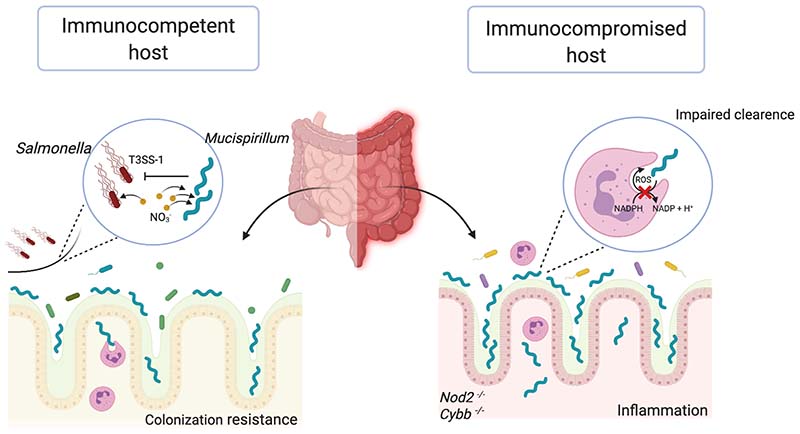
Trillions of bacteria inhabit the mammalian gastrointestinal tract. In the majority of hosts, these symbionts contribute largely to beneficial functions promoting microbe-host homeostasis. However, an increasing number of human diseases is associated with altered microbiota composition and enrichment of certain bacterial species. A well-known example of this is Mucispirillum schaedleri, which has been associated with inflammatory conditions in the intestine. Mucispirillum spp. belong to the phylum Deferribacteres and are prevalent but low abundant members of the rodent, pig and human microbiota. Recently, M. schaedleri was causally linked to the development of Crohn's disease-like colitis in immunodeficient mice. While this study certifies a considerable pathogenic potential, the same organism can also promote health in the immunocompetent host: M. schaedleri protects from Salmonella enterica serovar Typhimurium (S. Tm)-induced colitis by interfering with the expression of the pathogen´s invasion machinery. In this review, we summarize the current knowledge on the mammalian gut symbiont M. schaedleri and its role in intestinal homeostasis and discuss open questions and perspectives for future research.
数以万亿计的细菌栖息在哺乳动物的胃肠道中。在大多数宿主中,这些共生体主要有助于促进微生物-宿主体内平衡的有益功能。然而,越来越多的人类疾病与改变的微生物群落组成和某些细菌物种的富集有关。Mucispirillum schaedleri 就是一个众所周知的例子,它与肠道中的炎症有关。Mucispirillum spp. 属于 Deferribacteres 门,是啮齿动物、猪和人类微生物群中普遍存在但丰度较低的成员。最近,M. schaedleri 被因果关联到免疫缺陷小鼠中类似克罗恩病的结肠炎的发展。虽然这项研究证明了相当大的致病潜力,但同一生物体也可以在免疫功能正常的宿主中促进健康:M. schaedleri 通过干扰病原体侵袭机制的表达来预防沙门氏菌肠炎亚种(S. Tm)诱导的结肠炎。在这篇综述中,我们总结了哺乳动物肠道共生体 M. schaedleri 的现有知识及其在肠道内平衡中的作用,并讨论了未来研究的悬而未决的问题和前景。