Lowery Shea A, Sariol Alan, Perlman Stanley
Department of Microbiology and Immunology, University of Iowa, Iowa City, IA 52242, USA.
Interdisciplinary Program in Immunology, University of Iowa, Iowa City, IA 52242, USA.
Cell Host Microbe. 2021 Jul 14;29(7):1052-1062. doi: 10.1016/j.chom.2021.05.004. Epub 2021 May 17.
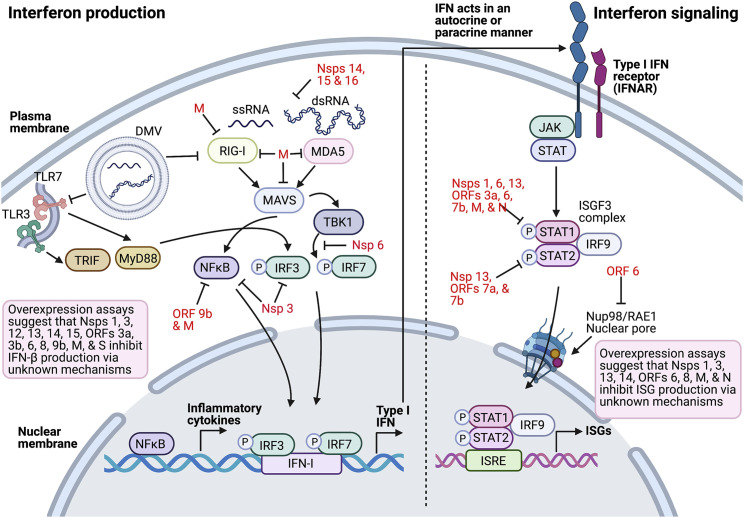
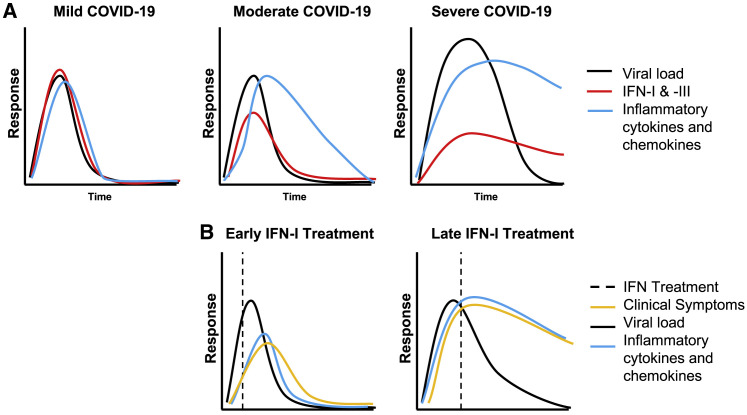
COVID-19 can result in severe disease characterized by significant immunopathology that is spurred by an exuberant, yet dysregulated, innate immune response with a poor adaptive response. A limited and delayed interferon I (IFN-I) and IFN-III response results in exacerbated proinflammatory cytokine production and in extensive cellular infiltrates in the respiratory tract, resulting in lung pathology. The development of effective therapeutics for patients with severe COVID-19 depends on our understanding of the pathological elements of this unbalanced innate immune response. Here, we review the mechanisms by which SARS-CoV-2 both activates and antagonizes the IFN and inflammatory response following infection, how a dysregulated cytokine and cellular response contributes to immune-mediated pathology in COVID-19, and therapeutic strategies that target elements of the innate response.
新冠病毒(COVID-19)可导致严重疾病,其特征是显著的免疫病理学变化,这是由过度但失调的先天免疫反应以及不良的适应性反应所引发的。有限且延迟的Ⅰ型干扰素(IFN-Ⅰ)和Ⅲ型干扰素反应会导致促炎细胞因子产生加剧,并在呼吸道出现广泛的细胞浸润,从而导致肺部病变。开发针对重症COVID-19患者的有效疗法,取决于我们对这种失衡的先天免疫反应病理因素的理解。在此,我们综述了严重急性呼吸综合征冠状病毒2(SARS-CoV-2)感染后激活和拮抗干扰素及炎症反应的机制、失调的细胞因子和细胞反应如何导致COVID-19中的免疫介导病理,以及针对先天反应要素的治疗策略。