García-Mintegui Claudia, Córdoba Laura Catalina, Buxadera-Palomero Judit, Marquina Andrea, Jiménez-Piqué Emilio, Ginebra Maria-Pau, Cortina José Luis, Pegueroles Marta
Biomaterials, Biomechanics and Tissue Engineering Group, Department of Materials Science and Engineering, Technical University of Catalonia (UPC), Barcelona East School of Engineering (EEBE), 08019, Barcelona, Spain.
Resource Recovery and Environmental Management Group, UPC, EEBE, 08019, Barcelona, Spain.
Bioact Mater. 2021 May 4;6(12):4430-4446. doi: 10.1016/j.bioactmat.2021.04.015. eCollection 2021 Dec.
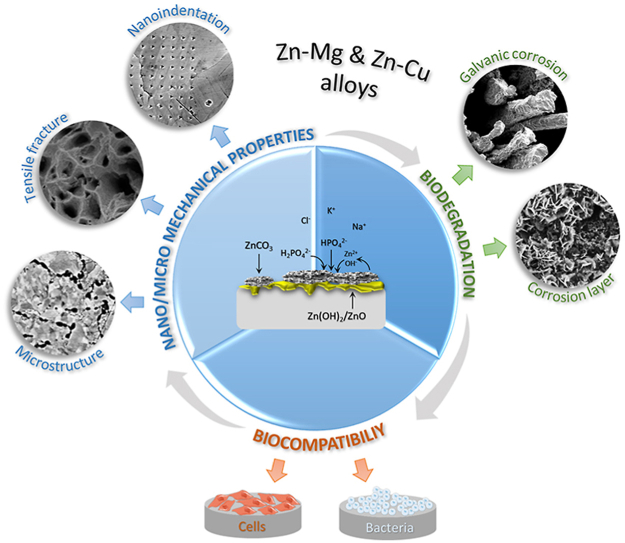
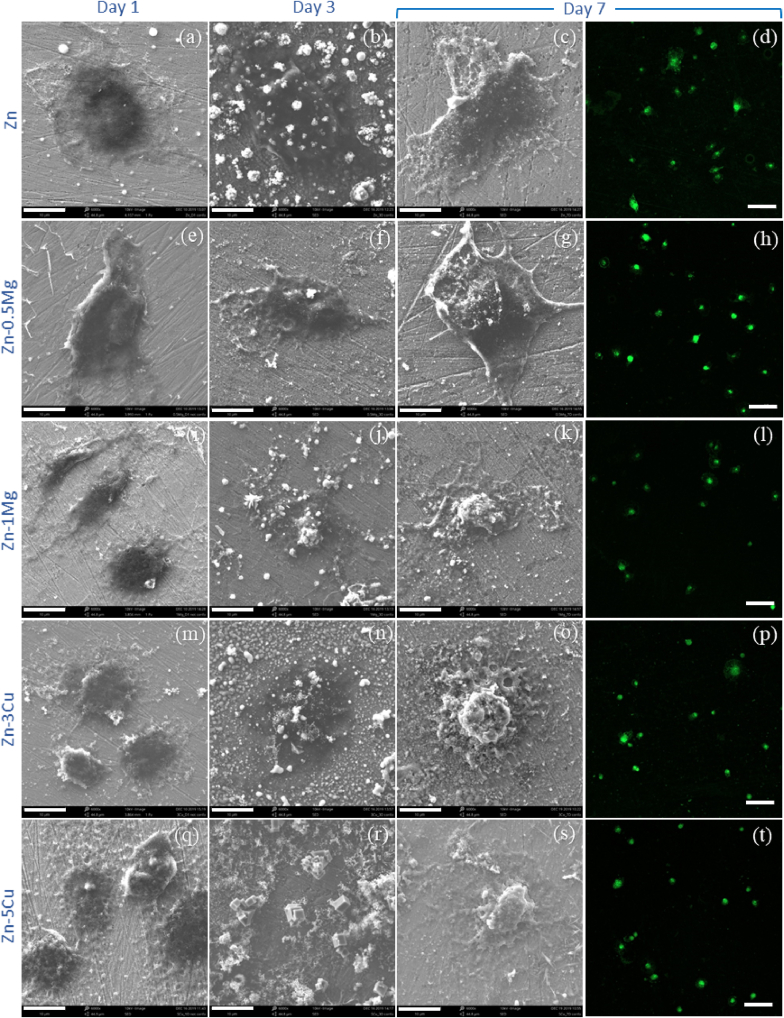
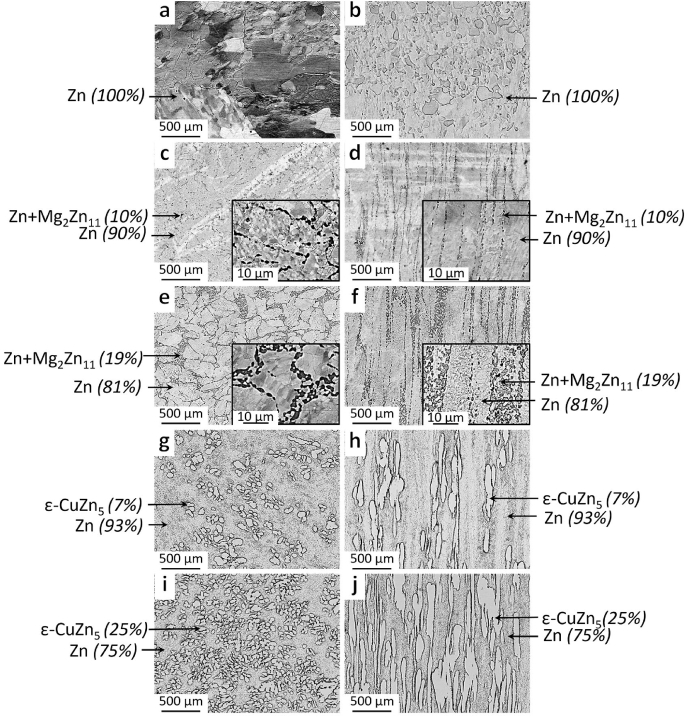
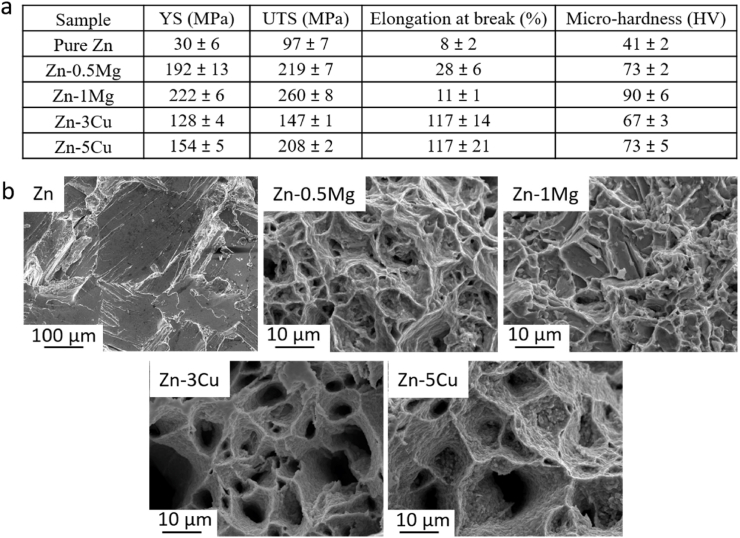
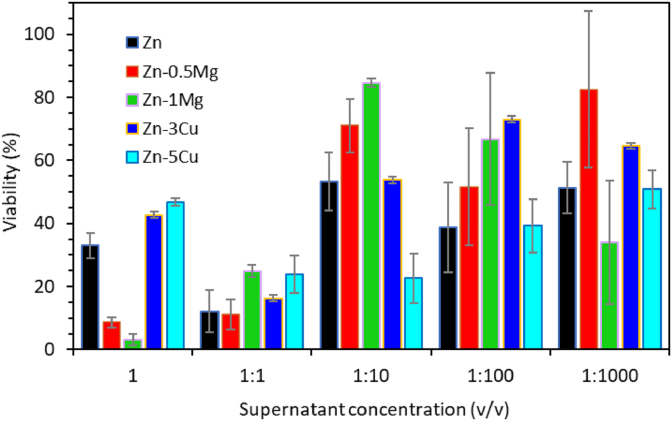
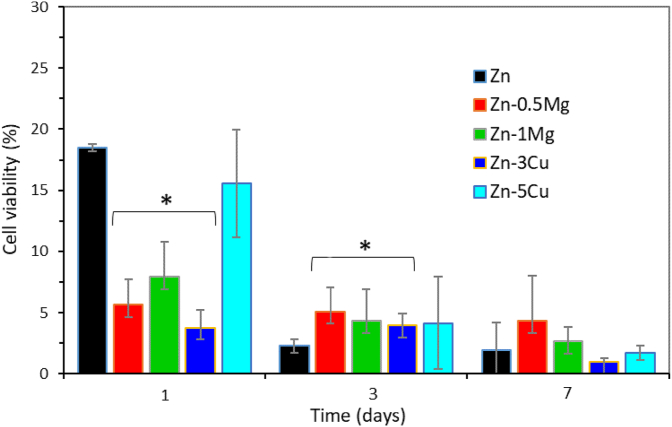
In the recent decades, zinc (Zn) and its alloys have been drawing attention as promising candidates for bioresorbable cardiovascular stents due to its degradation rate more suitable than magnesium (Mg) and iron (Fe) alloys. However, its mechanical properties need to be improved in order to meet the criteria for vascular stents. This work investigates the mechanical properties, biodegradability and biocompatibility of Zn-Mg and Zn-Cu alloys in order to determine a proper alloy composition for optimal stent performance. Nanoindentation measurements are performed to characterize the mechanical properties at the nanoscale as a function of the Zn microstructure variations induced by alloying. The biodegradation mechanisms are discussed and correlated to microstructure, mechanical performance and bacterial/cell response. Addition of Mg or Cu alloying elements refined the microstructure of Zn and enhanced yield strength (YS) and ultimate tensile strength (UTS) proportional to the volume fraction of secondary phases. Zn-1Mg showed the higher YS and UTS and better performance in terms of degradation stability in Hanks' solution. Zn-Cu alloys presented an antibacterial effect for controlled by diffusion mechanisms and by contact. Biocompatibility was dependent on the degradation rate and the nature of the corrosion products.
近几十年来,锌(Zn)及其合金作为生物可吸收心血管支架的潜在候选材料受到关注,因为其降解速率比镁(Mg)合金和铁(Fe)合金更合适。然而,其机械性能需要改进以满足血管支架的标准。这项工作研究了Zn-Mg和Zn-Cu合金的机械性能、生物降解性和生物相容性,以确定用于最佳支架性能的合适合金成分。进行纳米压痕测量以表征纳米尺度下的机械性能,该性能是合金化引起的Zn微观结构变化的函数。讨论了生物降解机制,并将其与微观结构、机械性能以及细菌/细胞反应相关联。添加Mg或Cu合金元素细化了Zn的微观结构,并提高了屈服强度(YS)和极限抗拉强度(UTS),其与第二相的体积分数成正比。Zn-1Mg在汉克斯溶液中的降解稳定性方面表现出更高的YS和UTS以及更好的性能。Zn-Cu合金通过扩散机制和接触表现出抗菌作用。生物相容性取决于降解速率和腐蚀产物的性质。