Landtblom Anne-Marie, Berntsson Shala G, Boström Inger, Iacobaeus Ellen
Department of Neuroscience, Uppsala University, Uppsala, Sweden.
Department of Biomedical and Clinical Sciences, Linköping University, Linköping, Sweden.
Acta Neurol Scand. 2021 Sep;144(3):229-235. doi: 10.1111/ane.13453. Epub 2021 May 24.
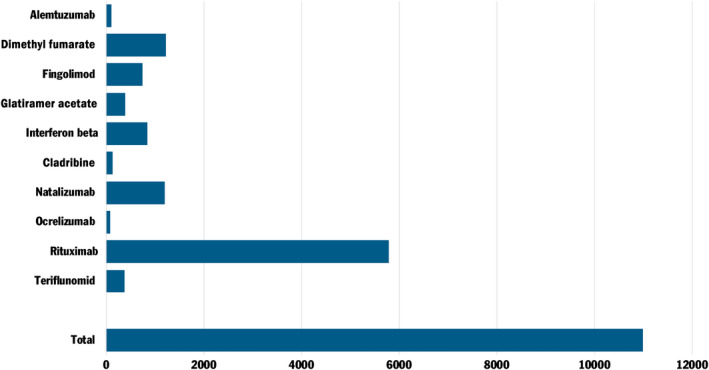
The COVID-19 pandemic has brought challenges for healthcare management of patients with multiple sclerosis (MS). Concerns regarding vulnerability to infections and disease-modifying therapies (DMTs) and their complications have been raised. Recent published guidelines on the use of DMTs in relation to COVID-19 in MS patients have been diverse between countries with lack of evidence-based facts. In Sweden, there exists a particular interest in anti-CD20 therapy as a possible risk factor for severe COVID-19 due to the large number of rituximab-treated patients off-label in the country. Rapid responses from the Swedish MS Association (SMSS) and the Swedish MS registry (SMSreg) have resulted in national guidelines on DMT use for MS patients and implementation of a COVID-19 module in the SMSreg. Recently updated guidelines also included recommendations on COVID-19 vaccination with regard to the different DMTs. Social distancing policies forced implementation of telemedicine consultation to replace in-person consultations as part of regular MS health care. Patient-reported outcome measures (PROMs) in SMSreg have been useful in this respect. This paper reports our experiences on the progress of national MS health care during the COVID-19 pandemic, in addition to offering an overview of the present scientific context.
新冠疫情给多发性硬化症(MS)患者的医疗管理带来了挑战。人们对感染易感性、疾病修正治疗(DMTs)及其并发症表示担忧。近期各国发布的关于MS患者使用DMTs与新冠疫情相关的指南各不相同,且缺乏循证依据。在瑞典,由于该国大量患者接受了利妥昔单抗的超适应症治疗,抗CD20疗法作为严重新冠的潜在风险因素受到特别关注。瑞典多发性硬化症协会(SMSS)和瑞典多发性硬化症登记处(SMSreg)迅速做出回应,制定了MS患者DMT使用的国家指南,并在SMSreg中实施了新冠模块。最近更新的指南还包括了针对不同DMTs的新冠疫苗接种建议。社交距离政策促使远程医疗咨询得以实施,以取代面对面咨询,作为常规MS医疗保健的一部分。SMSreg中的患者报告结局指标(PROMs)在这方面发挥了作用。本文报告了我们在新冠疫情期间国家MS医疗保健进展方面的经验,此外还概述了当前的科学背景。