Sir William Dunn School of Pathology, University of Oxford, Oxford, United Kingdom.
Radcliffe Department of Medicine, Medical Research Council Human Immunology Unit, Weatherall Institute of Molecular Medicine, University of Oxford, Oxford, United Kingdom.
Elife. 2021 May 25;10:e67092. doi: 10.7554/eLife.67092.
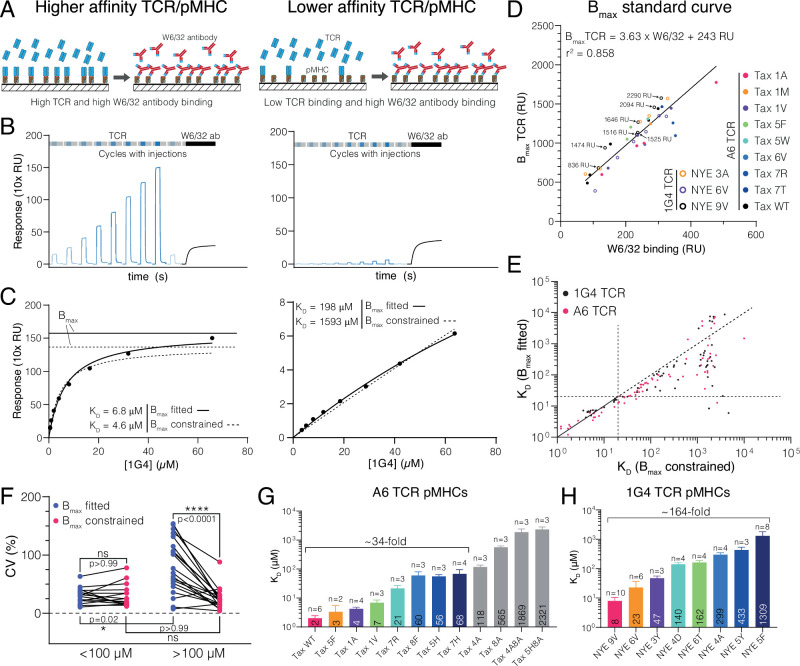
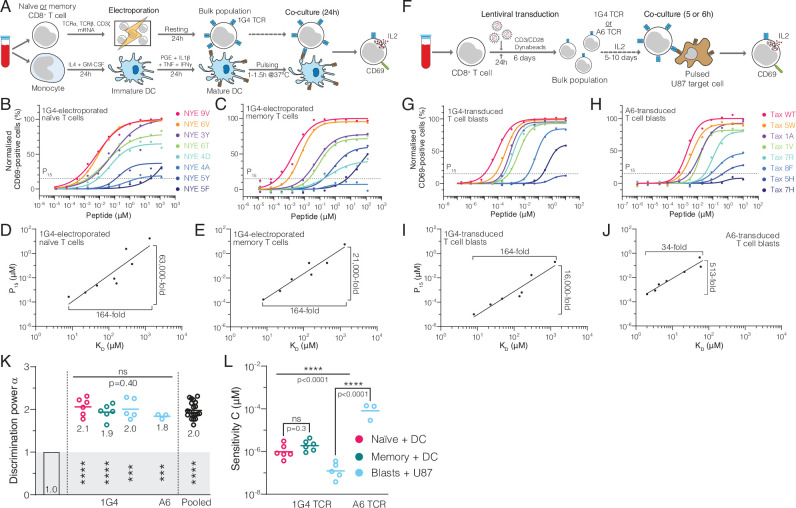
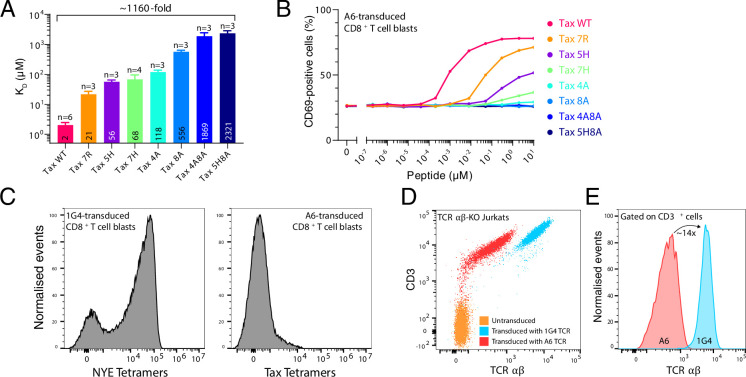
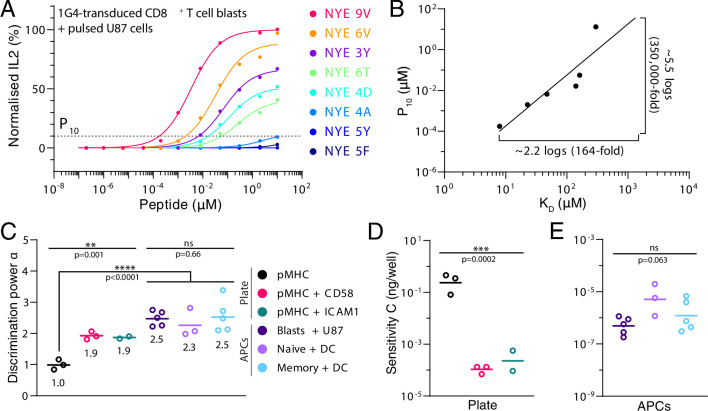
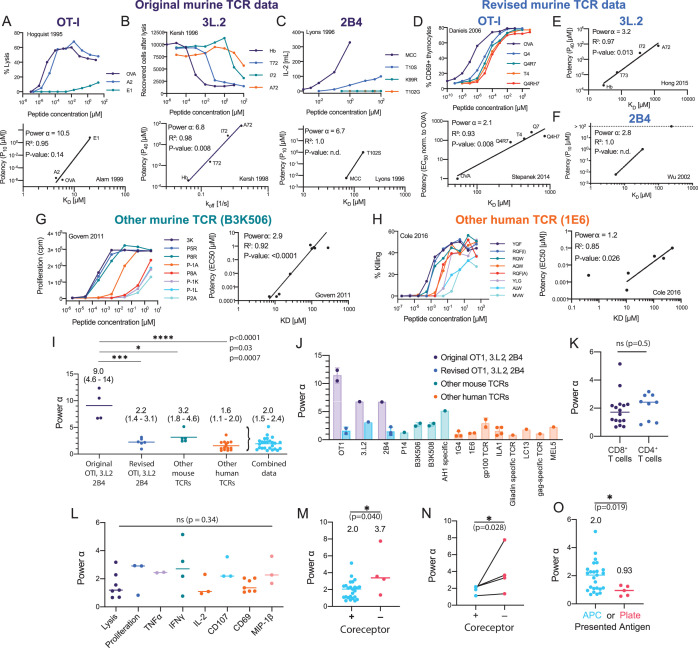
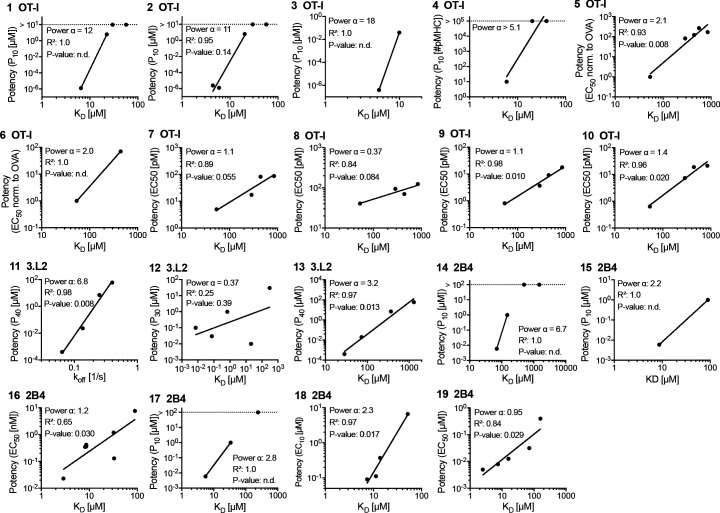
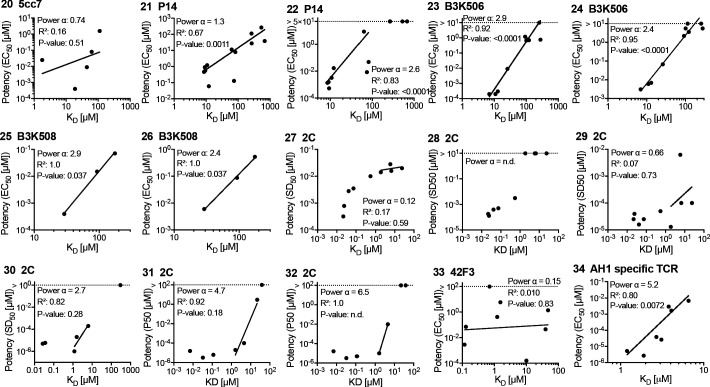
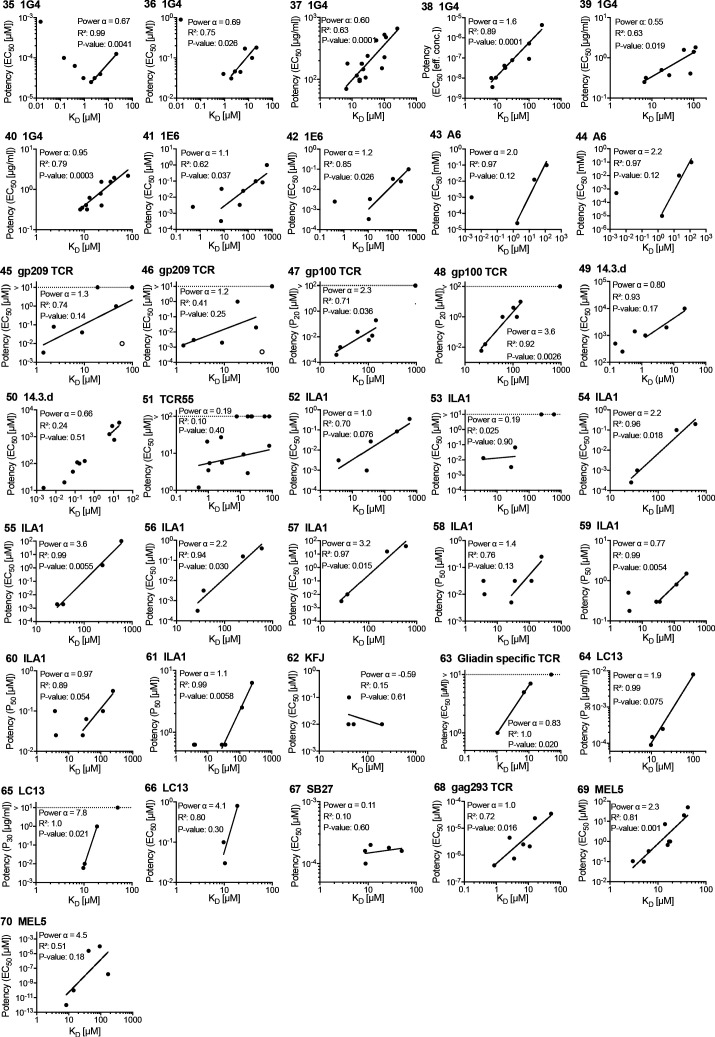
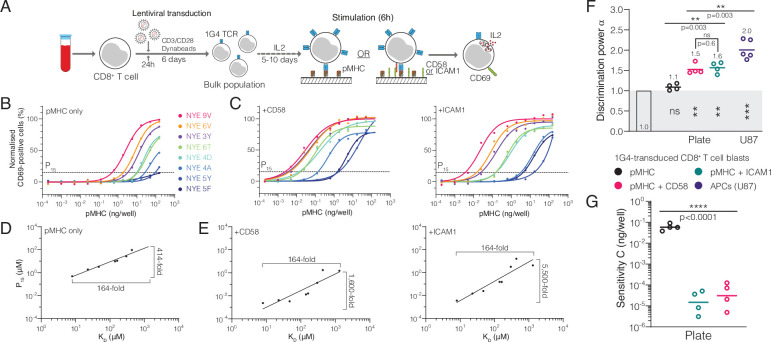
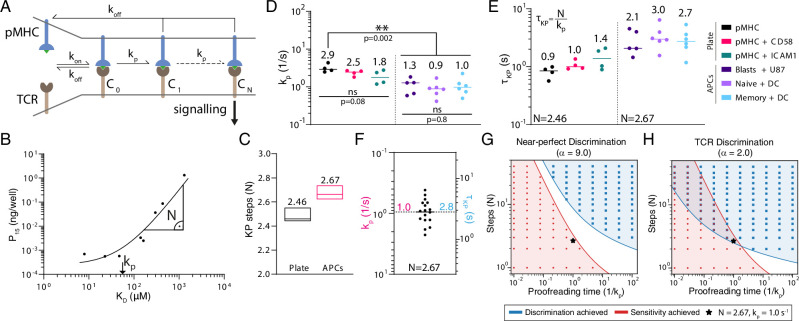
T cells use their T cell receptors (TCRs) to discriminate between lower-affinity self and higher-affinity non-self peptides presented on major histocompatibility complex (pMHC) antigens. Although the discriminatory power of the TCR is widely believed to be near-perfect, technical difficulties have hampered efforts to precisely quantify it. Here, we describe a method for measuring very low TCR/pMHC affinities and use it to measure the discriminatory power of the TCR and the factors affecting it. We find that TCR discrimination, although enhanced compared with conventional cell-surface receptors, is imperfect: primary human T cells can respond to pMHC with affinities as low as K ∼ 1 mM. The kinetic proofreading mechanism fit our data, providing the first estimates of both the time delay (2.8 s) and number of biochemical steps (2.67) that are consistent with the extraordinary sensitivity of antigen recognition. Our findings explain why self pMHC frequently induce autoimmune diseases and anti-tumour responses, and suggest ways to modify TCR discrimination.
T 细胞利用其 T 细胞受体 (TCR) 来区分主要组织相容性复合体 (pMHC) 抗原上低亲和力的自身肽和高亲和力的非自身肽。尽管 TCR 的区分能力被广泛认为是近乎完美的,但技术上的困难阻碍了对其进行精确量化的努力。在这里,我们描述了一种测量非常低的 TCR/pMHC 亲和力的方法,并使用它来测量 TCR 的区分能力以及影响它的因素。我们发现,尽管与传统的细胞表面受体相比,TCR 的区分能力得到了增强,但它并不完美:原代人类 T 细胞可以对亲和力低至 K∼1mM 的 pMHC 作出反应。我们的研究结果符合动力学校验机制,提供了与抗原识别的非凡敏感性一致的时间延迟(2.8 秒)和生化步骤数量(2.67)的首次估计。我们的发现解释了为什么自身 pMHC 经常引发自身免疫性疾病和抗肿瘤反应,并提出了改变 TCR 区分能力的方法。