Alsubaiti Amal, Alamir Hanin, Huynh Lan, Grant Tressan, Aljohani Abdullah, Chou Po Han, Shi Yiwei, Alismail Maryam, Mason Lydia R, Herman Andrew, Bridgeman John S, Holland Christopher J, Wülfing Christoph
School of Cellular and Molecular Medicine, University of Bristol, Bristol BS8 1TD, United Kingdom.
Department of Life Sciences, University of Bath, Bath BA2 7AY, United Kingdom.
Immunother Adv. 2025 Jun 11;5(1):ltaf023. doi: 10.1093/immadv/ltaf023. eCollection 2025.
Cytotoxic T lymphocytes (CTL) are key effectors in the antitumor immune response. However, their function is commonly suppressed in tumors in the form of exhausted CTL. Understanding mechanisms of suppression and of therapeutics to overcome them is of substantial basic and translational importance yet hindered by limited access to large numbers of exhausted CTL in vitro.
Here we use three-dimensional tissue culture to generate primary human CTL with suppressed function. Using functional assays, a 21-antibody flow cytometry panel and determination of calcium signaling and CTL tumor cell couple maintenance, we have characterized their phenotype.
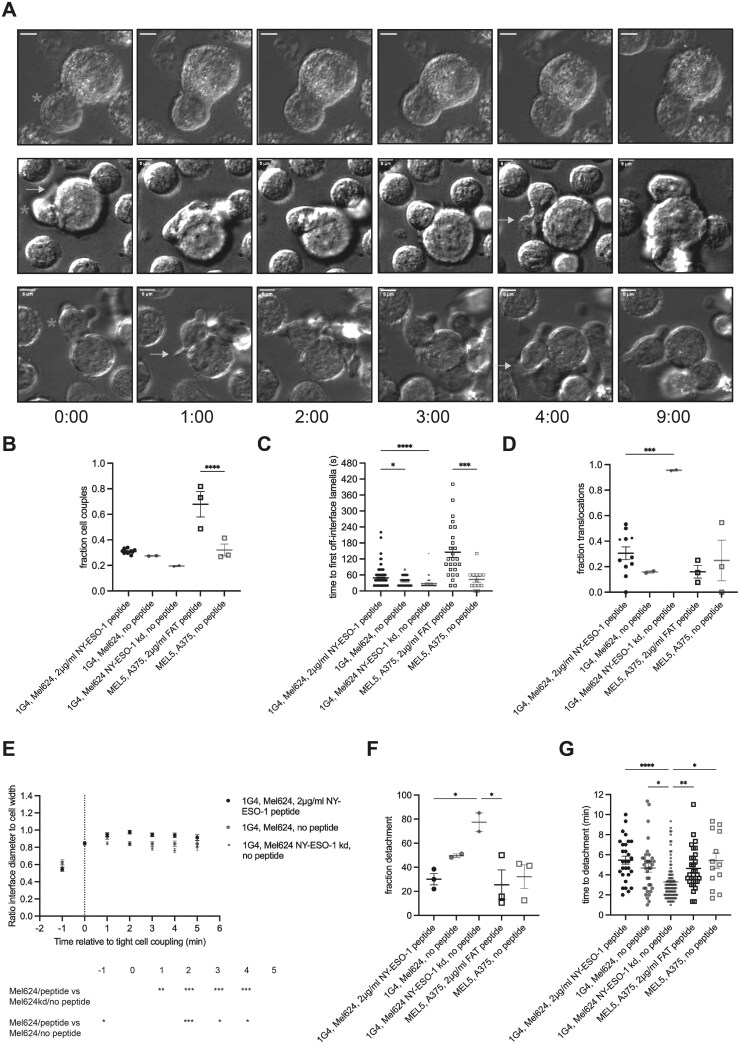
We show that these cells closely resemble exhausted CTL from tumors. For a better understanding of in vitro human primary CTL as key tools in therapeutic development, before and after induction of suppression, we have determined the dependence of CTL function on methodology of generation, antigen dose, and affinity across two T-cell receptors and multiple tumor cell lines. As a further determination of their phenotype, we have investigated the morphology and subcellular F-actin distributions of CTL as key regulators of effector function. Primary human CTL formed cell couples with tumor target cells even in the absence of antigen. Yet, the gradual stabilization of such cell couples was associated with increasing CTL effector function. Induction of suppression substantially destabilized CTL tumor cell couples.
This comprehensive characterization of the phenotype of in vitro primary human CTL, including a suppressed state, should facilitate their use in basic research, the development of CTL-targeting therapeutics and the determination of their mechanism of action.
细胞毒性T淋巴细胞(CTL)是抗肿瘤免疫反应中的关键效应细胞。然而,它们的功能在肿瘤中通常以耗竭的CTL形式受到抑制。了解抑制机制以及克服这些机制的治疗方法具有重要的基础和转化意义,但由于体外获取大量耗竭的CTL有限而受到阻碍。
在此,我们使用三维组织培养来生成功能受抑制的原代人CTL。通过功能测定、21抗体流式细胞术检测以及钙信号测定和CTL肿瘤细胞偶联维持情况,我们对其表型进行了表征。
我们表明这些细胞与肿瘤中的耗竭CTL非常相似。为了更好地理解体外人原代CTL作为治疗开发关键工具的情况,在诱导抑制之前和之后,我们确定了CTL功能对生成方法、抗原剂量以及跨两个T细胞受体和多个肿瘤细胞系的亲和力的依赖性。作为对其表型的进一步确定,我们研究了CTL的形态和亚细胞F-肌动蛋白分布,它们是效应器功能的关键调节因子。即使在没有抗原的情况下,原代人CTL也能与肿瘤靶细胞形成细胞偶联。然而,这种细胞偶联的逐渐稳定与CTL效应器功能的增强相关。抑制的诱导极大地破坏了CTL肿瘤细胞偶联。
对体外原代人CTL表型的这种全面表征,包括抑制状态,应有助于它们在基础研究、靶向CTL的治疗方法开发及其作用机制确定中的应用。