Research and Business Development Department, Kyowa Hakko Bio Co., Ltd., Tokyo, Japan.
Department of Biomedical Data Intelligence, Graduate School of Medicine, Kyoto University, Kyoto, Japan.
Nat Commun. 2021 May 25;12(1):3088. doi: 10.1038/s41467-021-23319-1.
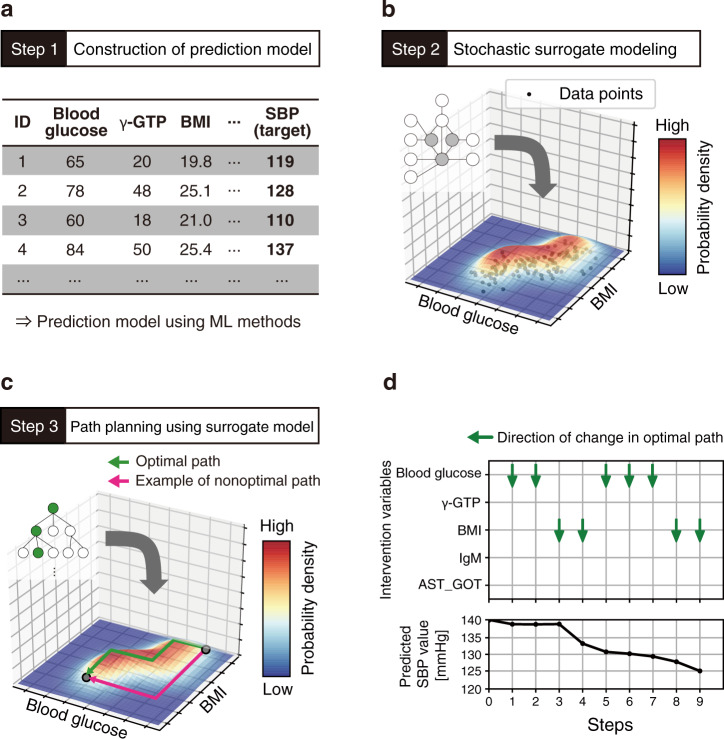
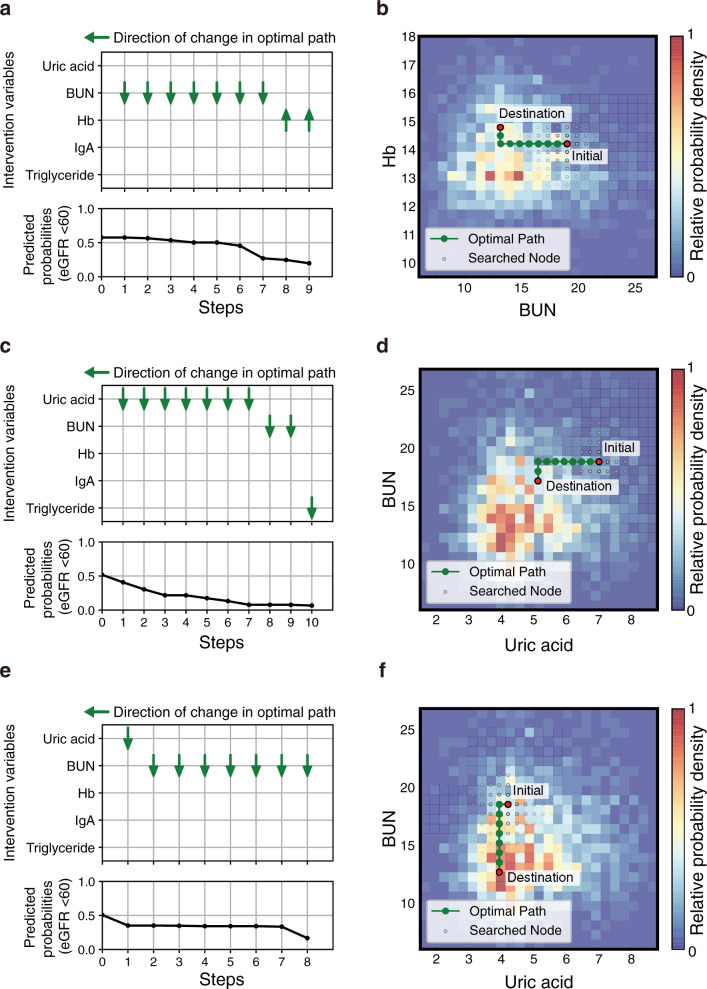
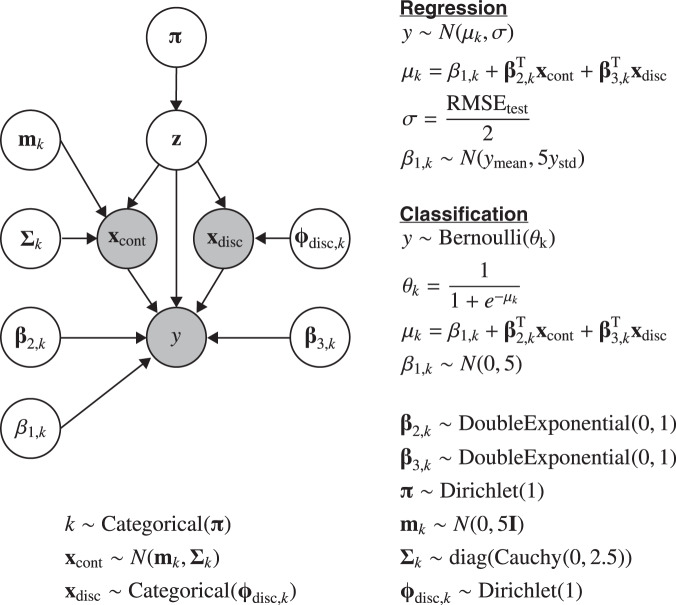
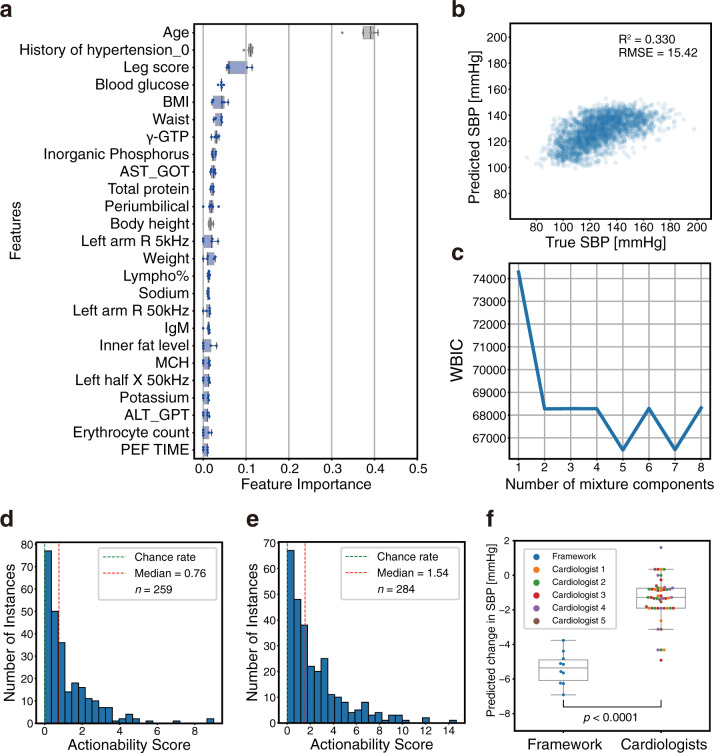
Clinical decision-making regarding treatments based on personal characteristics leads to effective health improvements. Machine learning (ML) has been the primary concern of diagnosis support according to comprehensive patient information. A prominent issue is the development of objective treatment processes in clinical situations. This study proposes a framework to plan treatment processes in a data-driven manner. A key point of the framework is the evaluation of the actionability for personal health improvements by using a surrogate Bayesian model in addition to a high-performance nonlinear ML model. We first evaluate the framework from the viewpoint of its methodology using a synthetic dataset. Subsequently, the framework is applied to an actual health checkup dataset comprising data from 3132 participants, to lower systolic blood pressure and risk of chronic kidney disease at the individual level. We confirm that the computed treatment processes are actionable and consistent with clinical knowledge for improving these values. We also show that the improvement processes presented by the framework can be clinically informative. These results demonstrate that our framework can contribute toward decision-making in the medical field, providing clinicians with deeper insights.
基于个人特征的治疗临床决策可实现有效的健康改善。机器学习 (ML) 一直是根据综合患者信息提供诊断支持的主要关注点。一个突出的问题是在临床情况下制定客观的治疗流程。本研究提出了一种以数据为驱动的治疗流程规划框架。该框架的一个关键点是使用替代贝叶斯模型来评估个人健康改善的可操作性,除了高性能的非线性 ML 模型。我们首先使用合成数据集从方法学的角度评估该框架。随后,将该框架应用于包含 3132 名参与者数据的实际健康检查数据集,以降低个体的收缩压和慢性肾脏病风险。我们确认计算出的治疗流程是可行的,并且与改善这些值的临床知识一致。我们还表明,该框架提出的改善流程具有临床意义。这些结果表明,我们的框架可以为医疗领域的决策提供帮助,为临床医生提供更深入的见解。