Department of Nanoengineering, University of California, San Diego, La Jolla, California 92093, United States.
Department of Bioengineering, University of California, San Diego, La Jolla, California 92093, United States.
ACS Sens. 2021 Jun 25;6(6):2356-2365. doi: 10.1021/acssensors.1c00518. Epub 2021 May 26.
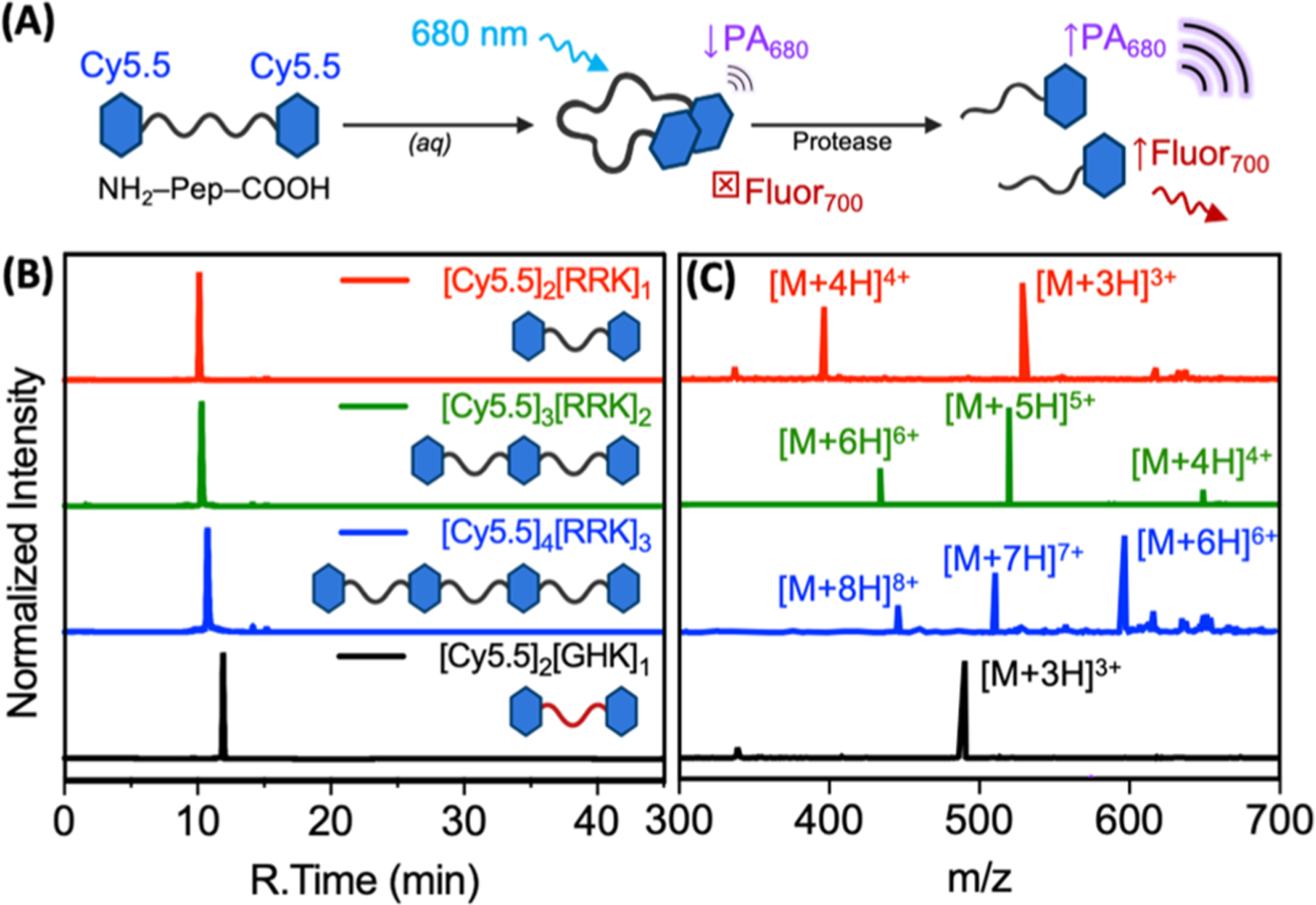
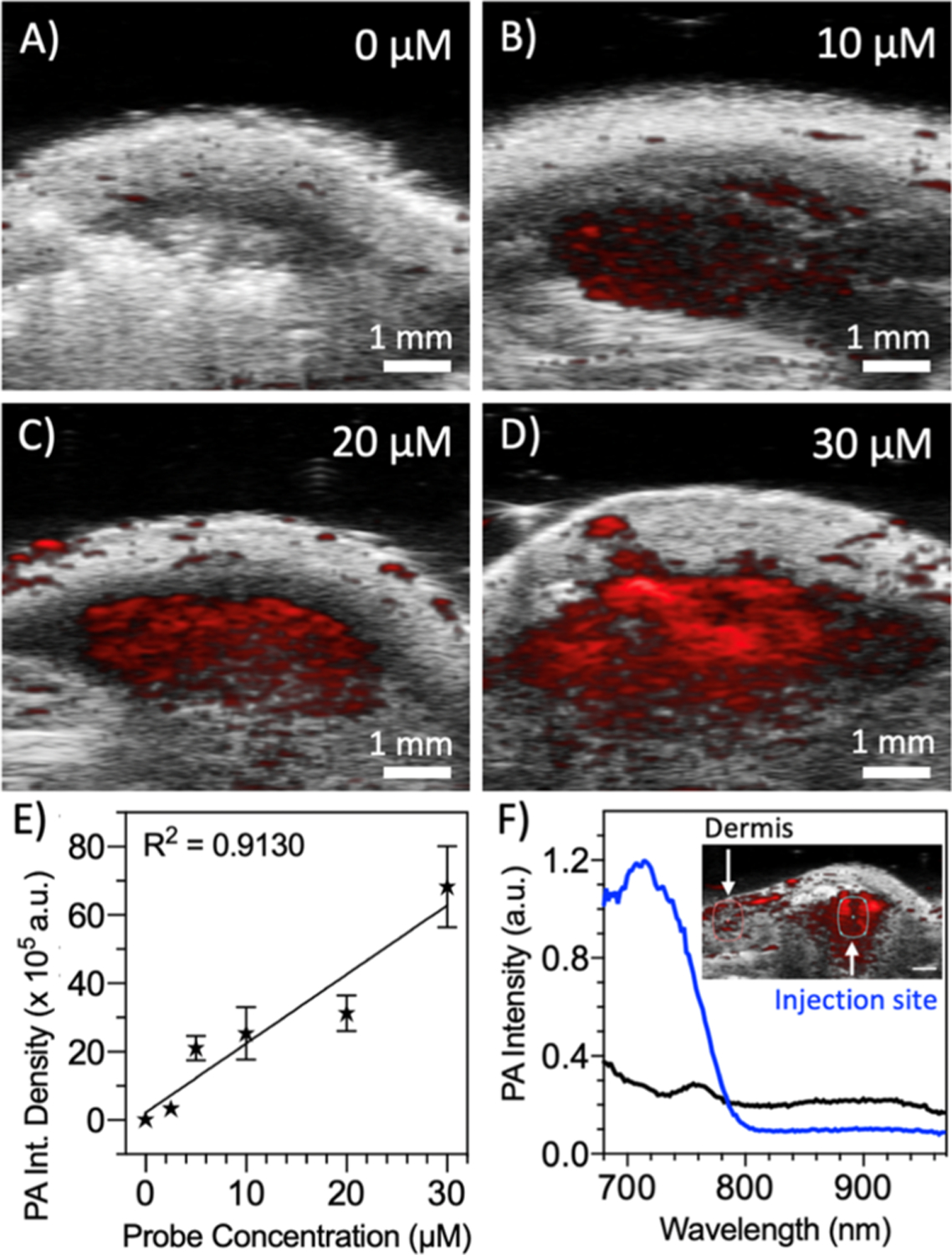
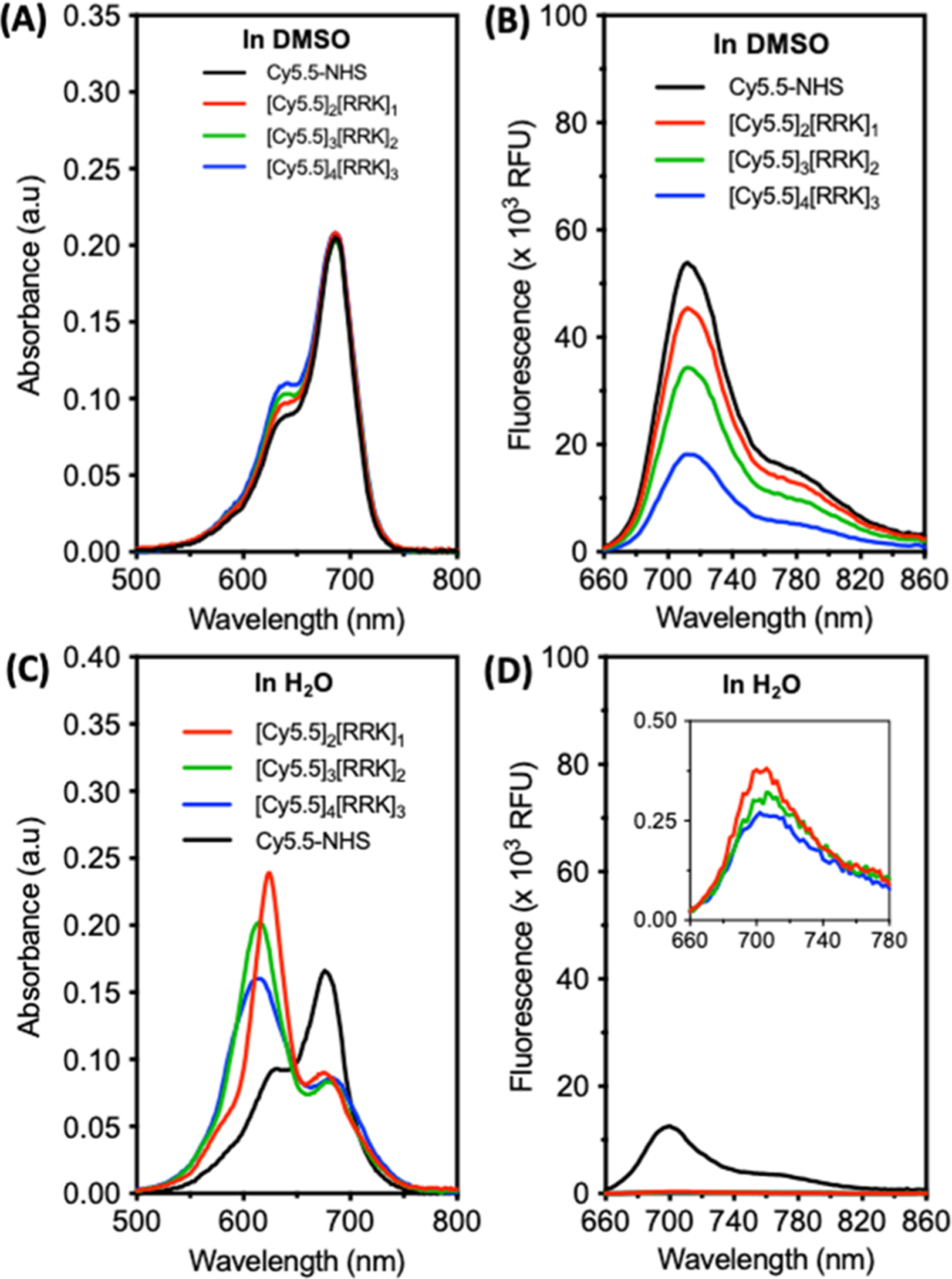
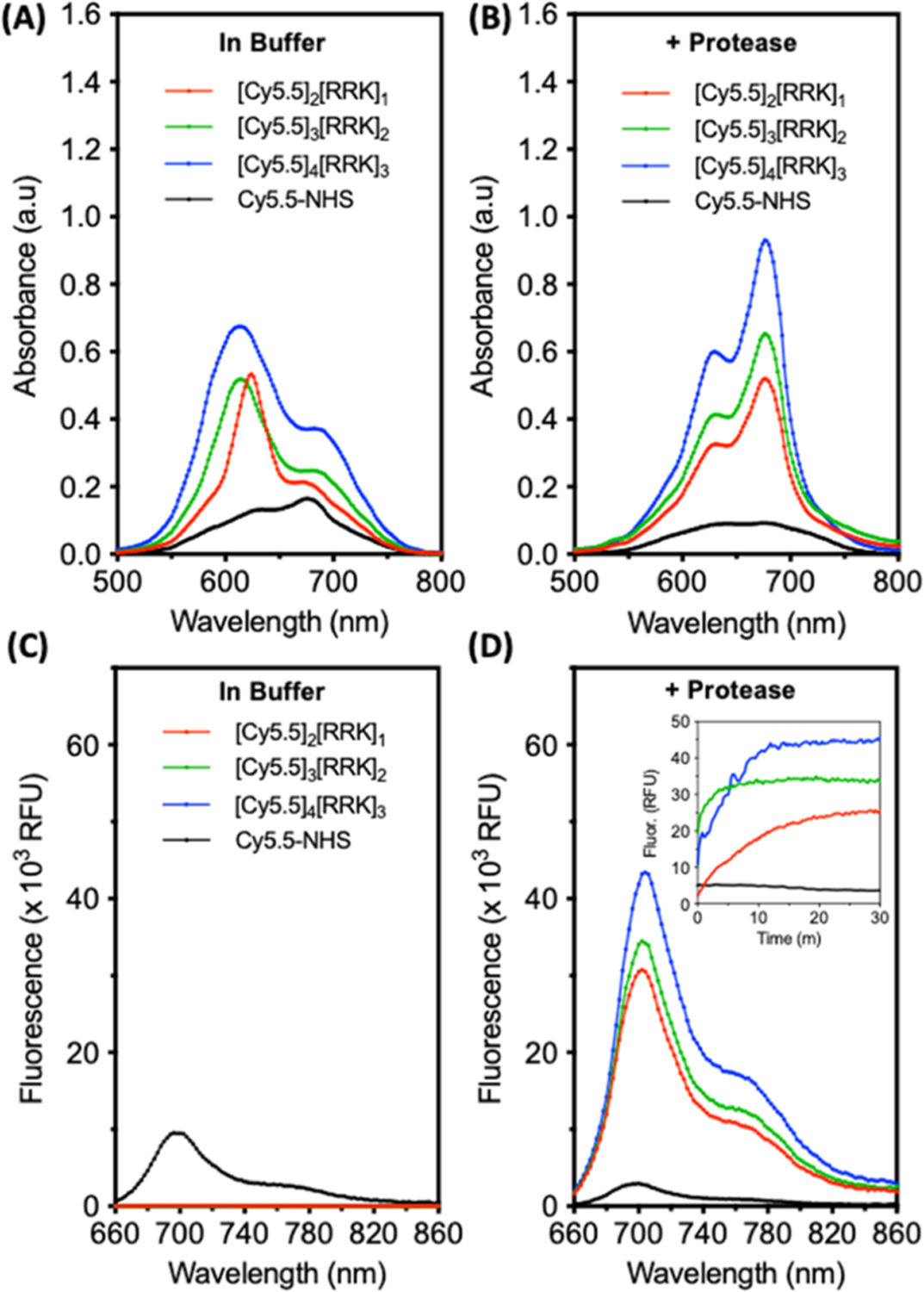
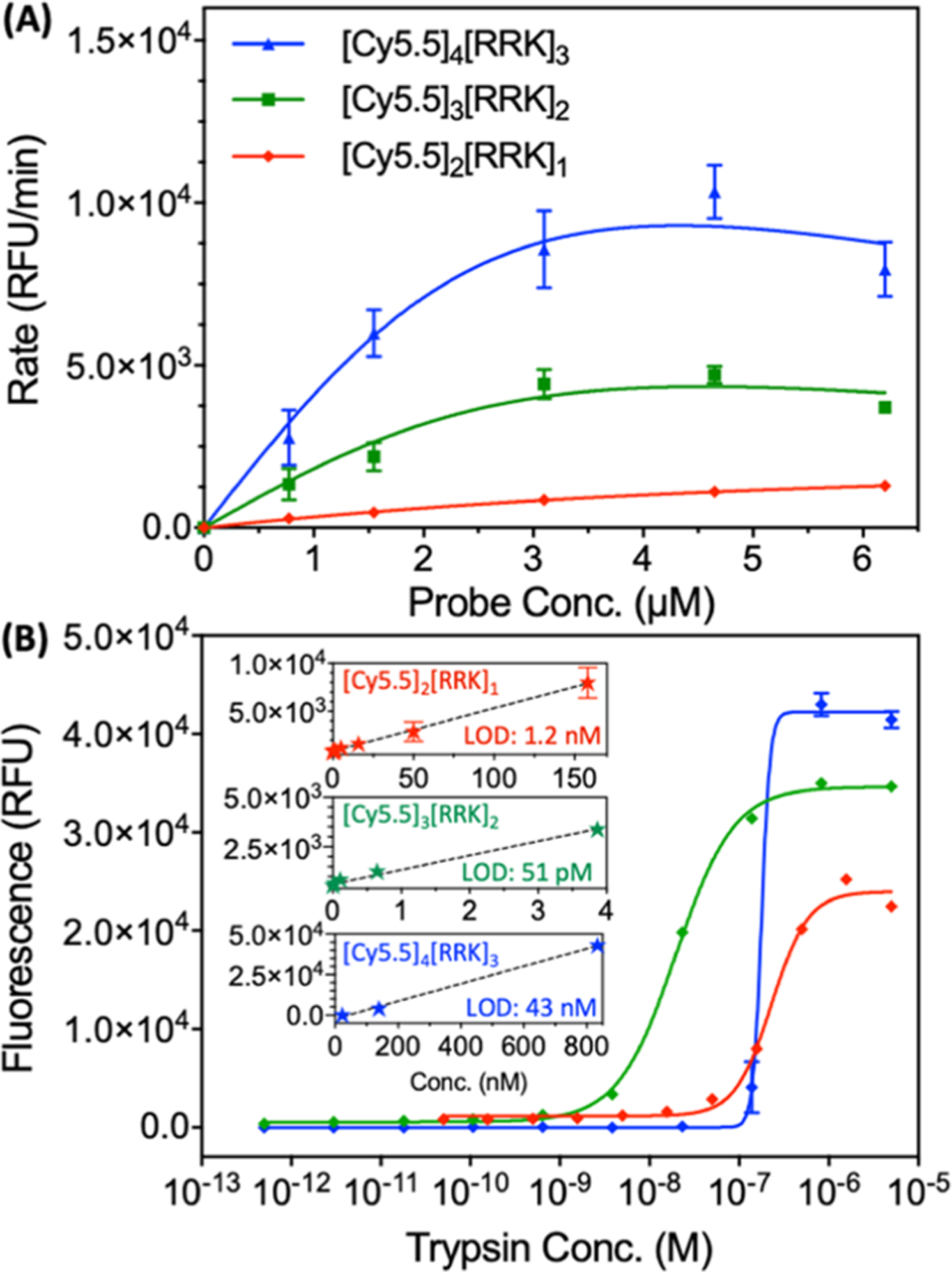
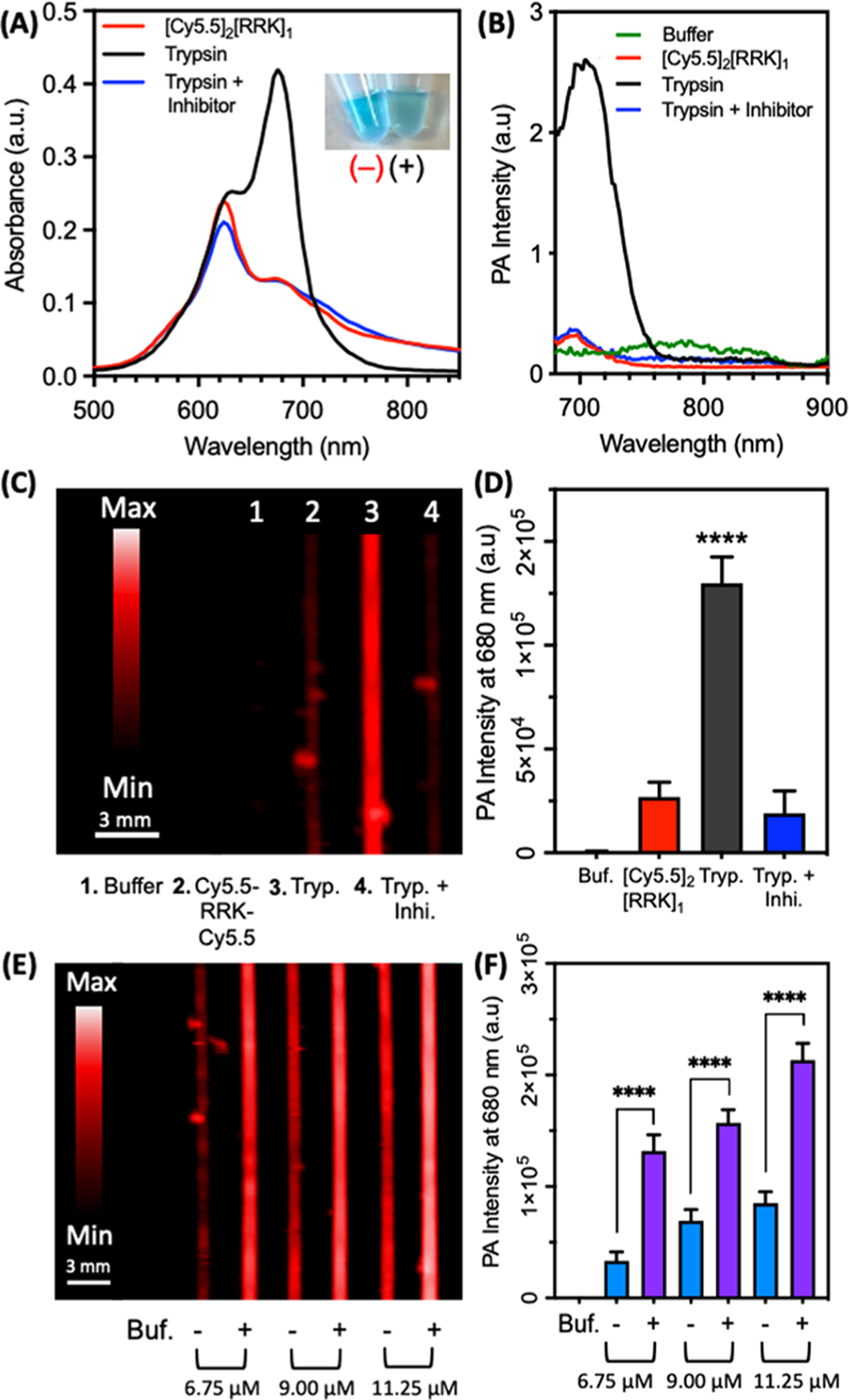
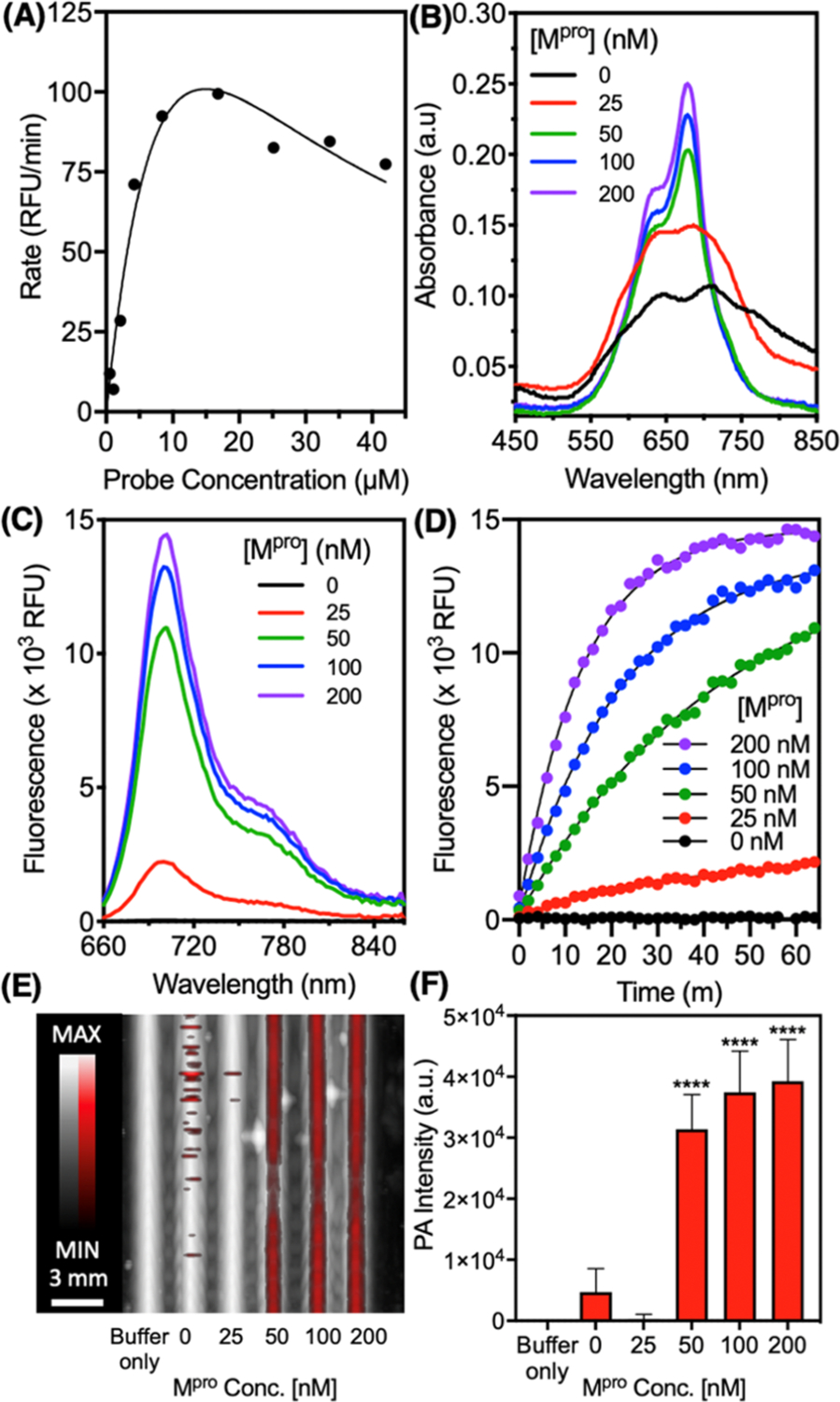
Activatable contrast agents are of ongoing research interest because they offer low background and high specificity to the imaging target. Engineered sensitivity to protease activity is particularly desirable because proteases are critical biomarkers in cancer, infectious disease, inflammatory disorders, and so forth. Herein, we developed and characterized a set of peptide-linked cyanine conjugates for dual-modal detection of protease activity via photoacoustic (PA) and fluorescence imaging. The peptide-dye conjugates were designed to undergo contact quenching via intramolecular dimerization and contained dyes ( = 2, 3, or 4) with - 1 cleavable peptide substrates. The absorption peaks of the conjugates were blue-shifted 50 nm relative to the free dye and had quenched fluorescence. This effect was sensitive to solvent polarity and could be reversed by solvent switching from water to dimethyl sulfoxide. Employing trypsin as a model protease, we observed a 2.5-fold recovery of the peak absorbance, 330-4600-fold fluorescent enhancement, and picomolar detection limits following proteolysis. The dimer probe was further characterized for PA activation. Proteolysis released single dye-peptide fragments that produced a 5-fold PA enhancement through the increased absorption at 680 nm with nanomolar sensitivity to trypsin. The peptide substrate could also be tuned for protease selectivity; as a proof-of-concept, we detected the main protease (M) associated with the viral replication in SARS-CoV-2 infection. Last, the activated probe was imaged subcutaneously in mice and signal was linearly correlated to the cleaved probe. Overall, these results demonstrate a tunable scaffold for the PA molecular imaging of protease activity with potential value in areas such as disease monitoring, tumor imaging, intraoperative imaging, in vitro diagnostics, and point-of-care sensing.
可激活对比剂是当前研究的热点,因为它们能为成像目标提供低背景和高特异性。对蛋白酶活性的工程敏感性尤其受到关注,因为蛋白酶是癌症、传染病、炎症性疾病等的关键生物标志物。在此,我们开发并表征了一系列肽连接的菁染料缀合物,用于通过光声(PA)和荧光成像双模态检测蛋白酶活性。肽-染料缀合物设计为通过分子内二聚化进行接触猝灭,并包含带有 -1 可切割肽底物的染料( = 2、3 或 4)。缀合物的吸收峰相对于游离染料蓝移 50nm,且荧光猝灭。这种效应对溶剂极性敏感,可通过将溶剂从水切换到二甲基亚砜来逆转。以胰蛋白酶为模型蛋白酶,我们观察到峰吸收的 2.5 倍恢复、330-4600 倍的荧光增强以及皮摩尔检测限以下的蛋白酶解。进一步对二聚体探针进行了 PA 激活的表征。蛋白酶解释放了单染料-肽片段,通过在 680nm 处增加吸收产生了 5 倍的 PA 增强,对胰蛋白酶的检测灵敏度达到纳摩尔级。肽底物也可针对蛋白酶的选择性进行调整;作为概念验证,我们检测到了与 SARS-CoV-2 感染中病毒复制相关的主要蛋白酶(M)。最后,激活的探针在小鼠体内进行了皮下成像,信号与被切割的探针呈线性相关。总体而言,这些结果证明了一种用于 PA 分子成像蛋白酶活性的可调谐支架,在疾病监测、肿瘤成像、术中成像、体外诊断和即时检测等领域具有潜在价值。