Graduate School of Bioresource Sciences, Akita Prefectural University, Akita, Japan.
PLoS One. 2021 May 26;16(5):e0247626. doi: 10.1371/journal.pone.0247626. eCollection 2021.
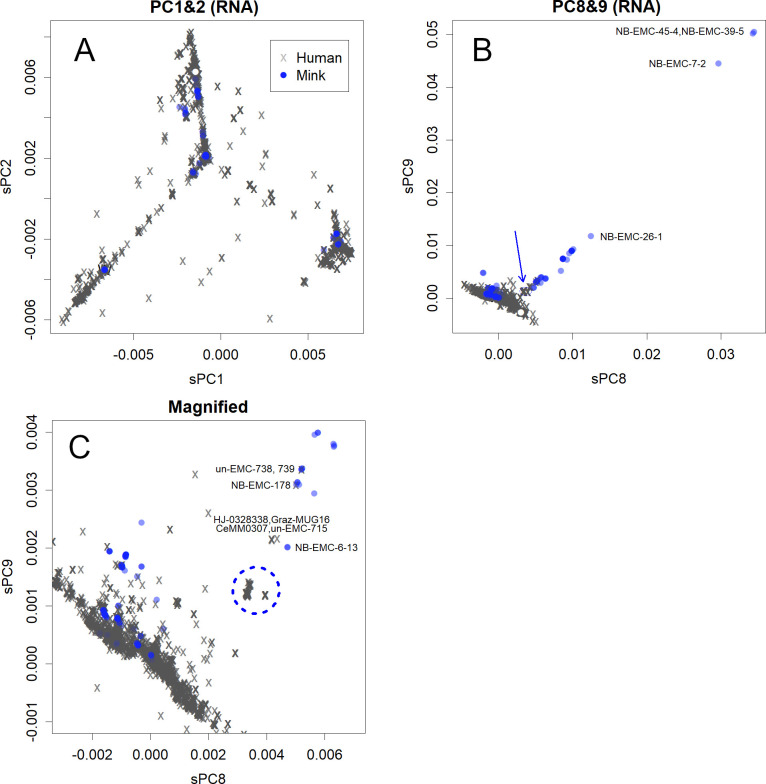
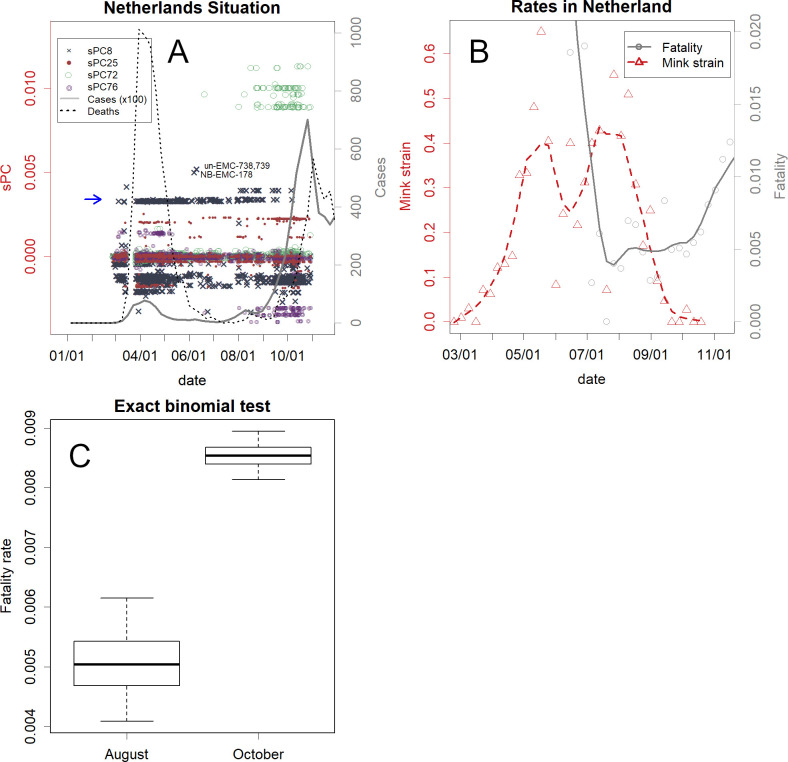
SARS-CoV-2 infection in minks has become a serious problem, as the virus may mutate and reinfect humans; some countries have decided to cull minks. Here, the virus sequencing data in minks were analysed and compared to those of human-virus. Although the mink-virus maintained the characteristics of human-virus, some variants rapidly mutated, adapting to minks. Some mink-derived variants infected humans, which accounted for 40% of the total SARS-CoV-2 cases in the Netherlands. These variants appear to be less lethal and infective compared to those in humans. Variants that have mutated further among minks were not found in humans. Such mink-viruses might be suitable for vaccination for humans, such as in the case of the smallpox virus, which is less infective and toxic to humans.
水貂中发生的 SARS-CoV-2 感染已成为一个严重的问题,因为该病毒可能发生突变并再次感染人类;一些国家已决定扑杀水貂。在这里,对水貂中的病毒测序数据进行了分析,并与人类病毒进行了比较。尽管水貂病毒保持了人类病毒的特征,但一些变体迅速发生突变,适应了水貂。一些源自水貂的变体感染了人类,占荷兰 SARS-CoV-2 总病例的 40%。与人类中的病毒相比,这些变体的致死性和传染性似乎较低。在人类中未发现进一步在水貂中发生突变的变体。这种水貂病毒可能适合人类接种疫苗,例如天花病毒,它对人类的传染性和毒性较低。