He Ruichen, Liu Wanjiao, Elson John, Vogt Rainer, Maranville Clay, Hong Jiarong
Research and Advanced Engineering, Ford Motor Company, 2101 Village Road, Dearborn, Michigan 48121, USA.
Ford-Werke GmbH, Research & Innovation Center, 52072 Aachen, Germany.
Phys Fluids (1994). 2021 May;33(5):057107. doi: 10.1063/5.0050058. Epub 2021 May 11.
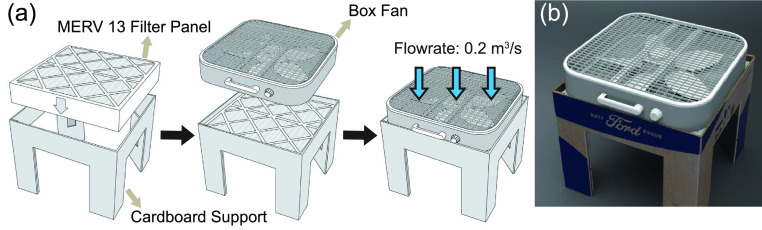
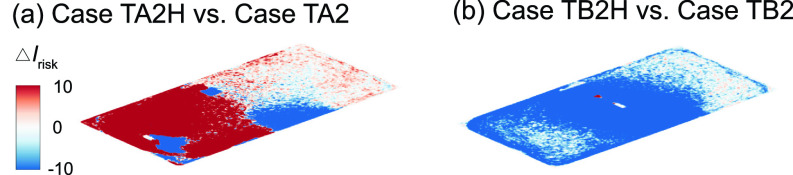
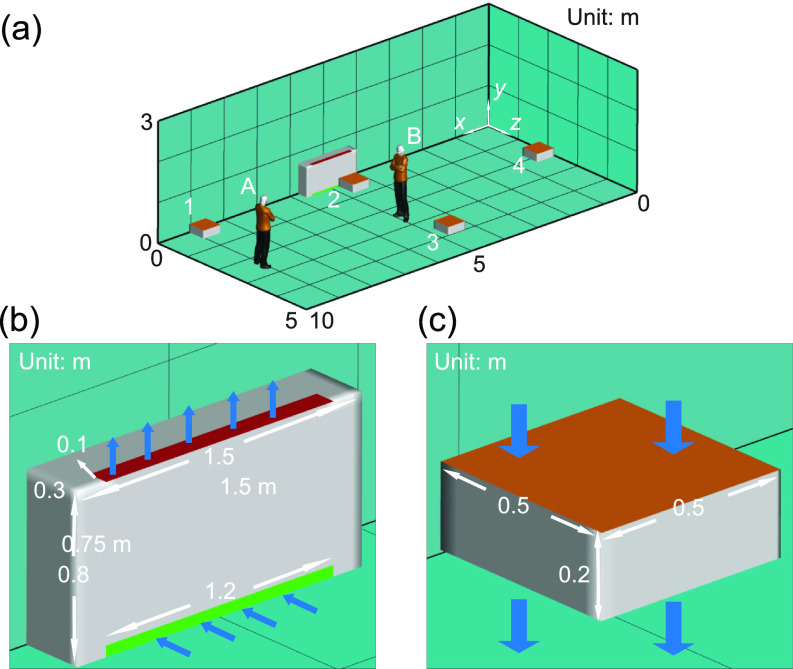
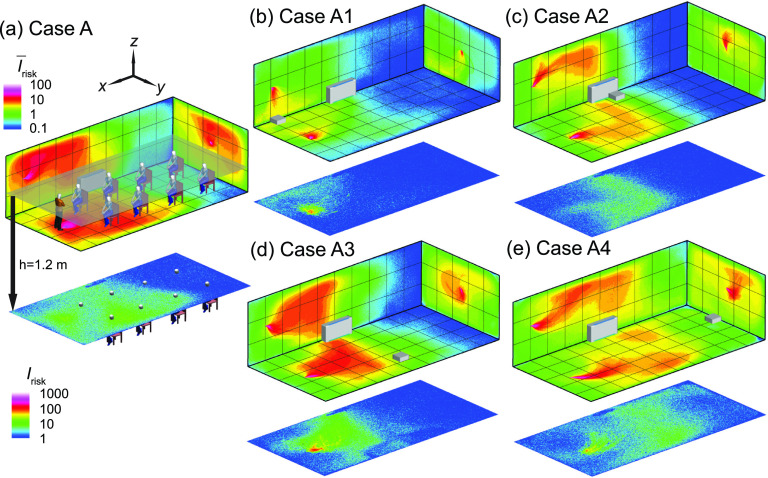
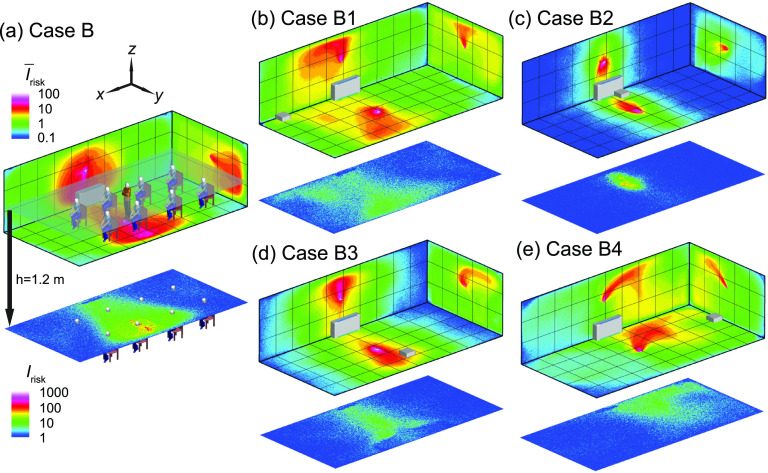
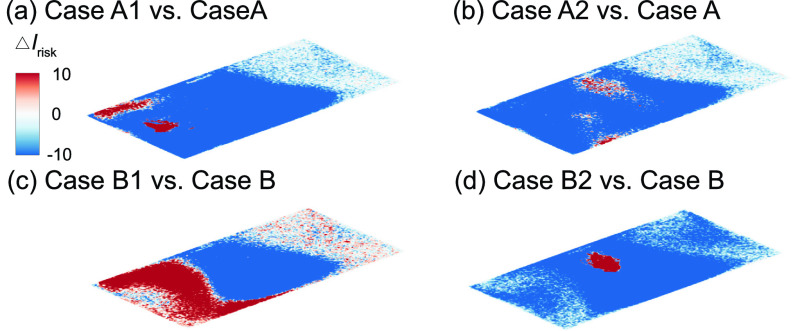
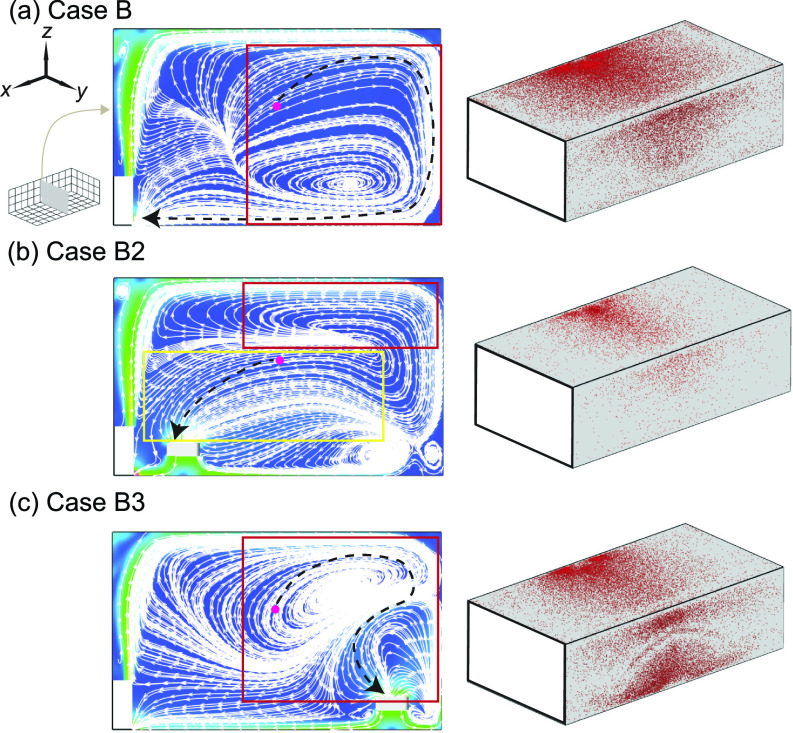
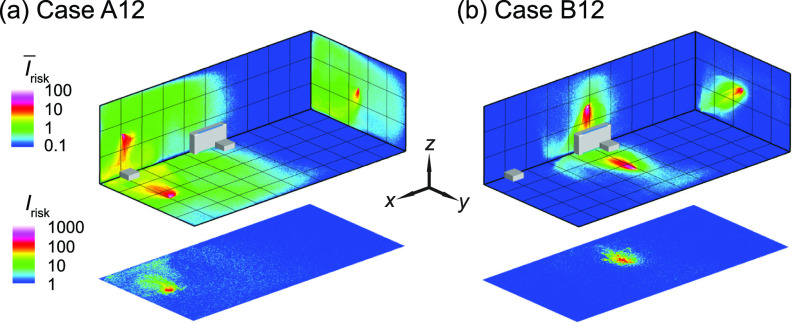
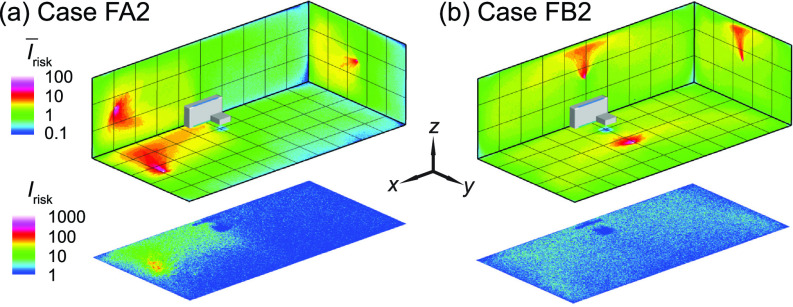
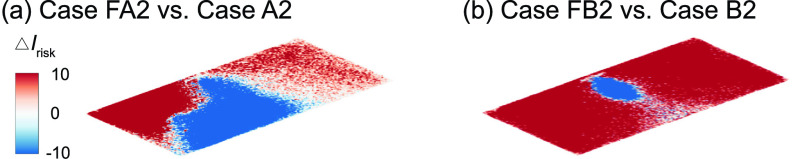
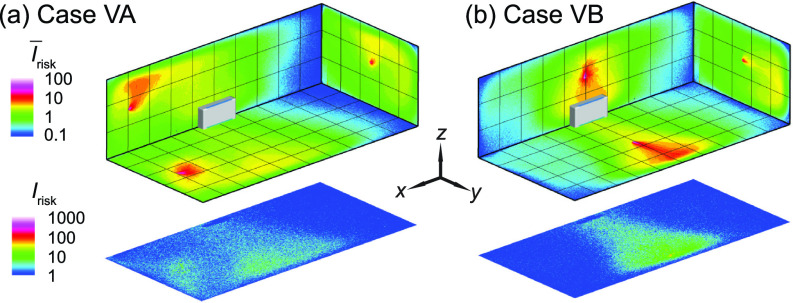
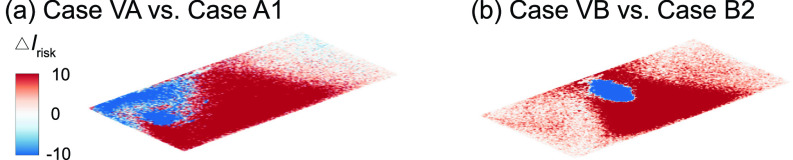
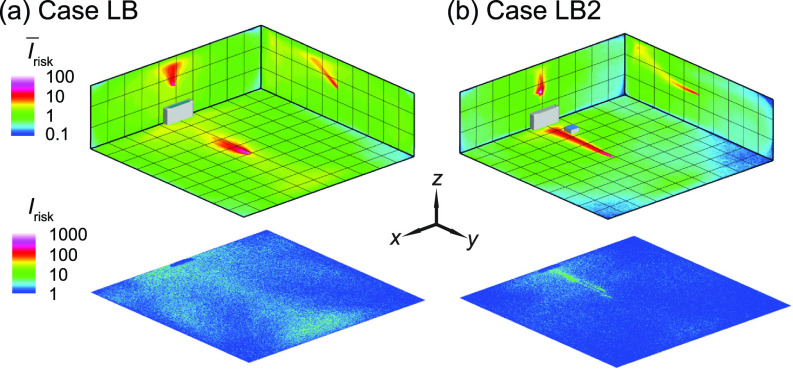
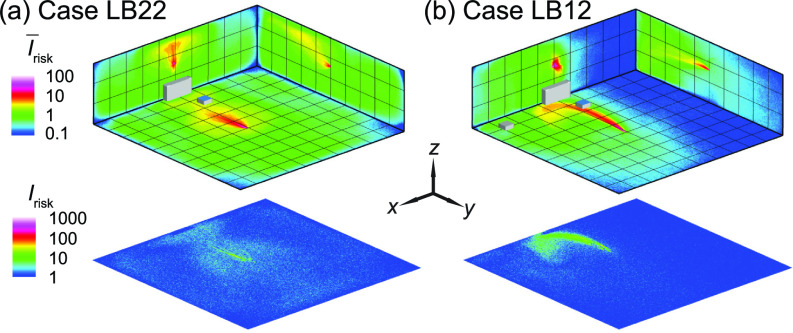
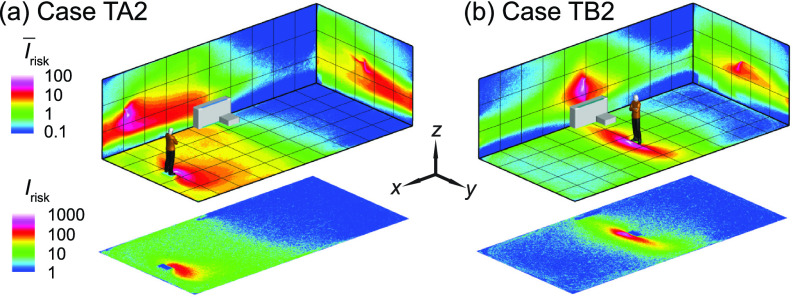
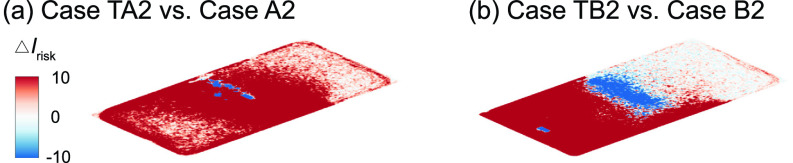
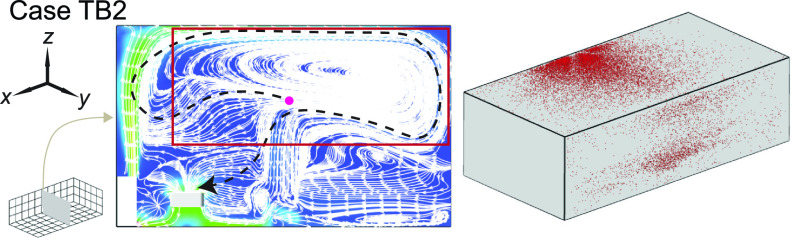
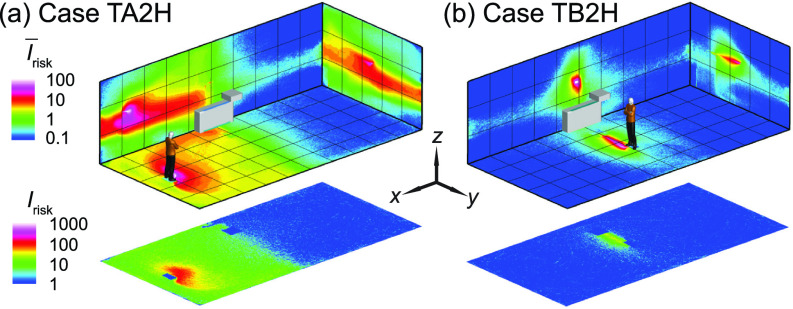
Many indoor places, including aged classrooms and offices, prisons, homeless shelters, etc., are poorly ventilated but resource-limited to afford expensive ventilation upgrades or commercial air purification systems, raising concerns on the safety of opening activities in these places in the era of the COVID-19 pandemic. To address this challenge, using computational fluid dynamics, we conducted a systematic investigation of airborne transmission in a classroom equipped with a single horizontal unit ventilator (HUV) and evaluate the performance of a low-cost box fan air cleaner for risk mitigation. Our study shows that placing box fan air cleaners in the classroom results in a substantial reduction of airborne transmission risk across the entire space. The air cleaner can achieve optimal performance when placed near the asymptomatic patient. However, without knowing the location of the patient, the performance of the cleaner is optimal near the HUV with the air flowing downwards. In addition, we find that it is more efficient in reducing aerosol concentration and spread in the classroom by adding air cleaners in comparison with raising the flow rate of HUV alone. The number and placement of air cleaners need to be adjusted to maintain their efficacy for larger classrooms and to account for the thermal gradient associated with a human thermal plume and hot ventilation air during cold seasons. Overall, our study shows that box fan air cleaners can serve as an effective low-cost alternative for mitigating airborne transmission risks in poorly ventilated spaces.
许多室内场所,包括老旧的教室、办公室、监狱、无家可归者收容所等,通风条件差且资源有限,无力承担昂贵的通风升级或商业空气净化系统,这引发了人们对在新冠疫情时代这些场所开展活动安全性的担忧。为应对这一挑战,我们利用计算流体动力学,对配备单个卧式单元通风机(HUV)的教室中的空气传播进行了系统研究,并评估了一种低成本箱式风扇空气净化器降低风险的性能。我们的研究表明,在教室中放置箱式风扇空气净化器可大幅降低整个空间内的空气传播风险。空气净化器放置在无症状患者附近时可实现最佳性能。然而,在不知道患者位置的情况下,当空气向下流动时,净化器在HUV附近性能最佳。此外,我们发现,与仅提高HUV的流速相比,在教室中增加空气净化器在降低气溶胶浓度和传播方面更有效。对于更大的教室,需要调整空气净化器的数量和放置位置,以保持其效果,并考虑到寒冷季节与人体热羽流和热通风空气相关的热梯度。总体而言,我们的研究表明,箱式风扇空气净化器可作为一种有效的低成本替代品,用于降低通风不良空间中的空气传播风险。