Department of Mathematics, University of Manchester, Manchester M13 9PY, UK.
The Alan Turing Institute, London NW1 2DB, UK.
Philos Trans R Soc Lond B Biol Sci. 2021 Jul 19;376(1829):20200267. doi: 10.1098/rstb.2020.0267. Epub 2021 May 31.
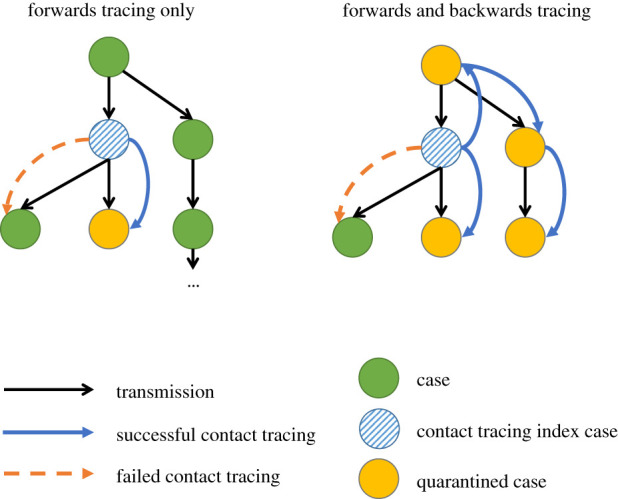
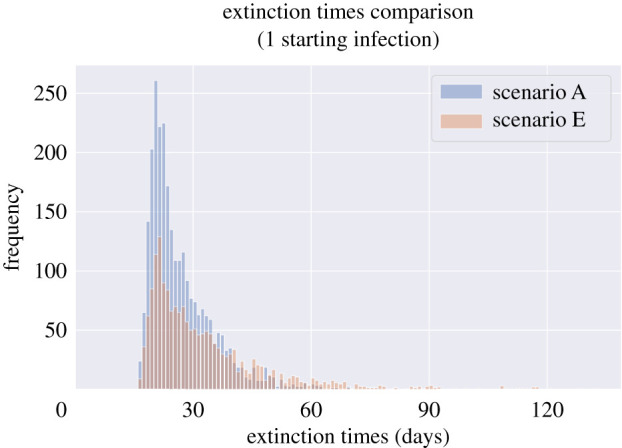
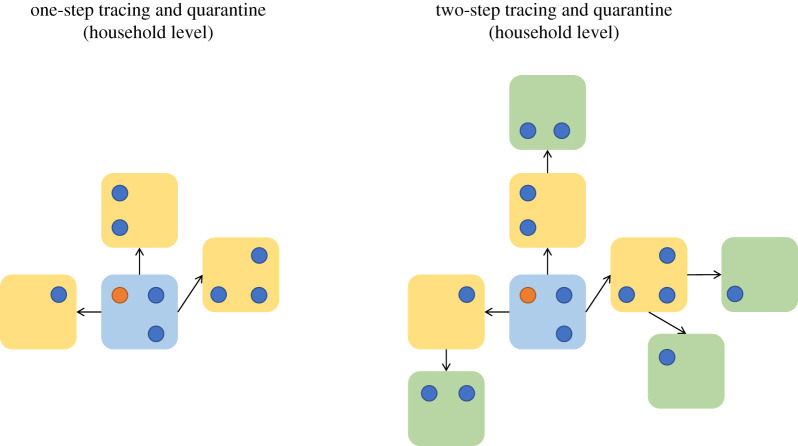
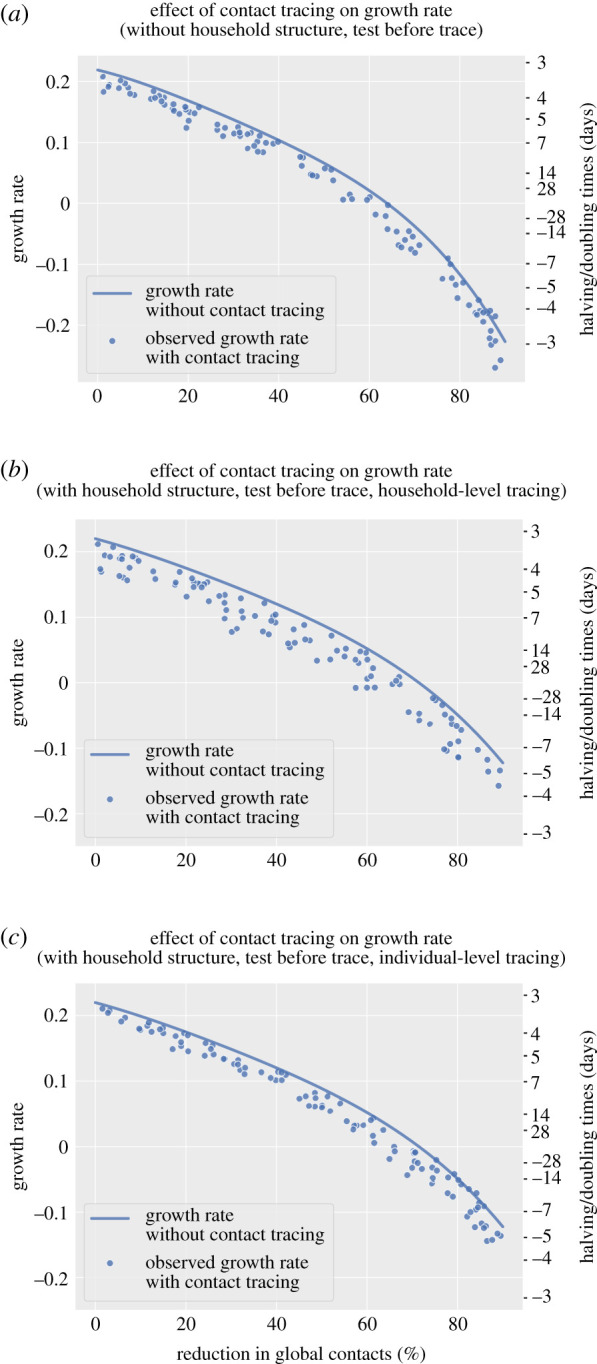
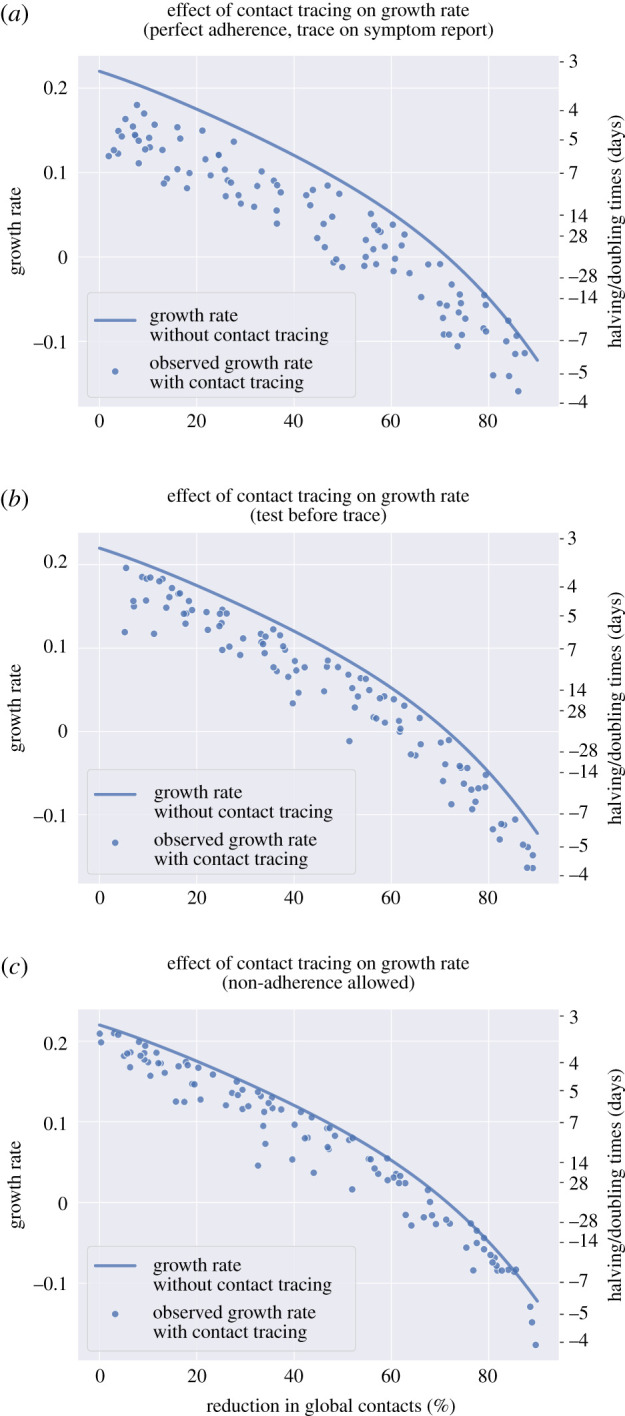
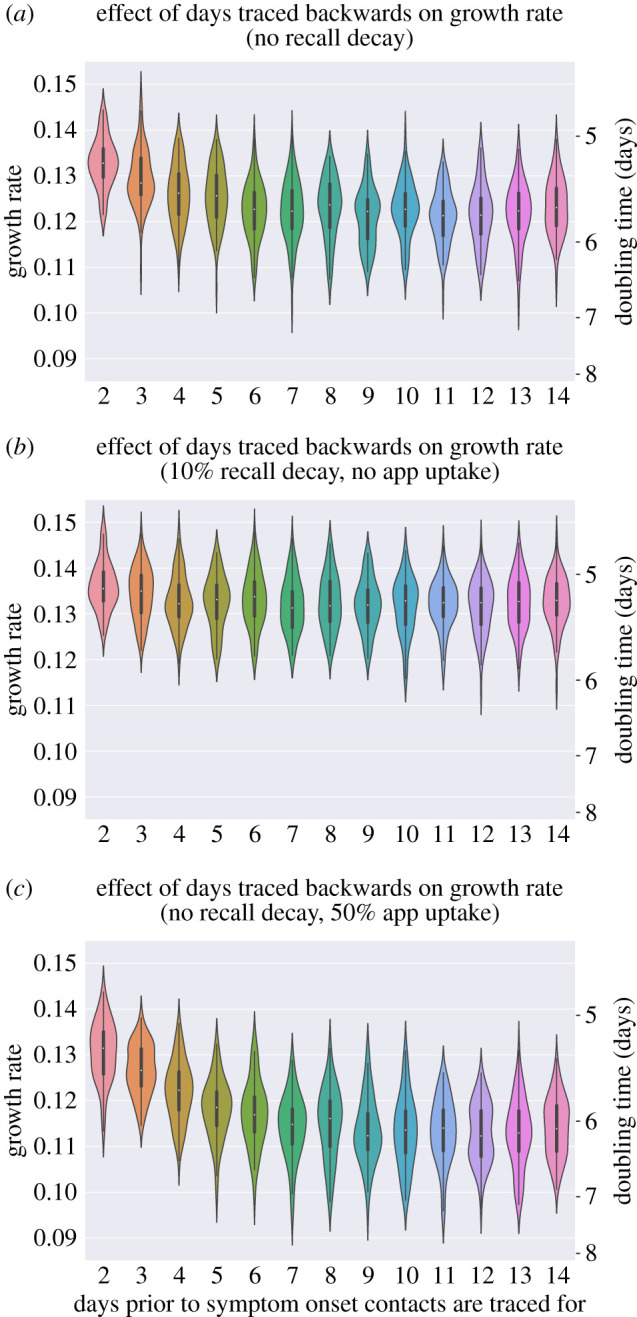
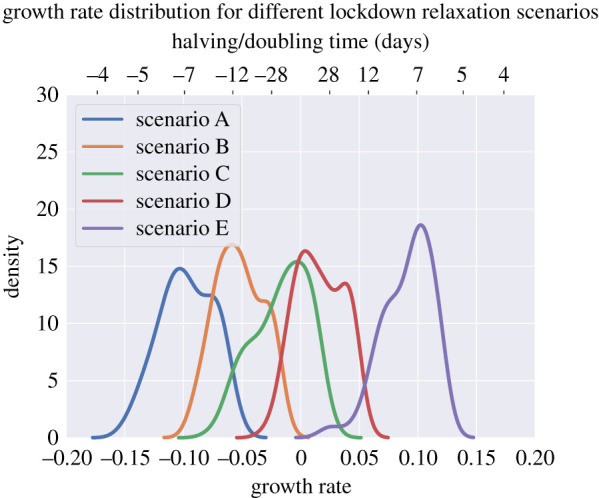
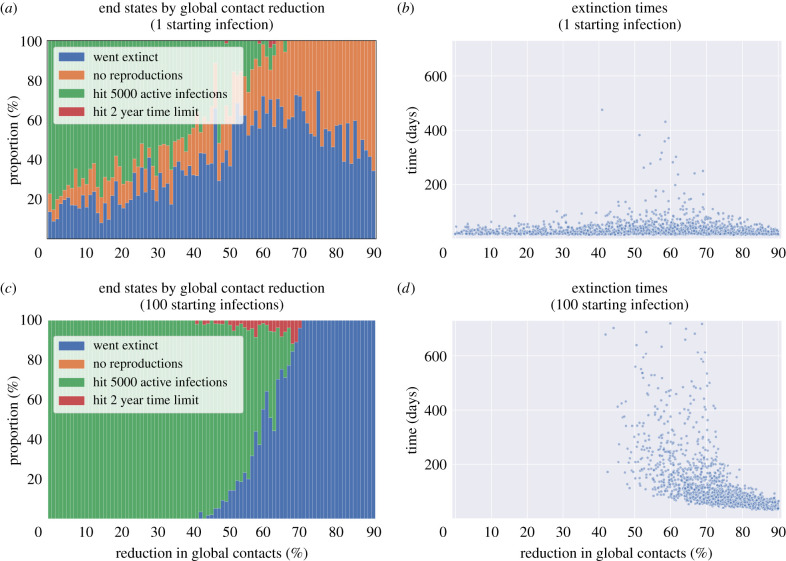
We explore strategies of contact tracing, case isolation and quarantine of exposed contacts to control the SARS-CoV-2 epidemic using a branching process model with household structure. This structure reflects higher transmission risks among household members than among non-household members. We explore strategic implementation choices that make use of household structure, and investigate strategies including two-step tracing, backwards tracing, smartphone tracing and tracing upon symptom report rather than test results. The primary model outcome is the effect of contact tracing, in combination with different levels of physical distancing, on the growth rate of the epidemic. Furthermore, we investigate epidemic extinction times to indicate the time period over which interventions must be sustained. We consider effects of non-uptake of isolation/quarantine, non-adherence, and declining recall of contacts over time. Our results find that, compared to self-isolation of cases without contact tracing, a contact tracing strategy designed to take advantage of household structure allows for some relaxation of physical distancing measures but cannot completely control the epidemic absent of other measures. Even assuming no imported cases and sustainment of moderate physical distancing, testing and tracing efforts, the time to bring the epidemic to extinction could be in the order of months to years. This article is part of the theme issue 'Modelling that shaped the early COVID-19 pandemic response in the UK'.
我们利用具有家庭结构的分支过程模型,探索接触者追踪、病例隔离和对暴露接触者的检疫策略,以控制 SARS-CoV-2 疫情。这种结构反映了家庭成员之间比非家庭成员之间更高的传播风险。我们探索了利用家庭结构的战略实施选择,并研究了包括两步追踪、回溯追踪、智能手机追踪和根据症状报告而不是测试结果进行追踪在内的策略。主要模型结果是接触追踪与不同程度的身体距离隔离相结合对疫情增长率的影响。此外,我们还研究了疫情灭绝时间,以表明干预措施必须持续的时间段。我们考虑了隔离/检疫的非采用、不遵守规定和接触者随时间推移的回忆下降的影响。我们的研究结果发现,与没有接触追踪的病例自我隔离相比,旨在利用家庭结构的接触追踪策略可以放宽一些身体距离隔离措施,但如果没有其他措施,仍然无法完全控制疫情。即使假设没有输入病例和维持中等程度的身体距离、检测和追踪工作,将疫情消灭也可能需要数月到数年的时间。本文是“塑造英国早期 COVID-19 大流行应对措施的模型”主题特刊的一部分。