Chang Zhuang-Peng, Deng Gui-Feng, Shao Yun-Yun, Xu Ding, Zhao Yi-Nan, Sun Yi-Fan, Zhang Shi-Quan, Hou Rui-Gang, Liu Jun-Jin
School of Pharmaceutical, Shanxi Medical University, Taiyuan, China.
Department of Pharmacy, Second Hospital of Shanxi Medical University, Taiyuan, China.
Front Pharmacol. 2021 May 13;12:670054. doi: 10.3389/fphar.2021.670054. eCollection 2021.
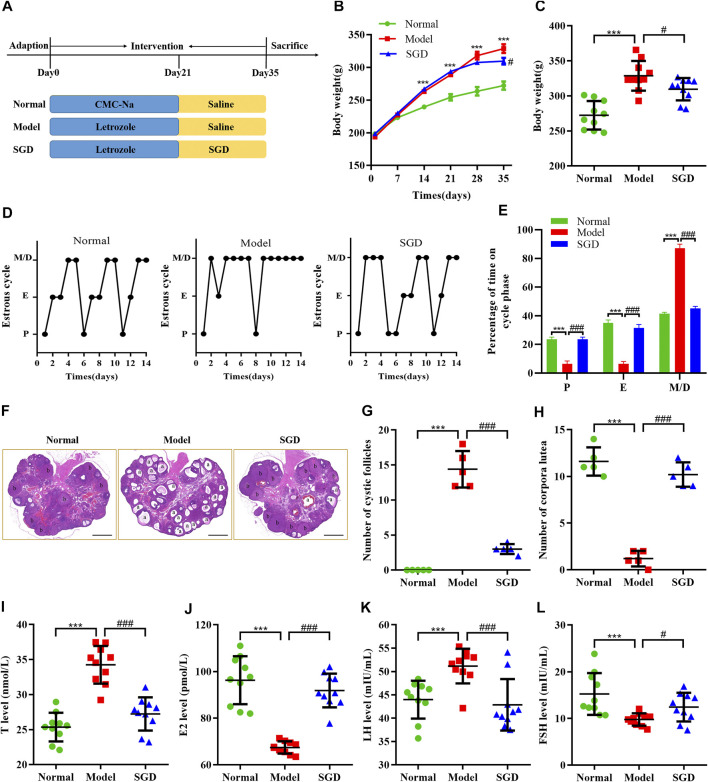
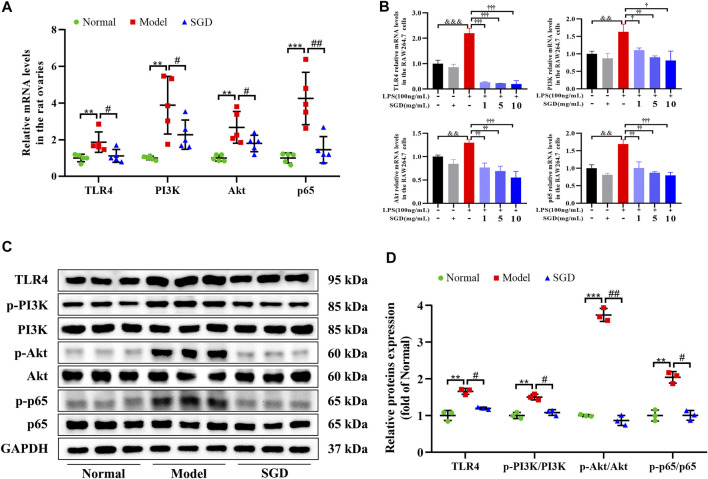
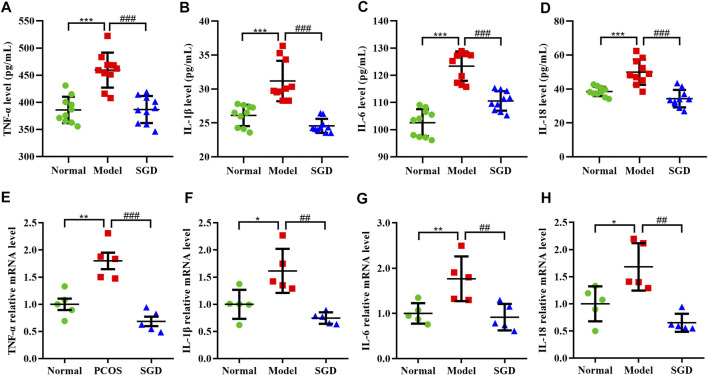
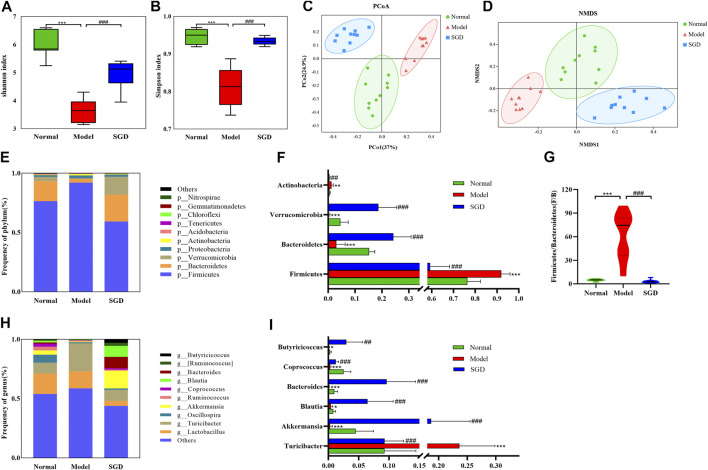
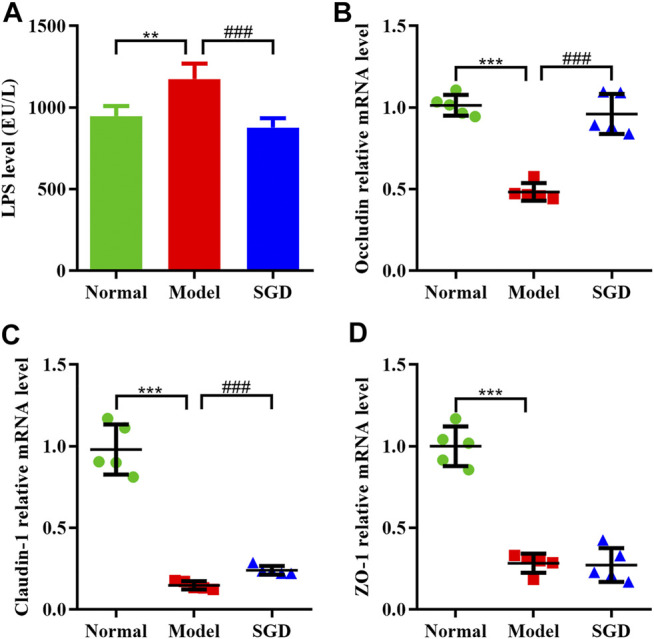
Emerging evidence suggests that gut microbiota plays a vital role in the occurrence of multiple endocrine disorders including polycystic ovary syndrome (PCOS). Shaoyao-Gancao Decoction (SGD), a classical Chinese prescription, has been widely used in the treatment of PCOS for decades. In previous studies, we found that SGD treatment could effectively reduce ovarian inflammation in PCOS rats. However, whether the anti-inflammation effect of SGD involves the regulation of the gut microbiota remains elusive. Letrozole-induced PCOS rat models were established, and the therapeutic effects of SGD were evaluated. Specifically, body weight, serum hormone concentrations, estrus phase and ovary histopathology were assessed. Then the structure of gut microbiota was determined by 16s rRNA sequencing. Additionally, the serum levels of pro-inflammatory cytokines and LPS were measured by ELISA kits. The key gene and protein expressions of TLR4/NF-κB signaling pathway were detected by quantitative real-time PCR and western blot. SGD could effectively reduce body weight, regulate estrous cycles and ameliorate hyperandrogenism in PCOS rats. In addition, SGD treatment decreased releases of pro-inflammatory cytokines, enhanced the expressions of tight junction (occludin and claudin1), and then prevented a translocation of LPS into bloodstream. SGD could significantly reduce the ratio of to , decrease the abundance of LPS-producing pathogens and enrich the abundance of and in PCOS rats. Furthermore, SGD blunted the key gene and protein expressions of TLR4/NF-κB signaling pathway both and in LPS-induced RAW264.7 cells. SGD administration could ameliorate the inflammatory response in PCOS rats by remodeling gut microbiome structure, protecting gut barrier, and suppressing TLR4/NF-κB signaling pathway.
新出现的证据表明,肠道微生物群在包括多囊卵巢综合征(PCOS)在内的多种内分泌疾病的发生中起着至关重要的作用。芍药甘草汤(SGD)是一种经典的中药方剂,几十年来一直广泛用于治疗PCOS。在先前的研究中,我们发现SGD治疗可有效减轻PCOS大鼠的卵巢炎症。然而,SGD的抗炎作用是否涉及肠道微生物群的调节仍不清楚。建立了来曲唑诱导的PCOS大鼠模型,并评估了SGD的治疗效果。具体而言,评估了体重、血清激素浓度、发情期和卵巢组织病理学。然后通过16S rRNA测序确定肠道微生物群的结构。此外,通过ELISA试剂盒检测促炎细胞因子和LPS的血清水平。通过定量实时PCR和蛋白质印迹法检测TLR4/NF-κB信号通路的关键基因和蛋白表达。SGD可有效降低PCOS大鼠的体重,调节发情周期并改善高雄激素血症。此外,SGD治疗可减少促炎细胞因子的释放,增强紧密连接(闭合蛋白和Claudin1)的表达,进而防止LPS进入血液循环。SGD可显著降低PCOS大鼠中[具体比值]的比例,降低产生LPS的病原体的丰度,并增加[具体菌属]和[具体菌属]的丰度。此外,SGD在体内和体外均抑制了LPS诱导的RAW264.7细胞中TLR4/NF-κB信号通路的关键基因和蛋白表达。给予SGD可通过重塑肠道微生物群结构、保护肠道屏障和抑制TLR4/NF-κB信号通路来改善PCOS大鼠的炎症反应。