Department of Spine Surgery, The First Hospital of Jilin University, Changchun, China.
Cancer Center, The First Hospital of Jilin University, Changchun, China.
Front Immunol. 2023 Jan 23;14:1051606. doi: 10.3389/fimmu.2023.1051606. eCollection 2023.
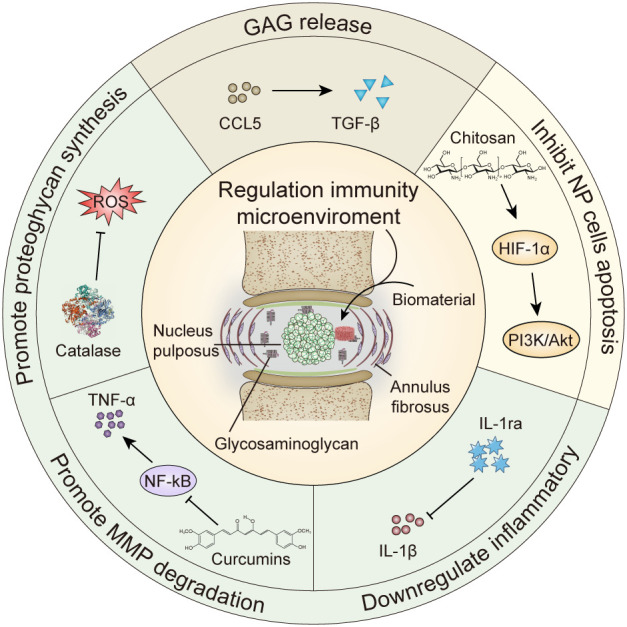
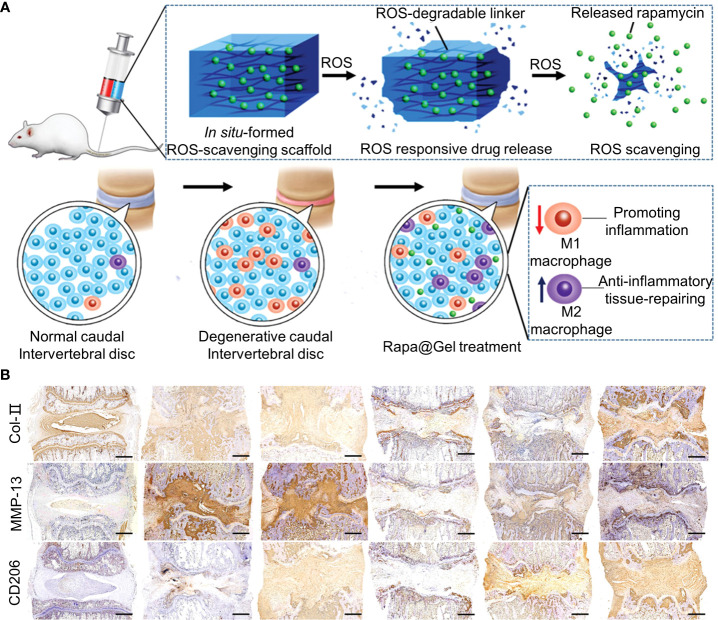
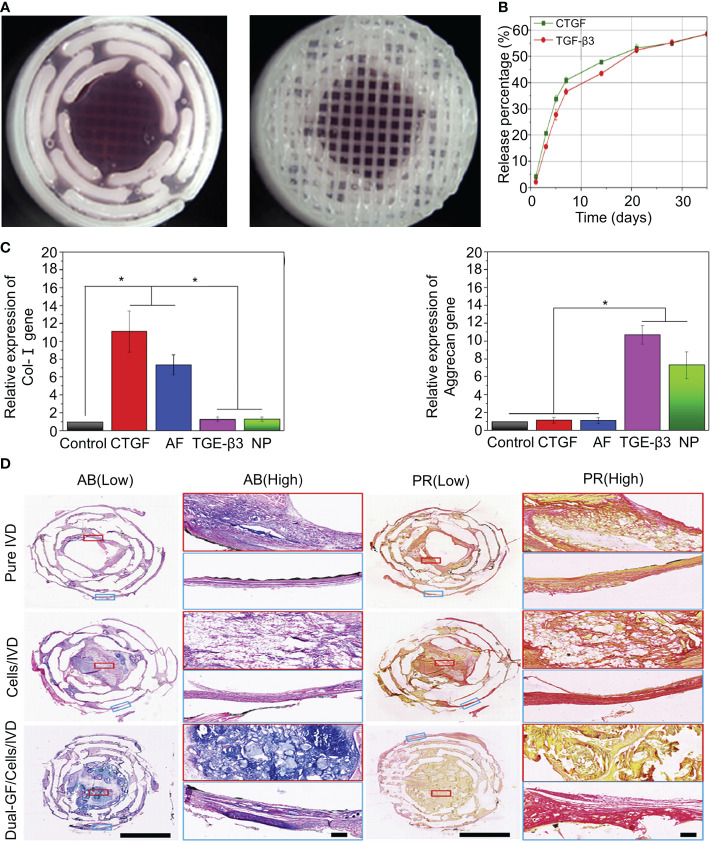
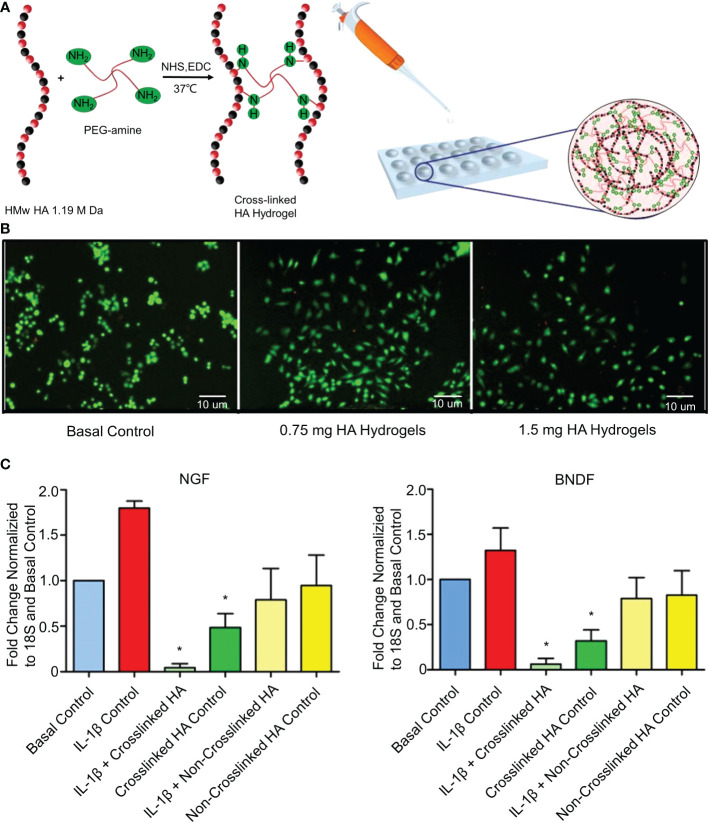
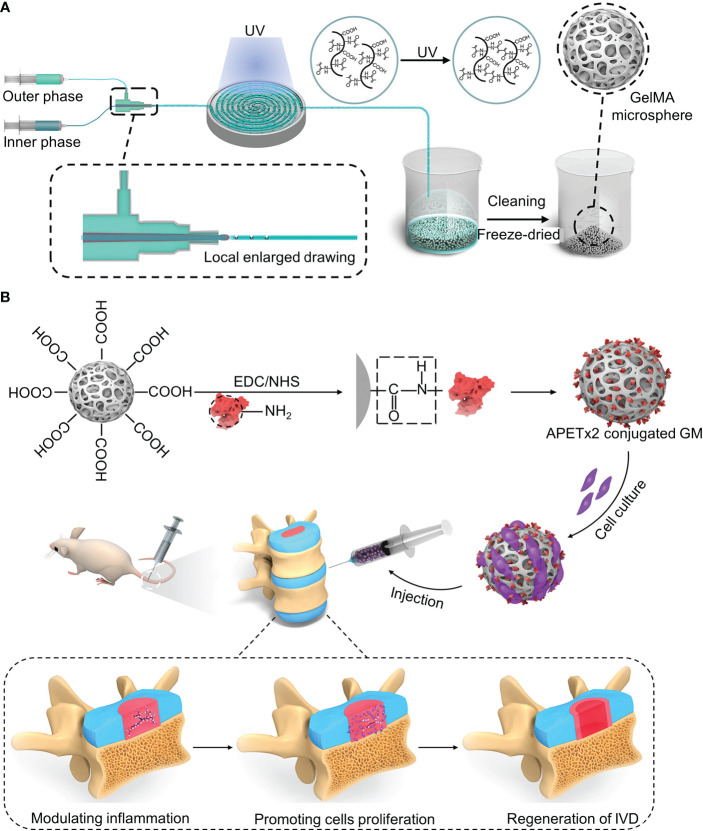
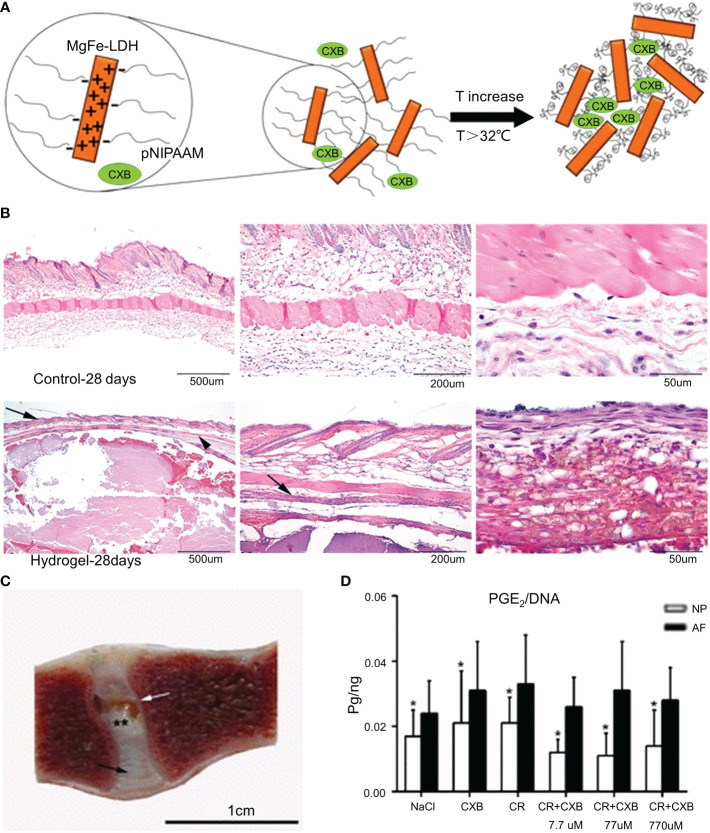
Intervertebral disc degeneration (IVDD) is one of the leading causes of lower back pain. Although IVDD cannot directly cause death, it can cause pain, psychological burdens, and economic burdens to patients. Current conservative treatments for IVDD can relieve pain but cannot reverse the disease. Patients who cannot tolerate pain usually resort to a strategy of surgical resection of the degenerated disc. However, the surgical removal of IVDD can affect the stability of adjacent discs. Furthermore, the probability of the reherniation of the intervertebral disc (IVD) after surgery is as high as 21.2%. Strategies based on tissue engineering to deliver stem cells for the regeneration of nucleus purposes (NP) and annulus fibrosus (AF) have been extensively studied. The developed biomaterials not only locally withstand the pressure of the IVD but also lay the foundation for the survival of stem cells. However, the structure of IVDs does not provide sufficient nutrients for delivered stem cells. The role of immune mechanisms in IVDD has recently become clear. In IVDD, the IVD that was originally in immune privilege prevents the attack of immune cells (mainly effector T cells and macrophages) and aggravates the disease. Immune regulatory and inflammatory factors released by effector T cells, macrophages, and the IVD further aggravate IVDD. Reversing IVDD by regulating the inflammatory microenvironment is a potential approach for the treatment of the disease. However, the biological factors modulating the inflammatory microenvironment easily degrade . It makes it possible for different biomaterials to modulate the inflammatory microenvironment to repair IVDD. In this review, we have discussed the structures of IVDs and the immune mechanisms underlying IVDD. We have described the immune mechanisms elicited by different biological factors, including tumor necrosis factors, interleukins, transforming growth factors, hypoxia-inducible factors, and reactive oxygen species in IVDs. Finally, we have discussed the biomaterials used to modulate the inflammatory microenvironment to repair IVDD and their development.
椎间盘退变(IVDD)是导致腰痛的主要原因之一。虽然 IVDD 不会直接导致死亡,但它会给患者带来疼痛、心理负担和经济负担。目前针对 IVDD 的保守治疗可以缓解疼痛,但无法逆转疾病。无法忍受疼痛的患者通常会选择手术切除退变的椎间盘。然而,IVDD 的手术切除会影响相邻椎间盘的稳定性。此外,手术后椎间盘再次突出的概率高达 21.2%。基于组织工程的策略已广泛研究用于再生核(NP)和纤维环(AF)的干细胞输送。开发的生物材料不仅能局部承受椎间盘的压力,还为干细胞的存活奠定了基础。然而,IVDD 的结构并不能为输送的干细胞提供足够的营养。免疫机制在 IVDD 中的作用最近变得清晰起来。在 IVDD 中,原本处于免疫特权状态的椎间盘会阻止免疫细胞(主要是效应 T 细胞和巨噬细胞)的攻击,从而加重病情。效应 T 细胞、巨噬细胞和椎间盘释放的免疫调节和炎症因子进一步加重了 IVDD。通过调节炎症微环境来逆转 IVDD 是治疗该疾病的一种潜在方法。然而,调节炎症微环境的生物因子容易降解。这使得不同的生物材料能够调节炎症微环境来修复 IVDD。在这篇综述中,我们讨论了 IVDD 的结构和免疫机制。我们描述了不同生物因子在椎间盘内引发的免疫机制,包括肿瘤坏死因子、白细胞介素、转化生长因子、缺氧诱导因子和活性氧。最后,我们讨论了用于调节炎症微环境以修复 IVDD 的生物材料及其发展。