Rodriguez Paris Valentina, Edwards Melissa C, Aflatounian Ali, Bertoldo Michael J, Ledger William L, Handelsman David J, Gilchrist Robert B, Walters Kirsty A
Fertility and Research Centre, School of Women's & Children's Health, University of New South Wales Sydney, NSW 2052, Australia.
Andrology Laboratory, ANZAC Research Institute, University of Sydney, Sydney, New South Wales 2139, Australia.
J Endocr Soc. 2021 Apr 7;5(6):bvab060. doi: 10.1210/jendso/bvab060. eCollection 2021 Jun 1.
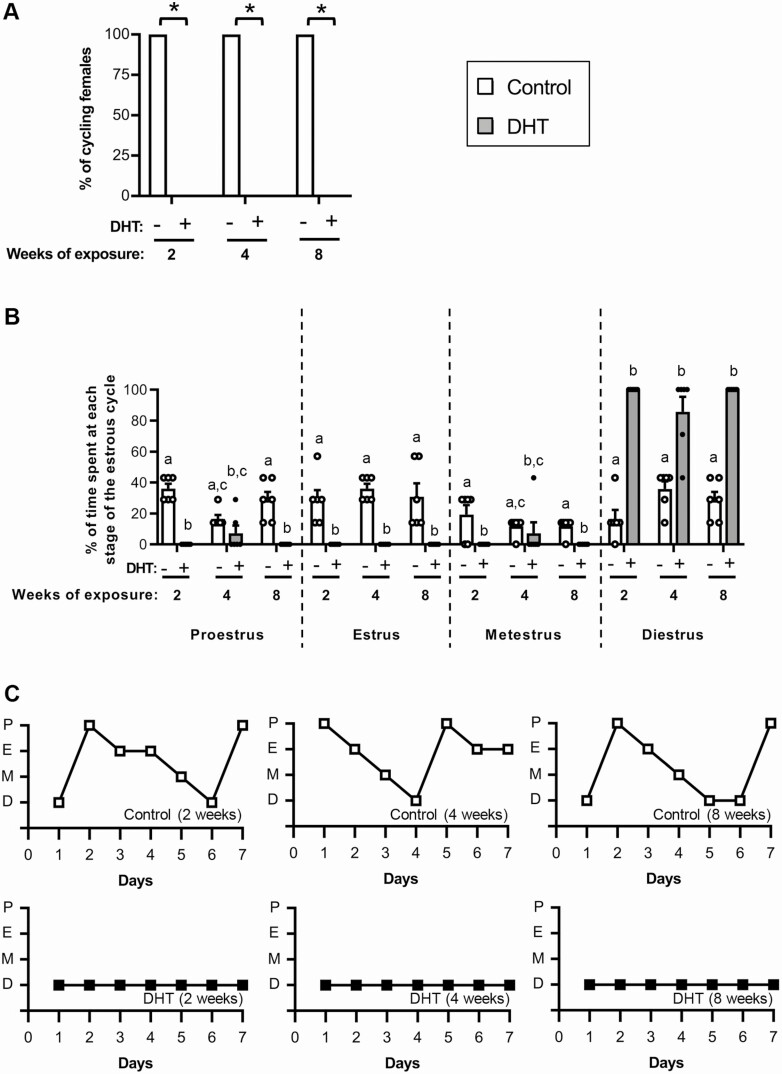
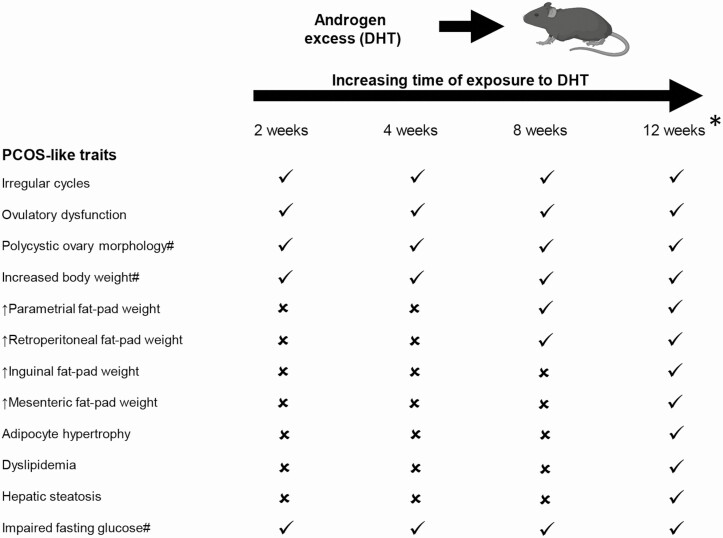
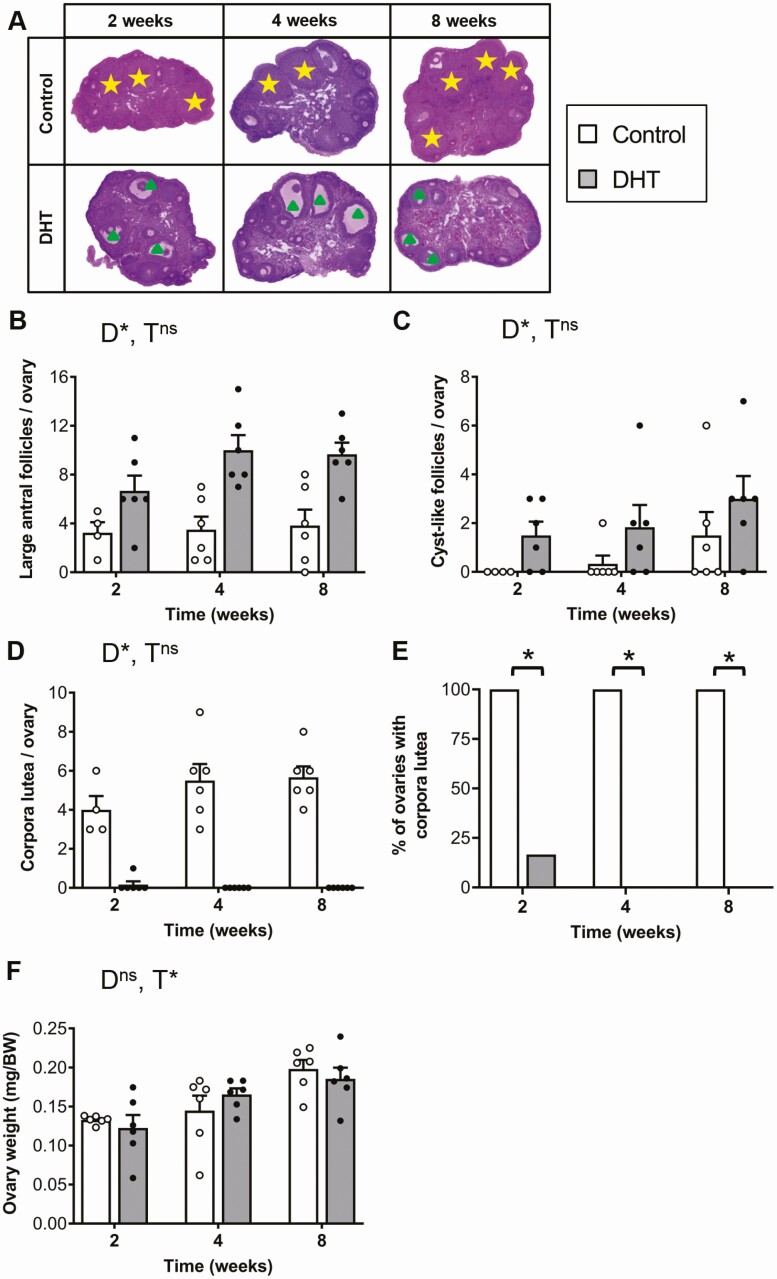
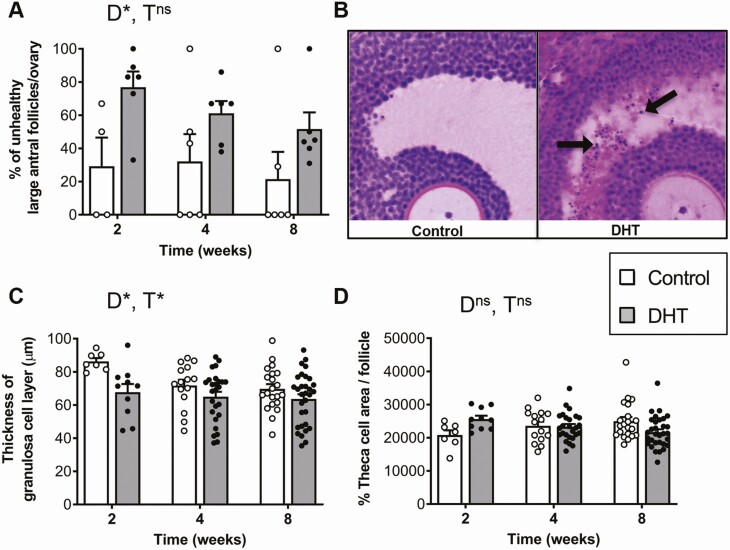
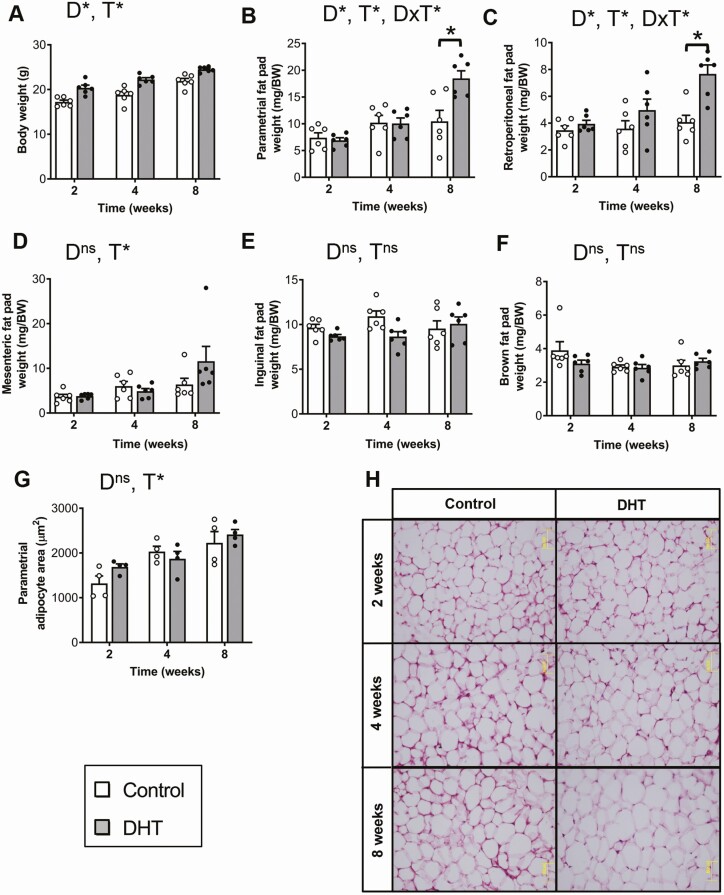
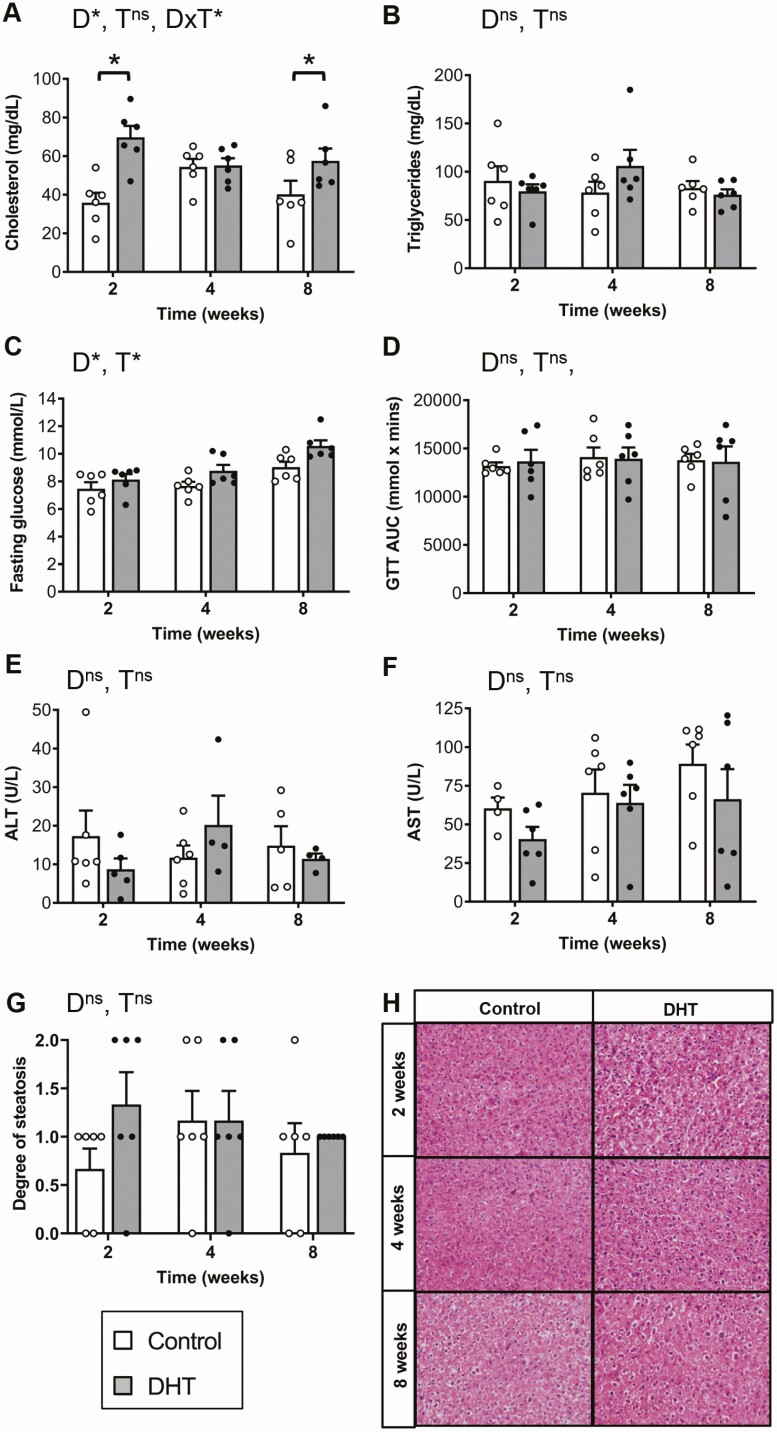
Polycystic ovary syndrome (PCOS) is a common and heterogeneous disorder; however, the etiology and pathogenesis of PCOS are poorly understood and current management is symptom-based. Defining the pathogenesis of PCOS traits is important for developing early PCOS detection markers and new treatment strategies. Hyperandrogenism is a defining characteristic of PCOS, and studies support a role for androgen-driven actions in the development of PCOS. Therefore, we aimed to determine the temporal pattern of development of PCOS features in a well-characterized dihydrotestosterone (DHT)-induced PCOS mouse model after 2, 4, and 8 weeks of DHT exposure. Following 2 weeks of treatment, DHT induced the key PCOS reproductive features of acyclicity, anovulation, and multifollicular ovaries as well as a decrease in large antral follicle health. DHT-treated mice displayed the metabolic PCOS characteristics of increased body weight and exhibited increased visceral adiposity after 8 weeks of DHT treatment. DHT treatment also led to an increase in circulating cholesterol after 2 weeks of exposure and had an overall effect on fasting glucose levels, but not triglycerides, aspartate transaminase (AST) and alanine transaminase (ALT) levels, or hepatic steatosis. These data reveal that in this experimental PCOS mouse model, acyclicity, anovulation, and increased body weight are early features of a developing PCOS phenotype whereas adiposity, impaired glucose tolerance, dyslipidemia, and hepatic steatosis are later developing features of PCOS. These findings provide insights into the likely sequence of PCOS trait development and support the addition of body weight criteria to the early diagnosis of PCOS.
多囊卵巢综合征(PCOS)是一种常见的异质性疾病;然而,PCOS的病因和发病机制尚不清楚,目前的治疗是基于症状的。明确PCOS特征的发病机制对于开发早期PCOS检测标志物和新的治疗策略至关重要。高雄激素血症是PCOS的一个决定性特征,研究支持雄激素驱动的作用在PCOS发展中的作用。因此,我们旨在确定在二氢睾酮(DHT)诱导的PCOS小鼠模型中,在暴露于DHT 2周、4周和8周后PCOS特征的发展时间模式。治疗2周后,DHT诱导了无排卵周期、无排卵和多囊卵巢等关键的PCOS生殖特征,以及大的窦状卵泡健康状况的下降。DHT处理的小鼠在DHT处理8周后表现出体重增加的代谢性PCOS特征,并表现出内脏脂肪增加。DHT处理在暴露2周后还导致循环胆固醇增加,并对空腹血糖水平有总体影响,但对甘油三酯、天冬氨酸转氨酶(AST)和丙氨酸转氨酶(ALT)水平或肝脂肪变性没有影响。这些数据表明,在这个实验性PCOS小鼠模型中,无排卵周期、无排卵和体重增加是正在发展的PCOS表型的早期特征,而肥胖、糖耐量受损、血脂异常和肝脂肪变性是PCOS后期发展的特征。这些发现为PCOS特征发展的可能顺序提供了见解,并支持将体重标准纳入PCOS的早期诊断。