Groningen Biomolecular Sciences and Biotechnology Institute, University of Groningen, 9747 AG Groningen, The Netherlands.
Center for Biophysics and Quantitative Biology, University of Illinois at Urbana-Champaign, Urbana, Illinois 61801, United States.
ACS Nano. 2021 Jun 22;15(6):9600-9613. doi: 10.1021/acsnano.0c09958. Epub 2021 Jun 1.
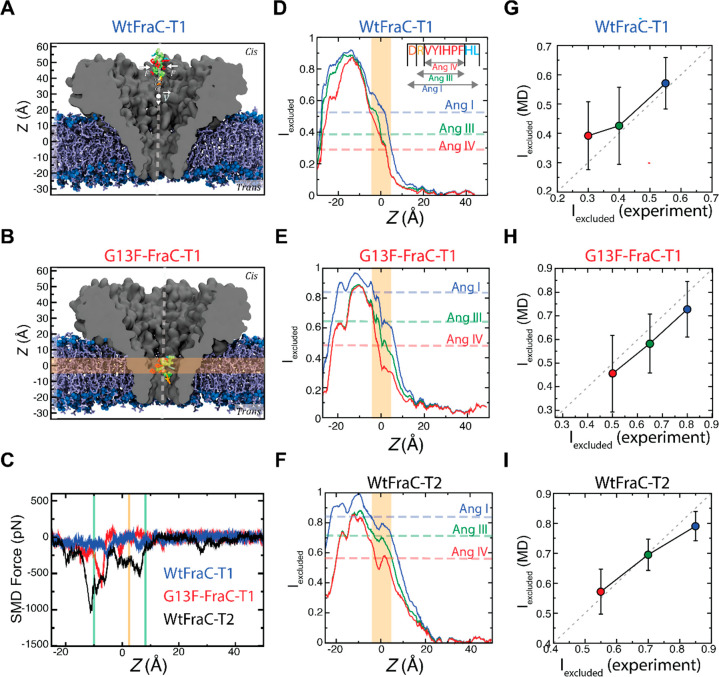
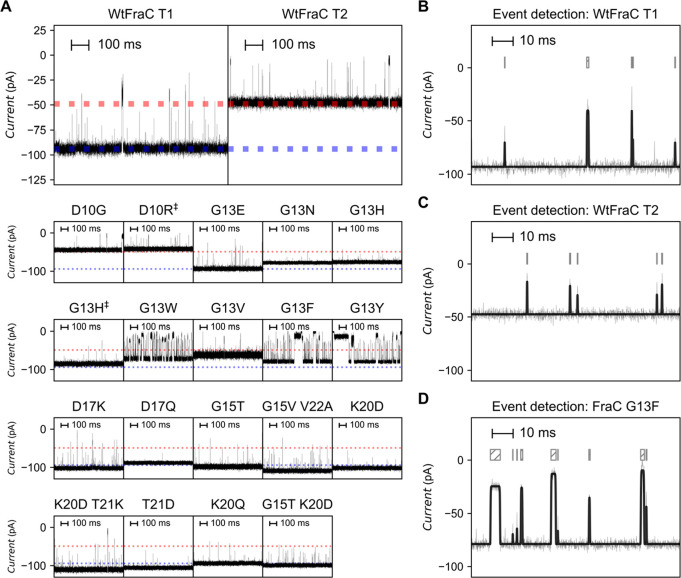
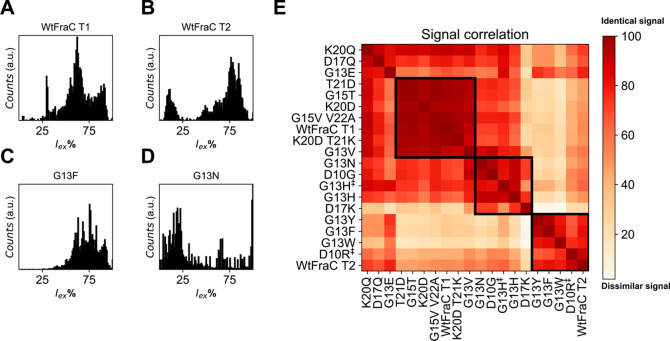
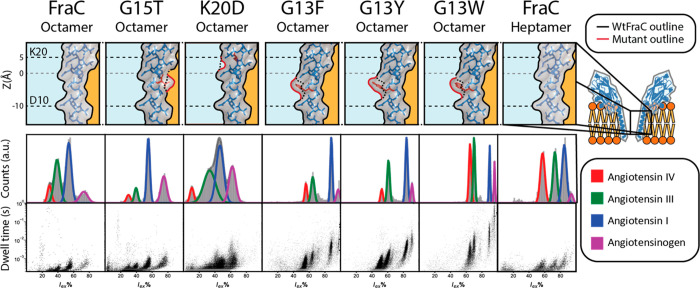
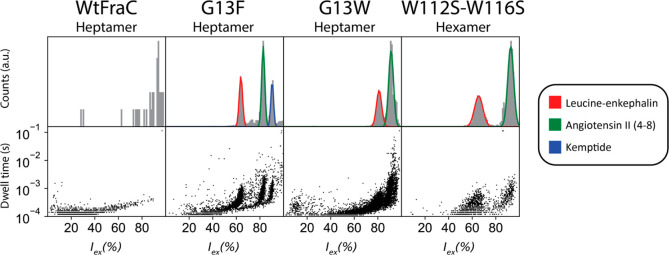
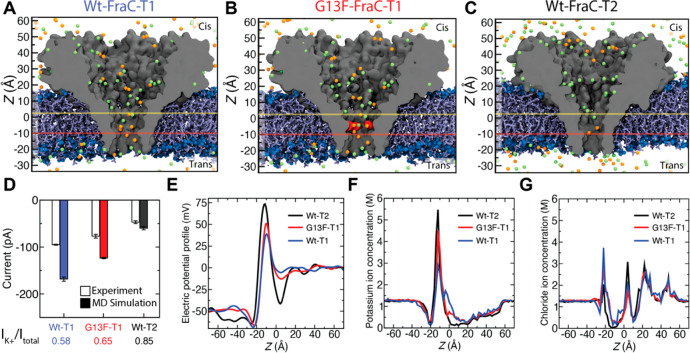
The detection of analytes and the sequencing of DNA using biological nanopores have seen major advances over recent years. The analysis of proteins and peptides with nanopores, however, is complicated by the complex physicochemical structure of polypeptides and the lack of understanding of the mechanism of capture and recognition of polypeptides by nanopores. In this work, we show that introducing aromatic amino acids at precise positions within the lumen of α-helical fragaceatoxin C (FraC) nanopores increased the capture frequency of peptides and largely improved the discrimination among peptides of similar size. Molecular dynamics simulations determined the sensing region of the nanopore, elucidated the microscopic mechanism enabling accurate characterization of the peptides ionic current blockades in FraC, and characterized the effect of the pore modification on peptide discrimination. This work provides insights to improve the recognition and to augment the capture of peptides by nanopores, which is important for developing a real-time and single-molecule size analyzer for peptide recognition and identification.
近年来,使用生物纳米孔检测分析物和对 DNA 进行测序方面取得了重大进展。然而,由于多肽具有复杂的物理化学结构,并且对纳米孔捕获和识别多肽的机制缺乏了解,因此用纳米孔分析蛋白质和肽更为复杂。在这项工作中,我们表明,在α-螺旋 Fragaceatoxin C(FraC)纳米孔的腔体内精确位置引入芳香族氨基酸会增加肽的捕获频率,并大大提高对类似大小的肽的区分能力。分子动力学模拟确定了纳米孔的传感区域,阐明了能够准确表征 FraC 中肽离子电流阻断的微观机制,并表征了孔修饰对肽区分的影响。这项工作为提高纳米孔对肽的识别和捕获能力提供了新的思路,这对于开发用于肽识别和鉴定的实时单分子大小分析器具有重要意义。