Medical Affairs, MSD K.K., Kitanomaru Square, Chiyoda, Tokyo, Japan.
Department of Pediatrics, Kawasaki Medical School, Kurashiki, Japan.
Hum Vaccin Immunother. 2021 Sep 2;17(9):3102-3112. doi: 10.1080/21645515.2021.1918042. Epub 2021 Jun 1.
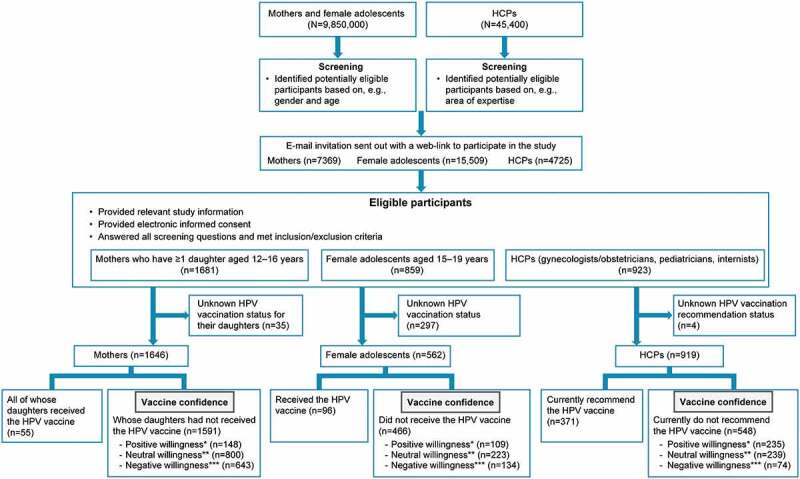
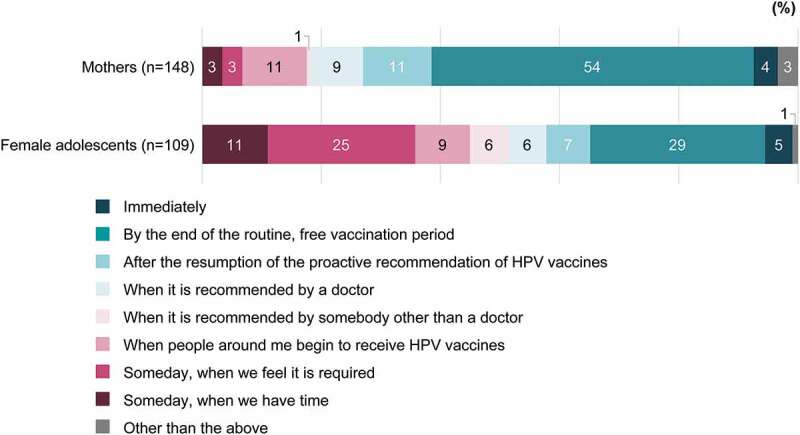
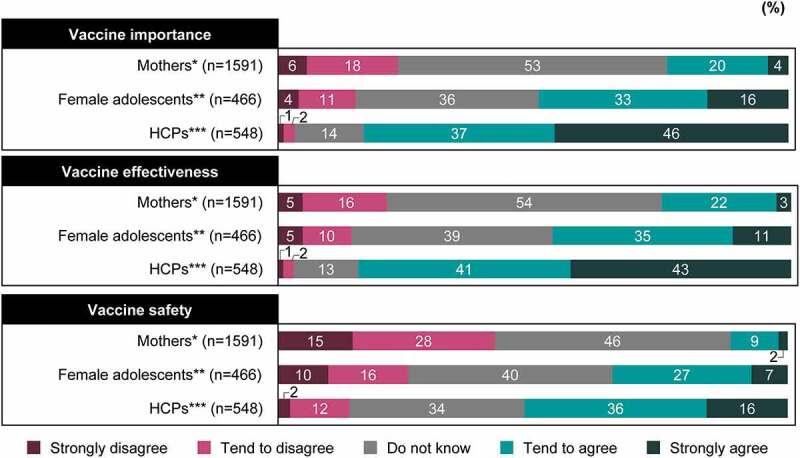
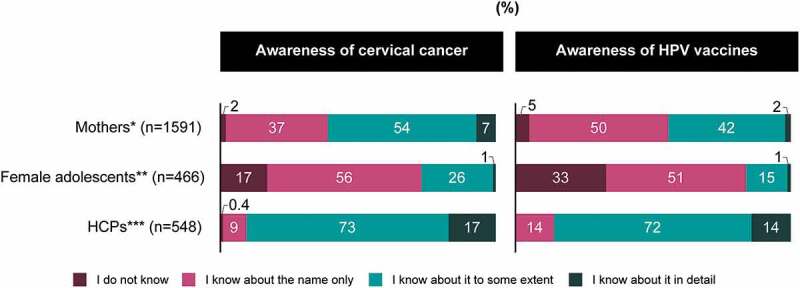
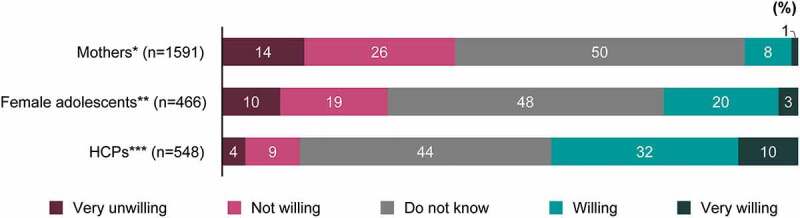
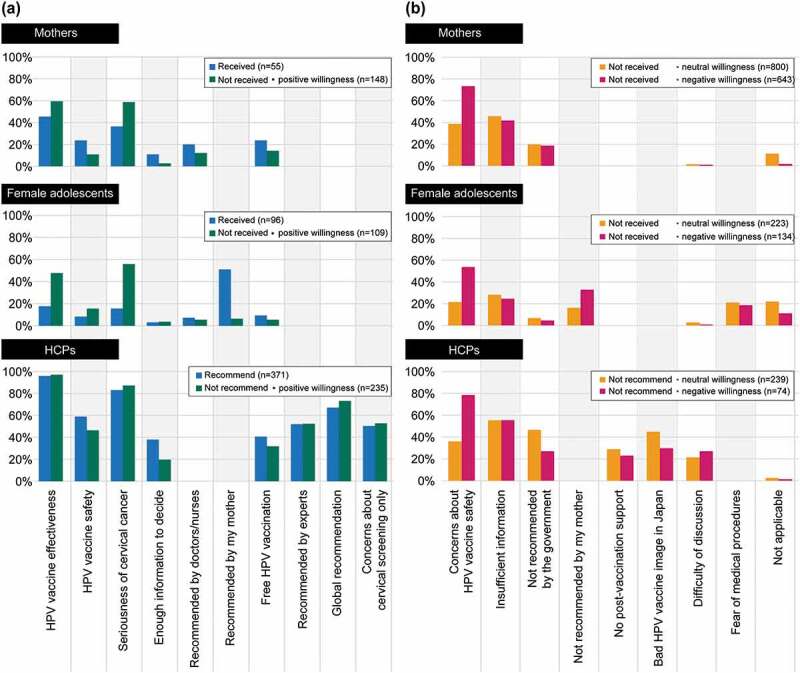
Vaccine confidence reflects social, individual, and political factors indicating confidence in vaccines and associated health systems. In Japan, the government ceased proactive recommendation of the human papillomavirus (HPV) vaccine in June 2013, only several months after the recommendation had begun. Seven years later, as of October 2020, the suspension persists and vaccine coverage has precipitously declined, resulting in many young women being continually exposed to the risk of preventable HPV-related diseases. Accordingly, understanding stakeholder opinions on HPV vaccination issues is critical for informing strategies to improve HPV vaccine confidence and acceptance. In October 2019, we performed a nationwide, web-based survey of 1646 mothers of HPV-vaccination-eligible girls, 562 female adolescents aged 15-19 years, and 919 healthcare professionals (HCPs) in Japan. This survey captured key elements of vaccine confidence (i.e., importance, effectiveness, and safety of the HPV vaccine), awareness, and the willingness to receive (in HPV-vaccination-eligible girls) or recommend (in HCPs) the HPV vaccine, and the factors responsible for these decisions. HPV vaccine confidence was generally higher among HCPs than among mothers or female adolescents. Nearly half of all stakeholders were neutral regarding their willingness to receive/recommend the HPV vaccine. The seriousness of cervical cancer and the HPV vaccine's effectiveness or safety were important deciding factors for receiving/recommending the HPV vaccine. Besides these factors, sufficient information and free vaccination were crucial. Our results suggest several factors that could help shape public policy and communication strategies to improve HPV vaccine confidence and acceptance in Japan.
疫苗信心反映了社会、个人和政治因素,表明了人们对疫苗和相关卫生系统的信心。在日本,政府于 2013 年 6 月停止了积极推荐人乳头瘤病毒(HPV)疫苗,而推荐工作仅开展了几个月。七年后的 2020 年 10 月,该疫苗仍处于暂停状态,疫苗接种率急剧下降,导致许多年轻女性持续面临可预防的 HPV 相关疾病的风险。因此,了解利益相关者对 HPV 疫苗接种问题的意见对于制定提高 HPV 疫苗信心和接受度的策略至关重要。2019 年 10 月,我们在日本对 1646 名 HPV 疫苗接种适龄女孩的母亲、562 名 15-19 岁的少女和 919 名医疗保健专业人员(HCPs)进行了一项全国性的网络调查。这项调查包括了疫苗信心(即 HPV 疫苗的重要性、有效性和安全性)、意识以及接种(在 HPV 疫苗接种适龄女孩中)或推荐(在 HCPs 中)HPV 疫苗的意愿的关键要素,以及这些决策的影响因素。与母亲或少女相比,HCPs 对 HPV 疫苗的信心普遍较高。几乎一半的利益相关者对他们接种/推荐 HPV 疫苗的意愿持中立态度。宫颈癌的严重性和 HPV 疫苗的有效性或安全性是决定是否接种/推荐 HPV 疫苗的重要因素。除了这些因素外,充分的信息和免费接种也很重要。我们的研究结果表明了一些因素,这些因素有助于制定公共政策和沟通策略,以提高日本 HPV 疫苗的信心和接受度。