Juliano Rudolph L
Initos Pharmaceuticals LLC, Chapel Hill, NC 27514, USA.
Biomedicines. 2021 May 5;9(5):512. doi: 10.3390/biomedicines9050512.
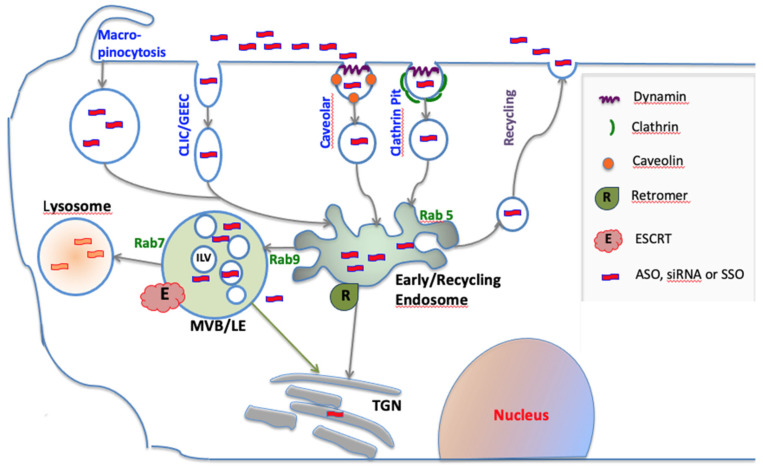
Antisense oligonucleotides (ASOs), siRNA and splice switching oligonucleotides (SSOs) all have immense potential as therapeutic agents, potential that is now being validated as oligonucleotides enter the clinic. However, progress in oligonucleotide-based therapeutics has been limited by the difficulty in delivering these complex molecules to their sites of action in the cytosol or nucleus of cells within specific tissues. There are two aspects to the delivery problem. The first is that most types of oligonucleotides have poor uptake into non-hepatic tissues. The second is that much of the oligonucleotide that is taken up by cells is entrapped in endosomes where it is pharmacologically inert. It has become increasingly recognized that endosomal trapping is a key constraint on oligonucleotide therapeutics. Thus, many approaches have been devised to address this problem, primarily ones based on various nanoparticle technologies. However, recently an alternative approach has emerged that employs small molecules to manipulate intracellular trafficking processes so as to enhance oligonucleotide actions. This review presents the current status of this chemical biology approach to oligonucleotide delivery and seeks to point out possible paths for future development.
反义寡核苷酸(ASO)、小干扰RNA(siRNA)和剪接转换寡核苷酸(SSO)作为治疗药物都具有巨大潜力,随着寡核苷酸进入临床,这种潜力正在得到验证。然而,基于寡核苷酸的治疗方法的进展受到将这些复杂分子递送至特定组织细胞的胞质溶胶或细胞核内作用位点的困难的限制。递送问题有两个方面。第一个方面是大多数类型的寡核苷酸对非肝组织的摄取较差。第二个方面是细胞摄取的许多寡核苷酸被困在内体中,在那里它没有药理活性。人们越来越认识到内体捕获是寡核苷酸治疗的关键限制因素。因此,已经设计了许多方法来解决这个问题,主要是基于各种纳米颗粒技术的方法。然而,最近出现了一种替代方法,即使用小分子来操纵细胞内运输过程,以增强寡核苷酸的作用。本文综述了这种寡核苷酸递送化学生物学方法的现状,并试图指出未来可能的发展方向。