Division of Immunopathology, Department of Pathophysiology and Allergy Research, Center of Pathophysiology, Infectiology and Immunology, Medical University of Vienna, 1090 Vienna, Austria.
Astrid Lindgren Children's Hospital, Karolinska University Hospital, 171 77 Stockholm, Sweden.
Viruses. 2021 May 15;13(5):915. doi: 10.3390/v13050915.
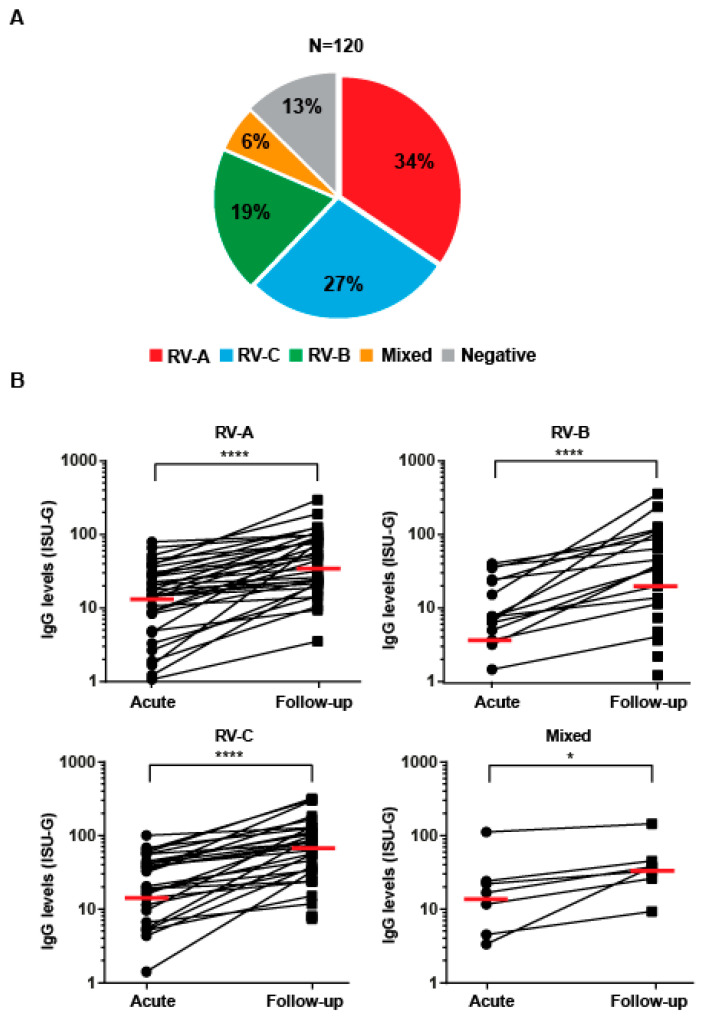
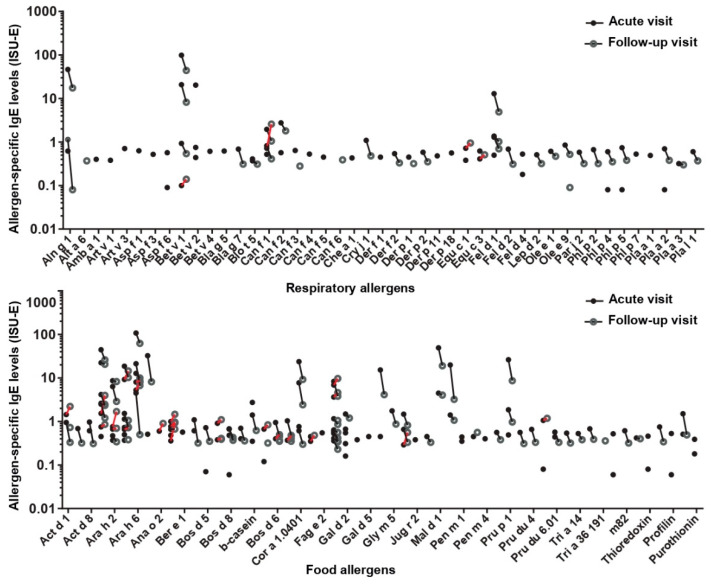
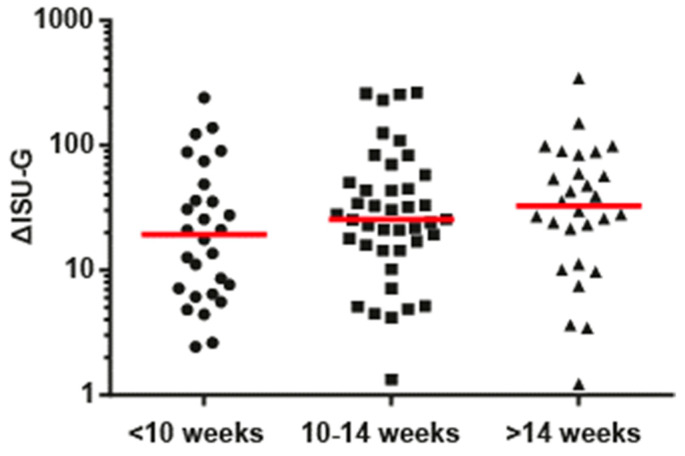
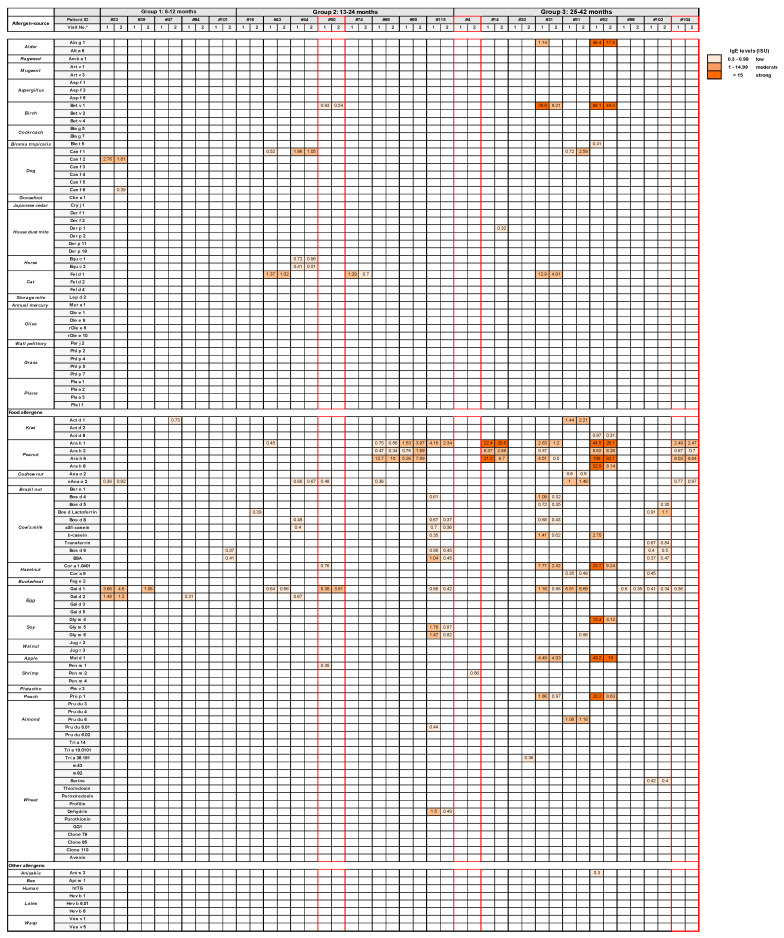
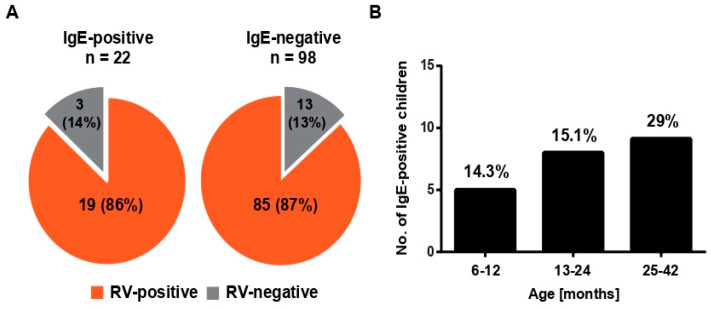
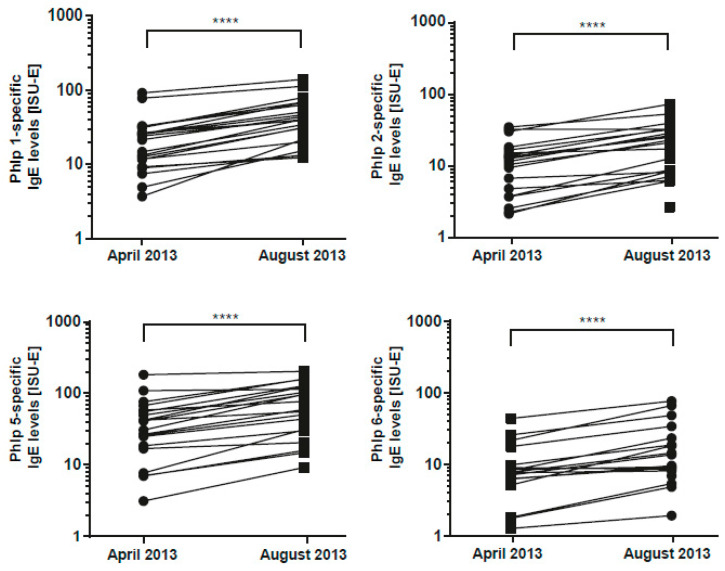
Allergen exposure and rhinovirus (RV) infections are common triggers of acute wheezing exacerbations in early childhood. The identification of such trigger factors is difficult but may have therapeutic implications. Increases of IgE and IgG in sera, were shown against allergens and the N-terminal portion of the VP1 proteins of RV species, respectively, several weeks after allergen exposure or RV infection. Hence, increases in VP1-specific IgG and in allergen-specific IgE may serve as biomarkers for RV infections or allergen exposure. The MeDALL-allergen chip containing comprehensive panels of allergens and the PreDicta RV chip equipped with VP1-derived peptides, representative of three genetic RV species, were used to measure allergen-specific IgE levels and RV-species-specific IgG levels in sera obtained from 120 preschool children at the time of an acute wheezing attack and convalescence. Nearly 20% of the children (22/120) showed specific IgE sensitizations to at least one of the allergen molecules on the MeDALL chip. For 87% of the children, increases in RV-specific IgG could be detected in the follow-up sera. This percentage of RV-specific IgG increases was equal in IgE-positive and -negative children. In 10% of the children, increases or appearances of IgE sensitizations indicative of allergen exposure could be detected. Our results suggest that, in the majority of preschool children, RV infections trigger wheezing attacks, but, in addition, allergen exposure seems to play a role as a trigger factor. RV-induced wheezing attacks occur in IgE-sensitized and non-IgE-sensitized children, indicating that allergic sensitization is not a prerequisite for RV-induced wheeze.
过敏原暴露和鼻病毒(RV)感染是幼儿急性喘息加重的常见诱因。虽然确定这些触发因素具有一定难度,但可能具有治疗意义。过敏原暴露或 RV 感染后数周,血清中可分别检测到针对过敏原和 RV 各型 VP1 蛋白 N 端的 IgE 和 IgG 增加。因此,RV 感染或过敏原暴露后,VP1 特异性 IgG 和过敏原特异性 IgE 的增加可作为 RV 感染或过敏原暴露的生物标志物。MeDALL 过敏原芯片包含了全面的过敏原面板,而 PreDicta RV 芯片则配备了代表三种遗传 RV 型的 VP1 衍生肽,用于检测 120 名急性喘息发作和恢复期幼儿血清中的过敏原特异性 IgE 水平和 RV 型特异性 IgG 水平。近 20%(22/120)的儿童对 MeDALL 芯片上至少一种过敏原分子存在特异性 IgE 致敏。87%的儿童在随访血清中可检测到 RV 特异性 IgG 增加。在 IgE 阳性和阴性儿童中,RV 特异性 IgG 增加的百分比相同。在 10%的儿童中,可检测到指示过敏原暴露的 IgE 致敏增加或出现。我们的研究结果表明,在大多数幼儿中,RV 感染引发喘息发作,但此外,过敏原暴露似乎也作为触发因素发挥作用。RV 引起的喘息发作发生在 IgE 致敏和非 IgE 致敏的儿童中,表明过敏致敏不是 RV 引起喘息的先决条件。