Beutel Alica K, Schütte Lena, Scheible Jeanette, Roger Elodie, Müller Martin, Perkhofer Lukas, Kestler Annika M T U, Kraus Johann M, Kestler Hans A, Barth Thomas F E, Lemke Johannes, Kornmann Marko, Ettrich Thomas J, Gout Johann, Seufferlein Thomas, Kleger Alexander
Department of Internal Medicine, University Hospital Ulm, 89081 Ulm, Germany.
Institute of Medical Systems Biology, Ulm University, 89081 Ulm, Germany.
Cancers (Basel). 2021 May 21;13(11):2539. doi: 10.3390/cancers13112539.
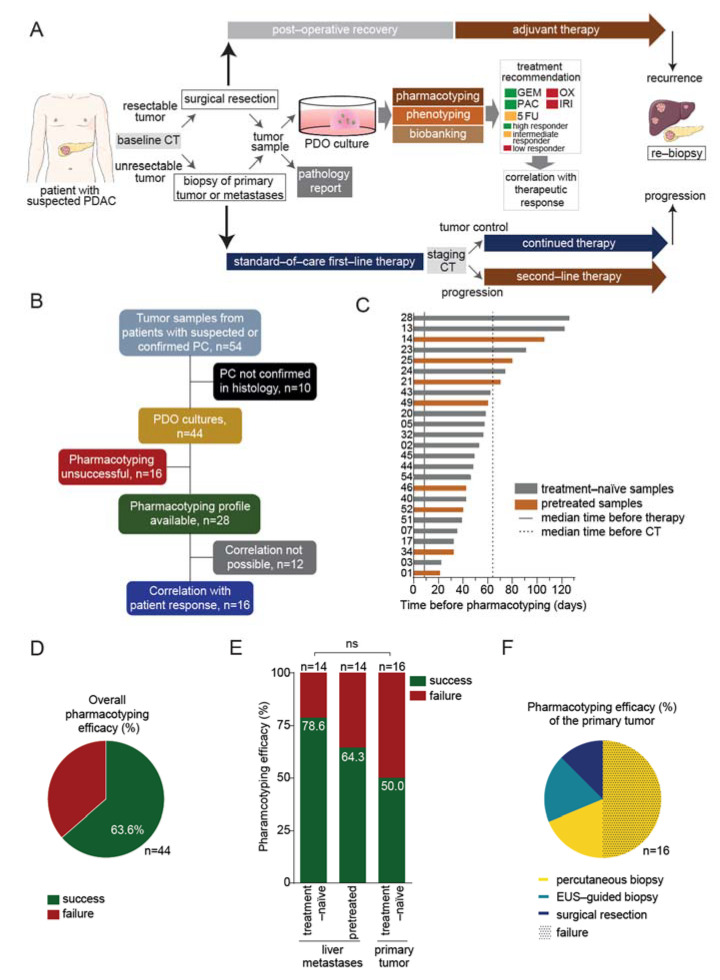
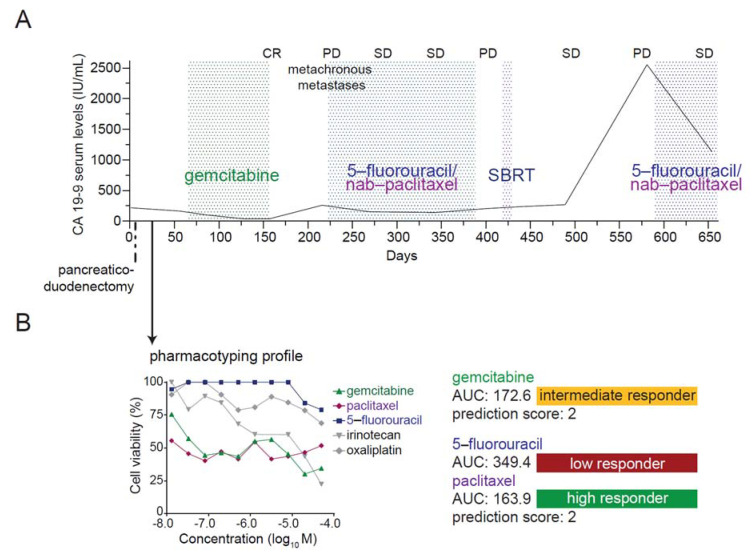
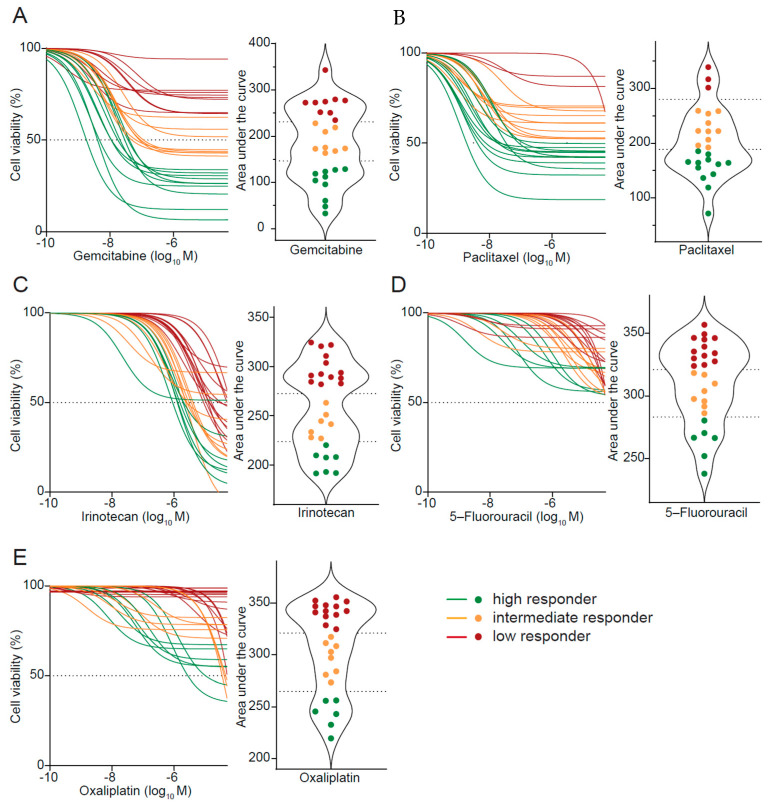
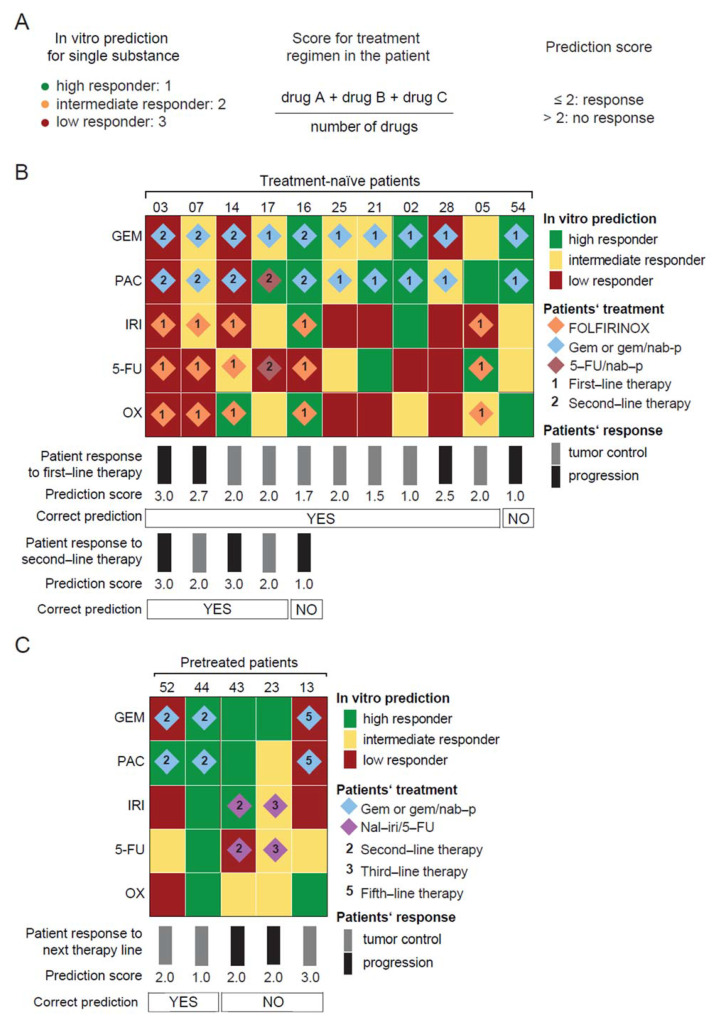
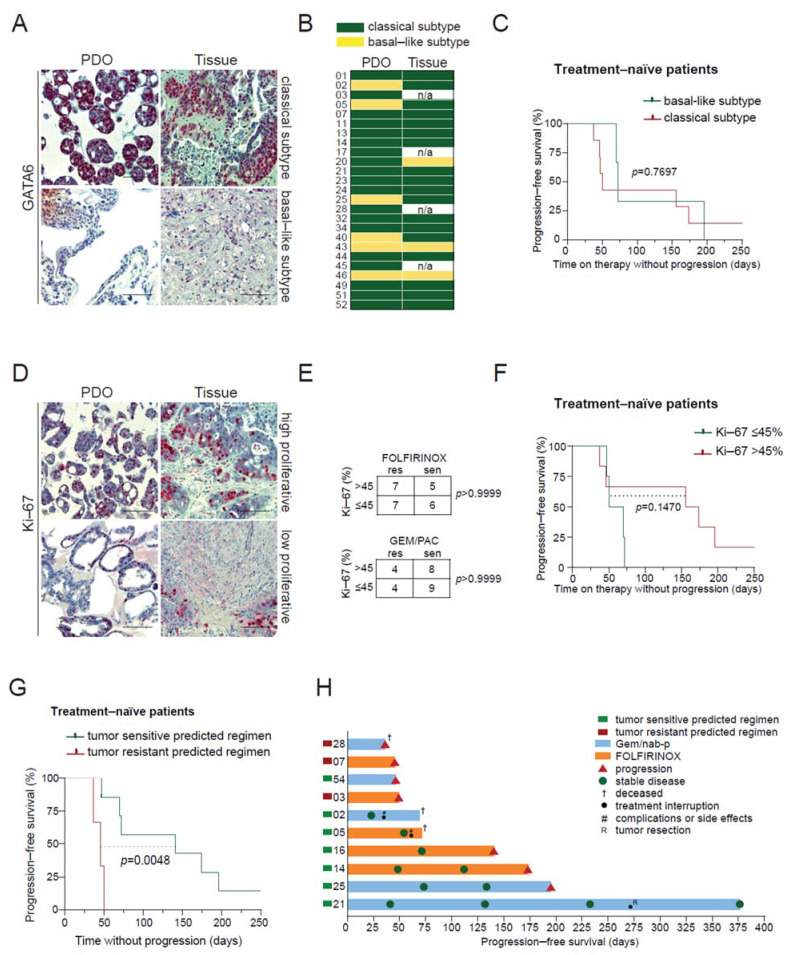
Real-time isolation, propagation, and pharmacotyping of patient-derived pancreatic cancer organoids (PDOs) may enable treatment response prediction and personalization of pancreatic cancer (PC) therapy. In our methodology, PDOs are isolated from 54 patients with suspected or confirmed PC in the framework of a prospective feasibility trial. The drug response of single agents is determined by a viability assay. Areas under the curves (AUC) are clustered for each drug, and a prediction score is developed for combined regimens. Pharmacotyping profiles are obtained from 28 PDOs (efficacy 63.6%) after a median of 53 days (range 21-126 days). PDOs exhibit heterogeneous responses to the standard-of-care drugs, and are classified into high, intermediate, or low responder categories. Our developed prediction model allows a successful response prediction in treatment-naïve patients with an accuracy of 91.1% for first-line and 80.0% for second-line regimens, respectively. The power of prediction declines in pretreated patients (accuracy 40.0%), particularly with more than one prior line of chemotherapy. Progression-free survival (PFS) is significantly longer in previously treatment-naïve patients receiving a predicted tumor sensitive compared to a predicted tumor resistant regimen (mPFS 141 vs. 46 days; = 0.0048). In conclusion, generation and pharmacotyping of PDOs is feasible in clinical routine and may provide substantial benefit.
实时分离、培养和对患者来源的胰腺癌类器官(PDO)进行药物分型,可能有助于预测胰腺癌(PC)的治疗反应并实现个性化治疗。在我们的方法中,在一项前瞻性可行性试验的框架内,从54例疑似或确诊为PC的患者中分离出PDO。通过活力测定法确定单一药物的药物反应。对每种药物的曲线下面积(AUC)进行聚类,并为联合用药方案制定预测评分。在中位53天(范围21 - 126天)后,从28个PDO中获得药物分型图谱(有效率63.6%)。PDO对标准治疗药物表现出异质性反应,并被分为高、中、低反应者类别。我们开发的预测模型能够成功预测初治患者的反应,一线方案的准确率为91.1%,二线方案的准确率为80.0%。在接受过治疗的患者中,预测能力下降(准确率40.0%),尤其是接受过不止一线化疗的患者。与接受预测为肿瘤耐药方案的患者相比,接受预测为肿瘤敏感方案的既往初治患者的无进展生存期(PFS)显著更长(中位PFS 141天对46天;P = 0.0048)。总之,在临床常规中生成PDO并进行药物分型是可行的,可能会带来显著益处。