Serratì Simona, Porcelli Letizia, Fragassi Francesco, Garofoli Marianna, Di Fonte Roberta, Fucci Livia, Iacobazzi Rosa Maria, Palazzo Antonio, Margheri Francesca, Cristiani Grazia, Albano Anna, De Luca Raffaele, Altomare Donato Francesco, Simone Michele, Azzariti Amalia
Laboratory of Nanotechnology, IRCCS Istituto Tumori Giovanni Paolo II, 70124 Bari, Italy.
Laboratory of Experimental Pharmacology, IRCCS Istituto Tumori Giovanni Paolo II, Viale O. Flacco 65, 70124 Bari, Italy.
Cancers (Basel). 2021 May 20;13(10):2505. doi: 10.3390/cancers13102505.
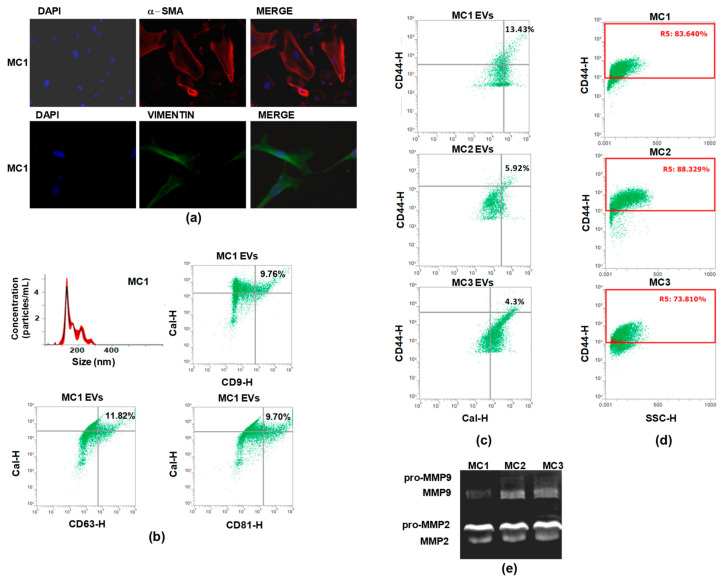
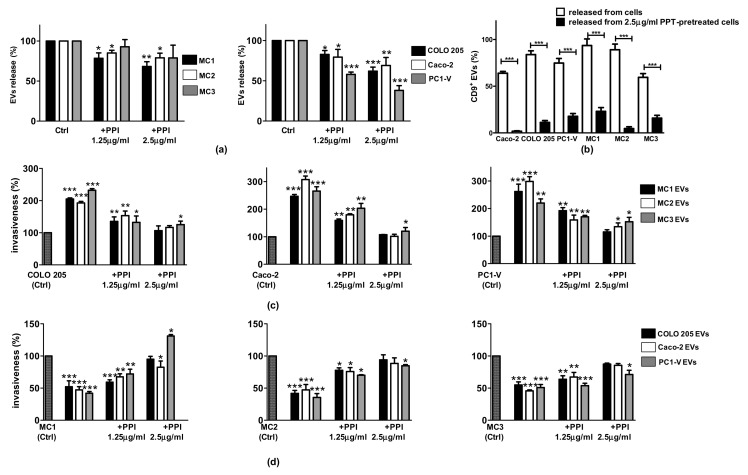
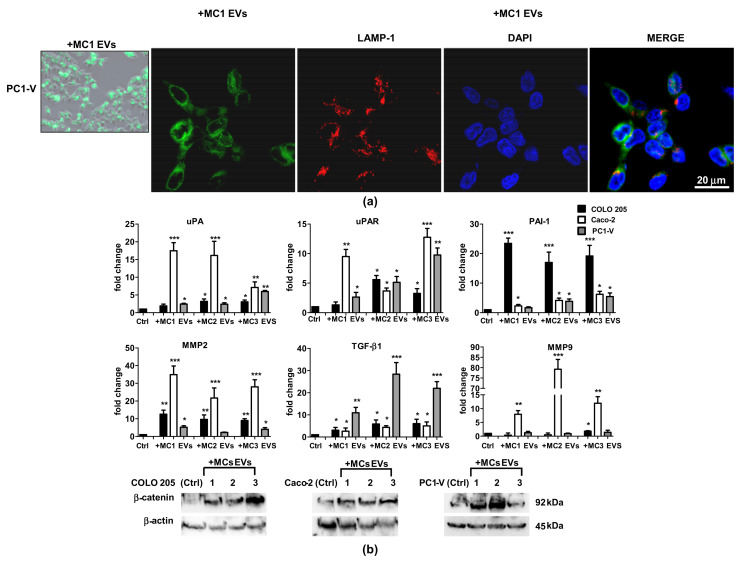
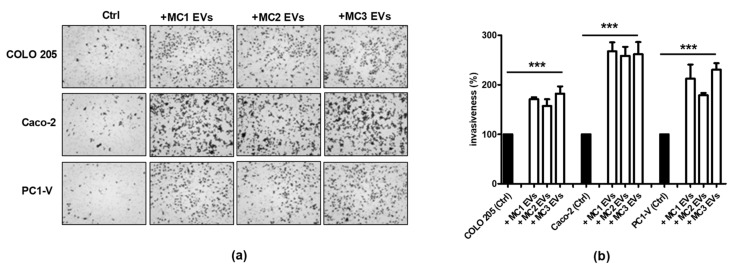
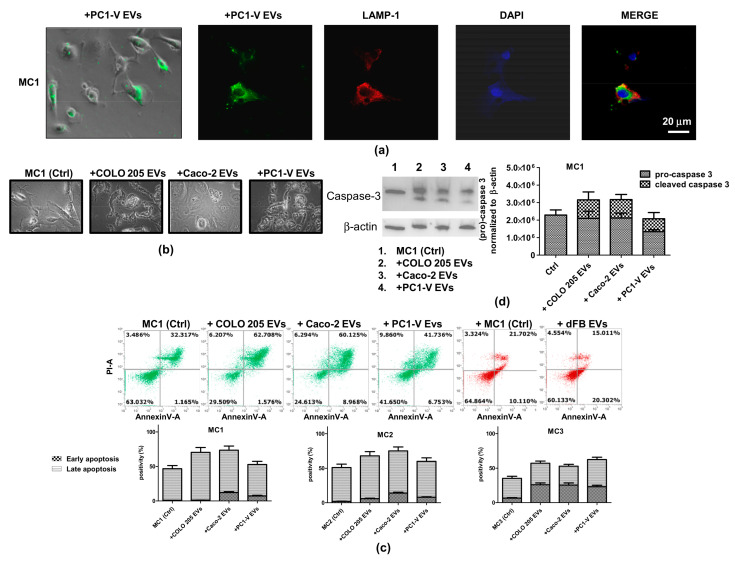
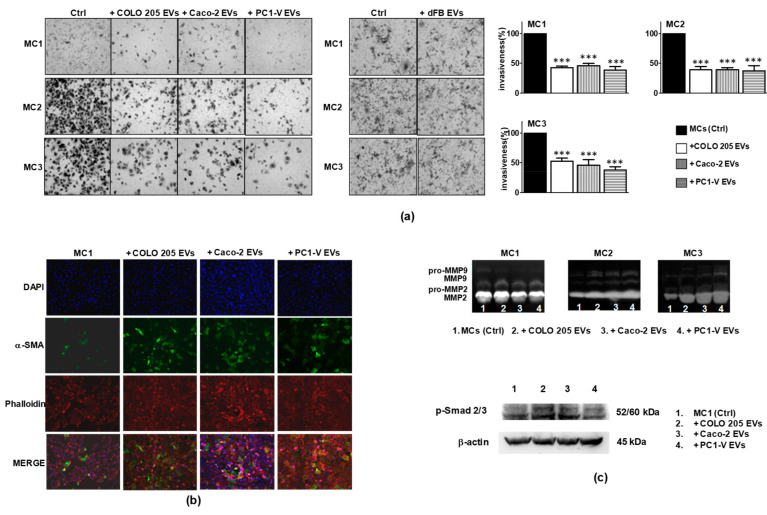
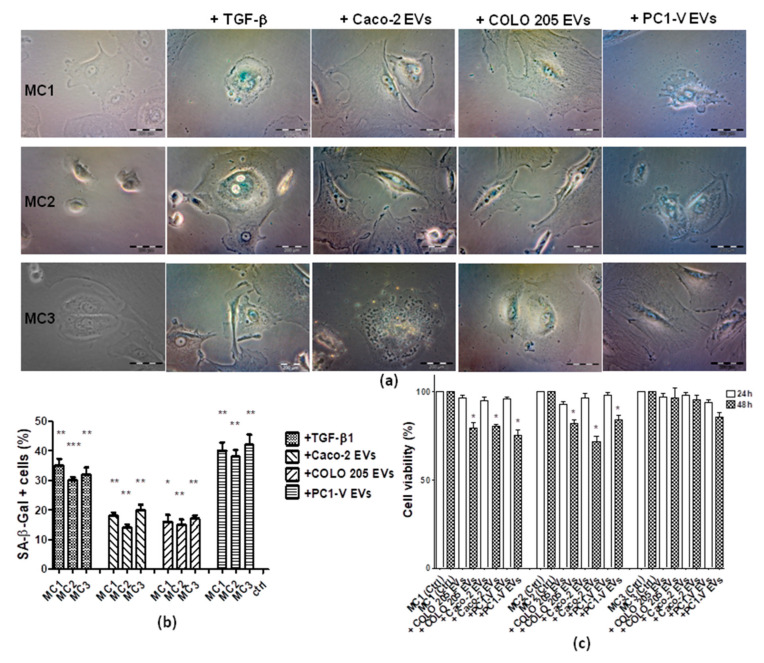
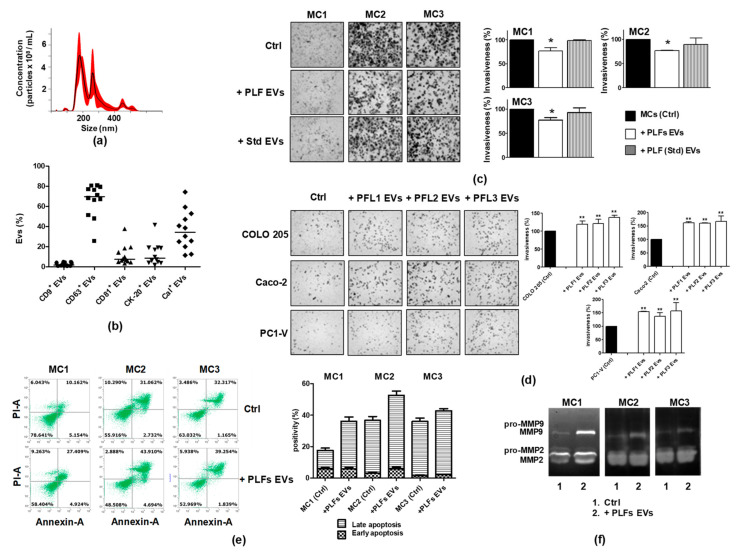
Advanced colorectal cancer (CRC) is highly metastatic and often results in peritoneal dissemination. The extracellular vesicles (EVs) released by cancer cells in the microenvironment are important mediators of tumor metastasis. We investigated the contribution of EV-mediated interaction between peritoneal mesothelial cells (MCs) and CRC cells in generating a pro-metastatic environment in the peritoneal cavity. Peritoneal MCs isolated from peritoneal lavage fluids displayed high CD44 expression, substantial mesothelial-to-mesenchymal transition (MMT) and released EVs that both directed tumor invasion and caused reprogramming of secretory profiles by increasing TGF-β1 and uPA/uPAR expression and MMP-2/9 activation in tumor cells. Notably, the EVs released by tumor cells induced apoptosis by activating caspase-3, peritoneal MC senescence, and MMT, thereby augmenting the tumor-promoting potential of these cells in the peritoneal cavity. By using pantoprazole, we reduced the biogenesis of EVs and their pro-tumor functions. In conclusion, our findings provided evidence of underlying mechanisms of CRC dissemination driven by the interaction of peritoneal MCs and tumor cells via the EVs released in the peritoneal cavity, which may have important implications for the clinical management of patients.
晚期结直肠癌(CRC)具有高度转移性,常导致腹膜播散。微环境中癌细胞释放的细胞外囊泡(EVs)是肿瘤转移的重要介质。我们研究了EV介导的腹膜间皮细胞(MCs)与CRC细胞之间的相互作用在腹膜腔中产生促转移环境的作用。从腹腔灌洗液中分离出的腹膜MCs表现出高CD44表达、大量的间皮-间充质转化(MMT),并释放出既能引导肿瘤侵袭又能通过增加肿瘤细胞中TGF-β1和uPA/uPAR表达以及MMP-2/9激活来引起分泌谱重编程的EVs。值得注意的是,肿瘤细胞释放的EVs通过激活caspase-3诱导细胞凋亡、导致腹膜MCs衰老和MMT,从而增强了这些细胞在腹膜腔中的促肿瘤潜能。通过使用泮托拉唑,我们减少了EVs的生物发生及其促肿瘤功能。总之,我们的研究结果为腹膜MCs与肿瘤细胞通过腹膜腔中释放的EVs相互作用驱动CRC播散的潜在机制提供了证据,这可能对患者的临床管理具有重要意义。