• 文献检索
  • 文档翻译
  • 深度研究
  • 学术资讯
  • Suppr Zotero 插件Zotero 插件
  • 邀请有礼
  • 套餐&价格
  • 历史记录
应用&插件
Suppr Zotero 插件Zotero 插件浏览器插件Mac 客户端Windows 客户端微信小程序
定价
高级版会员购买积分包购买API积分包
服务
文献检索文档翻译深度研究API 文档MCP 服务
关于我们
关于 Suppr公司介绍联系我们用户协议隐私条款
关注我们

Suppr 超能文献

核心技术专利:CN118964589B侵权必究
粤ICP备2023148730 号-1Suppr @ 2026

文献检索

告别复杂PubMed语法,用中文像聊天一样搜索,搜遍4000万医学文献。AI智能推荐,让科研检索更轻松。

立即免费搜索

文件翻译

保留排版,准确专业,支持PDF/Word/PPT等文件格式,支持 12+语言互译。

免费翻译文档

深度研究

AI帮你快速写综述,25分钟生成高质量综述,智能提取关键信息,辅助科研写作。

立即免费体验

植物根毛细胞与细胞内细菌界面处的化学相互作用

Chemical Interactions at the Interface of Plant Root Hair Cells and Intracellular Bacteria.

作者信息

Chang Xiaoqian, Kingsley Kathryn L, White James F

机构信息

Department of Plant Biology, School of Environmental and Biological Sciences, Rutgers University, New Brunswick, NJ 08901, USA.

出版信息

Microorganisms. 2021 May 12;9(5):1041. doi: 10.3390/microorganisms9051041.

DOI:10.3390/microorganisms9051041
PMID:34066008
原文链接:https://pmc.ncbi.nlm.nih.gov/articles/PMC8150332/
Abstract

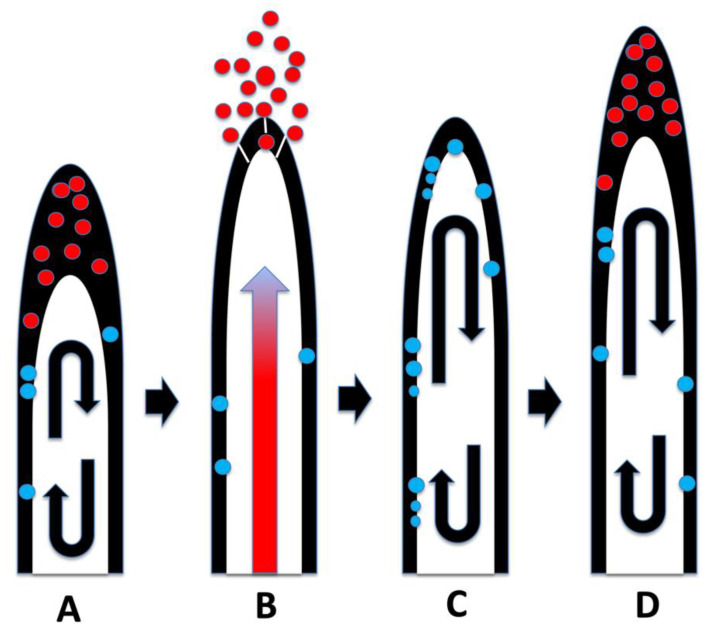
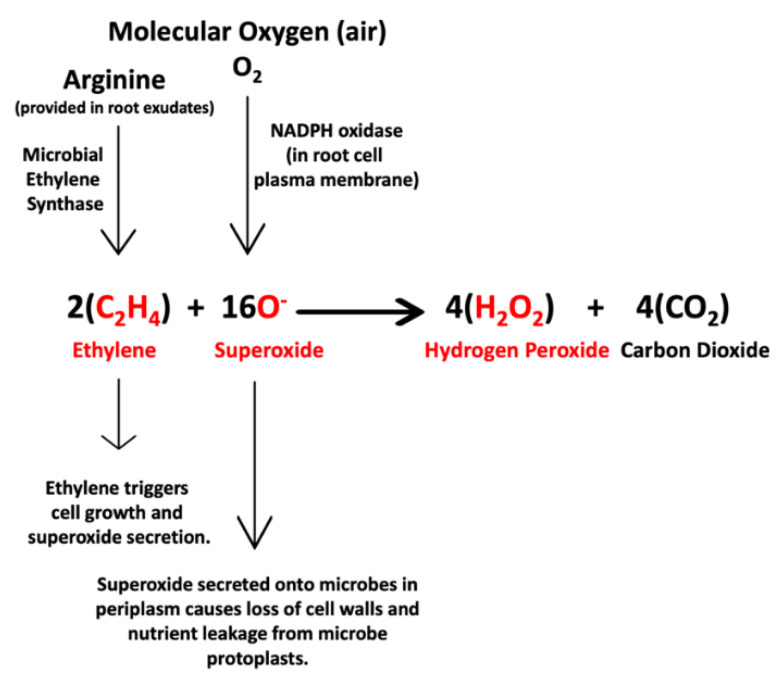
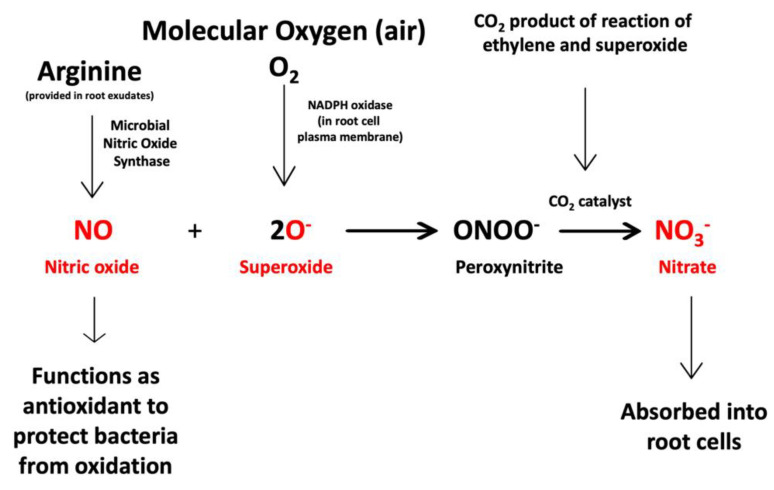
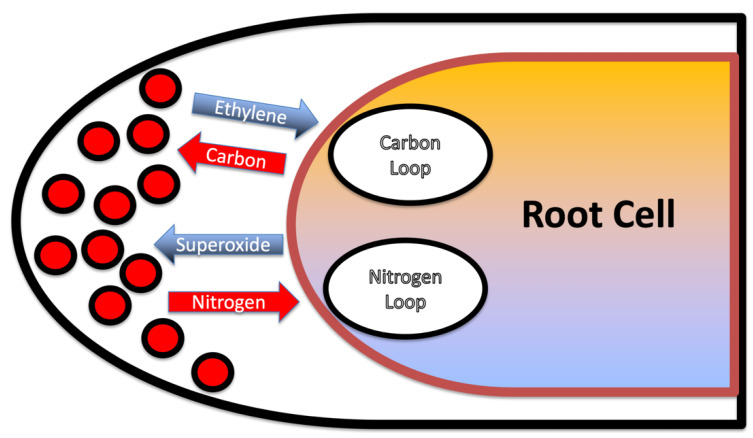
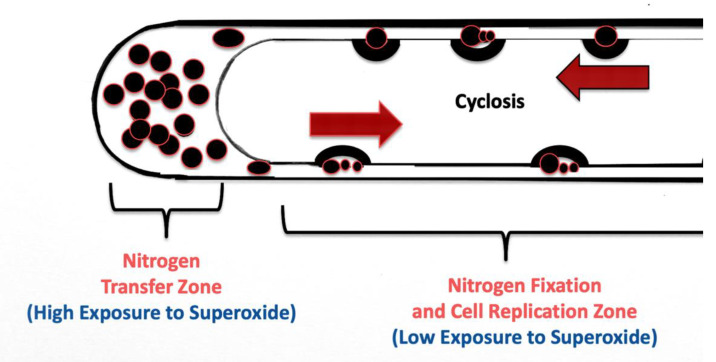
In this research, we conducted histochemical, inhibitor and other experiments to evaluate the chemical interactions between intracellular bacteria and plant cells. As a result of these experiments, we hypothesize two chemical interactions between bacteria and plant cells. The first chemical interaction between endophyte and plant is initiated by microbe-produced ethylene that triggers plant cells to grow, release nutrients and produce superoxide. The superoxide combines with ethylene to form products hydrogen peroxide and carbon dioxide. In the second interaction between microbe and plant the microbe responds to plant-produced superoxide by secretion of nitric oxide to neutralize superoxide. Nitric oxide and superoxide combine to form peroxynitrite that is catalyzed by carbon dioxide to form nitrate. The two chemical interactions underlie hypothesized nutrient exchanges in which plant cells provide intracellular bacteria with fixed carbon, and bacteria provide plant cells with fixed nitrogen. As a consequence of these two interactions between endophytes and plants, plants grow and acquire nutrients from endophytes, and plants acquire enhanced oxidative stress tolerance, becoming more tolerant to abiotic and biotic stresses.

摘要

在本研究中,我们进行了组织化学、抑制剂及其他实验,以评估细胞内细菌与植物细胞之间的化学相互作用。通过这些实验,我们推测细菌与植物细胞之间存在两种化学相互作用。内生菌与植物之间的第一种化学相互作用由微生物产生的乙烯引发,该乙烯触发植物细胞生长、释放养分并产生超氧化物。超氧化物与乙烯结合形成过氧化氢和二氧化碳。在微生物与植物的第二种相互作用中,微生物通过分泌一氧化氮来中和植物产生的超氧化物,以响应植物产生的超氧化物。一氧化氮与超氧化物结合形成过氧亚硝酸盐,过氧亚硝酸盐在二氧化碳的催化下形成硝酸盐。这两种化学相互作用是推测的养分交换的基础,在这种养分交换中,植物细胞为细胞内细菌提供固定碳,而细菌为植物细胞提供固定氮。由于内生菌与植物之间的这两种相互作用,植物生长并从内生菌中获取养分,并且植物获得了增强的氧化应激耐受性,对非生物和生物胁迫的耐受性更强。
https://cdn.ncbi.nlm.nih.gov/pmc/blobs/37de/8150332/279141f0e05e/microorganisms-09-01041-g019.jpg
https://cdn.ncbi.nlm.nih.gov/pmc/blobs/37de/8150332/82a31ab78551/microorganisms-09-01041-g001.jpg
https://cdn.ncbi.nlm.nih.gov/pmc/blobs/37de/8150332/ec7ee8a7c45f/microorganisms-09-01041-g002.jpg
https://cdn.ncbi.nlm.nih.gov/pmc/blobs/37de/8150332/7864ef4317b0/microorganisms-09-01041-g003.jpg
https://cdn.ncbi.nlm.nih.gov/pmc/blobs/37de/8150332/041431046cbd/microorganisms-09-01041-g004.jpg
https://cdn.ncbi.nlm.nih.gov/pmc/blobs/37de/8150332/8812b28f963b/microorganisms-09-01041-g005.jpg
https://cdn.ncbi.nlm.nih.gov/pmc/blobs/37de/8150332/8339dfbc4408/microorganisms-09-01041-g006.jpg
https://cdn.ncbi.nlm.nih.gov/pmc/blobs/37de/8150332/2378dcfd89a5/microorganisms-09-01041-g007.jpg
https://cdn.ncbi.nlm.nih.gov/pmc/blobs/37de/8150332/3a6ac8d563d4/microorganisms-09-01041-g008.jpg
https://cdn.ncbi.nlm.nih.gov/pmc/blobs/37de/8150332/c455fa94ba64/microorganisms-09-01041-g009.jpg
https://cdn.ncbi.nlm.nih.gov/pmc/blobs/37de/8150332/44a510aa98f8/microorganisms-09-01041-g010.jpg
https://cdn.ncbi.nlm.nih.gov/pmc/blobs/37de/8150332/069fee633c39/microorganisms-09-01041-g011.jpg
https://cdn.ncbi.nlm.nih.gov/pmc/blobs/37de/8150332/766db925c5dc/microorganisms-09-01041-g012.jpg
https://cdn.ncbi.nlm.nih.gov/pmc/blobs/37de/8150332/5adc20fcca3c/microorganisms-09-01041-g013.jpg
https://cdn.ncbi.nlm.nih.gov/pmc/blobs/37de/8150332/fdeda70b5eaf/microorganisms-09-01041-g014.jpg
https://cdn.ncbi.nlm.nih.gov/pmc/blobs/37de/8150332/ee9501c9b268/microorganisms-09-01041-g015.jpg
https://cdn.ncbi.nlm.nih.gov/pmc/blobs/37de/8150332/a13d0251bfd3/microorganisms-09-01041-g016.jpg
https://cdn.ncbi.nlm.nih.gov/pmc/blobs/37de/8150332/98a4910056cd/microorganisms-09-01041-g017.jpg
https://cdn.ncbi.nlm.nih.gov/pmc/blobs/37de/8150332/985de422d112/microorganisms-09-01041-g018.jpg
https://cdn.ncbi.nlm.nih.gov/pmc/blobs/37de/8150332/279141f0e05e/microorganisms-09-01041-g019.jpg
https://cdn.ncbi.nlm.nih.gov/pmc/blobs/37de/8150332/82a31ab78551/microorganisms-09-01041-g001.jpg
https://cdn.ncbi.nlm.nih.gov/pmc/blobs/37de/8150332/ec7ee8a7c45f/microorganisms-09-01041-g002.jpg
https://cdn.ncbi.nlm.nih.gov/pmc/blobs/37de/8150332/7864ef4317b0/microorganisms-09-01041-g003.jpg
https://cdn.ncbi.nlm.nih.gov/pmc/blobs/37de/8150332/041431046cbd/microorganisms-09-01041-g004.jpg
https://cdn.ncbi.nlm.nih.gov/pmc/blobs/37de/8150332/8812b28f963b/microorganisms-09-01041-g005.jpg
https://cdn.ncbi.nlm.nih.gov/pmc/blobs/37de/8150332/8339dfbc4408/microorganisms-09-01041-g006.jpg
https://cdn.ncbi.nlm.nih.gov/pmc/blobs/37de/8150332/2378dcfd89a5/microorganisms-09-01041-g007.jpg
https://cdn.ncbi.nlm.nih.gov/pmc/blobs/37de/8150332/3a6ac8d563d4/microorganisms-09-01041-g008.jpg
https://cdn.ncbi.nlm.nih.gov/pmc/blobs/37de/8150332/c455fa94ba64/microorganisms-09-01041-g009.jpg
https://cdn.ncbi.nlm.nih.gov/pmc/blobs/37de/8150332/44a510aa98f8/microorganisms-09-01041-g010.jpg
https://cdn.ncbi.nlm.nih.gov/pmc/blobs/37de/8150332/069fee633c39/microorganisms-09-01041-g011.jpg
https://cdn.ncbi.nlm.nih.gov/pmc/blobs/37de/8150332/766db925c5dc/microorganisms-09-01041-g012.jpg
https://cdn.ncbi.nlm.nih.gov/pmc/blobs/37de/8150332/5adc20fcca3c/microorganisms-09-01041-g013.jpg
https://cdn.ncbi.nlm.nih.gov/pmc/blobs/37de/8150332/fdeda70b5eaf/microorganisms-09-01041-g014.jpg
https://cdn.ncbi.nlm.nih.gov/pmc/blobs/37de/8150332/ee9501c9b268/microorganisms-09-01041-g015.jpg
https://cdn.ncbi.nlm.nih.gov/pmc/blobs/37de/8150332/a13d0251bfd3/microorganisms-09-01041-g016.jpg
https://cdn.ncbi.nlm.nih.gov/pmc/blobs/37de/8150332/98a4910056cd/microorganisms-09-01041-g017.jpg
https://cdn.ncbi.nlm.nih.gov/pmc/blobs/37de/8150332/985de422d112/microorganisms-09-01041-g018.jpg
https://cdn.ncbi.nlm.nih.gov/pmc/blobs/37de/8150332/279141f0e05e/microorganisms-09-01041-g019.jpg

相似文献

1
Chemical Interactions at the Interface of Plant Root Hair Cells and Intracellular Bacteria.植物根毛细胞与细胞内细菌界面处的化学相互作用
Microorganisms. 2021 May 12;9(5):1041. doi: 10.3390/microorganisms9051041.
2
Endophyte roles in nutrient acquisition, root system architecture development and oxidative stress tolerance.内生菌在养分获取、根系结构发育和氧化应激耐受中的作用。
J Appl Microbiol. 2021 Nov;131(5):2161-2177. doi: 10.1111/jam.15111. Epub 2021 May 17.
3
Histochemical Evidence for Nitrogen-Transfer Endosymbiosis in Non-Photosynthetic Cells of Leaves and Inflorescence Bracts of Angiosperms.被子植物叶片和花序苞片非光合细胞中氮转移内共生的组织化学证据
Biology (Basel). 2022 Jun 7;11(6):876. doi: 10.3390/biology11060876.
4
Bacterial Endophyte Colonization and Distribution within Plants.植物体内细菌内生菌的定殖与分布
Microorganisms. 2017 Nov 25;5(4):77. doi: 10.3390/microorganisms5040077.
5
Endophyte-Mediated Stress Tolerance in Plants: A Sustainable Strategy to Enhance Resilience and Assist Crop Improvement.内生菌介导的植物胁迫耐受性:增强植物恢复力和辅助作物改良的可持续策略。
Cells. 2022 Oct 19;11(20):3292. doi: 10.3390/cells11203292.
6
Inside the root microbiome: bacterial root endophytes and plant growth promotion.根内微生物组:细菌根内生菌与植物促生长。
Am J Bot. 2013 Sep;100(9):1738-50. doi: 10.3732/ajb.1200572. Epub 2013 Aug 8.
7
Role of Arbuscular Mycorrhizal Fungi in Regulating Growth, Enhancing Productivity, and Potentially Influencing Ecosystems under Abiotic and Biotic Stresses.丛枝菌根真菌在非生物和生物胁迫下调节生长、提高生产力以及潜在影响生态系统中的作用。
Plants (Basel). 2023 Aug 29;12(17):3102. doi: 10.3390/plants12173102.
8
Plant-Endophyte Interaction during Biotic Stress Management.生物胁迫管理过程中的植物-内生菌相互作用
Plants (Basel). 2022 Aug 25;11(17):2203. doi: 10.3390/plants11172203.
9
Deciphering the mechanisms, hormonal signaling, and potential applications of endophytic microbes to mediate stress tolerance in medicinal plants.解析内生微生物介导药用植物胁迫耐受性的机制、激素信号传导及潜在应用。
Front Plant Sci. 2023 Nov 15;14:1250020. doi: 10.3389/fpls.2023.1250020. eCollection 2023.
10
Drivers of bacterial and fungal root endophyte communities: understanding the relative influence of host plant, environment, and space.驱动细菌和真菌根内生菌群落的因素:理解宿主植物、环境和空间的相对影响。
FEMS Microbiol Ecol. 2023 Apr 7;99(5). doi: 10.1093/femsec/fiad034.

引用本文的文献

1
Endophytic bacteria discovered in oil body organelles of the liverworts Marchantia polymorpha and Radula complanata.在苔类植物多歧银叶苔和扁枝石松的油体细胞器中发现的内生细菌。
Am J Bot. 2025 Mar;112(3):e70017. doi: 10.1002/ajb2.70017. Epub 2025 Mar 11.
2
Characterization of Tomato Seed Endophytic Bacteria as Growth Promoters and Potential Biocontrol Agents.番茄种子内生细菌作为生长促进剂和潜在生物防治剂的特性研究
Plant Pathol J. 2024 Dec;40(6):578-592. doi: 10.5423/PPJ.OA.09.2024.0142. Epub 2024 Dec 1.
3
Root Hair Imaging Using Confocal Microscopy.

本文引用的文献

1
Endophyte roles in nutrient acquisition, root system architecture development and oxidative stress tolerance.内生菌在养分获取、根系结构发育和氧化应激耐受中的作用。
J Appl Microbiol. 2021 Nov;131(5):2161-2177. doi: 10.1111/jam.15111. Epub 2021 May 17.
2
Nitric oxide acts as an antioxidant and inhibits programmed cell death induced by aluminum in the root tips of peanut (Arachis hypogaea L.).一氧化氮作为一种抗氧化剂,抑制了铝诱导的花生根尖细胞程序性死亡(Arachis hypogaea L.)。
Sci Rep. 2019 Jul 2;9(1):9516. doi: 10.1038/s41598-019-46036-8.
3
Review: Endophytic microbes and their potential applications in crop management.
使用共聚焦显微镜进行根毛成像。
Methods Mol Biol. 2024;2787:81-94. doi: 10.1007/978-1-0716-3778-4_5.
4
Interactions between endophyte and the plant microbiome impact nitrogen responses in host plants.内生菌与植物微生物组之间的相互作用影响宿主植物的氮响应。
Microbiol Spectr. 2024 Apr 2;12(4):e0257423. doi: 10.1128/spectrum.02574-23. Epub 2024 Mar 15.
5
The Diverse Mycorrizal Morphology of , the Fungal Communities Structure and Dynamics from the Mycorrhizosphere.菌根圈中真菌的多样菌根形态、群落结构及动态
J Fungi (Basel). 2024 Jan 14;10(1):65. doi: 10.3390/jof10010065.
6
The nonpathogenic strain of Fusarium oxysporum FO12 induces Fe deficiency responses in cucumber (Cucumis sativus L.) plants.黄萎镰孢非致病株 FO12 诱导黄瓜(Cucumis sativus L.)植株缺铁反应。
Planta. 2023 Feb 9;257(3):50. doi: 10.1007/s00425-023-04079-2.
7
Plant Beneficial Bacteria and Their Potential Applications in Vertical Farming Systems.植物有益细菌及其在垂直耕作系统中的潜在应用。
Plants (Basel). 2023 Jan 15;12(2):400. doi: 10.3390/plants12020400.
8
H O , NO, and H S networks during root development and signalling under physiological and challenging environments: Beneficial or toxic?在根发育和信号转导过程中,H 2 O 2 、NO 和 HS 网络:有益还是有毒?
Plant Cell Environ. 2023 Mar;46(3):688-717. doi: 10.1111/pce.14531. Epub 2023 Jan 12.
9
Dynamic changes in the endophytic bacterial community during maturation of seeds.种子成熟过程中内生细菌群落的动态变化
Front Microbiol. 2022 Sep 26;13:996854. doi: 10.3389/fmicb.2022.996854. eCollection 2022.
10
Effects of fungal seed endophyte FXZ2 on Zn/Cd tolerance and accumulation.真菌种子内生菌FXZ2对锌/镉耐受性及积累的影响
Front Microbiol. 2022 Sep 21;13:995830. doi: 10.3389/fmicb.2022.995830. eCollection 2022.
综述:内生微生物及其在作物管理中的潜在应用。
Pest Manag Sci. 2019 Oct;75(10):2558-2565. doi: 10.1002/ps.5527. Epub 2019 Jul 27.
4
, an Endophyte That Establishes a Nutrient-Transfer Symbiosis With Banana Plants and Protects Against the Black Sigatoka Pathogen.一种与香蕉植株建立营养转移共生关系并抵御香蕉黑叶斑病菌的内生菌。
Front Microbiol. 2019 May 7;10:804. doi: 10.3389/fmicb.2019.00804. eCollection 2019.
5
Multifaceted Interactions Between Endophytes and Plant: Developments and Prospects.内生菌与植物之间的多方面相互作用:进展与展望
Front Microbiol. 2018 Nov 15;9:2732. doi: 10.3389/fmicb.2018.02732. eCollection 2018.
6
Rhizophagy Cycle: An Oxidative Process in Plants for Nutrient Extraction from Symbiotic Microbes.根际吞噬循环:植物从共生微生物中提取养分的氧化过程。
Microorganisms. 2018 Sep 17;6(3):95. doi: 10.3390/microorganisms6030095.
7
Diverse cellular colonizing endophytic bacteria in field shoots and in vitro cultured papaya with physiological and functional implications.具有生理和功能意义的田间茎和离体培养木瓜中多样化的细胞定植内生细菌。
Physiol Plant. 2019 Jul;166(3):729-747. doi: 10.1111/ppl.12825. Epub 2018 Nov 21.
8
Role of Phytohormones in -Induced Growth Promotion and Stress Tolerance in Plants: More Questions Than Answers.植物激素在诱导植物生长促进和胁迫耐受性中的作用:问题多于答案。
Front Microbiol. 2018 Jul 31;9:1646. doi: 10.3389/fmicb.2018.01646. eCollection 2018.
9
Root exudate metabolites drive plant-soil feedbacks on growth and defense by shaping the rhizosphere microbiota.根系分泌物代谢物通过塑造根际微生物群落来驱动植物-土壤反馈对生长和防御的影响。
Nat Commun. 2018 Jul 16;9(1):2738. doi: 10.1038/s41467-018-05122-7.
10
Emerging Roles of Nitric Oxide Synthase in Bacterial Physiology.一氧化氮合酶在细菌生理学中的新兴作用。
Adv Microb Physiol. 2018;72:147-191. doi: 10.1016/bs.ampbs.2018.01.006. Epub 2018 Feb 26.