Klomchit Anthikan, Calderin Jorge Daniel, Jaidee Wuttichai, Watla-Iad Kanchana, Brooks Siraprapa
School of Science, Mae Fah Luang University, Chiang Rai 57100, Thailand.
Department of Biochemistry, University of Illinois, Urbana-Champaign, IL 61820, USA.
J Fungi (Basel). 2021 May 8;7(5):370. doi: 10.3390/jof7050370.
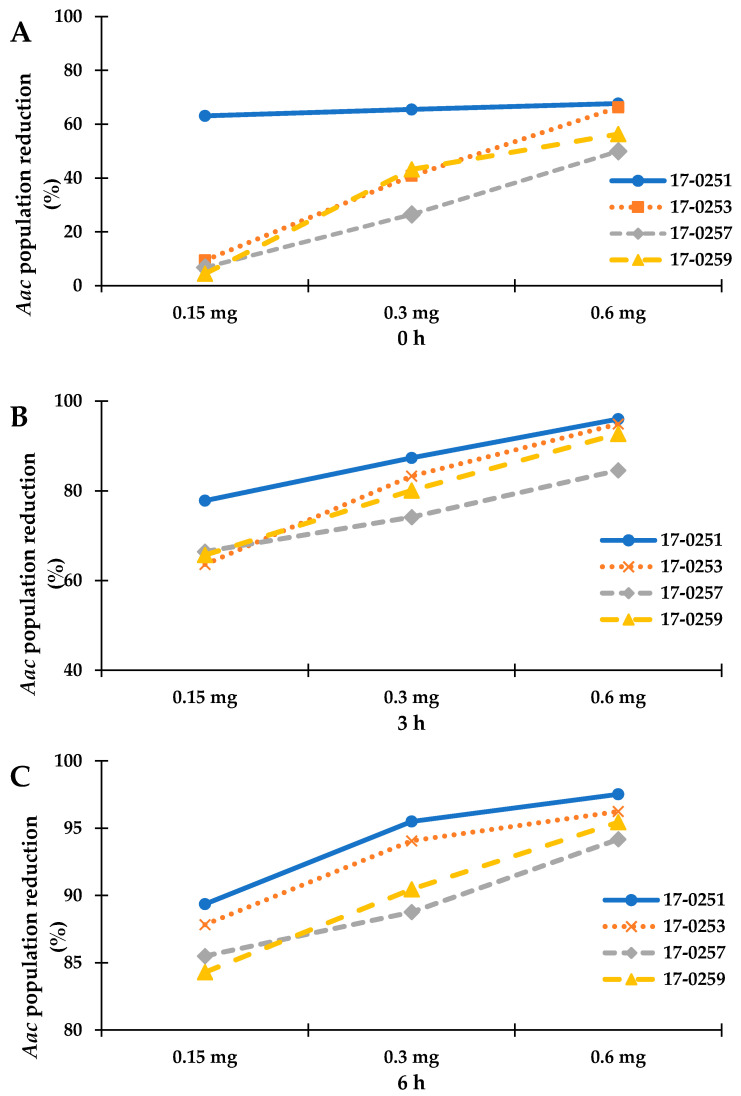
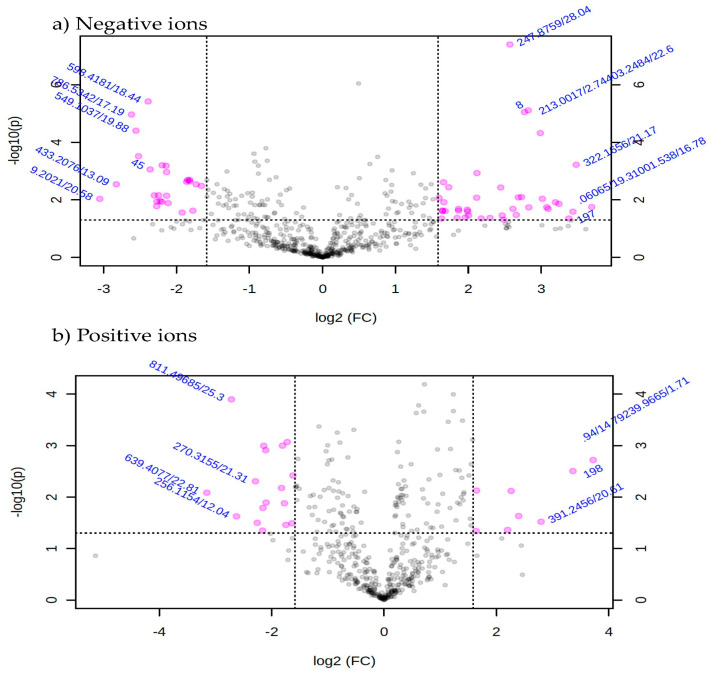
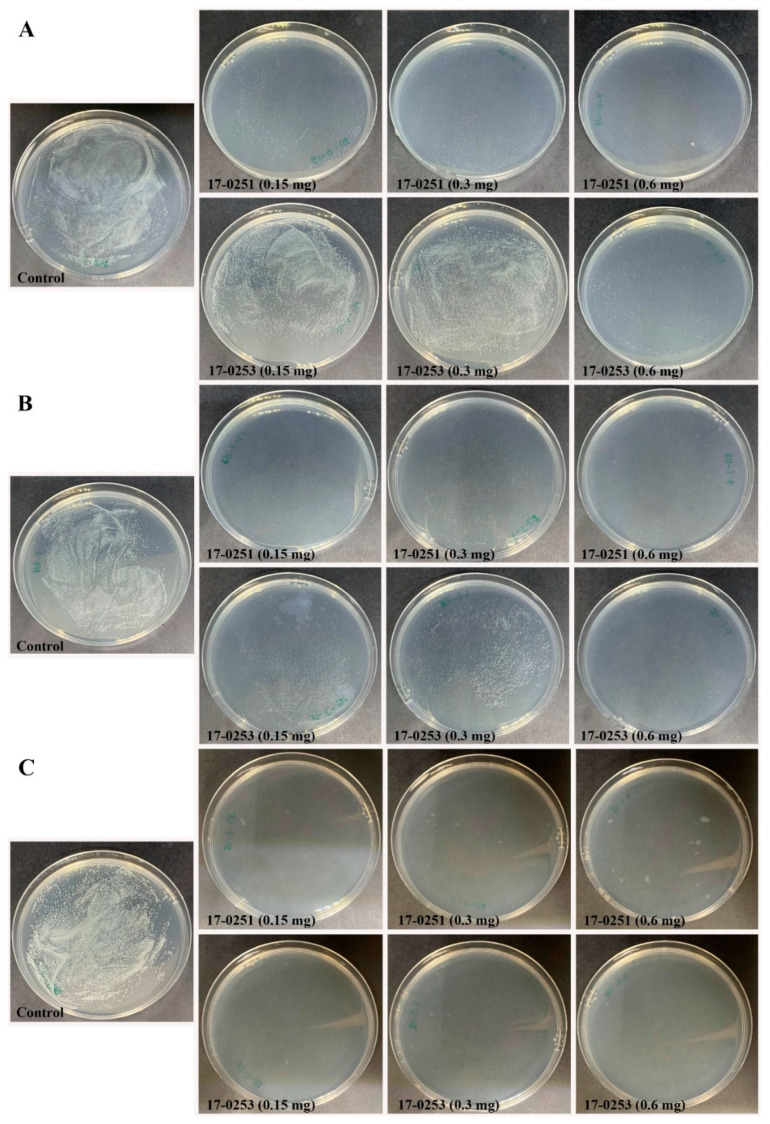
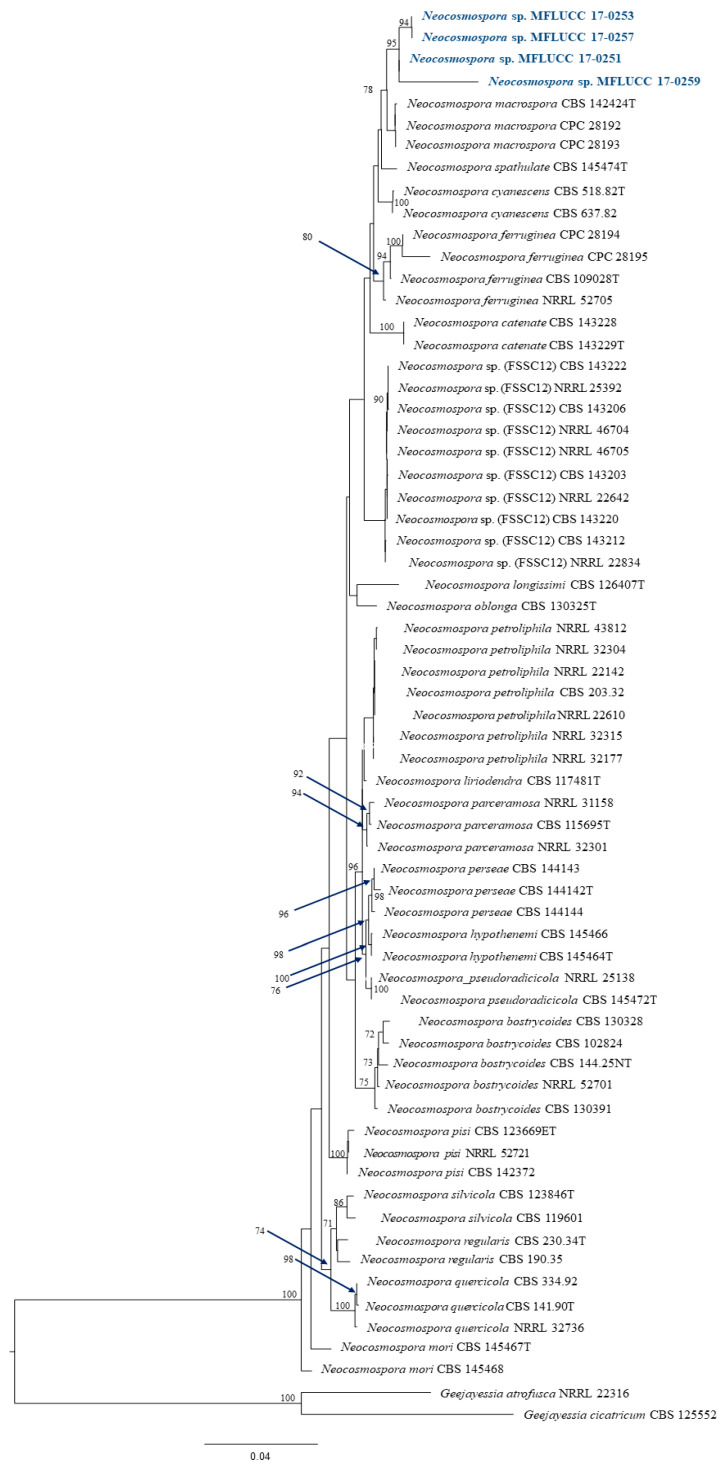
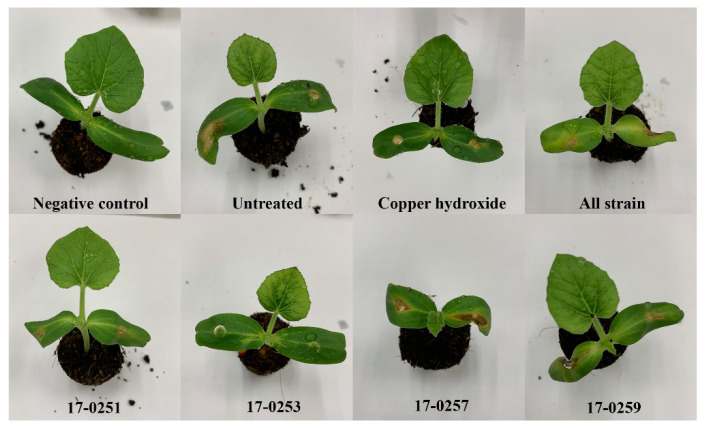
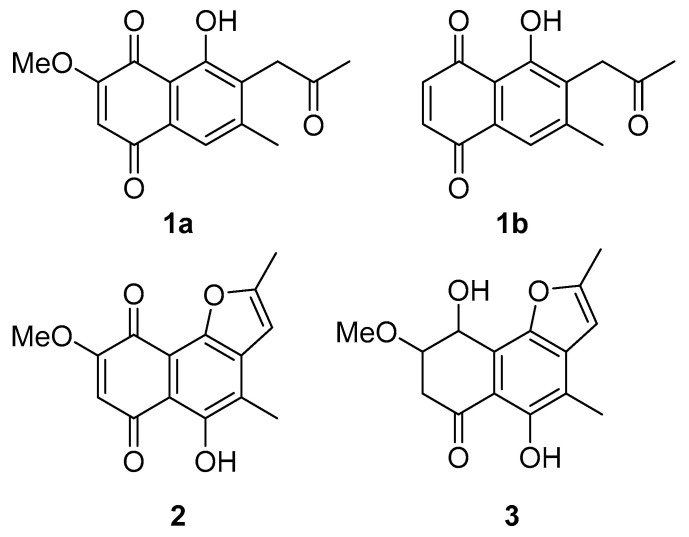
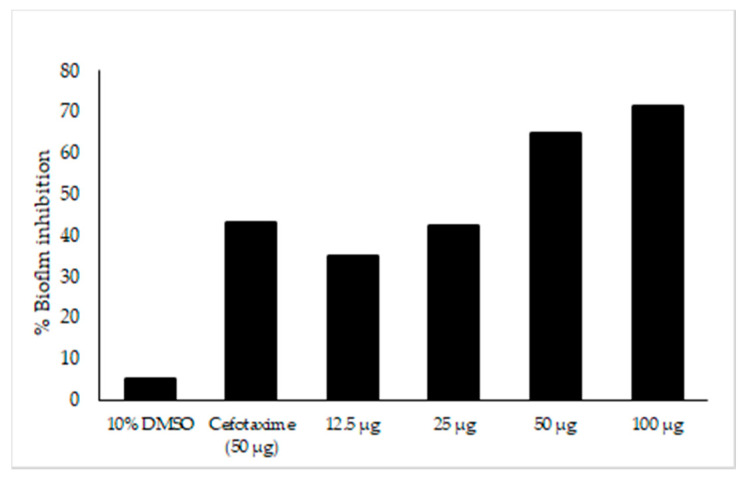
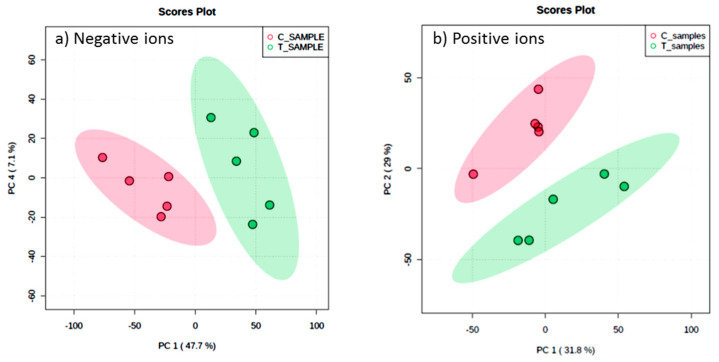
Bacterial fruit blotch (BFB) is a bacterial disease that devastates crops worldwide, causing significant economic losses. Currently, there is no means to treat or control the disease. This study focused on exploring the antibacterial properties of endophytic fungi against (), the causative agent of BFB. Based on disc diffusion, time kill and MIC microdilution broth assays, four endophytes showed promise in controlling . Nonetheless, only one strain, sp. MFLUCC 17-0253, reduced the severity of disease on watermelon and melon seedlings up to 80%. Structure analysis revealed production of several compounds by the fungus. Three of these secondary metabolites, including mixture of 2-methoxy-6-methyl-7-acetonyl-8-hydroxy-1,4-maphthalenedione and 5,8-dihydroxy-7-acetonyl-1,4-naphthalenedione, anhydrojavanicin, and fusarnaphthoquinones B exhibited antagonistic activity against . The chemical profile data experiment analyzed by LC-Q/TOF-MS suggested successful colonization of endophytic fungi in their host plant and different metabolic profiles between treated and untreated seedling. Biofilm assay also demonstrated that secondary metabolites of sp. MFLUCC 17-0253 significantly inhibited biofilm development of . To the best of our knowledge, secondary metabolites that provide significant growth inhibition of are reported for the first time. Thus, sp. MFLUCC 17-0253 possesses high potential as a biocontrol agent for BFB disease.
细菌性果斑病(BFB)是一种细菌性病害,在全球范围内对农作物造成严重破坏,导致重大经济损失。目前,尚无治疗或控制该病害的方法。本研究聚焦于探索内生真菌对细菌性果斑病病原菌()的抗菌特性。基于纸片扩散法、时间杀菌法和MIC微量稀释肉汤法,四种内生真菌在控制()方面显示出前景。然而,只有一个菌株,即sp. MFLUCC 17 - 0253,能将西瓜和甜瓜幼苗上的病害严重程度降低达80%。结构分析表明该真菌产生了几种化合物。其中三种次生代谢产物,包括2 - 甲氧基 - 6 - 甲基 - 7 - 乙酰基 - 8 - 羟基 - 1,4 - 萘二酮和5,8 - 二羟基 - 7 - 乙酰基 - 1,4 - 萘二酮的混合物、脱水爪哇霉素以及镰刀萘醌B,对()表现出拮抗活性。通过LC - Q/TOF - MS分析的化学图谱数据实验表明内生真菌成功定殖于其宿主植物中,且处理和未处理幼苗之间存在不同的代谢谱。生物膜实验还表明sp. MFLUCC 17 - 0253的次生代谢产物显著抑制()的生物膜形成。据我们所知,首次报道了对()具有显著生长抑制作用的次生代谢产物。因此,sp. MFLUCC 17 - 0253作为细菌性果斑病的生物防治剂具有很高的潜力。