• 文献检索
  • 文档翻译
  • 深度研究
  • 学术资讯
  • Suppr Zotero 插件Zotero 插件
  • 邀请有礼
  • 套餐&价格
  • 历史记录
应用&插件
Suppr Zotero 插件Zotero 插件浏览器插件Mac 客户端Windows 客户端微信小程序
定价
高级版会员购买积分包购买API积分包
服务
文献检索文档翻译深度研究API 文档MCP 服务
关于我们
关于 Suppr公司介绍联系我们用户协议隐私条款
关注我们

Suppr 超能文献

核心技术专利:CN118964589B侵权必究
粤ICP备2023148730 号-1Suppr @ 2026

文献检索

告别复杂PubMed语法,用中文像聊天一样搜索,搜遍4000万医学文献。AI智能推荐,让科研检索更轻松。

立即免费搜索

文件翻译

保留排版,准确专业,支持PDF/Word/PPT等文件格式,支持 12+语言互译。

免费翻译文档

深度研究

AI帮你快速写综述,25分钟生成高质量综述,智能提取关键信息,辅助科研写作。

立即免费体验

基于智能手机的行人导航情境下的活动识别。

Smartphone-Based Activity Recognition in a Pedestrian Navigation Context.

机构信息

Chair for Information Science, University Regensburg, 93053 Regensburg, Germany.

出版信息

Sensors (Basel). 2021 May 7;21(9):3243. doi: 10.3390/s21093243.

DOI:10.3390/s21093243
PMID:34067137
原文链接:https://pmc.ncbi.nlm.nih.gov/articles/PMC8124139/
Abstract

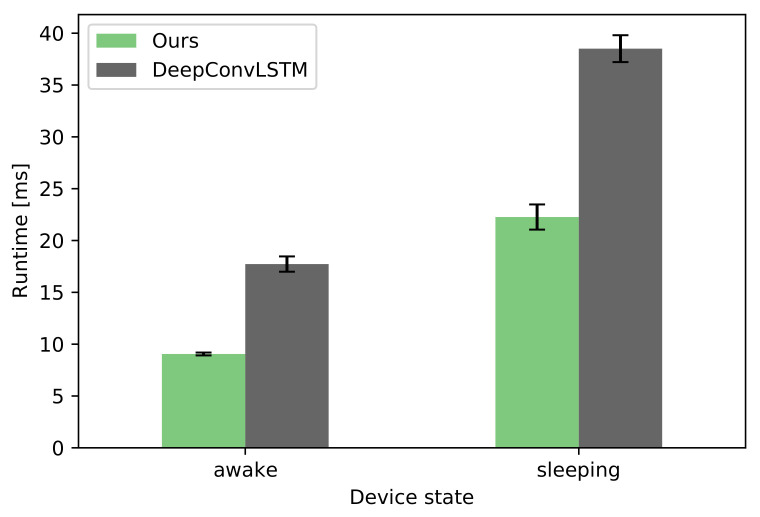
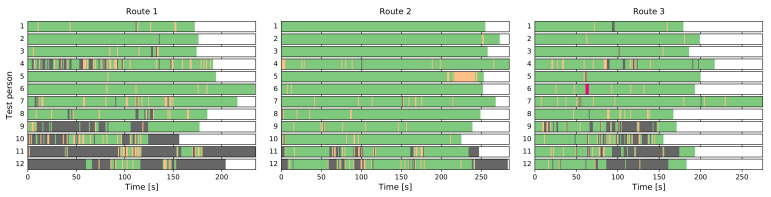
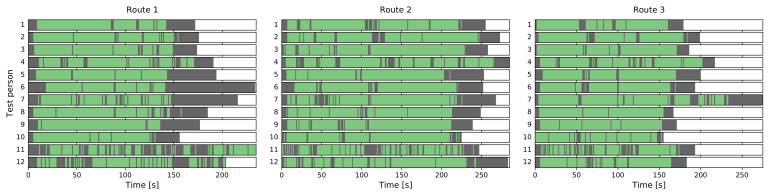
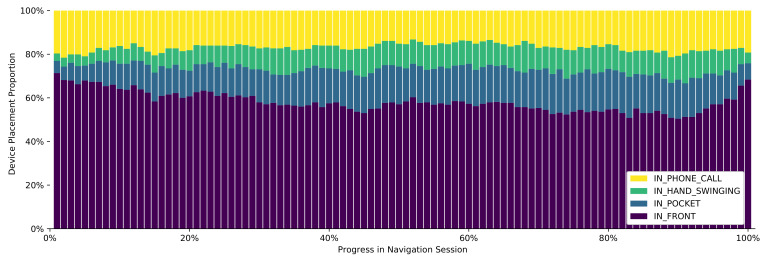
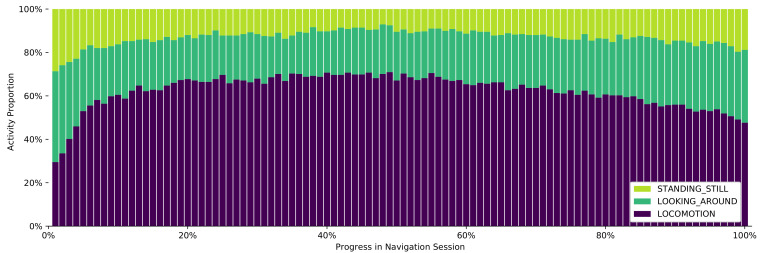
In smartphone-based pedestrian navigation systems, detailed knowledge about user activity and device placement is a key information. Landmarks such as staircases or elevators can help the system in determining the user position when located inside buildings, and navigation instructions can be adapted to the current context in order to provide more meaningful assistance. Typically, most human activity recognition (HAR) approaches distinguish between general activities such as walking, standing or sitting. In this work, we investigate more specific activities that are tailored towards the use-case of pedestrian navigation, including different kinds of stationary and locomotion behavior. We first collect a dataset of 28 combinations of device placements and activities, in total consisting of over 6 h of data from three sensors. We then use LSTM-based machine learning (ML) methods to successfully train hierarchical classifiers that can distinguish between these placements and activities. Test results show that the accuracy of device placement classification (97.2%) is on par with a state-of-the-art benchmark in this dataset while being less resource-intensive on mobile devices. Activity recognition performance highly depends on the classification task and ranges from 62.6% to 98.7%, once again performing close to the benchmark. Finally, we demonstrate in a case study how to apply the hierarchical classifiers to experimental and naturalistic datasets in order to analyze activity patterns during the course of a typical navigation session and to investigate the correlation between user activity and device placement, thereby gaining insights into real-world navigation behavior.

摘要

在基于智能手机的行人导航系统中,详细了解用户活动和设备放置位置是关键信息。地标(如楼梯或电梯)可以帮助系统确定用户在建筑物内的位置,并且可以根据当前上下文调整导航指令,以提供更有意义的帮助。通常,大多数人体活动识别(HAR)方法区分一般活动,例如行走、站立或坐着。在这项工作中,我们研究了更具体的活动,这些活动针对行人导航的用例进行了定制,包括不同类型的静止和运动行为。我们首先收集了一个包含 28 种设备放置和活动组合的数据集,总数据来自三个传感器,超过 6 小时。然后,我们使用基于 LSTM 的机器学习(ML)方法成功训练了层次分类器,可以区分这些设备放置和活动。测试结果表明,设备放置分类的准确率(97.2%)与该数据集的最新基准相当,而在移动设备上的资源消耗较少。活动识别性能高度依赖于分类任务,范围从 62.6%到 98.7%,再次接近基准。最后,我们在一个案例研究中演示了如何将层次分类器应用于实验和自然主义数据集,以分析典型导航会话过程中的活动模式,并研究用户活动和设备放置之间的相关性,从而深入了解真实世界的导航行为。
https://cdn.ncbi.nlm.nih.gov/pmc/blobs/ad8b/8124139/e790f7393c03/sensors-21-03243-g014.jpg
https://cdn.ncbi.nlm.nih.gov/pmc/blobs/ad8b/8124139/85b2b7f57f5c/sensors-21-03243-g001.jpg
https://cdn.ncbi.nlm.nih.gov/pmc/blobs/ad8b/8124139/6d9265a95613/sensors-21-03243-g002.jpg
https://cdn.ncbi.nlm.nih.gov/pmc/blobs/ad8b/8124139/1f6f61017efa/sensors-21-03243-g003.jpg
https://cdn.ncbi.nlm.nih.gov/pmc/blobs/ad8b/8124139/b06422dd1b0f/sensors-21-03243-g004.jpg
https://cdn.ncbi.nlm.nih.gov/pmc/blobs/ad8b/8124139/29560608e67c/sensors-21-03243-g005.jpg
https://cdn.ncbi.nlm.nih.gov/pmc/blobs/ad8b/8124139/5e43f3b7e234/sensors-21-03243-g006.jpg
https://cdn.ncbi.nlm.nih.gov/pmc/blobs/ad8b/8124139/27f01f688b27/sensors-21-03243-g007.jpg
https://cdn.ncbi.nlm.nih.gov/pmc/blobs/ad8b/8124139/726b4a21e612/sensors-21-03243-g008.jpg
https://cdn.ncbi.nlm.nih.gov/pmc/blobs/ad8b/8124139/0f2b21a5757b/sensors-21-03243-g009.jpg
https://cdn.ncbi.nlm.nih.gov/pmc/blobs/ad8b/8124139/6a3e15e0668a/sensors-21-03243-g010.jpg
https://cdn.ncbi.nlm.nih.gov/pmc/blobs/ad8b/8124139/18a24703eaf3/sensors-21-03243-g011.jpg
https://cdn.ncbi.nlm.nih.gov/pmc/blobs/ad8b/8124139/665fb046fef5/sensors-21-03243-g012.jpg
https://cdn.ncbi.nlm.nih.gov/pmc/blobs/ad8b/8124139/b126787fcb9c/sensors-21-03243-g013.jpg
https://cdn.ncbi.nlm.nih.gov/pmc/blobs/ad8b/8124139/e790f7393c03/sensors-21-03243-g014.jpg
https://cdn.ncbi.nlm.nih.gov/pmc/blobs/ad8b/8124139/85b2b7f57f5c/sensors-21-03243-g001.jpg
https://cdn.ncbi.nlm.nih.gov/pmc/blobs/ad8b/8124139/6d9265a95613/sensors-21-03243-g002.jpg
https://cdn.ncbi.nlm.nih.gov/pmc/blobs/ad8b/8124139/1f6f61017efa/sensors-21-03243-g003.jpg
https://cdn.ncbi.nlm.nih.gov/pmc/blobs/ad8b/8124139/b06422dd1b0f/sensors-21-03243-g004.jpg
https://cdn.ncbi.nlm.nih.gov/pmc/blobs/ad8b/8124139/29560608e67c/sensors-21-03243-g005.jpg
https://cdn.ncbi.nlm.nih.gov/pmc/blobs/ad8b/8124139/5e43f3b7e234/sensors-21-03243-g006.jpg
https://cdn.ncbi.nlm.nih.gov/pmc/blobs/ad8b/8124139/27f01f688b27/sensors-21-03243-g007.jpg
https://cdn.ncbi.nlm.nih.gov/pmc/blobs/ad8b/8124139/726b4a21e612/sensors-21-03243-g008.jpg
https://cdn.ncbi.nlm.nih.gov/pmc/blobs/ad8b/8124139/0f2b21a5757b/sensors-21-03243-g009.jpg
https://cdn.ncbi.nlm.nih.gov/pmc/blobs/ad8b/8124139/6a3e15e0668a/sensors-21-03243-g010.jpg
https://cdn.ncbi.nlm.nih.gov/pmc/blobs/ad8b/8124139/18a24703eaf3/sensors-21-03243-g011.jpg
https://cdn.ncbi.nlm.nih.gov/pmc/blobs/ad8b/8124139/665fb046fef5/sensors-21-03243-g012.jpg
https://cdn.ncbi.nlm.nih.gov/pmc/blobs/ad8b/8124139/b126787fcb9c/sensors-21-03243-g013.jpg
https://cdn.ncbi.nlm.nih.gov/pmc/blobs/ad8b/8124139/e790f7393c03/sensors-21-03243-g014.jpg

相似文献

1
Smartphone-Based Activity Recognition in a Pedestrian Navigation Context.基于智能手机的行人导航情境下的活动识别。
Sensors (Basel). 2021 May 7;21(9):3243. doi: 10.3390/s21093243.
2
Deep Learning-Based Human Activity Real-Time Recognition for Pedestrian Navigation.基于深度学习的行人导航实时人体活动识别。
Sensors (Basel). 2020 Apr 30;20(9):2574. doi: 10.3390/s20092574.
3
Recognition of Typical Locomotion Activities Based on the Sensor Data of a Smartphone in Pocket or Hand.基于智能手机在口袋或手中的传感器数据识别典型运动活动。
Sensors (Basel). 2020 Nov 17;20(22):6559. doi: 10.3390/s20226559.
4
LSTM Networks Using Smartphone Data for Sensor-Based Human Activity Recognition in Smart Homes.基于智能手机数据的 LSTM 网络在智能家居中用于基于传感器的人体活动识别。
Sensors (Basel). 2021 Feb 26;21(5):1636. doi: 10.3390/s21051636.
5
An intelligent indoor positioning system based on pedestrian directional signage object detection: a case study of Taipei Main Station.基于行人方向指示牌目标检测的智能室内定位系统:以台北车站为例。
Math Biosci Eng. 2019 Oct 8;17(1):266-285. doi: 10.3934/mbe.2020015.
6
Pedestrian Stride-Length Estimation Based on LSTM and Denoising Autoencoders.基于 LSTM 和去噪自动编码器的行人步长估计。
Sensors (Basel). 2019 Feb 18;19(4):840. doi: 10.3390/s19040840.
7
The Performance Analysis of the Map-Aided Fuzzy Decision Tree Based on the Pedestrian Dead Reckoning Algorithm in an Indoor Environment.基于室内环境中行人航位推算算法的地图辅助模糊决策树性能分析
Sensors (Basel). 2015 Dec 28;16(1):34. doi: 10.3390/s16010034.
8
Smartphone Location Recognition: A Deep Learning-Based Approach.智能手机定位识别:基于深度学习的方法。
Sensors (Basel). 2019 Dec 30;20(1):214. doi: 10.3390/s20010214.
9
Pedestrian Navigation Method Based on Machine Learning and Gait Feature Assistance.基于机器学习和步态特征辅助的行人导航方法。
Sensors (Basel). 2020 Mar 10;20(5):1530. doi: 10.3390/s20051530.
10
A Smartphone Step Counter Using IMU and Magnetometer for Navigation and Health Monitoring Applications.一种使用 IMU 和磁力计的智能手机计步器,用于导航和健康监测应用。
Sensors (Basel). 2017 Nov 8;17(11):2573. doi: 10.3390/s17112573.

引用本文的文献

1
Context-Aware Edge-Based AI Models for Wireless Sensor Networks-An Overview.基于上下文感知的边缘人工智能模型在无线传感器网络中的应用综述
Sensors (Basel). 2022 Jul 25;22(15):5544. doi: 10.3390/s22155544.

本文引用的文献

1
Recognition of Typical Locomotion Activities Based on the Sensor Data of a Smartphone in Pocket or Hand.基于智能手机在口袋或手中的传感器数据识别典型运动活动。
Sensors (Basel). 2020 Nov 17;20(22):6559. doi: 10.3390/s20226559.
2
Deep Learning-Based Human Activity Real-Time Recognition for Pedestrian Navigation.基于深度学习的行人导航实时人体活动识别。
Sensors (Basel). 2020 Apr 30;20(9):2574. doi: 10.3390/s20092574.
3
Human Activity Recognition Using Inertial Sensors in a Smartphone: An Overview.基于智能手机惯性传感器的人体活动识别:综述。
Sensors (Basel). 2019 Jul 21;19(14):3213. doi: 10.3390/s19143213.
4
Smartphone-Based Activity Recognition for Indoor Localization Using a Convolutional Neural Network.基于卷积神经网络的智能手机室内定位活动识别。
Sensors (Basel). 2019 Feb 1;19(3):621. doi: 10.3390/s19030621.
5
Deep Convolutional and LSTM Recurrent Neural Networks for Multimodal Wearable Activity Recognition.用于多模态可穿戴活动识别的深度卷积和长短期记忆循环神经网络
Sensors (Basel). 2016 Jan 18;16(1):115. doi: 10.3390/s16010115.
6
User-Independent Motion State Recognition Using Smartphone Sensors.使用智能手机传感器进行用户独立运动状态识别。
Sensors (Basel). 2015 Dec 4;15(12):30636-52. doi: 10.3390/s151229821.