Gu Fuqiang, Kealy Allison, Khoshelham Kourosh, Shang Jianga
Department of Infrastructure Engineering, University of Melbourne, Parkville, Victoria 3010, Australia.
Faculty of Information Engineering, China University of Geosciences, Wuhan 430074, China.
Sensors (Basel). 2015 Dec 4;15(12):30636-52. doi: 10.3390/s151229821.
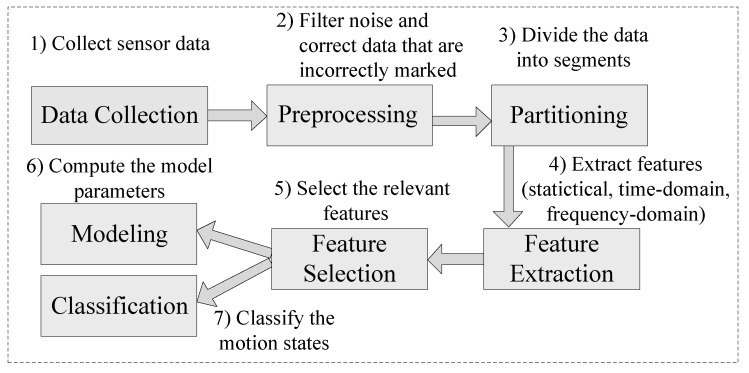
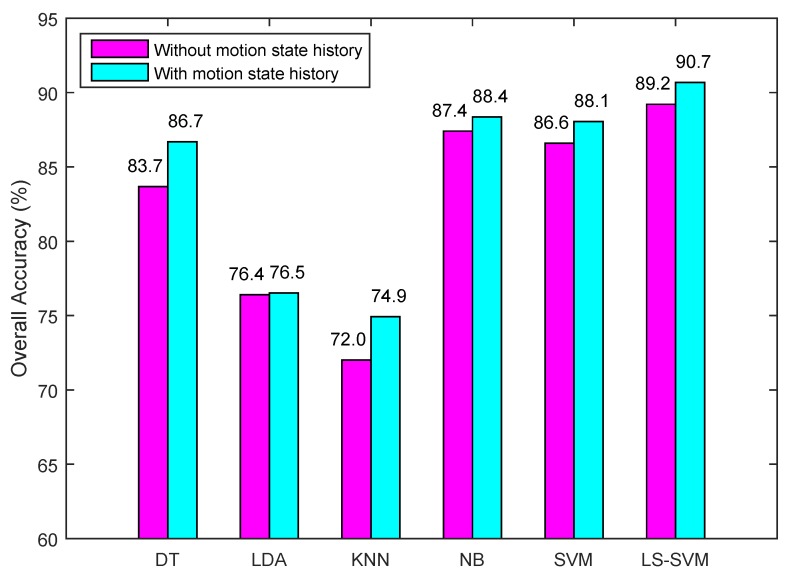
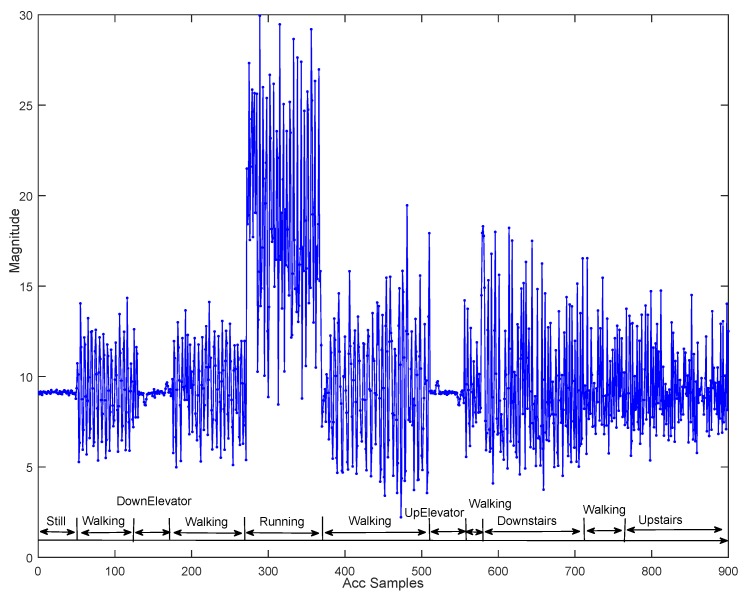
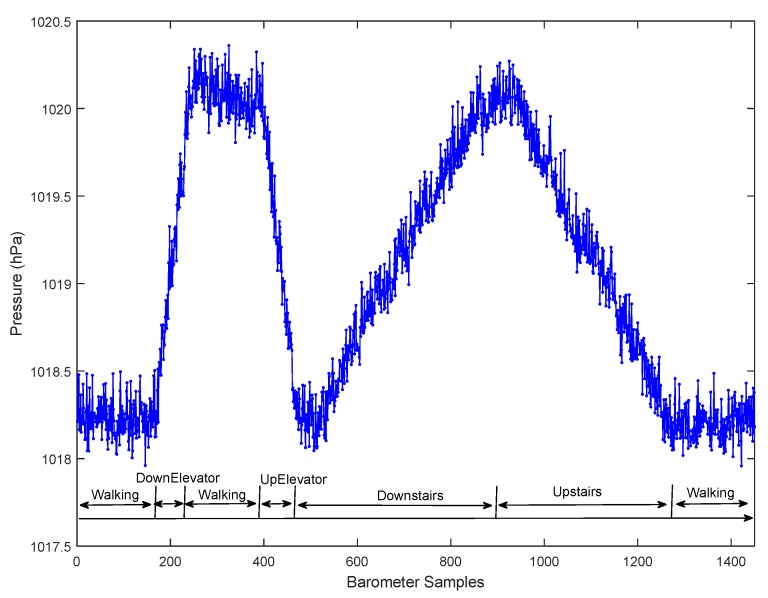
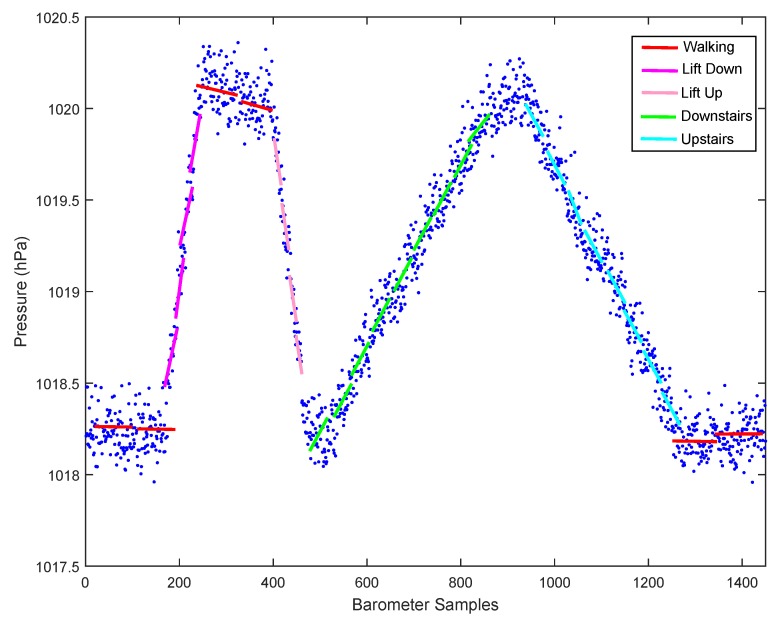
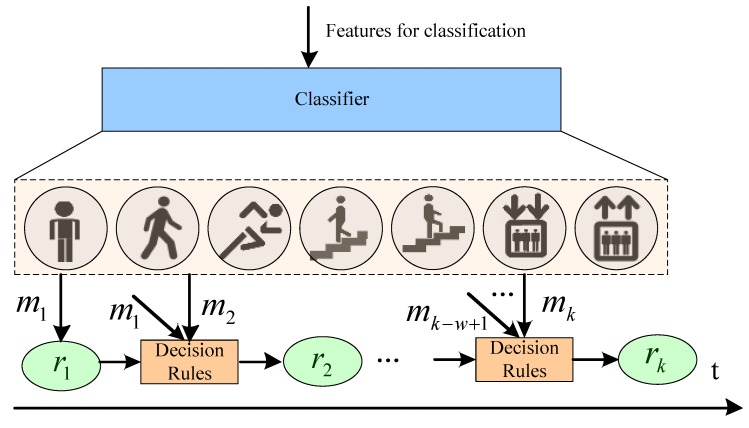
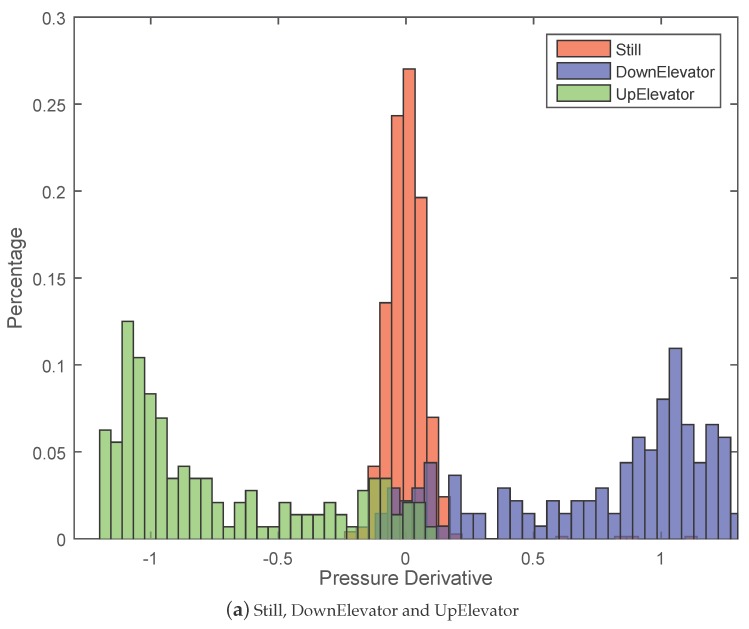
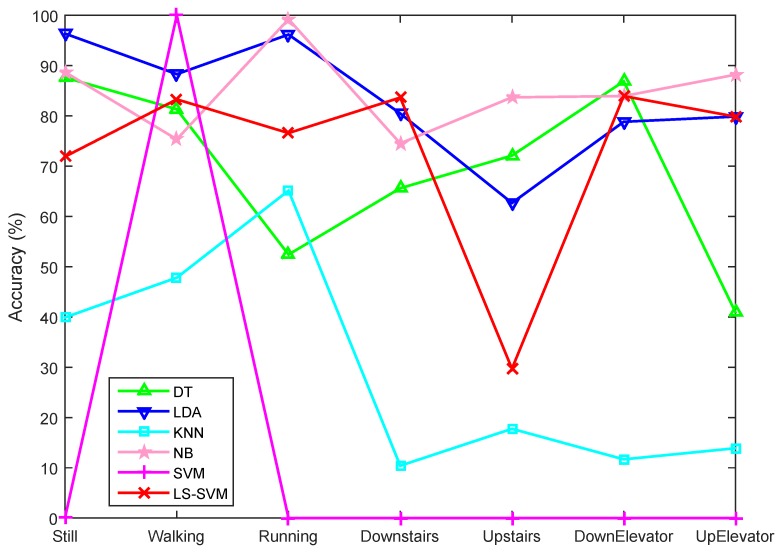
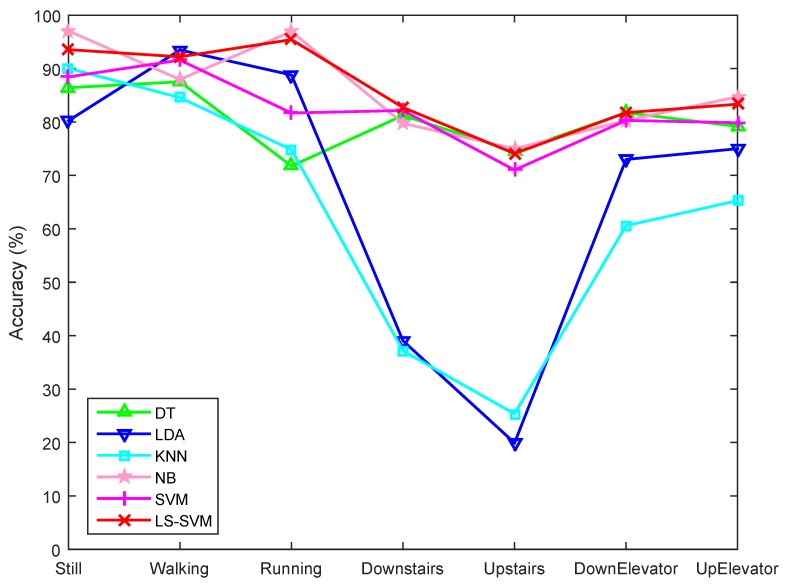
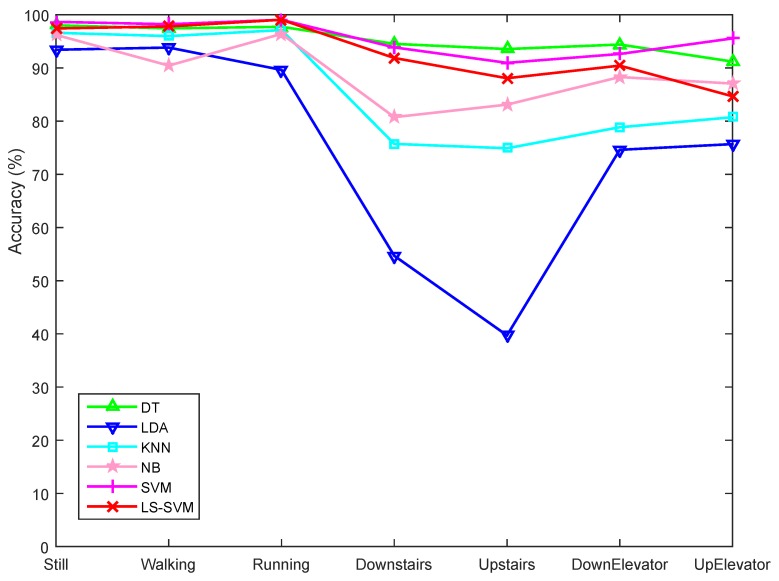
The recognition of locomotion activities (e.g., walking, running, still) is important for a wide range of applications like indoor positioning, navigation, location-based services, and health monitoring. Recently, there has been a growing interest in activity recognition using accelerometer data. However, when utilizing only acceleration-based features, it is difficult to differentiate varying vertical motion states from horizontal motion states especially when conducting user-independent classification. In this paper, we also make use of the newly emerging barometer built in modern smartphones, and propose a novel feature called pressure derivative from the barometer readings for user motion state recognition, which is proven to be effective for distinguishing vertical motion states and does not depend on specific users' data. Seven types of motion states are defined and six commonly-used classifiers are compared. In addition, we utilize the motion state history and the characteristics of people's motion to improve the classification accuracies of those classifiers. Experimental results show that by using the historical information and human's motion characteristics, we can achieve user-independent motion state classification with an accuracy of up to 90.7%. In addition, we analyze the influence of the window size and smartphone pose on the accuracy.
对诸如步行、跑步、静止等运动活动的识别,对于室内定位、导航、基于位置的服务以及健康监测等广泛应用而言至关重要。近来,利用加速度计数据进行活动识别的兴趣与日俱增。然而,仅使用基于加速度的特征时,尤其在进行独立于用户的分类时,很难区分不同的垂直运动状态和水平运动状态。在本文中,我们还利用现代智能手机中内置的新兴气压计,并提出一种名为气压计读数压力导数的新特征用于用户运动状态识别,该特征被证明对区分垂直运动状态有效且不依赖于特定用户的数据。我们定义了七种运动状态,并比较了六种常用的分类器。此外,我们利用运动状态历史和人们运动的特征来提高这些分类器的分类准确率。实验结果表明,通过使用历史信息和人类运动特征,我们能够实现独立于用户的运动状态分类,准确率高达90.7%。此外,我们分析了窗口大小和智能手机姿态对准确率的影响。