Wei Zhihuan, Xue Zhongying, Guo Qinglei
School of Microelectronics, Shandong University, Jinan 250100, China.
State Key Laboratory of Functional Materials for Informatics, Shanghai Institute of Microsystem and Information Technology, Chinese Academy of Sciences, Shanghai 200050, China.
Micromachines (Basel). 2021 May 22;12(6):600. doi: 10.3390/mi12060600.
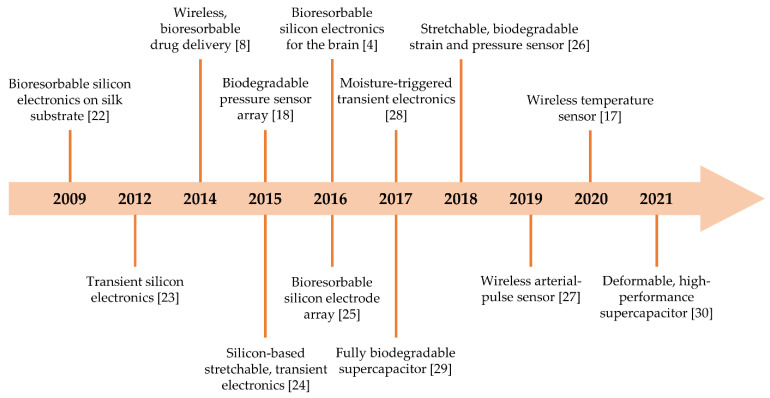
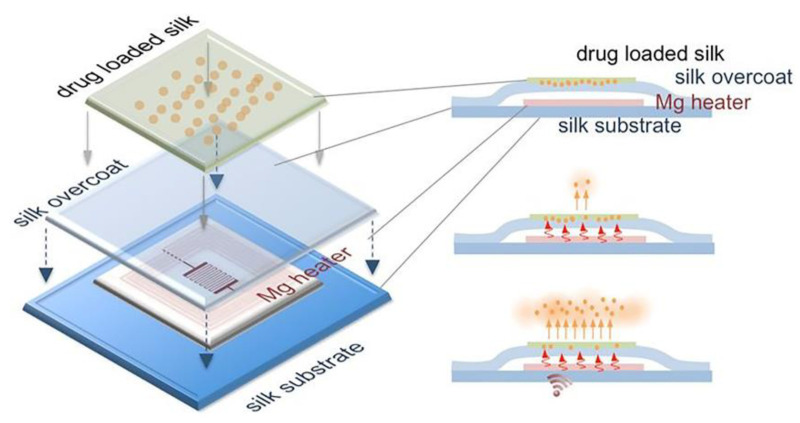
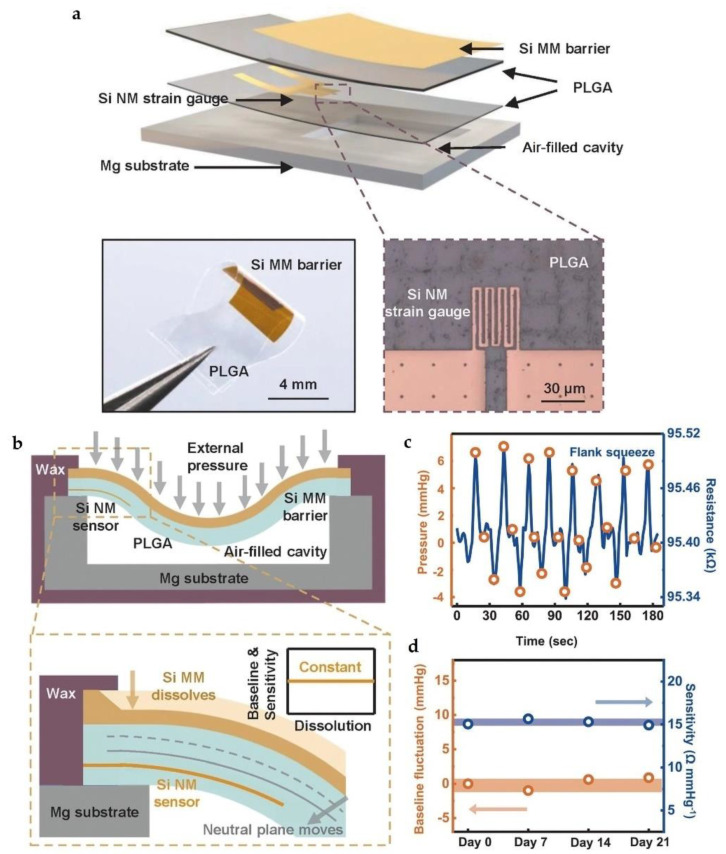
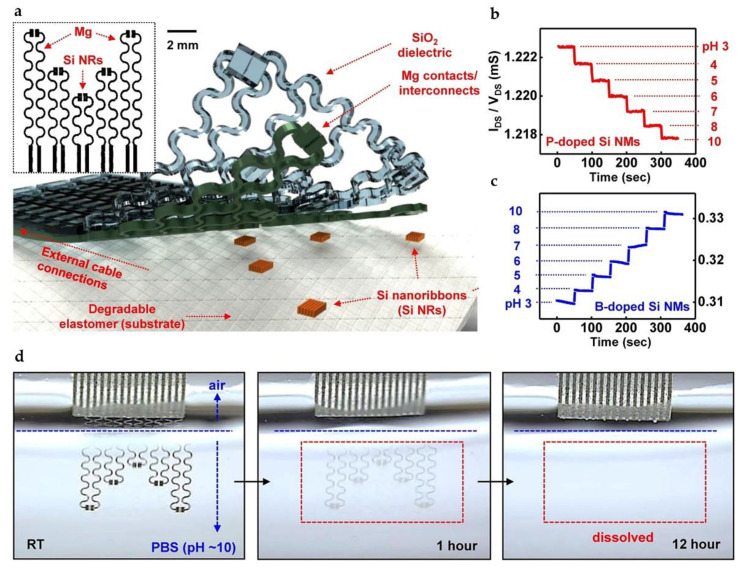
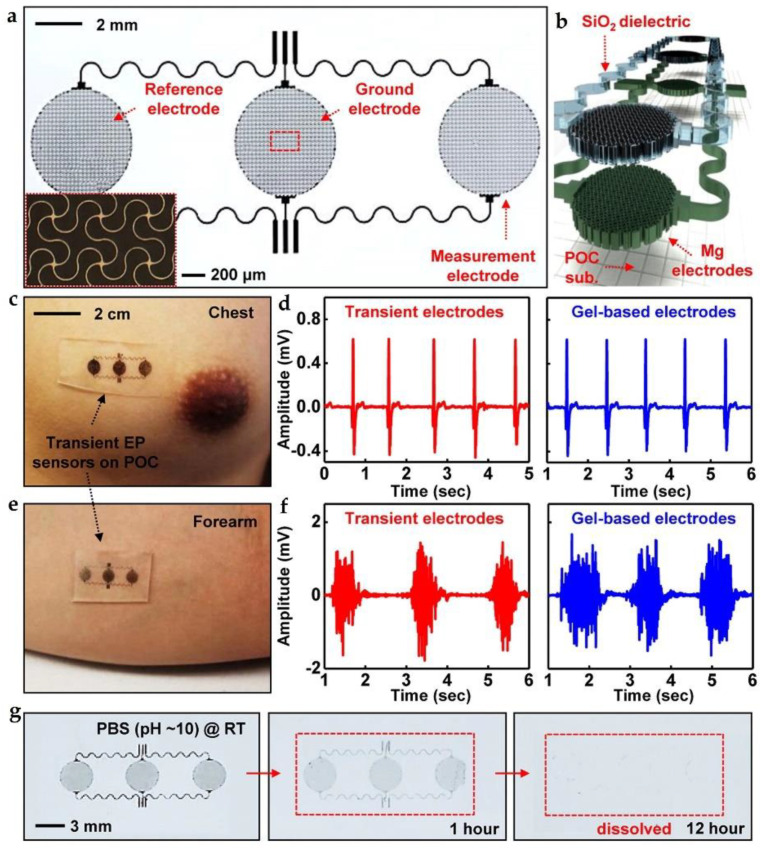
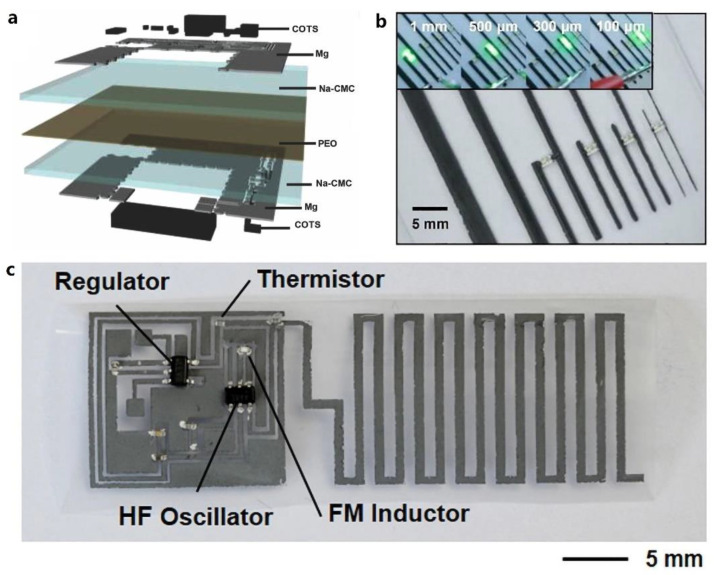
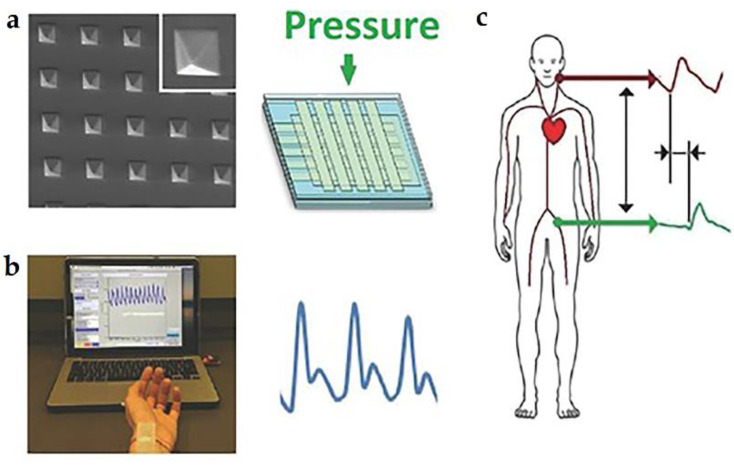
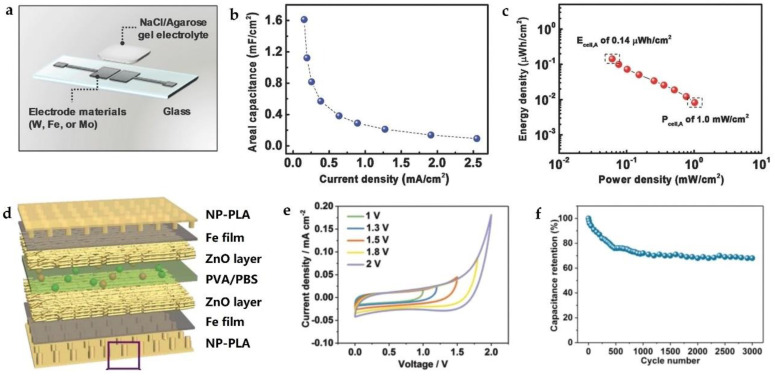
Bioresorbable electronic devices and/or systems are of great appeal in the field of biomedical engineering due to their unique characteristics that can be dissolved and resorbed after a predefined period, thus eliminating the costs and risks associated with the secondary surgery for retrieval. Among them, passive electronic components or systems are attractive for the clear structure design, simple fabrication process, and ease of data extraction. This work reviews the recent progress on bioresorbable passive electronic devices and systems, with an emphasis on their applications in biomedical engineering. Materials strategies, device architectures, integration approaches, and applications of bioresorbable passive devices are discussed. Furthermore, this work also overviews wireless passive systems fabricated with the combination of various passive components for vital sign monitoring, drug delivering, and nerve regeneration. Finally, we conclude with some perspectives on future fundamental studies, application opportunities, and remaining challenges of bioresorbable passive electronics.
由于具有独特的特性,生物可吸收电子设备和/或系统在生物医学工程领域具有很大的吸引力,这些特性使其能够在预定时间后溶解和吸收,从而消除了与二次手术取出相关的成本和风险。其中,无源电子元件或系统因其清晰的结构设计、简单的制造工艺和易于数据提取而备受关注。本文综述了生物可吸收无源电子设备和系统的最新进展,重点介绍了它们在生物医学工程中的应用。讨论了生物可吸收无源设备的材料策略、器件架构、集成方法和应用。此外,本文还概述了由各种无源元件组合而成的用于生命体征监测、药物递送和神经再生的无线无源系统。最后,我们对生物可吸收无源电子学未来的基础研究、应用机会和剩余挑战提出了一些观点。