School of Life Science, Anhui Agricultural University, Hefei 230036, China.
State Key Laboratory of Tea Plant Biology and Utilization, Anhui Agricultural University, Hefei 230036, China.
Molecules. 2021 May 14;26(10):2919. doi: 10.3390/molecules26102919.
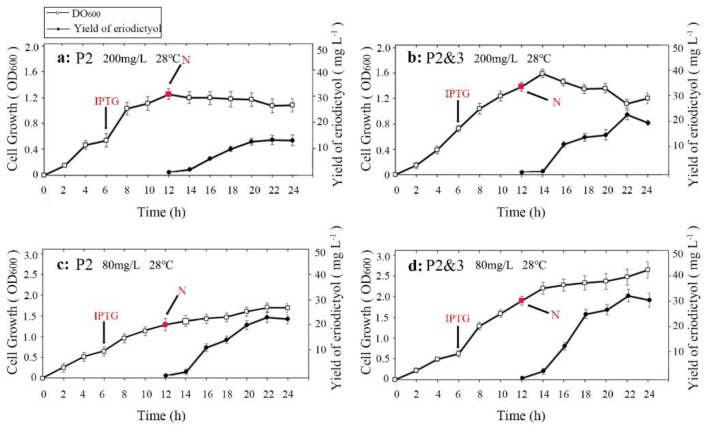
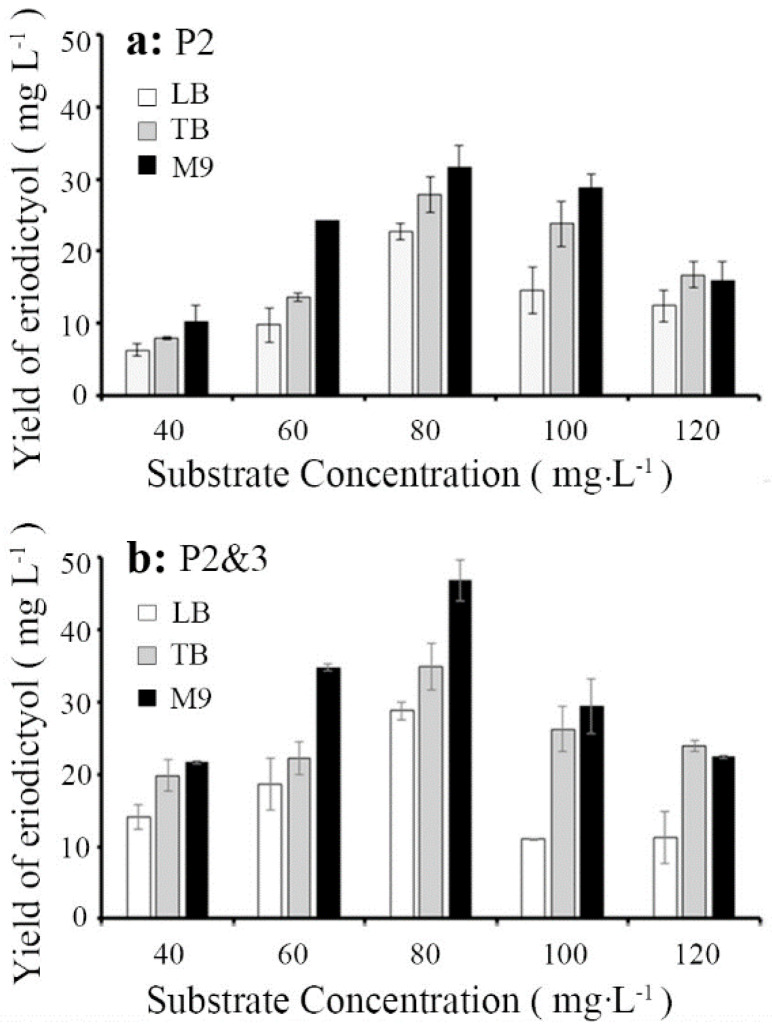
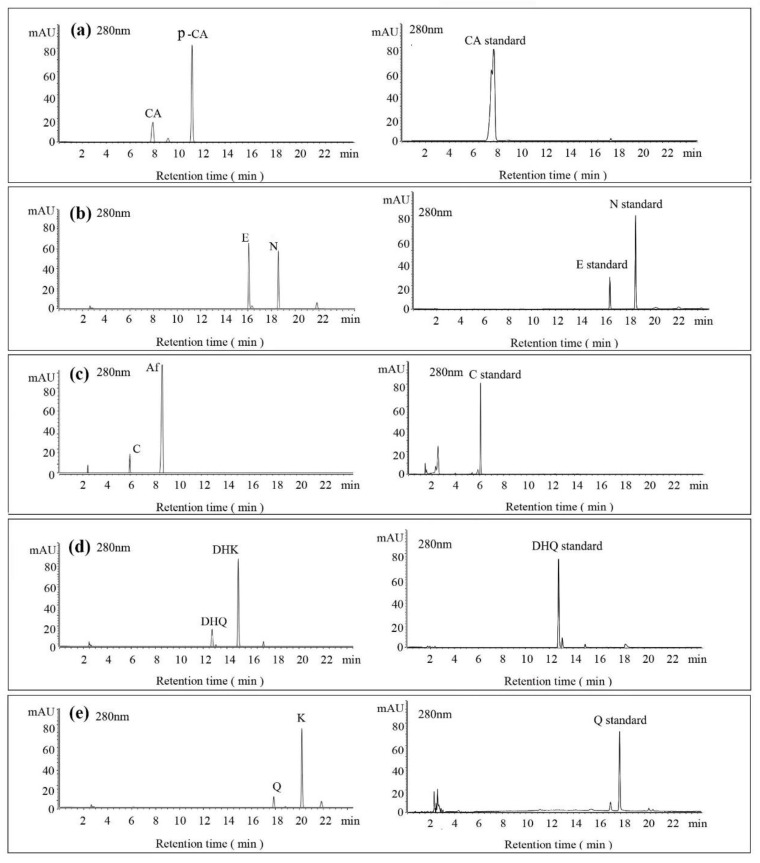
Flavonoids are important plant metabolites that exhibit a wide range of physiological and pharmaceutical functions. Because of their wide biological activities, such as anti-inflammatory, antioxidant, antiaging and anticancer, they have been widely used in foods, nutraceutical and pharmaceuticals industries. Here, the hydroxylase complex was selected for the efficient in vivo production of -hydroxylated flavonoids. Several expression vectors were constructed, and the corresponding products were successfully detected by feeding naringenin to vector-carrying strains. However, when was linked with an S-Tag on the C terminus, the enzyme activity was significantly affected. The optimal culture conditions were determined, including a substrate concentration of 80 mg·L, an induction temperature of 28 °C, an M9 medium, and a substrate delay time of 6 h after IPTG induction. Finally, the efficiency of eriodictyol conversion from P2&3-carrying strains fed naringin was up to 57.67 ± 3.36%. The same strategy was used to produce catechin and caffeic acid, and the highest conversion efficiencies were 35.2 ± 3.14 and 32.93 ± 2.01%, respectively. In this paper, the catalytic activity of on dihydrokaempferol and kaempferol was demonstrated for the first time. This study demonstrates a feasible method for efficiently synthesizing in vivo B-ring dihydroxylated flavonoids, such as catechins, flavanols, dihydroflavonols and flavonols, in a bacterial expression system.
类黄酮是重要的植物代谢物,具有广泛的生理和药理功能。由于其广泛的生物活性,如抗炎、抗氧化、抗衰老和抗癌作用,它们已被广泛应用于食品、营养保健品和制药行业。在这里,选择羟化酶复合物用于高效体内生产β-羟基化黄酮类化合物。构建了几个表达载体,并通过向携带载体的菌株喂食柚皮素成功检测到相应的产物。然而,当 C 末端带有 S-Tag 时,酶活性受到显著影响。确定了最佳的培养条件,包括底物浓度为 80mg·L、诱导温度为 28°C、M9 培养基和 IPTG 诱导后 6 小时的底物延迟时间。最后,从携带 P2&3 的菌株中转化圣草酚的效率高达 57.67±3.36%。采用相同的策略生产儿茶素和咖啡酸,最高转化率分别为 35.2±3.14%和 32.93±2.01%。本文首次证明了在体内合成二氢杨梅素和杨梅素时,羟化酶对二氢杨梅素和杨梅素的催化活性。本研究证明了在细菌表达系统中高效合成体内 B 环二羟基化黄酮类化合物(如儿茶素、黄烷醇、二氢黄酮醇和黄酮醇)的可行方法。