Heart, Mind & Body Research Group, Griffith University, Gold Coast, QLD 4222, Australia.
Int J Environ Res Public Health. 2021 May 14;18(10):5243. doi: 10.3390/ijerph18105243.
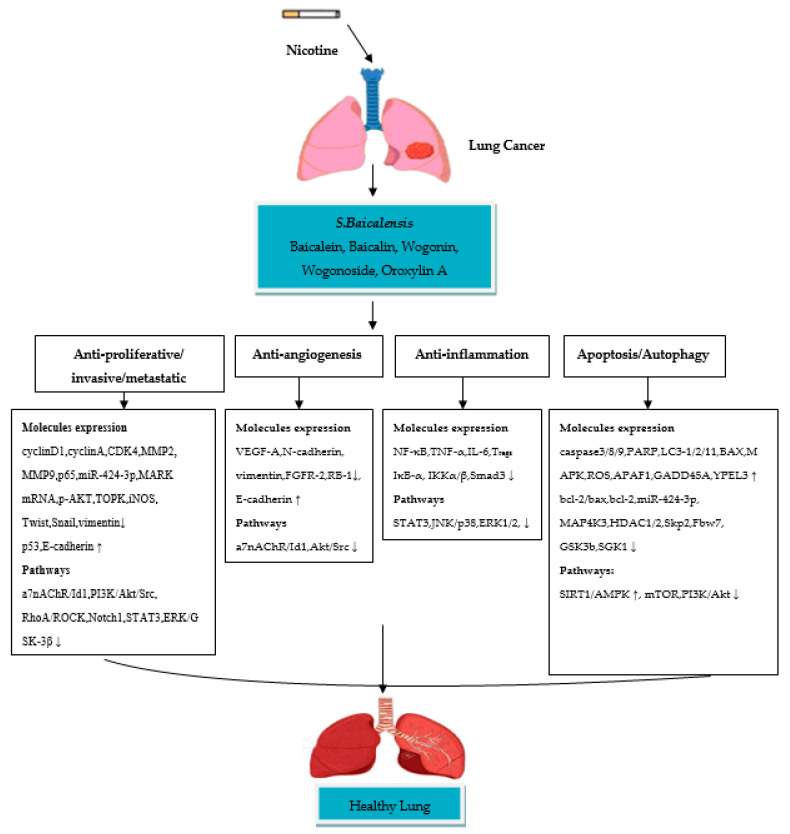
Flavonoids as the largest group of natural phytochemical compounds have received significant attention, as demonstrated by clinical trials, due to their chemotherapeutic and/or pharmacological effects against non-small-cell lung cancer (NSCLC) and asthma. (), known as one of the most popular medicinal plants and used in several countries, contains natural active flavone constituents, with the major compounds of the roots being baicalein, baicalin, wogonin, wogonoside and oroxylin A. and their compounds are proven to have inhibitory effects on NSCLC cells when used at different concentrations. However, the exact mechanisms by which these compounds exert their therapeutic effects against asthma remain unexplored. Indeed, the mechanisms by which and its flavone compounds exert a protective effect against nicotine-induced NSCLC and asthma are not yet fully understood. Therefore, this review explores the mechanisms involved in the therapeutic potential of flavone-rich extracts from in nicotine-induced NSCLC and asthma.
类黄酮作为最大的天然植物化学化合物群体,由于其对非小细胞肺癌 (NSCLC) 和哮喘的化学治疗和/或药理作用,已受到临床试验的广泛关注。()作为最受欢迎的药用植物之一,在多个国家被使用,含有天然的活性黄酮成分,其根的主要化合物为黄芩素、黄芩苷、汉黄芩素、汉黄芩苷和木樨草素 A。当以不同浓度使用时,和其化合物被证明对 NSCLC 细胞具有抑制作用。然而,这些化合物对哮喘发挥治疗作用的确切机制仍未被探索。事实上,和其类黄酮化合物对尼古丁诱导的 NSCLC 和哮喘发挥保护作用的机制尚未完全阐明。因此,本综述探讨了富含类黄酮的提取物在尼古丁诱导的 NSCLC 和哮喘中的治疗潜力所涉及的机制。