School of Economics and Management, Beihang University, Beijing 100191, China.
Beijing Key Laboratory of Emergency Support Simulation Technologies for City Operation, Beijing 100191, China.
Int J Environ Res Public Health. 2021 May 19;18(10):5422. doi: 10.3390/ijerph18105422.
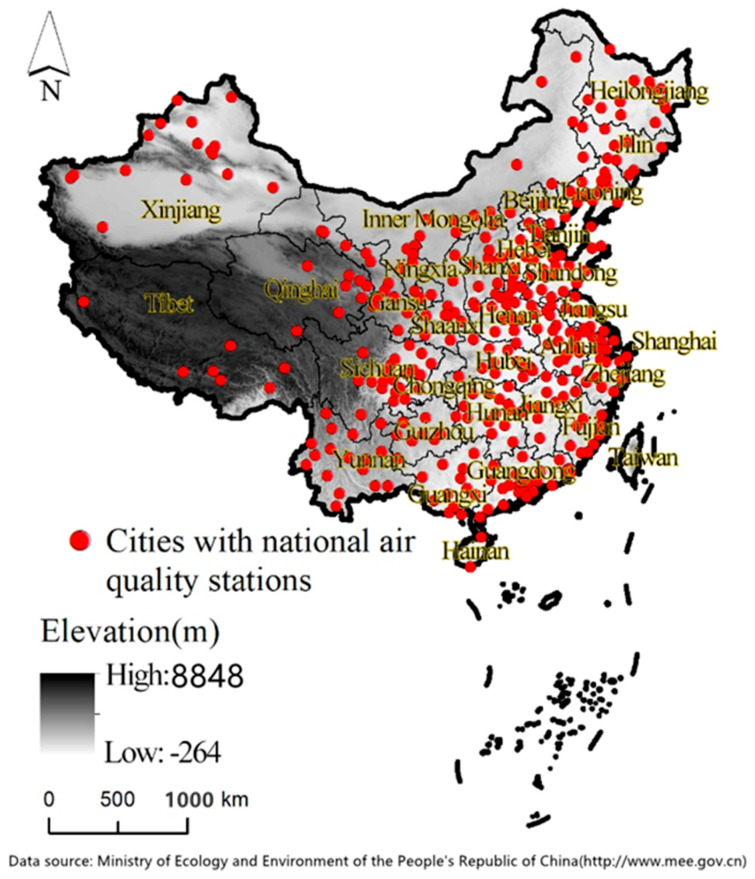
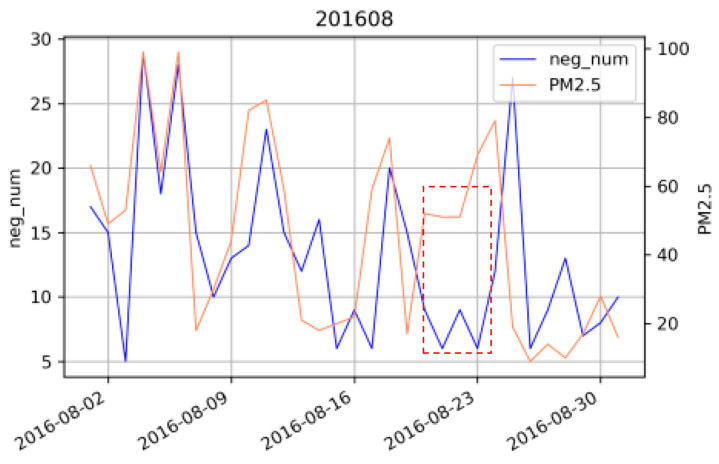
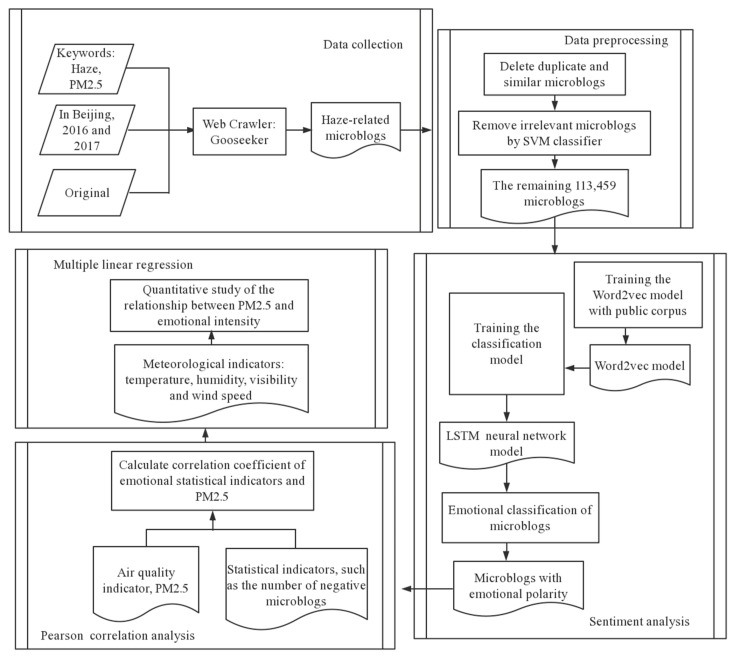
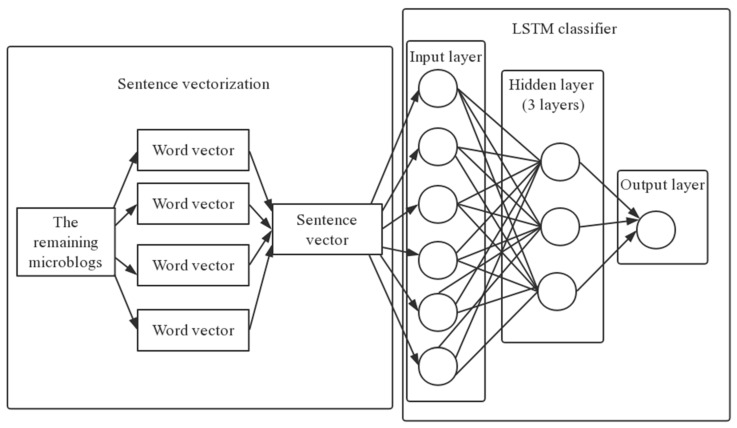
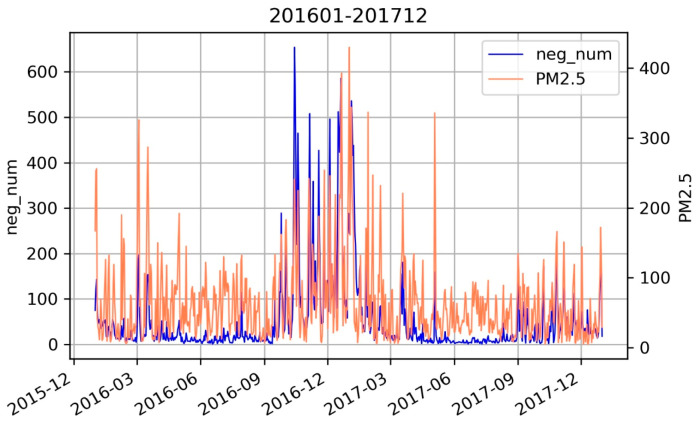
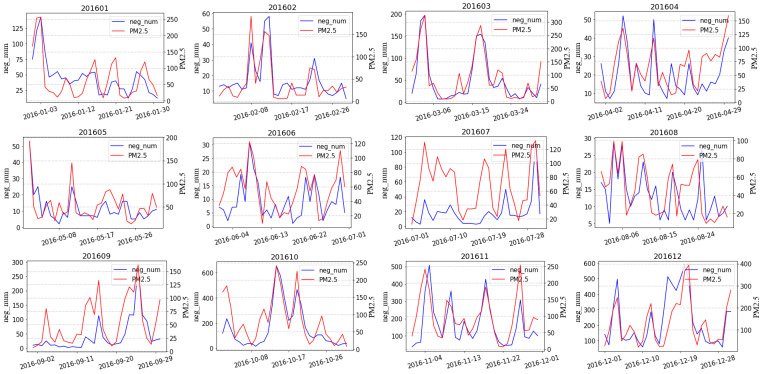
PM not only harms physical health but also has negative impacts on the public's wellbeing and cognitive and behavioral patterns. However, traditional air quality assessments may fail to provide comprehensive, real-time monitoring of air quality because of the sparse distribution of air quality monitoring stations. Overcoming some key limitations of traditional surface monitoring data, Web-based social media platforms, such as Twitter, Weibo, and Facebook, provide a promising tool and novel perspective for environmental monitoring, prediction, and evaluation. This study aims to investigate the relationship between PM levels and people's emotional intensity by observing social media postings. This study defines the "emotional intensity" indicator, which is measured by the number of negative posts on Weibo, based on Weibo data related to haze from 2016 and 2017. This study estimates sentiment polarity using a recurrent neural networks model based on LSTM (Long Short-Term Memory) and verifies the correlation between high PM levels and negative posts on Weibo using a Pearson correlation coefficient and multiple linear regression model. This study makes the following observations: (1) Taking the two-year data as an example, this study recorded the significant influence of PM levels on netizens' posting behavior. (2) Air quality, meteorological factors, the seasons, and other factors have a strong influence on netizens' emotional intensity. (3) From a quantitative viewpoint, the level of PM varies by 1 unit, and the number of negative Weibo posts fluctuates by 1.0168 units. Thus, it can be concluded that netizens' emotional intensity is significantly positively affected by levels of PM. The high correlation between PM levels and emotional intensity and the sensitivity of social media data shows that social media data can be used to provide a new perspective on the assessment of air quality.
PM 不仅危害身体健康,对公众的幸福感以及认知和行为模式也有负面影响。然而,由于空气质量监测站分布稀疏,传统的空气质量评估可能无法提供全面、实时的空气质量监测。基于推特(Twitter)、微博(Weibo)和脸书(Facebook)等网络社交媒体平台,克服了传统地面监测数据的一些关键局限性,为环境监测、预测和评估提供了一种很有前景的工具和新颖视角。本研究旨在通过观察社交媒体发布内容,研究 PM 水平与人们情绪强度之间的关系。本研究定义了“情绪强度”指标,该指标基于 2016 年和 2017 年与微博雾霾相关的数据,通过微博上的负面帖子数量来衡量。本研究使用基于长短期记忆网络(LSTM)的递归神经网络模型估计情感极性,并使用 Pearson 相关系数和多元线性回归模型验证高 PM 水平与微博负面帖子之间的相关性。本研究得出以下结论:(1)以两年的数据为例,本研究记录了 PM 水平对网民发布行为的显著影响。(2)空气质量、气象因素、季节等因素对网民的情绪强度有很强的影响。(3)从定量的角度来看,PM 水平每变化 1 个单位,微博上的负面帖子数量就波动 1.0168 个单位。因此,可以得出结论,PM 水平显著正向影响网民的情绪强度。PM 水平与情绪强度之间的高度相关性以及社交媒体数据的敏感性表明,社交媒体数据可用于提供空气质量评估的新视角。