Environmental Health Department, Faculty of Health Sciences, University of Johannesburg, Johannesburg 2028, South Africa.
Nursing Department, Faculty of Health Sciences, University of Johannesburg, Johannesburg 2028, South Africa.
Int J Environ Res Public Health. 2021 May 18;18(10):5355. doi: 10.3390/ijerph18105355.
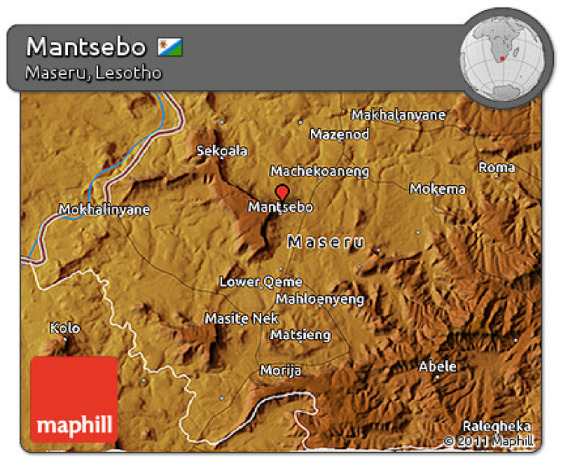
Solid waste management (SWM) is the greatest challenge facing environmental protection and human wellbeing in the rural communities of Maseru (Kingsom of Lesotho). A lack of formal waste management (WM) systems in rural areas of Maseru have resulted in different indigenous systems and practices of SWM. Direct observation and descriptive designs will be employed. This is a mixed methods study of qualitative, quantitative and, non-experimental. We obtained data sets from existing official census and statistics of Maseru. We sampled 693 participants from total population of 6917. We received ethical clearance from Research Ethics committee of Health Sciences at the University of Johannesburg, we recruited six field workers. We have preventive equipment (sanitizers, masks, and sterile latex gloves) for COVID-19 infections in place; we have specific design on caps, masks and bags that will identify field workers as they collect data. We will train field workers, administer questionnaires, interview, and observe participants. STATKON will analyse data. The research will share the results with the Ministry of Environment and the community in Lesotho. The results will also be used to educate the rural communities on improved WM. Where weaknesses are identified, mitigation measures can be evaluated and implemented to rectify the negative aspects and improve the systems and practices. The rural communities face challenges such as waste collection services and sanitation facilities and this fact points out that there is a gap in SWM, which favours the existence of indigenous systems and practice of SWM.
固体废物管理(SWM)是马塞卢(莱索托国王)农村社区环境保护和人类福祉面临的最大挑战。马塞卢农村地区缺乏正式的废物管理(WM)系统,导致出现了不同的本土固体废物管理系统和实践。我们将采用直接观察和描述性设计。这是一项定性、定量和非实验混合方法研究。我们从马塞卢现有的官方人口普查和统计数据中获取了数据集。我们从总人口 6917 人中抽取了 693 名参与者。我们获得了约翰内斯堡大学健康科学研究伦理委员会的伦理批准,我们招募了六名实地工作者。我们有针对 COVID-19 感染的预防设备(消毒剂、口罩和无菌乳胶手套);我们有专门的帽子、口罩和袋子设计,以便在收集数据时识别现场工作人员。我们将培训实地工作者,管理问卷调查、访谈和观察参与者。STATKON 将分析数据。研究结果将与莱索托环境部和社区分享。研究结果还将用于教育农村社区改善 WM。如果发现弱点,可以评估和实施缓解措施,以纠正负面方面并改进系统和实践。农村社区面临废物收集服务和卫生设施等挑战,这一事实表明 SWM 存在差距,这有利于本土 SWM 系统和实践的存在。