Donate Ricardo, Alemán-Domínguez María Elena, Monzón Mario
Grupo de Investigación en Fabricación Integrada y Avanzada, Departamento de Ingeniería Mecánica, Universidad de Las Palmas de Gran Canaria, Campus Universitario de Tafira s/n, 35017 Las Palmas, Spain.
Polymers (Basel). 2021 May 18;13(10):1643. doi: 10.3390/polym13101643.
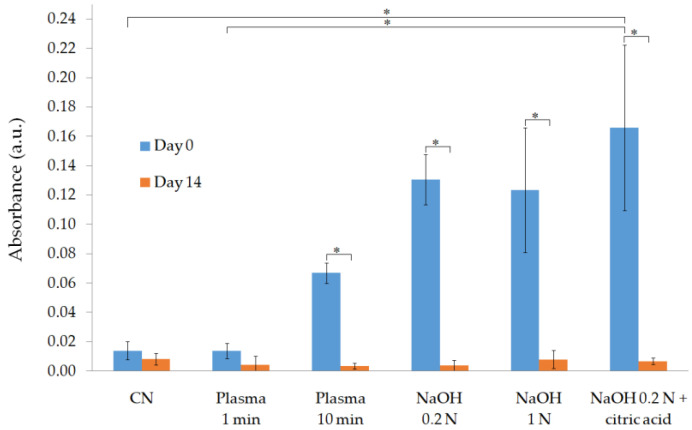
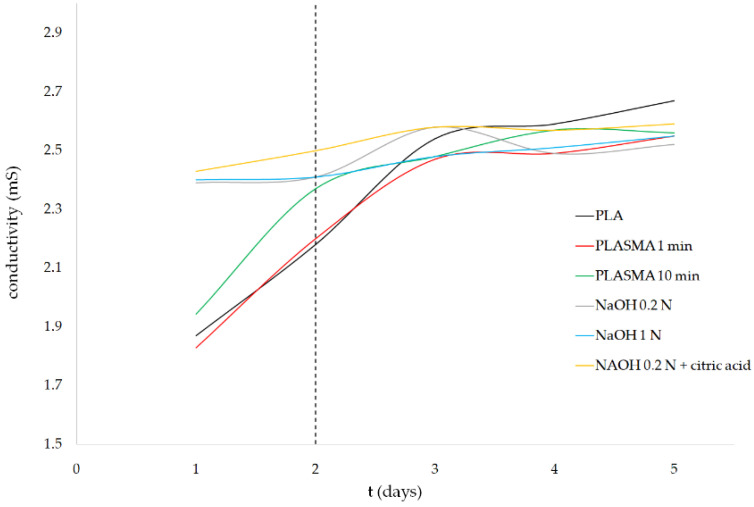
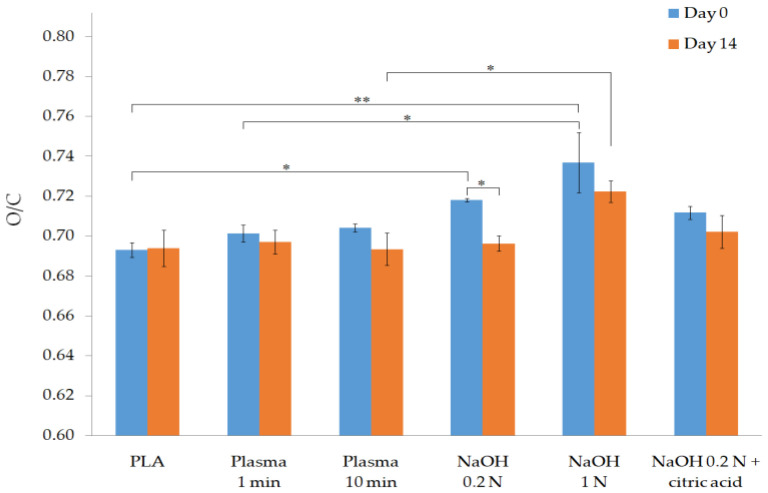
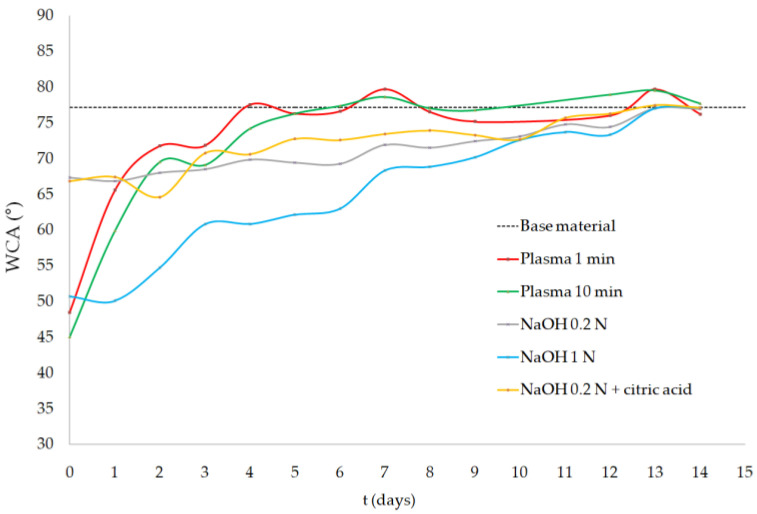
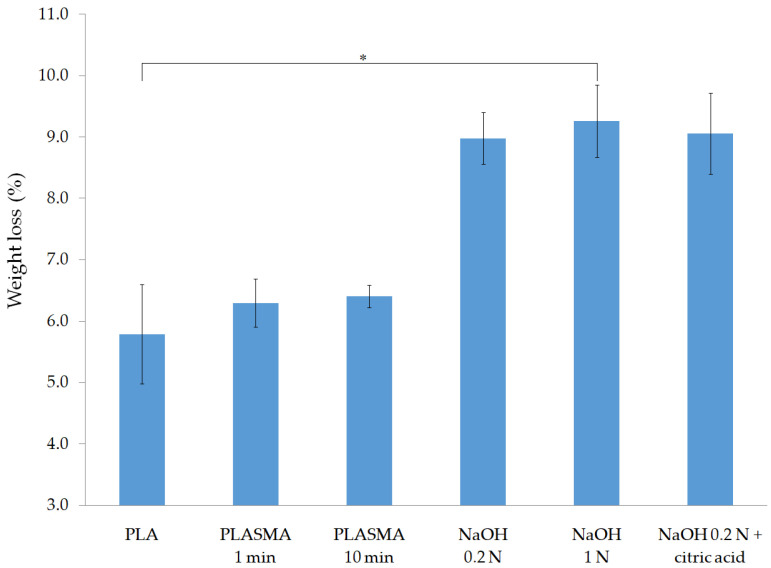
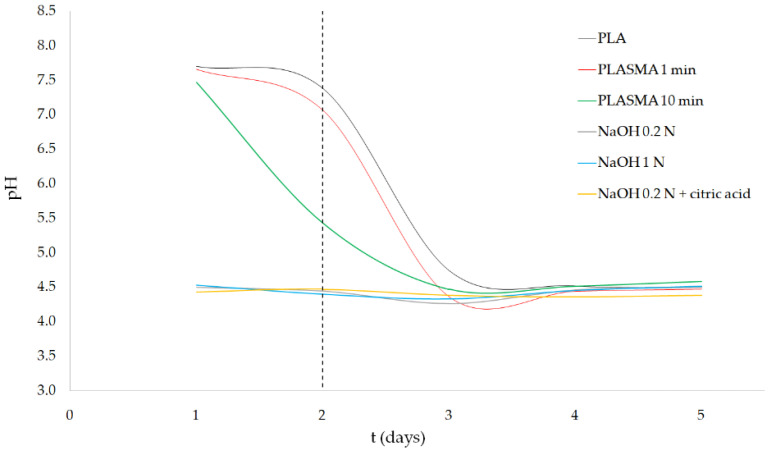
Surface modification of 3D-printed PLA structures is a major issue in terms of increasing the biofunctionality and expanding the tissue engineering applications of these parts. In this paper, different exposure times were used for low-pressure oxygen plasma applied to PLA 3D-printed scaffolds. Alkali surface treatments were also evaluated, aiming to compare the modifications introduced on the surface properties by each strategy. Surface-treated samples were characterized through the quantification of carboxyl groups, energy-dispersive X-ray spectroscopy, water contact angle measurements, and differential scanning calorimetry analysis. The change in the surface properties was studied over a two-week period. In addition, an enzymatic degradation analysis was carried out to evaluate the effect of the surface treatments on the degradation profile of the 3D structures. The physicochemical characterization results suggest different mechanism pathways for each type of treatment. Alkali-treated scaffolds showed a higher concentration of carboxyl groups on their surface, which enhanced the enzymatic degradation rate, but were also proven to be more aggressive towards 3D-printed structures. In contrast, the application of the plasma treatments led to an increased hydrophilicity of the PLA surface without affecting the bulk properties. However, the changes on the properties were less steady over time.
对3D打印聚乳酸(PLA)结构进行表面改性,是提高其生物功能以及拓展这些部件在组织工程中应用的一个主要问题。本文中,对应用于PLA 3D打印支架的低压氧等离子体采用了不同的暴露时间。还评估了碱表面处理,旨在比较每种策略对表面性质所引入的改性。通过羧基定量、能量色散X射线光谱分析、水接触角测量和差示扫描量热分析对经表面处理的样品进行了表征。在两周的时间内研究了表面性质的变化。此外,还进行了酶降解分析,以评估表面处理对3D结构降解曲线的影响。物理化学表征结果表明每种处理方式都有不同的作用机制途径。经碱处理的支架表面羧基浓度更高,这提高了酶降解速率,但也被证明对3D打印结构更具侵蚀性。相比之下,等离子体处理使PLA表面亲水性增加,而不影响本体性能。然而,随着时间的推移,性能变化不太稳定。