de Sire Alessandro, Marotta Nicola, Demeco Andrea, Moggio Lucrezia, Paola Pasquale, Marotta Marcello, Iona Teresa, Invernizzi Marco, Leigheb Massimiliano, Ammendolia Antonio
Department of Medical and Surgical Sciences, University of Catanzaro "Magna Graecia", 88100 Catanzaro, Italy.
Faculty of Applied Health Sciences, Brock University, St. Catharines, ON L2S3A1, Canada.
Diagnostics (Basel). 2021 May 30;11(6):997. doi: 10.3390/diagnostics11060997.
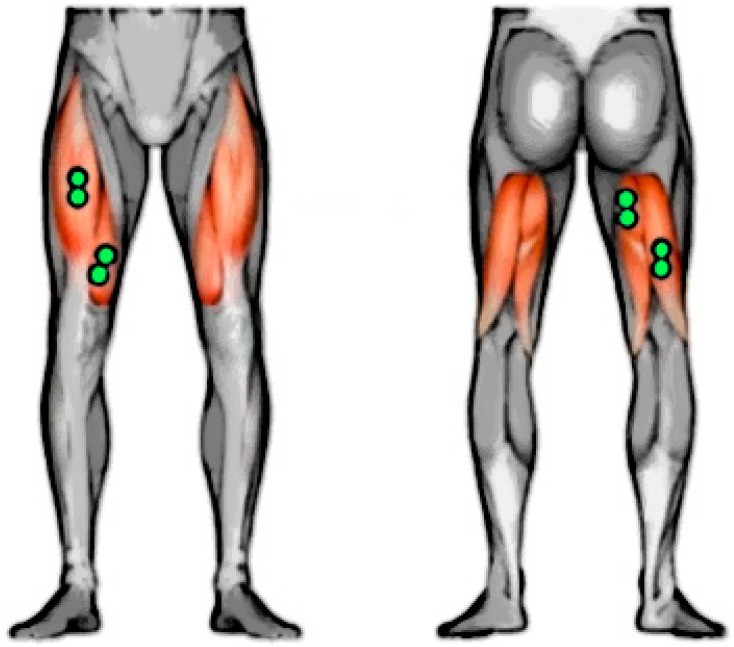
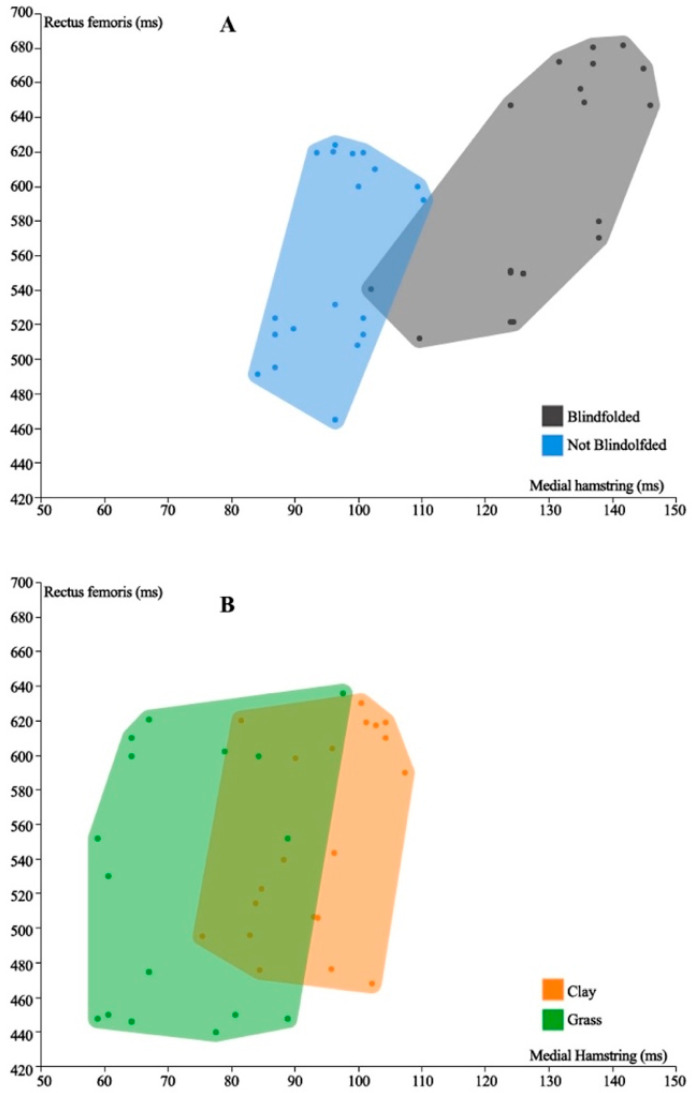
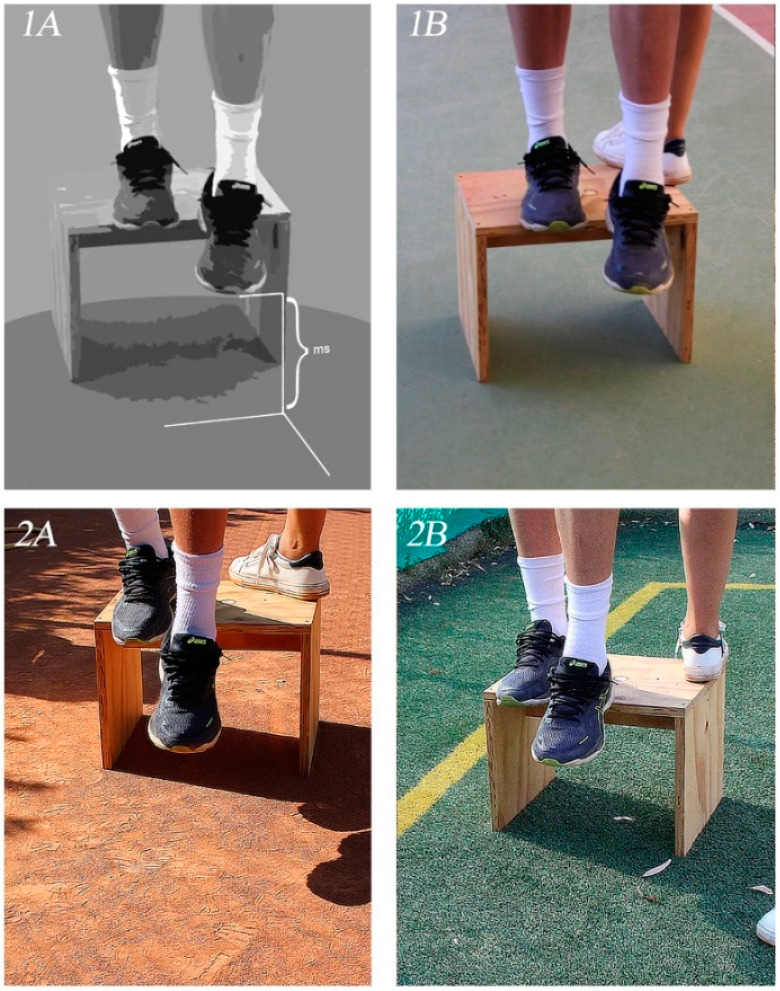
Anterior cruciate ligament (ACL) injury incidence is often underestimated in tennis players, who are considered as subjects conventionally less prone to knee injuries. However, evaluation of the preactivation of knee stabilizer muscles by surface electromyography (sEMG) showed to be a predictive value in the assessment of the risk of ACL injury. Therefore, this proof-of-concept study aimed at evaluating the role of visual input on the thigh muscle preactivation through sEMG to reduce ACL injury risk in tennis players. We recruited male, adult, semiprofessional tennis players from July to August 2020. They were asked to drop with the dominant lower limb from a step, to evaluate-based on dynamic valgus stress-the preactivation time of the rectus femoris (RF), vastus medialis, biceps femoris, and medial hamstrings (MH), through sEMG. To highlight the influence of visual inputs, the athletes performed the test blindfolded and not blindfolded on both clay and grass surfaces. We included 20 semiprofessional male players, with a mean age 20.3 ± 4.8 years; results showed significant early muscle activation when the subject lacked visual input, but also when faced with a less-safe surface such as clay over grass. Considering the posteromedial-anterolateral relationship (MH/RF ratio), tennis players showed a significant higher MH/RF ratio if blindfolded (22.0 vs. 17.0% not blindfolded; < 0.01) and percentage of falling on clay (17.0% vs. 14.0% in grass; < 0.01). This proof-of-principle study suggests that in case of absence of visual input or falling on a surface considered unsafe (clay), neuro-activation would tend to protect the anterior stress of the knee. Thus, the sEMG might play a crucial role in planning adequate athletic preparation for semiprofessional male athletes in terms of reduction of ACL injury risk.
前交叉韧带(ACL)损伤的发生率在网球运动员中常常被低估,他们通常被认为是传统上较少容易发生膝关节损伤的人群。然而,通过表面肌电图(sEMG)对膝关节稳定肌的预激活进行评估,在ACL损伤风险评估中显示出具有预测价值。因此,这项概念验证研究旨在通过sEMG评估视觉输入对大腿肌肉预激活的作用,以降低网球运动员ACL损伤的风险。我们在2020年7月至8月招募了成年男性半职业网球运动员。要求他们用优势下肢从一级台阶上跳下,通过sEMG基于动态外翻应力评估股直肌(RF)、股内侧肌、股二头肌和内侧腘绳肌(MH)的预激活时间。为了突出视觉输入的影响,运动员在红土和草地表面分别进行了蒙眼和不蒙眼测试。我们纳入了20名男性半职业运动员,平均年龄20.3±4.8岁;结果显示,当受试者缺乏视觉输入时,以及面对诸如红土(相对于草地)这种不太安全的表面时,肌肉会显著提前激活。考虑到后内侧 - 前外侧关系(MH/RF比值),网球运动员蒙眼时的MH/RF比值显著更高(蒙眼时为22.0%,不蒙眼时为17.0%;P<0.01),并且在红土上摔倒的百分比(红土上为17.0%,草地上为14.0%;P<0.01)。这项原理验证研究表明,在缺乏视觉输入或摔倒在被认为不安全的表面(红土)的情况下,神经激活倾向于保护膝关节的前向应力。因此,就降低ACL损伤风险而言,sEMG可能在为男性半职业运动员规划适当的运动准备方面发挥关键作用。