Saitoh Issei, Sato Masahiro, Kiyokawa Yuki, Inada Emi, Iwase Yoko, Ibano Natsumi, Noguchi Hirofumi
Department of Pediatric Dentistry, Asahi University School of Dentistry, Hozumi 501-0296, Japan.
National Center for Child Health and Development, Department of Genome Medicine, Tokyo 157-8535, Japan.
Pharmaceutics. 2021 May 23;13(6):780. doi: 10.3390/pharmaceutics13060780.
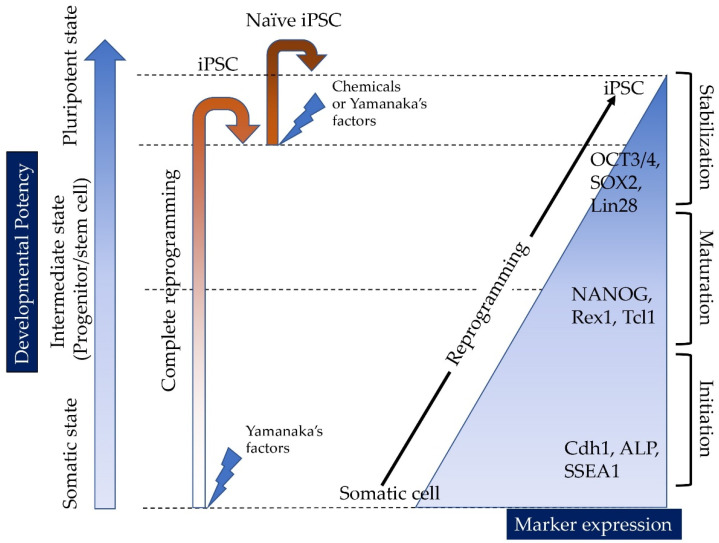
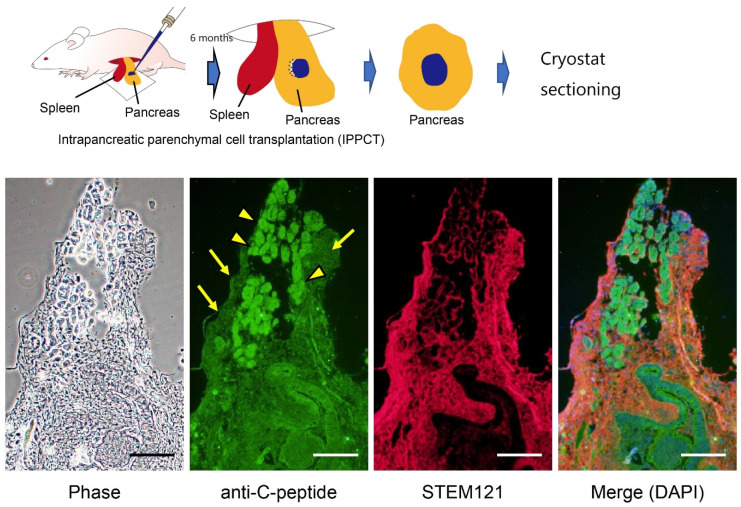
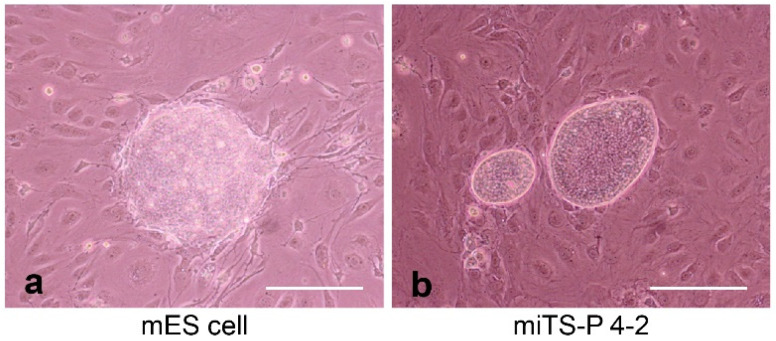
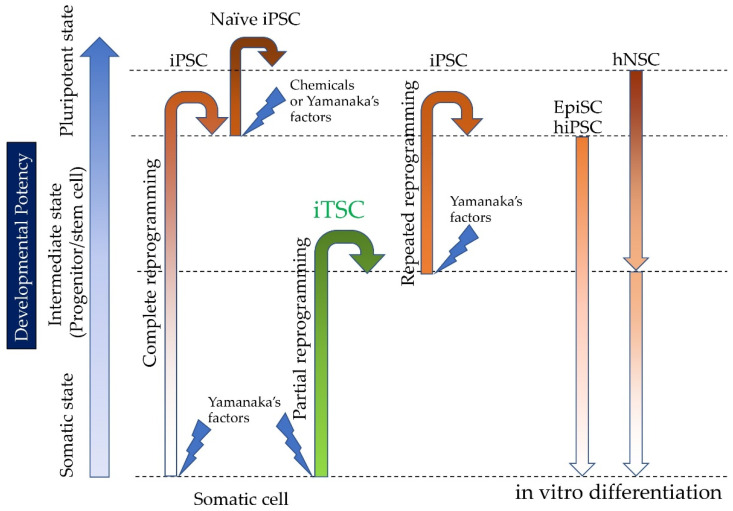
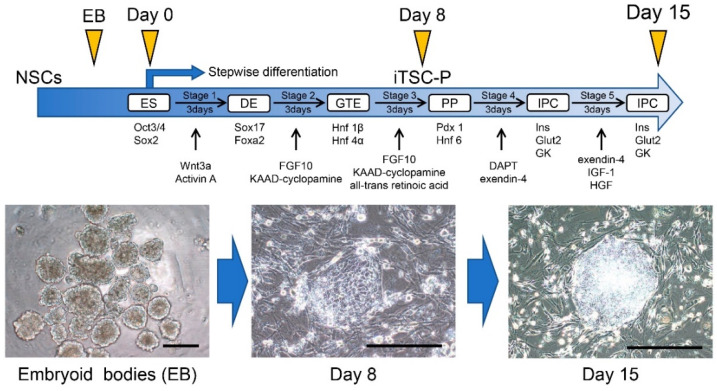
Induced tissue-specific stem cells (iTSCs) are partially reprogrammed cells which have an intermediate state, such as progenitors or stem cells. They originate from the de-differentiation of differentiated somatic cells into pluripotent stem cells, such as induced pluripotent stem cells (iPSCs) and embryonic stem cells (ESCs), or from the differentiation of undifferentiated cells. They show a limited capacity to differentiate and a morphology similar to that of somatic cell stem cells present in tissues, but distinct from that of iPSCs and ESCs. iTSCs can be generally obtained 7 to 10 days after reprogramming of somatic cells with Yamanaka's factors, and their fibroblast-like morphology remains unaltered. iTSCs can also be obtained directly from iPSCs cultured under conditions allowing cellular differentiation. In this case, to effectively induce iTSCs, additional treatment is required, as exemplified by the conversion of iPSCs into naïve iPSCs. iTSCs can proliferate continuously in vitro, but when transplanted into immunocompromised mice, they fail to generate solid tumors (teratomas), implying loss of tumorigenic potential. The low tendency of iTSCs to elicit tumors is beneficial, especially considering applications for regenerative medicine in humans. Several iTSC types have been identified, including iTS-L, iTS-P, and iTS-D, obtained by reprogramming hepatocytes, pancreatic cells, and deciduous tooth-derived dental pulp cells, respectively. This review provides a brief overview of iPSCs and discusses recent advances in the establishment of iTSCs and their possible applications in regenerative medicine.
诱导组织特异性干细胞(iTSCs)是具有中间状态的部分重编程细胞,如祖细胞或干细胞。它们源自分化的体细胞去分化为多能干细胞,如诱导多能干细胞(iPSCs)和胚胎干细胞(ESCs),或源自未分化细胞的分化。它们表现出有限的分化能力,其形态与组织中存在的体细胞干细胞相似,但与iPSCs和ESCs不同。在用山中因子重编程体细胞后7至10天通常可获得iTSCs,其成纤维细胞样形态保持不变。iTSCs也可直接从在允许细胞分化的条件下培养的iPSCs中获得。在这种情况下,为了有效诱导iTSCs,需要额外的处理,例如将iPSCs转化为原始iPSCs。iTSCs可以在体外持续增殖,但移植到免疫缺陷小鼠中时,它们不会产生实体瘤(畸胎瘤),这意味着致瘤潜力丧失。iTSCs引发肿瘤的倾向较低是有益的,特别是考虑到其在人类再生医学中的应用。已经鉴定出几种iTSC类型,包括分别通过重编程肝细胞、胰腺细胞和乳牙来源的牙髓细胞获得的iTS-L、iTS-P和iTS-D。本综述简要概述了iPSCs,并讨论了iTSCs建立的最新进展及其在再生医学中的可能应用。