Division of Pediatric Dentistry, Graduate School of Medical and Dental Science, Niigata University, Niigata, Japan.
Department of Pediatric Dentistry, Kagoshima University Graduate School of Medical and Dental Sciences, Kagoshima, Japan.
Sci Rep. 2019 Feb 6;9(1):1490. doi: 10.1038/s41598-018-37291-2.
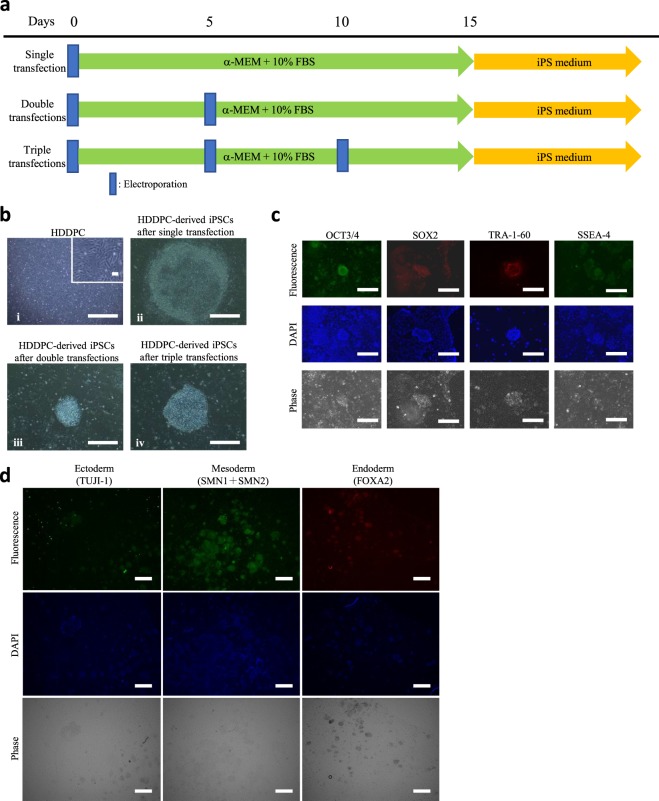
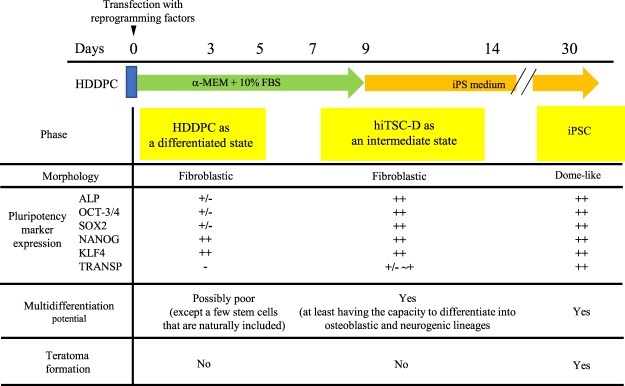
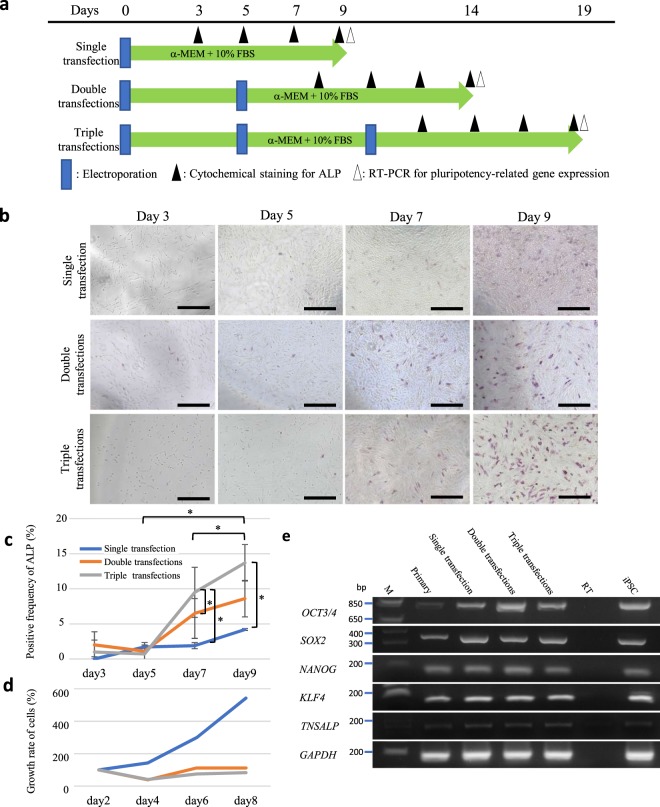
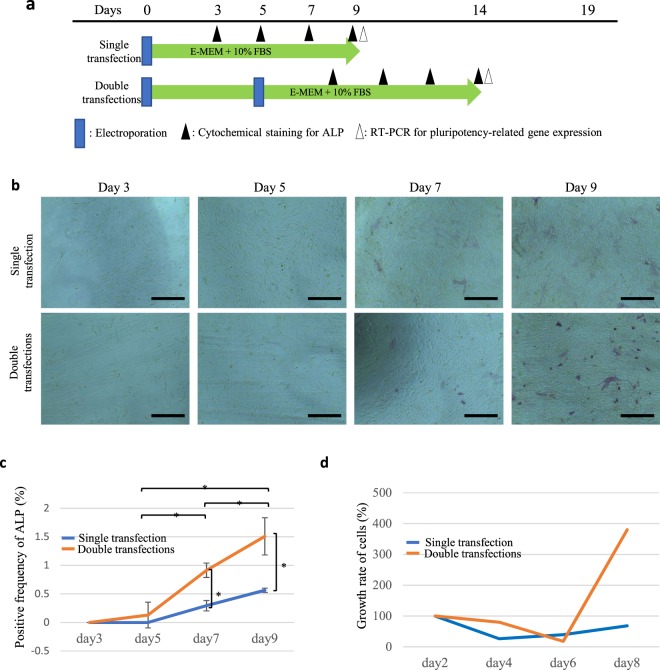
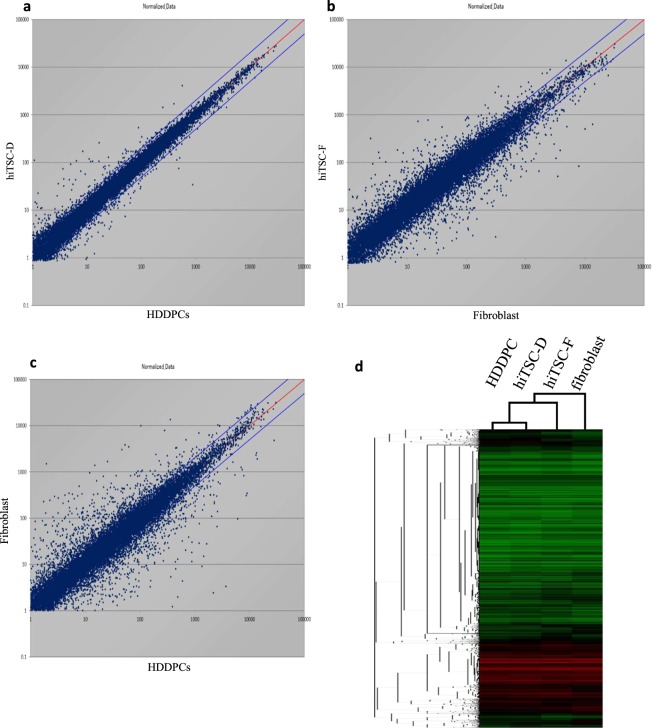
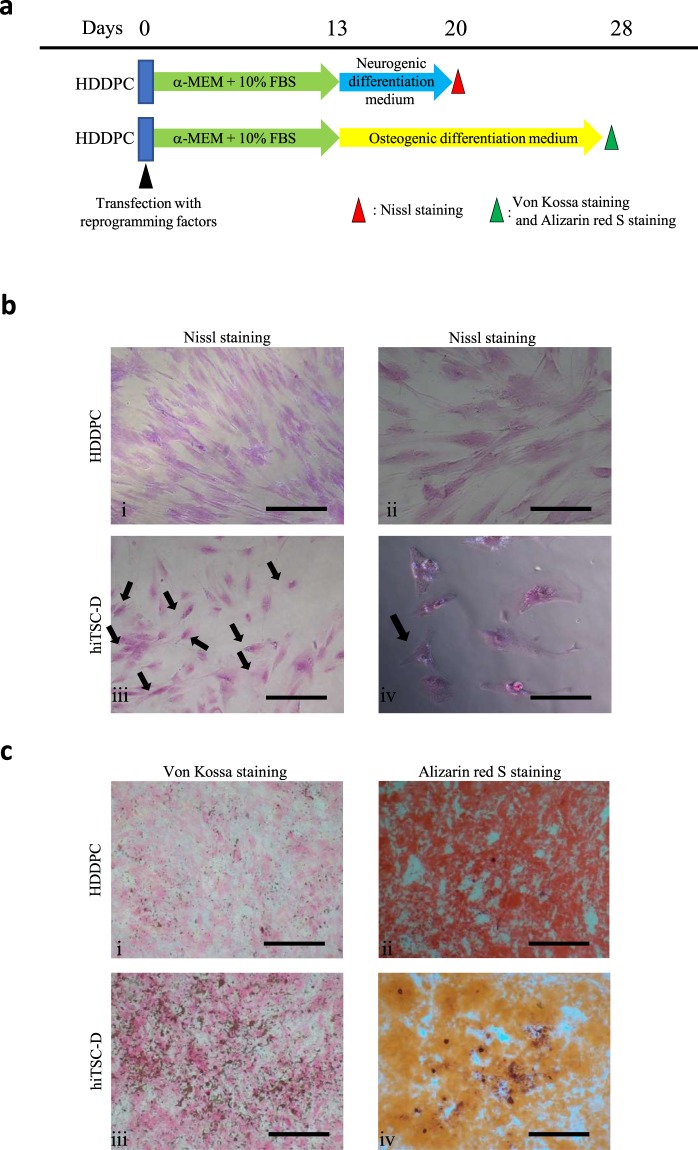
Human tissue-specific stem cells (hTSCs), found throughout the body, can differentiate into several lineages under appropriate conditions in vitro and in vivo. By transfecting terminally differentiated cells with reprogramming factors, we previously produced induced TSCs from the pancreas and hepatocytes that exhibit additional properties than iPSCs, as exemplified by very low tumour formation after xenogenic transplantation. We hypothesised that hTSCs, being partially reprogrammed in a state just prior to iPSC transition, could be isolated from any terminally differentiated cell type through transient reprogramming factor overexpression. Cytochemical staining of human deciduous tooth-derived dental pulp cells (HDDPCs) and human skin-derived fibroblasts following transfection with Yamanaka's factors demonstrated increased ALP activity, a stem cell marker, three weeks after transfection albeit in a small percentage of clones. Repeated transfections (≤3) led to more efficient iPSC generation, with HDDPCs exhibiting greater multipotentiality at two weeks post-transfection than the parental intact HDDPCs. These results indicated the utility of iPSC technology to isolate TSCs from HDDPCs and fibroblasts. Generally, a step-wise loss of pluripotential phenotypes in ESCs/iPSCs occurs during their differentiation process. Our present findings suggest that the reverse phenomenon can also occur upon repeated introduction of reprogramming factors into differentiated cells such as HDDPCs and fibroblasts.
人体组织特异性干细胞(hTSC)存在于全身各处,在适当的条件下可以在体外和体内分化为多个谱系。通过将终末分化细胞转染重编程因子,我们之前已经从胰腺和肝细胞中产生了诱导性 TSC,它们表现出比 iPSC 更多的特性,例如异种移植后极低的肿瘤形成。我们假设 hTSC 在刚刚进入 iPSC 转变的状态下被部分重编程,因此可以通过瞬时重编程因子过表达从任何终末分化细胞类型中分离出来。用 Yamanaka 因子转染人乳牙牙髓细胞(HDDPC)和人皮肤源性成纤维细胞后进行细胞化学染色,尽管在一小部分克隆中,但转染三周后 ALP 活性(干细胞标志物)增加。重复转染(≤3)导致更有效的 iPSC 生成,与亲本完整的 HDDPC 相比,转染两周后 HDDPC 的多能性更强。这些结果表明 iPSC 技术可用于从 HDDPC 和成纤维细胞中分离 TSC。一般来说,在 ESC/iPSC 的分化过程中,多能性表型会逐渐丧失。我们目前的发现表明,在将重编程因子反复引入 HDDPC 和成纤维细胞等分化细胞时,也会发生相反的现象。