Tang Tao, Li Ya, Wang Jie, Elzo Mauricio A, Shao Jiahao, Li Yanhong, Xia Siqi, Fan Huimei, Jia Xianbo, Lai Songjia
College of Animal Science and Technology, Sichuan Agricultural University, Chengdu 611130, China.
Department of Animal Sciences, University of Florida, Gainesville, FL 32611, USA.
Animals (Basel). 2021 May 27;11(6):1560. doi: 10.3390/ani11061560.
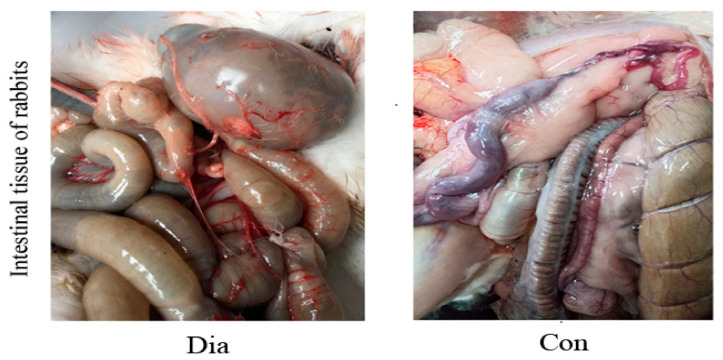
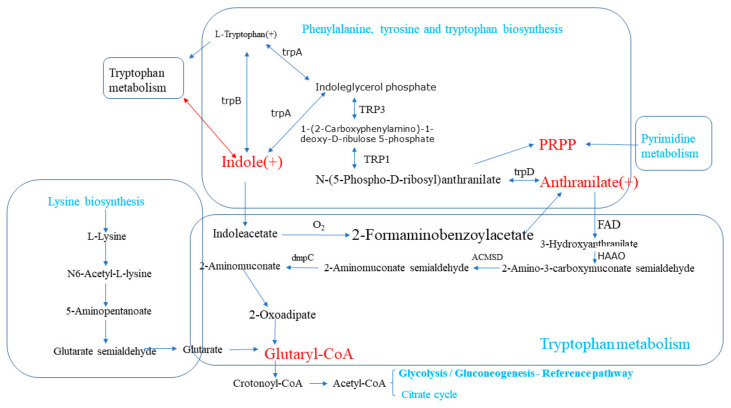
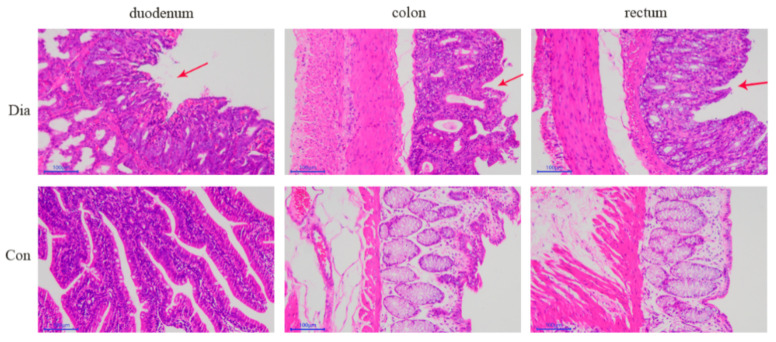
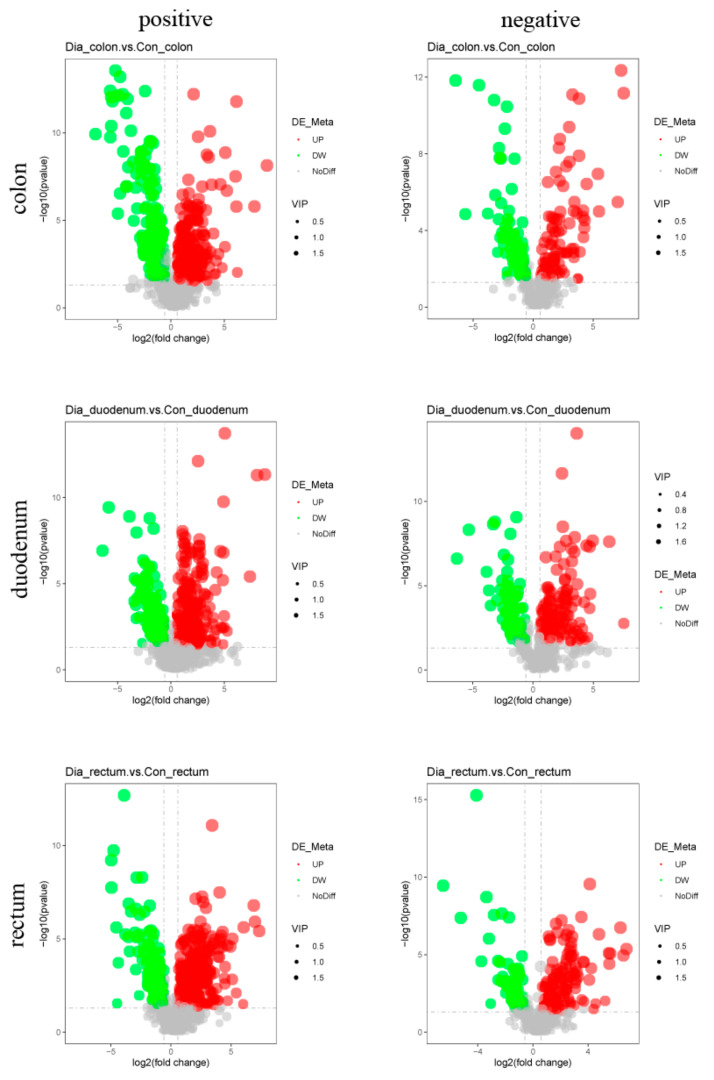
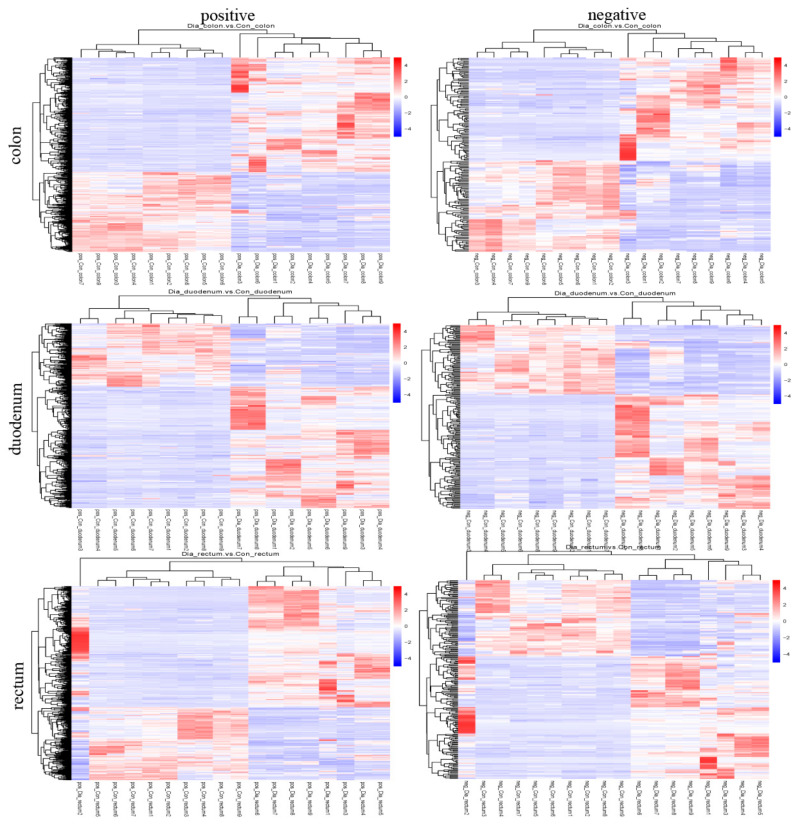
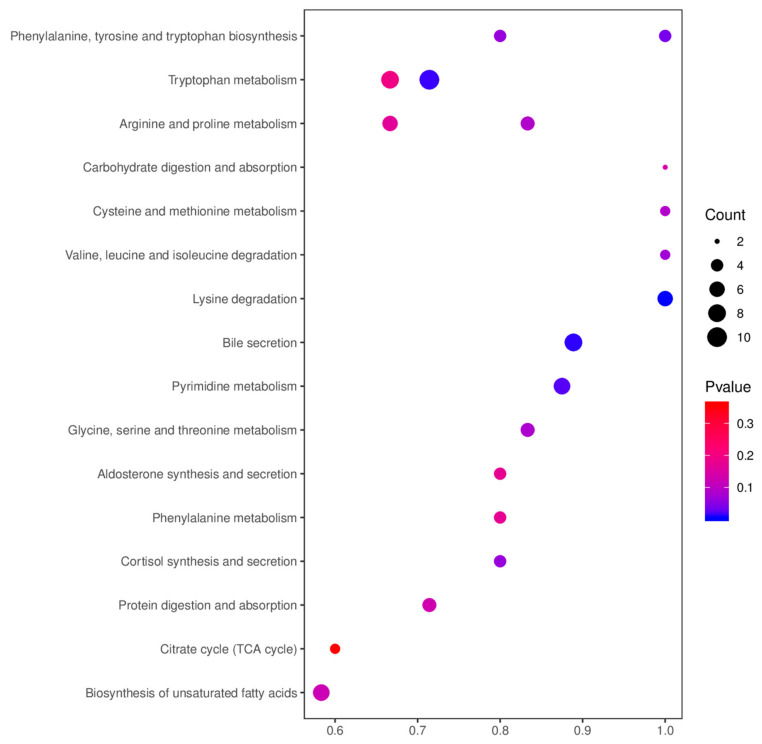
The prohibition of the use of growth-promoting drug additives in feeds was implemented in China in 2020. However, rabbits can experience symptoms of intestinal disease, such as diarrhea and flatulence, when switching from standard normal diets with antibiotics to antibiotic-free diets. The molecular mechanisms related to the occurrence of these diseases as well as associated physiological and metabolic changes in the intestine are unclear. Thus, the objectives of this study were to study the pathogenesis of intestinal inflammation using untargeted metabolomics. This was done to identify differential metabolites between a group of antibiotic-free feed Hyplus rabbits (Dia) whose diet was abruptly changed from a standard normal diet with antibiotics to an antibiotic-free diet, and an antibiotic diet group Hyplus rabbits (Con) that was fed a standard normal diet with antibiotics. Morphological damage to the three intestinal tissues was determined through visual microscopic examination of intestinal Dia and Con tissue samples stained with hematoxylin and eosin (HE). A total of 1969 different metabolites were identified in the three intestinal tissues from Dia and Con rabbits. The level of 1280 metabolites was significantly higher and the level of 761 metabolites was significantly lower in the Dia than in the Con group. These differential metabolites were involved in five metabolic pathways associated with intestinal inflammation (tryptophan metabolism, pyrimidine metabolism, phenylalanine, tyrosine and tryptophan biosynthesis, lysine degradation, and bile secretion). Rabbits in the Dia group developed metabolic disorders that affected the intestinal microbiota and changed the permeability of the intestinal tract, thereby triggering intestinal inflammation, affecting feed utilization, reducing production performance, and activating the intestinal tract self-repair mechanism. Thus, the abrupt transition from a diet with antibiotics to an antibiotic-free diet affected the structure and metabolism of the intestinal tract in Hyplus rabbits. Consequently, to avoid these problems, the antibiotic content in a rabbit diet should be changed gradually or alternative antibiotics should be found.
中国于2020年实施了饲料中禁止使用促生长药物添加剂的规定。然而,兔子从含抗生素的标准正常日粮转换为无抗生素日粮时,可能会出现肠道疾病症状,如腹泻和肠胃胀气。这些疾病发生的分子机制以及肠道相关的生理和代谢变化尚不清楚。因此,本研究的目的是利用非靶向代谢组学研究肠道炎症的发病机制。具体做法是,对比一组无抗生素饲料海普瑞斯兔(Dia)和一组抗生素日粮组海普瑞斯兔(Con),Dia组兔子的日粮从含抗生素的标准正常日粮突然转换为无抗生素日粮,Con组兔子则喂食含抗生素的标准正常日粮。通过对苏木精和伊红(HE)染色的肠道Dia和Con组织样本进行视觉显微镜检查,确定三种肠道组织的形态损伤。在Dia和Con组兔子的三种肠道组织中总共鉴定出1969种不同的代谢物。Dia组中1280种代谢物的水平显著高于Con组,761种代谢物的水平显著低于Con组。这些差异代谢物参与了与肠道炎症相关的五条代谢途径(色氨酸代谢、嘧啶代谢、苯丙氨酸、酪氨酸和色氨酸生物合成、赖氨酸降解和胆汁分泌)。Dia组兔子出现了代谢紊乱,影响了肠道微生物群,改变了肠道通透性,从而引发肠道炎症,影响饲料利用率,降低生产性能,并激活肠道自我修复机制。因此,从含抗生素日粮突然转换为无抗生素日粮会影响海普瑞斯兔肠道的结构和代谢。因此,为避免这些问题,兔子日粮中的抗生素含量应逐渐改变或寻找替代抗生素。