Abbattista Ramona, Ventura Giovanni, Calvano Cosima Damiana, Cataldi Tommaso R I, Losito Ilario
Chemistry Department, University of Bari Aldo Moro, via Orabona 4, 70126 Bari, Italy.
Interdepartmental Centre SMART, University of Bari Aldo Moro, via Orabona 4, 70126 Bari, Italy.
Foods. 2021 May 29;10(6):1236. doi: 10.3390/foods10061236.
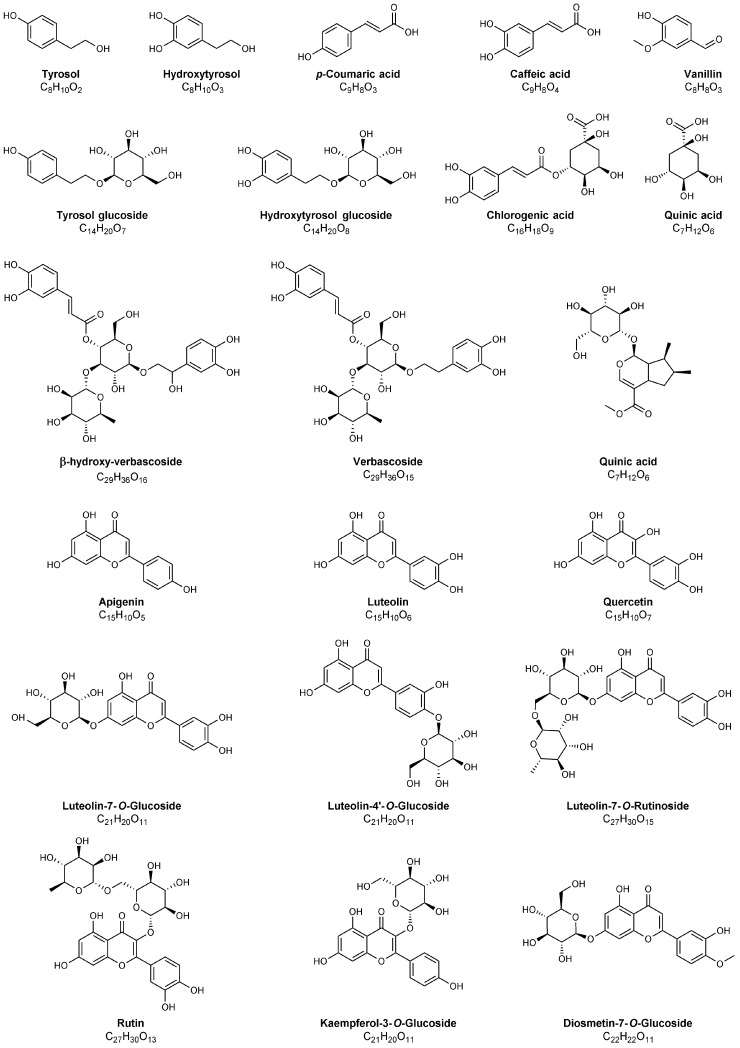
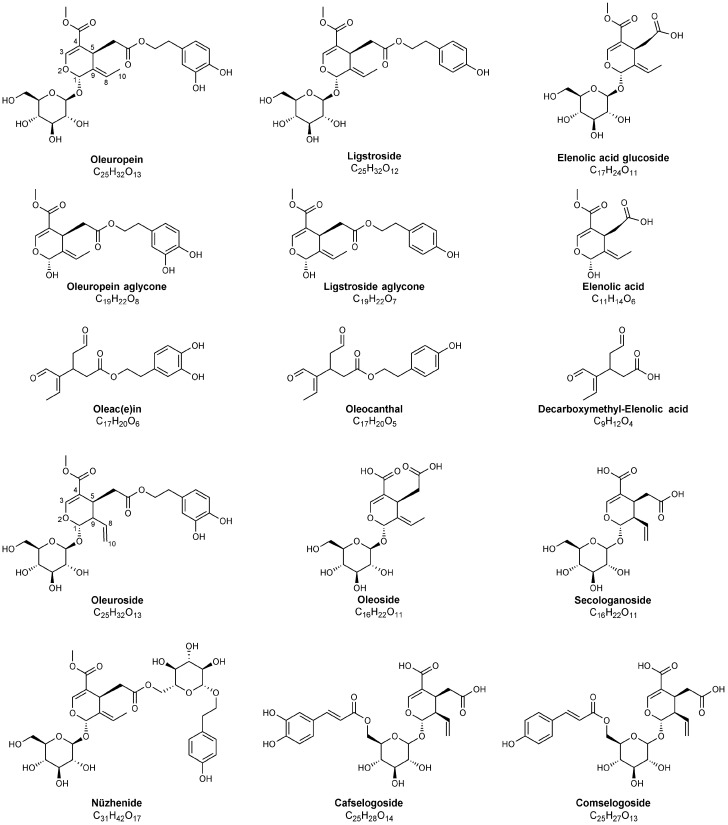
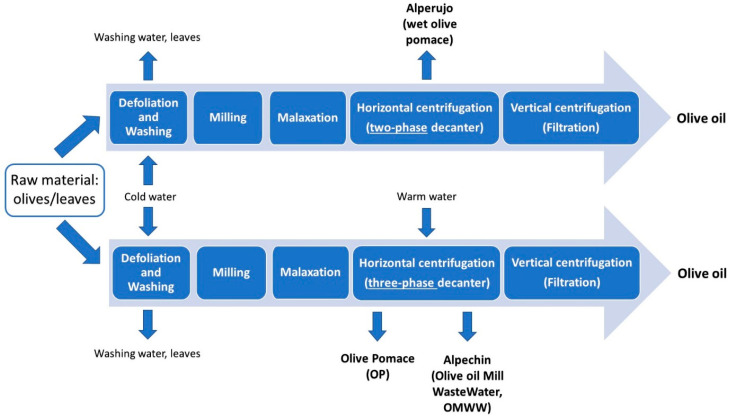
In recent years, a remarkable increase in olive oil consumption has occurred worldwide, favoured by its organoleptic properties and the growing awareness of its health benefits. Currently, olive oil production represents an important economic income for Mediterranean countries, where roughly 98% of the world production is located. Both the cultivation of olive trees and the production of industrial and table olive oil generate huge amounts of solid wastes and dark liquid effluents, including olive leaves and pomace and olive oil mill wastewaters. Besides representing an economic problem for producers, these by-products also pose serious environmental concerns, thus their partial reuse, like that of all agronomical production residues, represents a goal to pursue. This aspect is particularly important since the cited by-products are rich in bioactive compounds, which, once extracted, may represent ingredients with remarkable added value for food, cosmetic and nutraceutical industries. Indeed, they contain considerable amounts of valuable organic acids, carbohydrates, proteins, fibers, and above all, phenolic compounds, that are variably distributed among the different wastes, depending on the employed production process of olive oils and table olives and agronomical practices. Yet, extraction and recovery of bioactive components from selected by-products constitute a critical issue for their rational valorization and detailed identification and quantification are mandatory. The most used analytical methods adopted to identify and quantify bioactive compounds in olive oil by-products are based on the coupling between gas- (GC) or liquid chromatography (LC) and mass spectrometry (MS), with MS being the most useful and successful detection tool for providing structural information. Without derivatization, LC-MS with electrospray (ESI) or atmospheric pressure chemical (APCI) ionization sources has become one of the most relevant and versatile instrumental platforms for identifying phenolic bioactive compounds. In this review, the major LC-MS accomplishments reported in the literature over the last two decades to investigate olive oil processing by-products, specifically olive leaves and pomace and olive oil mill wastewaters, are described, focusing on phenolics and related compounds.
近年来,受橄榄油感官特性及其健康益处认知度不断提高的推动,全球橄榄油消费量显著增加。目前,橄榄油生产是地中海国家重要的经济收入来源,全球约98%的橄榄油产量集中于此。橄榄树的种植以及工业用和食用橄榄油的生产都会产生大量固体废物和深色液体废水,包括橄榄叶、果渣和橄榄油厂废水。这些副产品不仅给生产商带来经济问题,还引发严重的环境问题,因此,与所有农业生产残留物一样,对其进行部分再利用是一个值得追求的目标。这一点尤为重要,因为上述副产品富含生物活性化合物,一旦提取出来,可能成为食品、化妆品和营养保健品行业具有显著附加值的成分。事实上,它们含有大量有价值的有机酸、碳水化合物、蛋白质、纤维,最重要的是酚类化合物,这些成分在不同废物中的分布各不相同,这取决于所采用的橄榄油和食用橄榄生产工艺以及农业实践。然而,从选定的副产品中提取和回收生物活性成分是其合理增值的关键问题,必须进行详细的鉴定和定量。用于鉴定和定量橄榄油副产品中生物活性化合物的最常用分析方法是基于气相色谱(GC)或液相色谱(LC)与质谱(MS)的联用,其中MS是提供结构信息最有用、最成功的检测工具。未经衍生化处理,带有电喷雾(ESI)或大气压化学电离(APCI)源的LC-MS已成为鉴定酚类生物活性化合物最相关、最通用的仪器平台之一。在这篇综述中,描述了过去二十年来文献中报道的用于研究橄榄油加工副产品,特别是橄榄叶、果渣和橄榄油厂废水的主要LC-MS成果,重点是酚类及相关化合物。