Jiang Ke, Kuang Yong, Feng Liying, Liu Yuhao, Wang Shu, Du Hongmei, Shen Wenbiao
College of Life Sciences, Laboratory Center of Life Sciences, Nanjing Agricultural University, Nanjing 210095, China.
Center of Hydrogen Science, Shanghai Jiao Tong University, Shanghai 200240, China.
Plants (Basel). 2021 May 29;10(6):1095. doi: 10.3390/plants10061095.
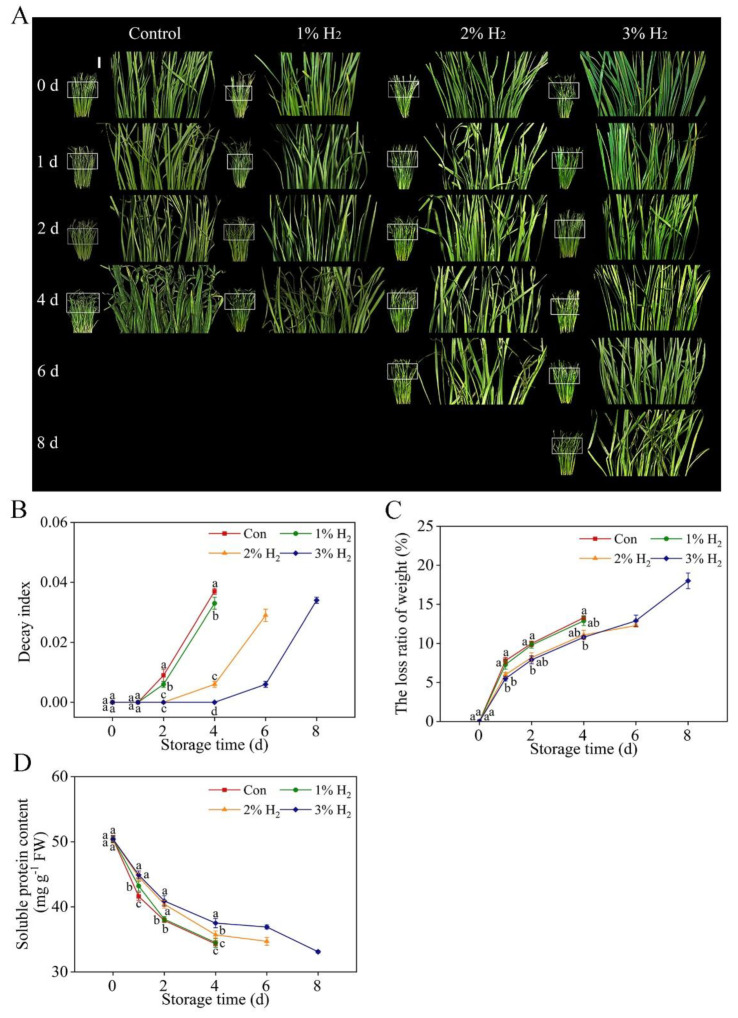
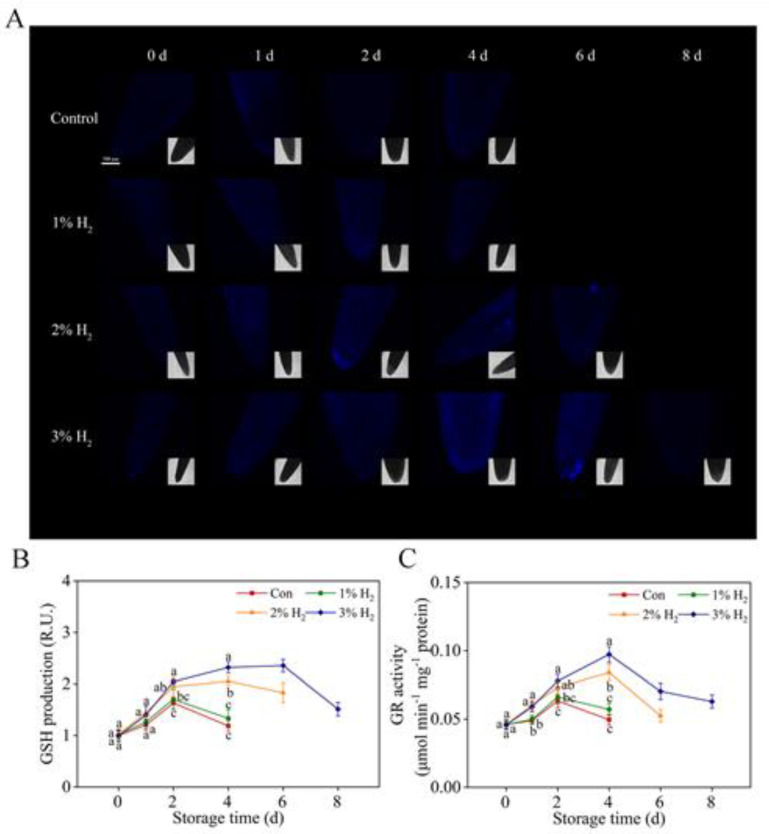
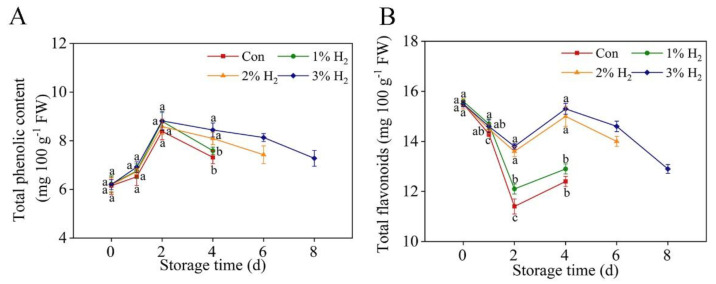
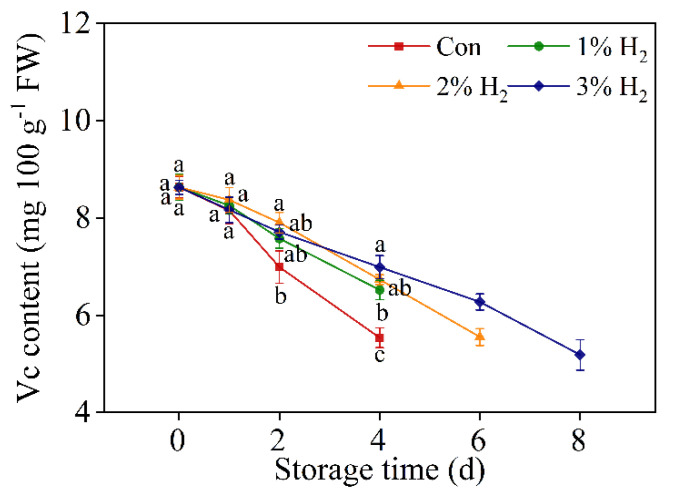
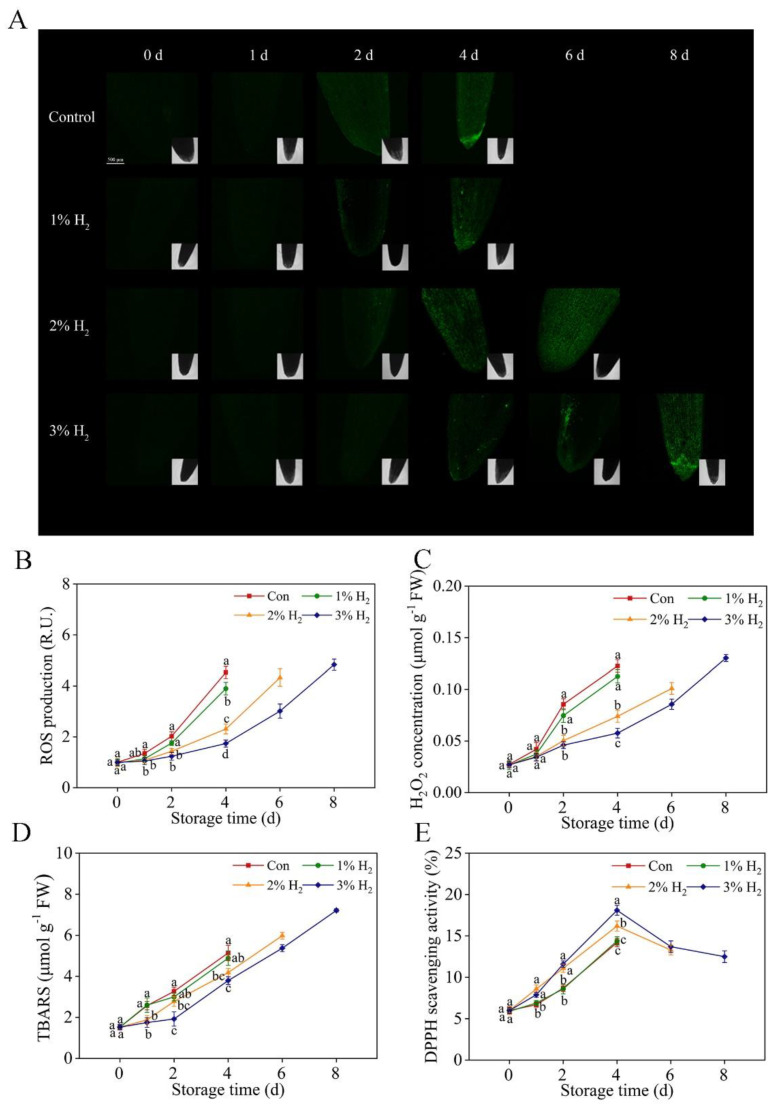
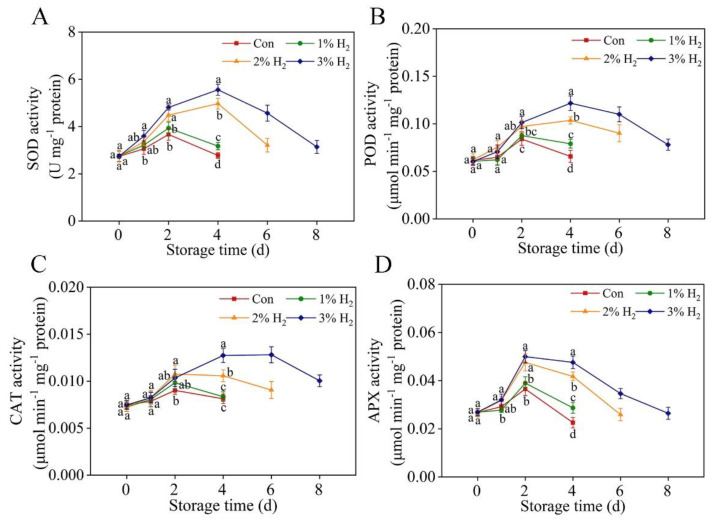
Chinese chive usually becomes decayed after a short storage time, which was closely observed with the redox imbalance. To cope with this practical problem, in this report, molecular hydrogen (H) was used to evaluate its influence in maintaining storage quality of Chinese chive, and the changes in antioxidant capacity were also analyzed. Chives were treated with 1%, 2%, or 3% H, and with air as the control, and then were stored at 4 ± 1 °C. We observed that, compared with other treatment groups, the application of 3% H could significantly prolong the shelf life of Chinese chive, which was also confirmed by the obvious mitigation of decreased decay index, the loss ratio of weight, and the reduction in soluble protein content. Meanwhile, the decreasing tendency in total phenolic, flavonoid, and vitamin C contents was obviously impaired or slowed down by H. Results of antioxidant capacity revealed that the accumulation of reactive oxygen species (ROS) and hydrogen peroxide (HO) was differentially alleviated, which positively matched with 2,2-Diphenyl-1-picrylhydrazyl (DPPH) scavenging activity and the improved activities of antioxidant enzymes, including superoxide dismutase (SOD), guaiacol peroxidase (POD), catalase (CAT), and ascorbate peroxidase (APX). Above results clearly suggest that postharvest molecular hydrogen application might be a potential useful approach to improve the storage quality of Chinese chive, which is partially achieved through the alleviation of oxidative damage happening during the storage periods. These findings also provide potential theoretical and practical significance for transportation and consumption of perishable vegetables.
韭菜在短期储存后通常会腐烂,这与氧化还原失衡密切相关。为了解决这一实际问题,在本报告中,使用分子氢(H₂)来评估其对维持韭菜储存品质的影响,并分析抗氧化能力的变化。将韭菜用1%、2%或3%的H₂处理,以空气作为对照,然后在4±1℃下储存。我们观察到,与其他处理组相比,施用3%的H₂可以显著延长韭菜的货架期,这也通过腐烂指数下降、重量损失率和可溶性蛋白质含量降低的明显缓解得到证实。同时,H₂明显削弱或减缓了总酚、黄酮和维生素C含量的下降趋势。抗氧化能力的结果表明,活性氧(ROS)和过氧化氢(H₂O₂)的积累得到了不同程度的缓解,这与2,2-二苯基-1-苦基肼(DPPH)清除活性以及抗氧化酶(包括超氧化物歧化酶(SOD)、愈创木酚过氧化物酶(POD)、过氧化氢酶(CAT)和抗坏血酸过氧化物酶(APX))活性的提高呈正相关。上述结果清楚地表明,采后施用分子氢可能是提高韭菜储存品质的一种潜在有效方法,这部分是通过减轻储存期间发生的氧化损伤来实现的。这些发现也为易腐蔬菜的运输和消费提供了潜在的理论和实际意义。