Przydacz Mikolaj, Chlosta Marcin, Chlosta Piotr
Department of Urology, Jagiellonian University Medical College, 30-688 Krakow, Poland.
J Clin Med. 2021 May 26;10(11):2314. doi: 10.3390/jcm10112314.
Population-level data are lacking for urinary incontinence (UI) in Central and Eastern European countries. Therefore, the objective of this study was to estimate the prevalence, bother, and behavior regarding treatment for UI in a population-representative group of Polish adults aged ≥ 40 years.
Data for this epidemiological study were derived from the larger LUTS POLAND project, in which a group of adults that typified the Polish population were surveyed, by telephone, about lower urinary tract symptoms. Respondents were classified by age, sex, and place of residence. UI was assessed with a standard protocol and established International Continence Society definitions.
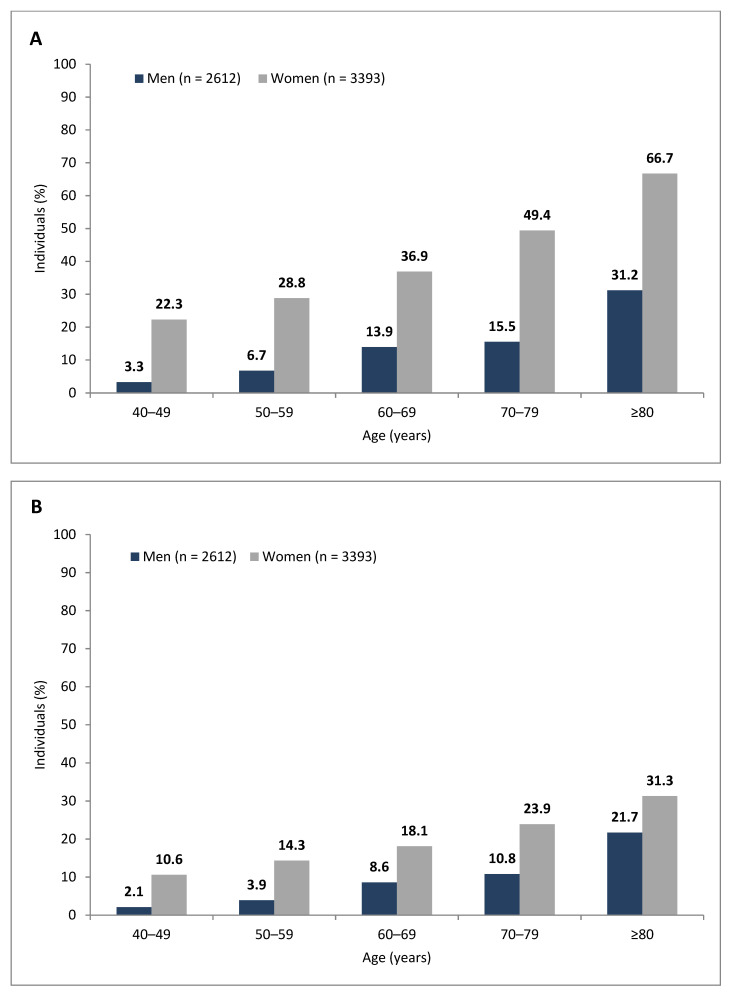
The LUTS POLAND survey included 6005 completed interviews. The prevalence of UI was 14.6-25.4%; women reported a greater occurrence compared with men ( < 0.001). For both sexes, UI prevalence increased with age. Stress UI was the most common type of UI in women, and urgency UI was the most prevalent in men. We did not find a difference in prevalence between urban and rural areas. Individuals were greatly bothered by UI. For women, mixed UI was the most bothersome, whereas for men, leak for no reason was most annoying. More than half of respondents (51.4-62.3%) who reported UI expressed anxiety about the effect of UI on their quality of life. Nevertheless, only around one third (29.2-38.1%) of respondents with UI sought treatment, most of whom received treatment. Persons from urban and rural areas did not differ in the degrees of treatment seeking and treatment receiving.
Urinary incontinence was prevalent and greatly bothersome among Polish adults aged ≥ 40 years. Consequently, UI had detrimental effects on quality of life. Nonetheless, most affected persons did not seek treatment. Therefore, we need to increase population awareness in Poland about UI and available treatment methods, and we need to ensure adequate allocation of government and healthcare system resources.
中东欧国家缺乏关于尿失禁(UI)的人群水平数据。因此,本研究的目的是估计≥40岁波兰成年人群体代表性样本中UI的患病率、困扰程度及治疗行为。
本流行病学研究的数据来自规模更大的LUTS POLAND项目,该项目通过电话对一组代表波兰人口的成年人进行了下尿路症状调查。受访者按年龄、性别和居住地分类。采用标准方案和国际尿控协会既定定义对UI进行评估。
LUTS POLAND调查共完成6005次访谈。UI患病率为14.6%-25.4%;女性报告的发生率高于男性(<0.001)。男女两性的UI患病率均随年龄增加。压力性尿失禁是女性中最常见的UI类型,急迫性尿失禁在男性中最为普遍。我们未发现城乡患病率存在差异。个体深受UI困扰。对女性而言,混合性尿失禁最令人困扰,而对男性来说,无故漏尿最让人烦恼。报告有UI的受访者中,超过一半(51.4%-62.3%)对UI对其生活质量的影响表示焦虑。然而,只有约三分之一(29.2%-38.1%)的UI受访者寻求治疗,其中大多数接受了治疗。城乡地区的受访者在寻求治疗和接受治疗的程度上没有差异。
尿失禁在≥40岁的波兰成年人中普遍存在且困扰严重。因此,UI对生活质量有不利影响。尽管如此,大多数受影响者并未寻求治疗。因此,我们需要提高波兰民众对UI及可用治疗方法的认识,并确保政府和医疗系统资源的充分分配。