Sharma Kashma, Sharma Shreya, Sharma Vipasha, Mishra Pawan Kumar, Ekielski Adam, Sharma Vishal, Kumar Vijay
Institute of Forensic Science & Criminology, Panjab University, Chandigarh 160014, India.
Department of Chemistry, DAV College, Sector-10, Chandigarh 160011, India.
Nanomaterials (Basel). 2021 May 26;11(6):1403. doi: 10.3390/nano11061403.
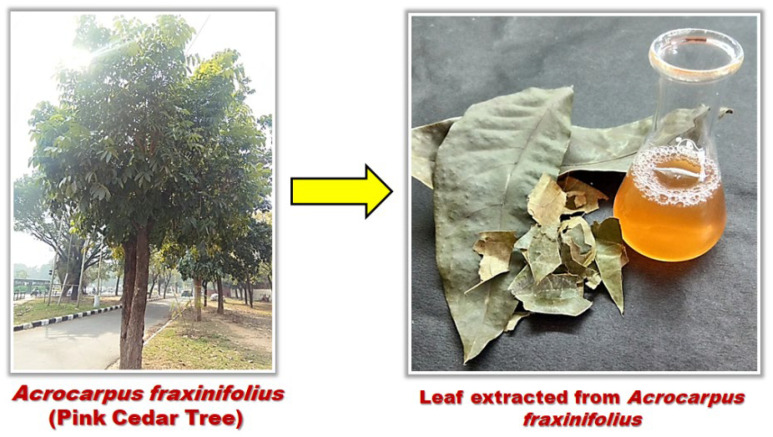
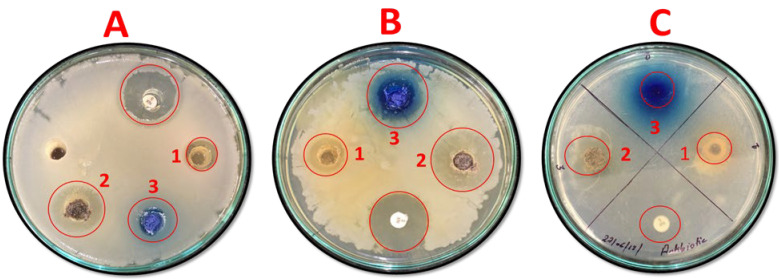
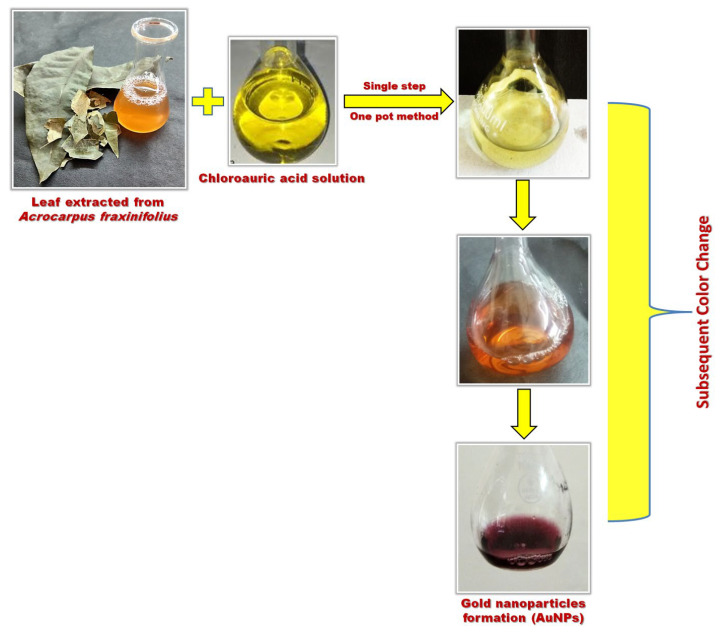
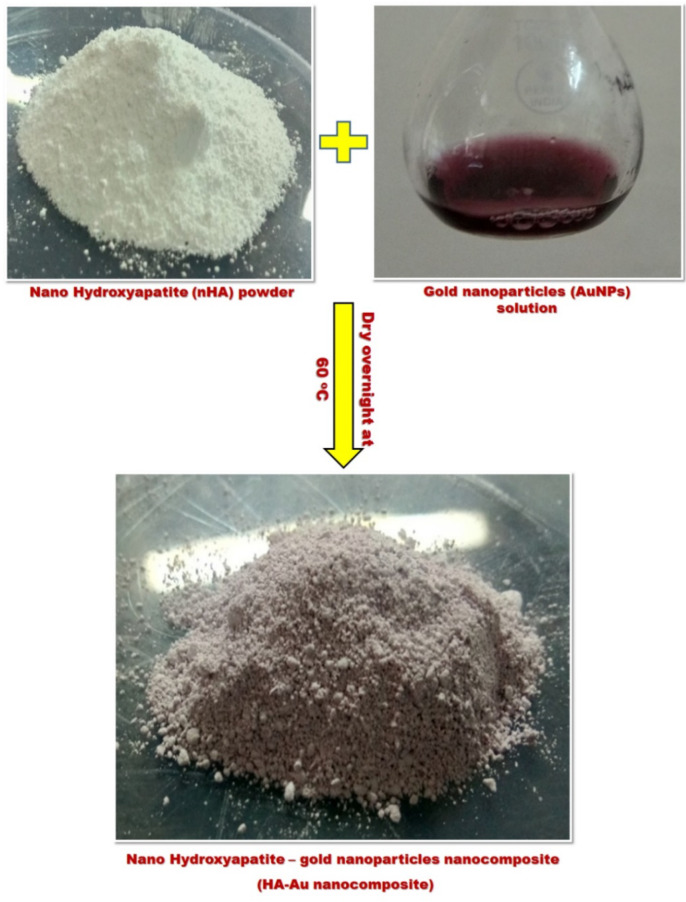
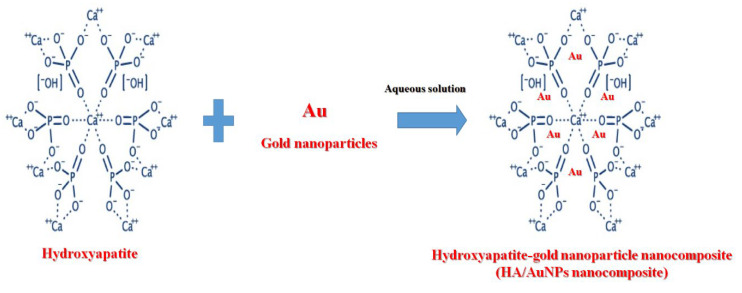
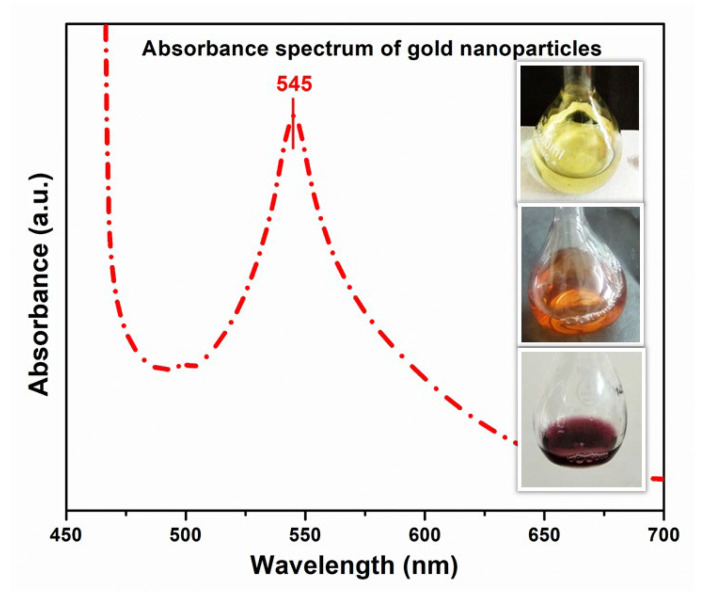
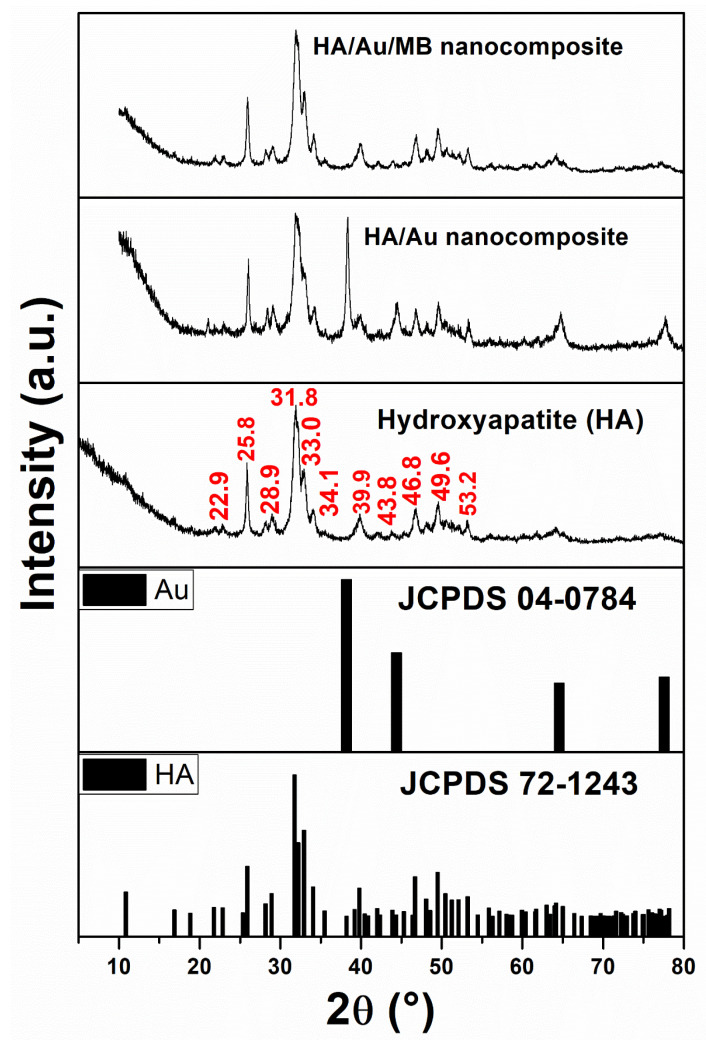
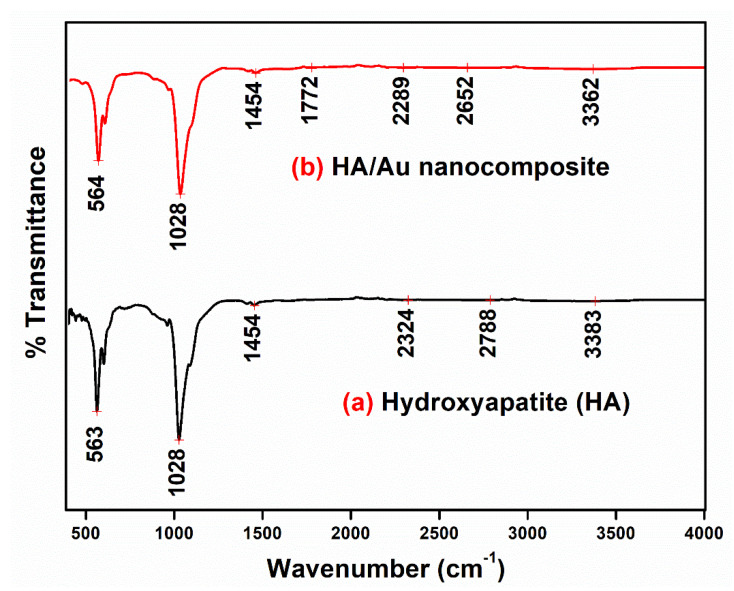
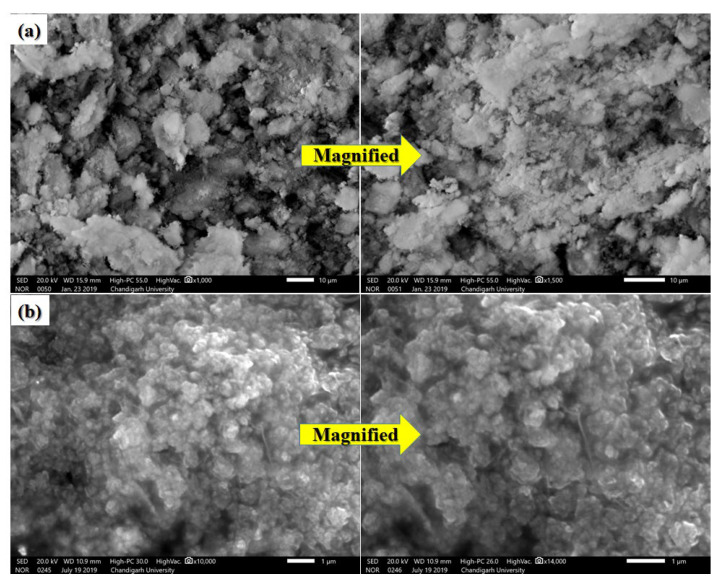
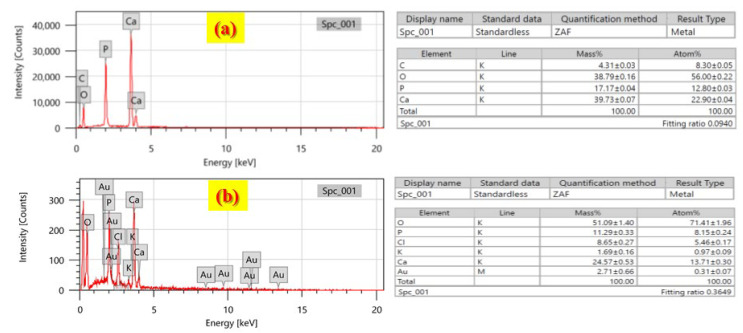
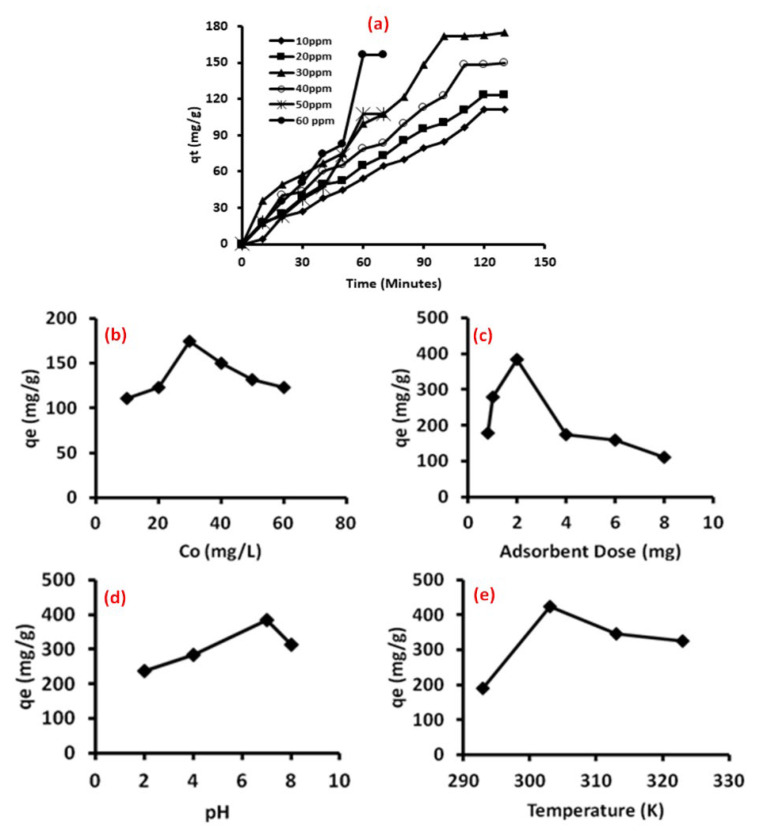
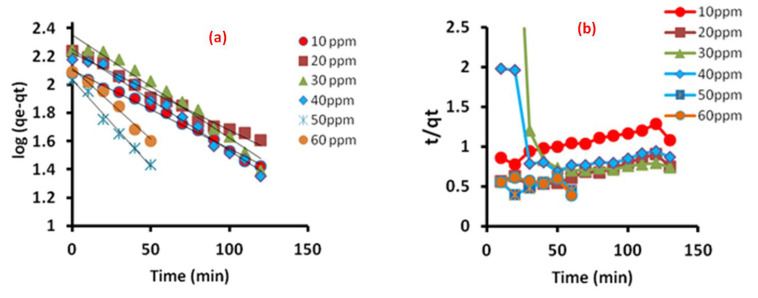
The present work demonstrates the development of hydroxyapatite (HA)/gold (Au) nanocomposites to increase the adsorption of methylene blue (MB) dye from the wastewater. HA nanopowder was prepared via a wet chemical precipitation method by means of Ca(OH) and HPO as starting materials. The biosynthesis of gold nanoparticles (AuNPs) has been reported for the first time by using the plant extract of . Finally, the as-prepared HA nanopowder was mixed with an optimized AuNPs solution to produce HA/Au nanocomposite. The prepared HA/Au nanocomposite was studied by using Fourier transform infrared spectroscopy (FTIR), X-ray diffraction (XRD), and Scanning Electron Microscopy (SEM) with Energy Dispersive X-Ray Analysis (EDX) analysis. Adsorption studies were executed by batch experiments on the synthesized composite. The effect of the amount of adsorbent, pH, dye concentration and temperature was studied. Pseudo-first-order and pseudo-second-order models were used to fit the kinetic data and the kinetic modeling results reflected that the experimental data is perfectly matched with the pseudo-first-order kinetic model. The dye adsorbed waste materials have also been investigated against , , and bacteria by the agar well diffusion method. The inhibition zones of dye adsorbed samples are more or less the same as compared to as-prepared samples. The results so obtained indicates the suitability of the synthesized sample to be exploited as an adsorbent for effective treatment of MB dye from wastewater and dye adsorbed waste as an effective antibacterial agent from an economic point of view.
本工作展示了羟基磷灰石(HA)/金(Au)纳米复合材料的开发,以提高从废水中吸附亚甲基蓝(MB)染料的能力。HA纳米粉末通过以Ca(OH)和HPO为起始原料的湿化学沉淀法制备。首次报道了利用植物提取物生物合成金纳米颗粒(AuNPs)。最后,将制备好的HA纳米粉末与优化后的AuNPs溶液混合,制备出HA/Au纳米复合材料。通过傅里叶变换红外光谱(FTIR)、X射线衍射(XRD)以及带有能量色散X射线分析(EDX)的扫描电子显微镜(SEM)对制备的HA/Au纳米复合材料进行了研究。通过对合成复合材料进行批量实验来开展吸附研究。研究了吸附剂用量、pH值、染料浓度和温度的影响。使用伪一级和伪二级模型来拟合动力学数据,动力学建模结果表明实验数据与伪一级动力学模型完美匹配。还通过琼脂孔扩散法研究了染料吸附废料对 、 和 细菌的抗菌性能。与制备好的样品相比,染料吸附样品的抑菌圈大致相同。如此获得的结果表明,从经济角度来看,合成样品适合用作有效处理废水中MB染料的吸附剂,而染料吸附废料适合用作有效的抗菌剂。