• 文献检索
  • 文档翻译
  • 深度研究
  • 学术资讯
  • Suppr Zotero 插件Zotero 插件
  • 邀请有礼
  • 套餐&价格
  • 历史记录
应用&插件
Suppr Zotero 插件Zotero 插件浏览器插件Mac 客户端Windows 客户端微信小程序
定价
高级版会员购买积分包购买API积分包
服务
文献检索文档翻译深度研究API 文档MCP 服务
关于我们
关于 Suppr公司介绍联系我们用户协议隐私条款
关注我们

Suppr 超能文献

核心技术专利:CN118964589B侵权必究
粤ICP备2023148730 号-1Suppr @ 2026

文献检索

告别复杂PubMed语法,用中文像聊天一样搜索,搜遍4000万医学文献。AI智能推荐,让科研检索更轻松。

立即免费搜索

文件翻译

保留排版,准确专业,支持PDF/Word/PPT等文件格式,支持 12+语言互译。

免费翻译文档

深度研究

AI帮你快速写综述,25分钟生成高质量综述,智能提取关键信息,辅助科研写作。

立即免费体验

用于药物发现的生物医学文本链接预测:以COVID-19为例的案例研究

Biomedical Text Link Prediction for Drug Discovery: A Case Study with COVID-19.

作者信息

McCoy Kevin, Gudapati Sateesh, He Lawrence, Horlander Elaina, Kartchner David, Kulkarni Soham, Mehra Nidhi, Prakash Jayant, Thenot Helena, Vanga Sri Vivek, Wagner Abigail, White Brandon, Mitchell Cassie S

机构信息

Laboratory for Pathology Dynamics, Biomedical Engineering, Georgia Institute of Technology and Emory University, Atlanta, GA 30332, USA.

Computer Science, Georgia Institute of Technology, Atlanta, GA 30332, USA.

出版信息

Pharmaceutics. 2021 May 26;13(6):794. doi: 10.3390/pharmaceutics13060794.

DOI:10.3390/pharmaceutics13060794
PMID:34073456
原文链接:https://pmc.ncbi.nlm.nih.gov/articles/PMC8230210/
Abstract

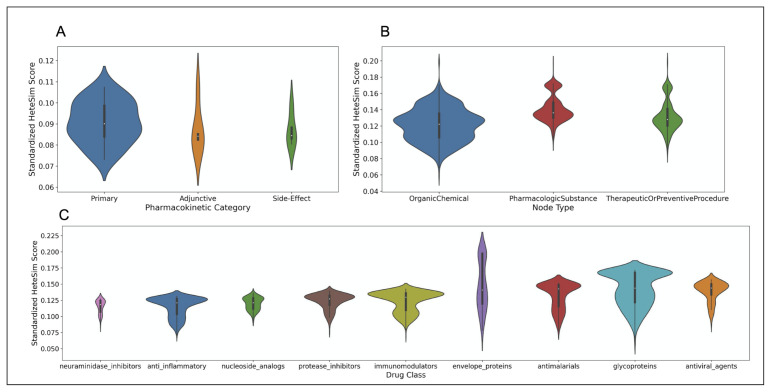
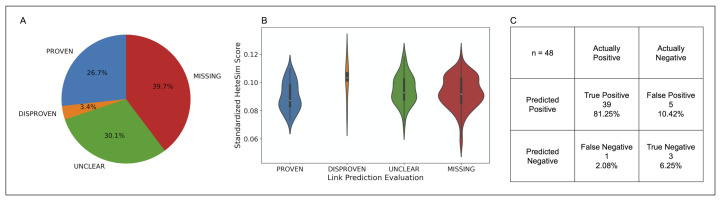
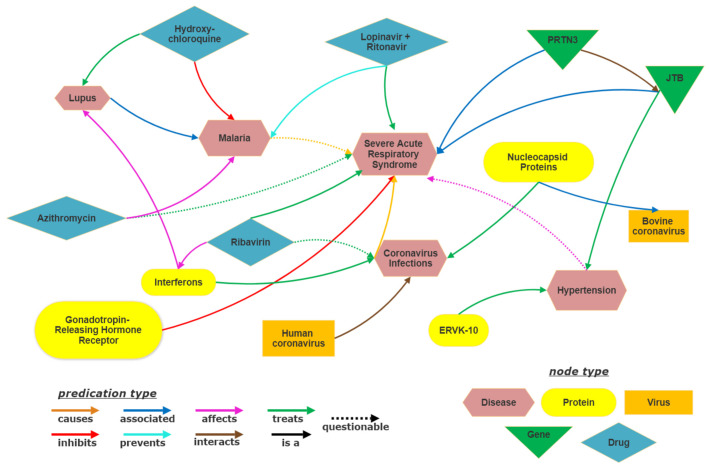
Link prediction in artificial intelligence is used to identify missing links or derive future relationships that can occur in complex networks. A link prediction model was developed using the complex heterogeneous biomedical knowledge graph, SemNet, to predict missing links in biomedical literature for drug discovery. A web application visualized knowledge graph embeddings and link prediction results using TransE, CompleX, and RotatE based methods. The link prediction model achieved up to 0.44 hits@10 on the entity prediction tasks. The recent outbreak of severe acute respiratory syndrome coronavirus 2 (SARS-CoV-2), also known as COVID-19, served as a case study to demonstrate the efficacy of link prediction modeling for drug discovery. The link prediction algorithm guided identification and ranking of repurposed drug candidates for SARS-CoV-2 primarily by text mining biomedical literature from previous coronaviruses, including SARS and middle east respiratory syndrome (MERS). Repurposed drugs included potential primary SARS-CoV-2 treatment, adjunctive therapies, or therapeutics to treat side effects. The link prediction accuracy for nodes ranked highly for SARS coronavirus was 0.875 as calculated by human in the loop validation on existing COVID-19 specific data sets. Drug classes predicted as highly ranked include anti-inflammatory, nucleoside analogs, protease inhibitors, antimalarials, envelope proteins, and glycoproteins. Examples of highly ranked predicted links to SARS-CoV-2: human leukocyte interferon, recombinant interferon-gamma, cyclosporine, antiviral therapy, zidovudine, chloroquine, vaccination, methotrexate, artemisinin, alkaloids, glycyrrhizic acid, quinine, flavonoids, amprenavir, suramin, complement system proteins, fluoroquinolones, bone marrow transplantation, albuterol, ciprofloxacin, quinolone antibacterial agents, and hydroxymethylglutaryl-CoA reductase inhibitors. Approximately 40% of identified drugs were not previously connected to SARS, such as edetic acid or biotin. In summary, link prediction can effectively suggest repurposed drugs for emergent diseases.

摘要

人工智能中的链接预测用于识别复杂网络中缺失的链接或推导未来可能出现的关系。利用复杂的异构生物医学知识图谱SemNet开发了一种链接预测模型,以预测生物医学文献中用于药物发现的缺失链接。一个网络应用程序使用基于TransE、CompleX和RotatE的方法可视化知识图谱嵌入和链接预测结果。该链接预测模型在实体预测任务中达到了高达0.44的命中率@10。最近爆发的严重急性呼吸综合征冠状病毒2(SARS-CoV-2),也称为新冠肺炎,作为一个案例研究,以证明链接预测模型在药物发现中的有效性。链接预测算法主要通过挖掘包括SARS和中东呼吸综合征(MERS)在内的先前冠状病毒的生物医学文献,指导对SARS-CoV-2重新利用的候选药物进行识别和排名。重新利用的药物包括潜在的SARS-CoV-2主要治疗药物、辅助治疗药物或治疗副作用的药物。根据对现有新冠肺炎特定数据集的人工参与验证计算,SARS冠状病毒排名靠前的节点的链接预测准确率为0.875。预测排名靠前的药物类别包括抗炎药、核苷类似物、蛋白酶抑制剂、抗疟药、包膜蛋白和糖蛋白。与SARS-CoV-2预测排名靠前的链接示例:人白细胞干扰素、重组干扰素-γ、环孢素、抗病毒治疗、齐多夫定、氯喹、疫苗接种、甲氨蝶呤、青蒿素、生物碱、甘草酸、奎宁、黄酮类化合物、安普那韦、苏拉明、补体系统蛋白、氟喹诺酮类、骨髓移植、沙丁胺醇、环丙沙星、喹诺酮类抗菌剂和羟甲基戊二酰辅酶A还原酶抑制剂。大约40%的已识别药物以前未与SARS相关联,如依地酸或生物素。总之,链接预测可以有效地为突发疾病推荐重新利用的药物。
https://cdn.ncbi.nlm.nih.gov/pmc/blobs/711c/8230210/8c49a357bd95/pharmaceutics-13-00794-g010.jpg
https://cdn.ncbi.nlm.nih.gov/pmc/blobs/711c/8230210/3a1bfa01a529/pharmaceutics-13-00794-g001.jpg
https://cdn.ncbi.nlm.nih.gov/pmc/blobs/711c/8230210/3761e913b784/pharmaceutics-13-00794-g002.jpg
https://cdn.ncbi.nlm.nih.gov/pmc/blobs/711c/8230210/c5a4c070e605/pharmaceutics-13-00794-g003.jpg
https://cdn.ncbi.nlm.nih.gov/pmc/blobs/711c/8230210/6cb5be272a66/pharmaceutics-13-00794-g004.jpg
https://cdn.ncbi.nlm.nih.gov/pmc/blobs/711c/8230210/13dab1263e48/pharmaceutics-13-00794-g005.jpg
https://cdn.ncbi.nlm.nih.gov/pmc/blobs/711c/8230210/ae75e2cdcfba/pharmaceutics-13-00794-g006.jpg
https://cdn.ncbi.nlm.nih.gov/pmc/blobs/711c/8230210/57076899c9a3/pharmaceutics-13-00794-g007.jpg
https://cdn.ncbi.nlm.nih.gov/pmc/blobs/711c/8230210/012c7d162349/pharmaceutics-13-00794-g008.jpg
https://cdn.ncbi.nlm.nih.gov/pmc/blobs/711c/8230210/dbb968875499/pharmaceutics-13-00794-g009.jpg
https://cdn.ncbi.nlm.nih.gov/pmc/blobs/711c/8230210/8c49a357bd95/pharmaceutics-13-00794-g010.jpg
https://cdn.ncbi.nlm.nih.gov/pmc/blobs/711c/8230210/3a1bfa01a529/pharmaceutics-13-00794-g001.jpg
https://cdn.ncbi.nlm.nih.gov/pmc/blobs/711c/8230210/3761e913b784/pharmaceutics-13-00794-g002.jpg
https://cdn.ncbi.nlm.nih.gov/pmc/blobs/711c/8230210/c5a4c070e605/pharmaceutics-13-00794-g003.jpg
https://cdn.ncbi.nlm.nih.gov/pmc/blobs/711c/8230210/6cb5be272a66/pharmaceutics-13-00794-g004.jpg
https://cdn.ncbi.nlm.nih.gov/pmc/blobs/711c/8230210/13dab1263e48/pharmaceutics-13-00794-g005.jpg
https://cdn.ncbi.nlm.nih.gov/pmc/blobs/711c/8230210/ae75e2cdcfba/pharmaceutics-13-00794-g006.jpg
https://cdn.ncbi.nlm.nih.gov/pmc/blobs/711c/8230210/57076899c9a3/pharmaceutics-13-00794-g007.jpg
https://cdn.ncbi.nlm.nih.gov/pmc/blobs/711c/8230210/012c7d162349/pharmaceutics-13-00794-g008.jpg
https://cdn.ncbi.nlm.nih.gov/pmc/blobs/711c/8230210/dbb968875499/pharmaceutics-13-00794-g009.jpg
https://cdn.ncbi.nlm.nih.gov/pmc/blobs/711c/8230210/8c49a357bd95/pharmaceutics-13-00794-g010.jpg

相似文献

1
Biomedical Text Link Prediction for Drug Discovery: A Case Study with COVID-19.用于药物发现的生物医学文本链接预测:以COVID-19为例的案例研究
Pharmaceutics. 2021 May 26;13(6):794. doi: 10.3390/pharmaceutics13060794.
2
Prediction of repurposed drugs for Coronaviruses using artificial intelligence and machine learning.利用人工智能和机器学习预测冠状病毒的药物新用途
Comput Struct Biotechnol J. 2021;19:3133-3148. doi: 10.1016/j.csbj.2021.05.037. Epub 2021 May 24.
3
Drug repurposing for COVID-19 via knowledge graph completion.基于知识图谱补全的新冠病毒药物再利用
J Biomed Inform. 2021 Mar;115:103696. doi: 10.1016/j.jbi.2021.103696. Epub 2021 Feb 8.
4
Potential Target Discovery and Drug Repurposing for Coronaviruses: Study Involving a Knowledge Graph-Based Approach.冠状病毒的潜在靶点发现和药物再利用:基于知识图谱的研究方法。
J Med Internet Res. 2023 Oct 20;25:e45225. doi: 10.2196/45225.
5
Community knowledge graph abstraction for enhanced link prediction: A study on PubMed knowledge graph.面向增强链接预测的社区知识图抽象:基于 PubMed 知识图的研究。
J Biomed Inform. 2024 Oct;158:104725. doi: 10.1016/j.jbi.2024.104725. Epub 2024 Sep 10.
6
Role of biological Data Mining and Machine Learning Techniques in Detecting and Diagnosing the Novel Coronavirus (COVID-19): A Systematic Review.生物数据挖掘和机器学习技术在检测和诊断新型冠状病毒 (COVID-19) 中的作用:系统评价。
J Med Syst. 2020 May 25;44(7):122. doi: 10.1007/s10916-020-01582-x.
7
Current therapeutic options for coronavirus disease 2019 (COVID-19)-lessons learned from severe acute respiratory syndrome (SARS) and Middle East Respiratory Syndrome (MERS) therapy: a systematic review protocol.2019冠状病毒病(COVID-19)的当前治疗选择——从严重急性呼吸综合征(SARS)和中东呼吸综合征(MERS)治疗中吸取的经验教训:一项系统评价方案
Ann Transl Med. 2020 Nov;8(22):1527. doi: 10.21037/atm-20-2340.
8
The Coronavirus Network Explorer: mining a large-scale knowledge graph for effects of SARS-CoV-2 on host cell function.冠状病毒网络探索者:从大规模知识图谱中挖掘 SARS-CoV-2 对宿主细胞功能的影响
BMC Bioinformatics. 2021 May 3;22(1):229. doi: 10.1186/s12859-021-04148-x.
9
Human and novel coronavirus infections in children: a review.儿童人感染和新型冠状病毒感染:综述。
Paediatr Int Child Health. 2021 Feb;41(1):36-55. doi: 10.1080/20469047.2020.1781356. Epub 2020 Jun 25.
10
Potential Antiviral Drugs for SARS-Cov-2 Treatment: Preclinical Findings and Ongoing Clinical Research.用于 SARS-CoV-2 治疗的潜在抗病毒药物:临床前发现和正在进行的临床研究。
In Vivo. 2020 Jun;34(3 Suppl):1597-1602. doi: 10.21873/invivo.11949.

引用本文的文献

1
GNN-FTuckER: A novel link prediction model for identifying suitable populations for tea varieties.GNN-FTuckER:一种用于识别适合茶树品种群体的新型链接预测模型。
PLoS One. 2025 May 27;20(5):e0323315. doi: 10.1371/journal.pone.0323315. eCollection 2025.
2
Predicting implicit concept embeddings for singular relationship discovery replication of closed literature-based discovery.预测隐式概念嵌入以进行基于封闭文献发现的奇异关系发现复制。
Front Res Metr Anal. 2025 Mar 5;10:1509502. doi: 10.3389/frma.2025.1509502. eCollection 2025.
3
Artificial Intelligence-Assisted Comparative Analysis of the Overlapping Molecular Pathophysiology of Alzheimer's Disease, Amyotrophic Lateral Sclerosis, and Frontotemporal Dementia.

本文引用的文献

1
COVID-19: Discovery, diagnostics and drug development.新型冠状病毒肺炎:发现、诊断和药物研发。
J Hepatol. 2021 Jan;74(1):168-184. doi: 10.1016/j.jhep.2020.09.031. Epub 2020 Oct 8.
2
The novel coronavirus Disease-2019 (COVID-19): Mechanism of action, detection and recent therapeutic strategies.新型冠状病毒病 2019(COVID-19):作用机制、检测和最近的治疗策略。
Virology. 2020 Dec;551:1-9. doi: 10.1016/j.virol.2020.08.011. Epub 2020 Sep 24.
3
Nebulized in-line endotracheal dornase alfa and albuterol administered to mechanically ventilated COVID-19 patients: a case series.
人工智能辅助对阿尔茨海默病、肌萎缩侧索硬化症和额颞叶痴呆重叠分子病理生理学的比较分析
Int J Mol Sci. 2024 Dec 15;25(24):13450. doi: 10.3390/ijms252413450.
4
BioSift: A Dataset for Filtering Biomedical Abstracts for Drug Repurposing and Clinical Meta-Analysis.BioSift:用于药物再利用和临床荟萃分析的生物医学摘要筛选数据集。
Int ACM SIGIR Conf Res Dev Inf Retr. 2023 Jul;2023:2913-2923. doi: 10.1145/3539618.3591897. Epub 2023 Jul 18.
5
Cross-Domain Text Mining of Pathophysiological Processes Associated with Diabetic Kidney Disease.与糖尿病肾病相关的病理生理过程的跨领域文本挖掘
Int J Mol Sci. 2024 Apr 19;25(8):4503. doi: 10.3390/ijms25084503.
6
An Interpretable Machine Learning Framework for Rare Disease: A Case Study to Stratify Infection Risk in Pediatric Leukemia.一种用于罕见病的可解释机器学习框架:以小儿白血病感染风险分层为例的研究。
J Clin Med. 2024 Mar 20;13(6):1788. doi: 10.3390/jcm13061788.
7
Potential Target Discovery and Drug Repurposing for Coronaviruses: Study Involving a Knowledge Graph-Based Approach.冠状病毒的潜在靶点发现和药物再利用:基于知识图谱的研究方法。
J Med Internet Res. 2023 Oct 20;25:e45225. doi: 10.2196/45225.
8
Literature-Based Discovery to Elucidate the Biological Links between Resistant Hypertension and COVID-19.基于文献的发现以阐明难治性高血压与2019冠状病毒病之间的生物学联系
Biology (Basel). 2023 Sep 21;12(9):1269. doi: 10.3390/biology12091269.
9
Literature-Based Discovery Predicts Antihistamines Are a Promising Repurposed Adjuvant Therapy for Parkinson's Disease.基于文献的发现表明抗组胺药是一种有前途的帕金森病辅助治疗药物。
Int J Mol Sci. 2023 Aug 2;24(15):12339. doi: 10.3390/ijms241512339.
10
Paving New Roads Using as a Repurposed Drug and Analyzing its Antiviral Action Using Artificial Intelligence Technology.利用[某种药物]作为重新利用的药物开辟新途径,并使用人工智能技术分析其抗病毒作用。 (注:原文中“Using as a Repurposed Drug”部分有缺失信息,这里是按大致结构翻译)
Iran J Pharm Res. 2023 Jan 21;21(1):e131577. doi: 10.5812/ijpr-131577. eCollection 2022 Dec.
经雾化器吸入的 inline 气管内酶 α-糜蛋白酶与沙丁胺醇联合用于机械通气的 COVID-19 患者:一项病例系列研究。
Mol Med. 2020 Sep 29;26(1):91. doi: 10.1186/s10020-020-00215-w.
4
Targeting Polyamines Inhibits Coronavirus Infection by Reducing Cellular Attachment and Entry.靶向多胺通过减少细胞附着和进入来抑制冠状病毒感染。
ACS Infect Dis. 2021 Jun 11;7(6):1423-1432. doi: 10.1021/acsinfecdis.0c00491. Epub 2020 Oct 6.
5
Methotrexate inhibits SARS-CoV-2 virus replication "in vitro".甲氨蝶呤在体外抑制 SARS-CoV-2 病毒复制。
J Med Virol. 2021 Mar;93(3):1780-1785. doi: 10.1002/jmv.26512. Epub 2020 Sep 28.
6
Structural stability of the SARS-CoV-2 main protease: Can metal ions affect function?SARS-CoV-2 主要蛋白酶的结构稳定性:金属离子会影响其功能吗?
J Inorg Biochem. 2020 Oct;211:111179. doi: 10.1016/j.jinorgbio.2020.111179. Epub 2020 Jul 16.
7
Constructing knowledge graphs and their biomedical applications.构建知识图谱及其生物医学应用。
Comput Struct Biotechnol J. 2020 Jun 2;18:1414-1428. doi: 10.1016/j.csbj.2020.05.017. eCollection 2020.
8
Potential therapeutic use of ebselen for COVID-19 and other respiratory viral infections.埃斯硒啉治疗 COVID-19 和其他呼吸道病毒感染的潜在用途。
Free Radic Biol Med. 2020 Aug 20;156:107-112. doi: 10.1016/j.freeradbiomed.2020.06.032. Epub 2020 Jun 26.
9
Pneumatosis intestinalis in COVID-19.新型冠状病毒肺炎中的肠壁积气
BMJ Open Gastroenterol. 2020 Jun;7(1). doi: 10.1136/bmjgast-2020-000434.
10
Remdesivir in adults with severe COVID-19: a randomised, double-blind, placebo-controlled, multicentre trial.瑞德西韦治疗成人重症 COVID-19 的随机、双盲、安慰剂对照、多中心临床试验。
Lancet. 2020 May 16;395(10236):1569-1578. doi: 10.1016/S0140-6736(20)31022-9. Epub 2020 Apr 29.