• 文献检索
  • 文档翻译
  • 深度研究
  • 学术资讯
  • Suppr Zotero 插件Zotero 插件
  • 邀请有礼
  • 套餐&价格
  • 历史记录
应用&插件
Suppr Zotero 插件Zotero 插件浏览器插件Mac 客户端Windows 客户端微信小程序
定价
高级版会员购买积分包购买API积分包
服务
文献检索文档翻译深度研究API 文档MCP 服务
关于我们
关于 Suppr公司介绍联系我们用户协议隐私条款
关注我们

Suppr 超能文献

核心技术专利:CN118964589B侵权必究
粤ICP备2023148730 号-1Suppr @ 2026

文献检索

告别复杂PubMed语法,用中文像聊天一样搜索,搜遍4000万医学文献。AI智能推荐,让科研检索更轻松。

立即免费搜索

文件翻译

保留排版,准确专业,支持PDF/Word/PPT等文件格式,支持 12+语言互译。

免费翻译文档

深度研究

AI帮你快速写综述,25分钟生成高质量综述,智能提取关键信息,辅助科研写作。

立即免费体验

冠状病毒网络探索者:从大规模知识图谱中挖掘 SARS-CoV-2 对宿主细胞功能的影响

The Coronavirus Network Explorer: mining a large-scale knowledge graph for effects of SARS-CoV-2 on host cell function.

机构信息

Digital Insights, QIAGEN, Redwood City, USA.

出版信息

BMC Bioinformatics. 2021 May 3;22(1):229. doi: 10.1186/s12859-021-04148-x.

DOI:10.1186/s12859-021-04148-x
PMID:33941085
原文链接:https://pmc.ncbi.nlm.nih.gov/articles/PMC8091149/
Abstract

BACKGROUND

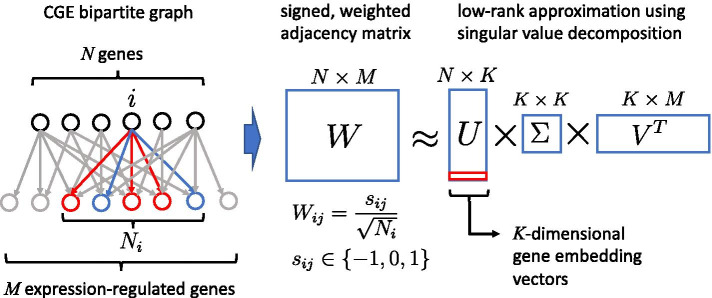
Leveraging previously identified viral interactions with human host proteins, we apply a machine learning-based approach to connect SARS-CoV-2 viral proteins to relevant host biological functions, diseases, and pathways in a large-scale knowledge graph derived from the biomedical literature. Our goal is to explore how SARS-CoV-2 could interfere with various host cell functions, and to identify drug targets amongst the host genes that could potentially be modulated against COVID-19 by repurposing existing drugs. The machine learning model employed here involves gene embeddings that leverage causal gene expression signatures curated from literature. In contrast to other network-based approaches for drug repurposing, our approach explicitly takes the direction of effects into account, distinguishing between activation and inhibition.

RESULTS

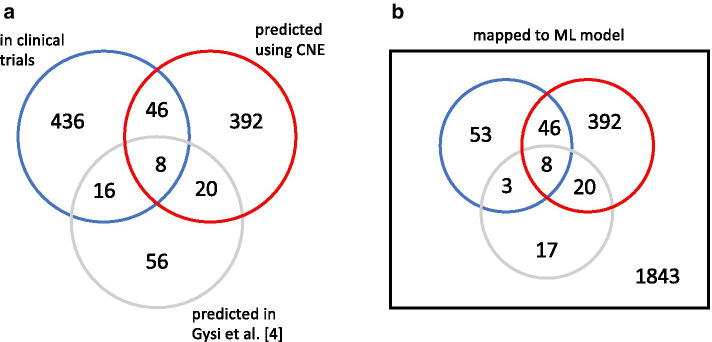
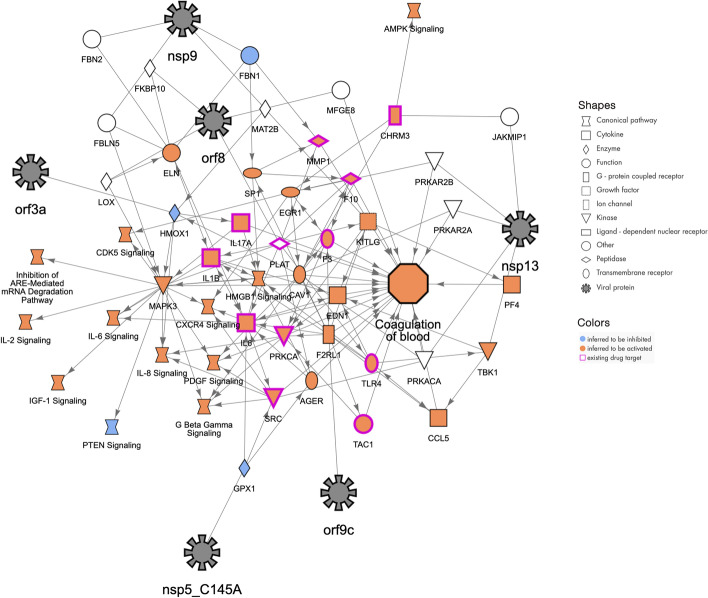
We have constructed 70 networks connecting SARS-CoV-2 viral proteins to various biological functions, diseases, and pathways reflecting viral biology, clinical observations, and co-morbidities in the context of COVID-19. Results are presented in the form of interactive network visualizations through a web interface, the Coronavirus Network Explorer (CNE), that allows exploration of underlying experimental evidence. We find that existing drugs targeting genes in those networks are strongly enriched in the set of drugs that are already in clinical trials against COVID-19.

CONCLUSIONS

The approach presented here can identify biologically plausible hypotheses for COVID-19 pathogenesis, explicitly connected to the immunological, virological and pathological observations seen in SARS-CoV-2 infected patients. The discovery of repurposable drugs is driven by prior knowledge of relevant functional endpoints that reflect known viral biology or clinical observations, therefore suggesting potential mechanisms of action. We believe that the CNE offers relevant insights that go beyond more conventional network approaches, and can be a valuable tool for drug repurposing. The CNE is available at https://digitalinsights.qiagen.com/coronavirus-network-explorer .

摘要

背景

利用先前鉴定出的病毒与人宿主蛋白的相互作用,我们应用基于机器学习的方法,将 SARS-CoV-2 病毒蛋白与从生物医学文献中提取的大型知识图谱中的相关宿主生物学功能、疾病和途径联系起来。我们的目标是探索 SARS-CoV-2 如何干扰各种宿主细胞功能,并确定宿主基因中的药物靶点,这些靶点可能通过重新利用现有药物来针对 COVID-19 进行调节。这里使用的机器学习模型涉及利用从文献中整理的因果基因表达特征的基因嵌入。与其他用于药物再利用的网络方法不同,我们的方法明确考虑了效果的方向,区分激活和抑制。

结果

我们构建了 70 个网络,将 SARS-CoV-2 病毒蛋白与反映病毒生物学、临床观察和 COVID-19 背景下合并症的各种生物学功能、疾病和途径联系起来。结果以通过网络界面——冠状病毒网络探索器(CNE)呈现的交互式网络可视化形式呈现,该界面允许探索潜在的实验证据。我们发现,针对这些网络中基因的现有药物在已经针对 COVID-19 进行临床试验的药物集中强烈富集。

结论

这里提出的方法可以识别与 SARS-CoV-2 感染患者的免疫、病毒学和病理学观察明显相关的 COVID-19 发病机制的生物学上合理的假说。可再利用药物的发现是由反映已知病毒生物学或临床观察的相关功能终点的先验知识驱动的,因此提示了潜在的作用机制。我们相信,CNE 提供了超越更传统网络方法的相关见解,并且可以成为药物再利用的有价值的工具。CNE 可在 https://digitalinsights.qiagen.com/coronavirus-network-explorer 上获得。
https://cdn.ncbi.nlm.nih.gov/pmc/blobs/98f6/8094488/0ff5ec708753/12859_2021_4148_Fig7_HTML.jpg
https://cdn.ncbi.nlm.nih.gov/pmc/blobs/98f6/8094488/d8c1bedaadc1/12859_2021_4148_Fig1_HTML.jpg
https://cdn.ncbi.nlm.nih.gov/pmc/blobs/98f6/8094488/111f3cd04738/12859_2021_4148_Fig2_HTML.jpg
https://cdn.ncbi.nlm.nih.gov/pmc/blobs/98f6/8094488/ef38929498fe/12859_2021_4148_Fig3_HTML.jpg
https://cdn.ncbi.nlm.nih.gov/pmc/blobs/98f6/8094488/5d7fe12e96d1/12859_2021_4148_Fig4_HTML.jpg
https://cdn.ncbi.nlm.nih.gov/pmc/blobs/98f6/8094488/bb8322522ab3/12859_2021_4148_Fig5_HTML.jpg
https://cdn.ncbi.nlm.nih.gov/pmc/blobs/98f6/8094488/fafe51b66545/12859_2021_4148_Fig6_HTML.jpg
https://cdn.ncbi.nlm.nih.gov/pmc/blobs/98f6/8094488/0ff5ec708753/12859_2021_4148_Fig7_HTML.jpg
https://cdn.ncbi.nlm.nih.gov/pmc/blobs/98f6/8094488/d8c1bedaadc1/12859_2021_4148_Fig1_HTML.jpg
https://cdn.ncbi.nlm.nih.gov/pmc/blobs/98f6/8094488/111f3cd04738/12859_2021_4148_Fig2_HTML.jpg
https://cdn.ncbi.nlm.nih.gov/pmc/blobs/98f6/8094488/ef38929498fe/12859_2021_4148_Fig3_HTML.jpg
https://cdn.ncbi.nlm.nih.gov/pmc/blobs/98f6/8094488/5d7fe12e96d1/12859_2021_4148_Fig4_HTML.jpg
https://cdn.ncbi.nlm.nih.gov/pmc/blobs/98f6/8094488/bb8322522ab3/12859_2021_4148_Fig5_HTML.jpg
https://cdn.ncbi.nlm.nih.gov/pmc/blobs/98f6/8094488/fafe51b66545/12859_2021_4148_Fig6_HTML.jpg
https://cdn.ncbi.nlm.nih.gov/pmc/blobs/98f6/8094488/0ff5ec708753/12859_2021_4148_Fig7_HTML.jpg

相似文献

1
The Coronavirus Network Explorer: mining a large-scale knowledge graph for effects of SARS-CoV-2 on host cell function.冠状病毒网络探索者:从大规模知识图谱中挖掘 SARS-CoV-2 对宿主细胞功能的影响
BMC Bioinformatics. 2021 May 3;22(1):229. doi: 10.1186/s12859-021-04148-x.
2
Signaling repurposable drug combinations against COVID-19 by developing the heterogeneous deep herb-graph method.通过开发异构深度草药图方法,寻找针对 COVID-19 的信号可重利用药物组合。
Brief Bioinform. 2022 Sep 20;23(5). doi: 10.1093/bib/bbac124.
3
Repurpose Open Data to Discover Therapeutics for COVID-19 Using Deep Learning.利用深度学习重新利用公开数据发现 COVID-19 治疗方法。
J Proteome Res. 2020 Nov 6;19(11):4624-4636. doi: 10.1021/acs.jproteome.0c00316. Epub 2020 Jul 24.
4
Task-driven knowledge graph filtering improves prioritizing drugs for repurposing.任务驱动的知识图过滤可改善药物再利用的优先级排序。
BMC Bioinformatics. 2022 Mar 4;23(1):84. doi: 10.1186/s12859-022-04608-y.
5
Knowledge Graph-Based Approaches to Drug Repurposing for COVID-19.基于知识图谱的新冠病毒药物再利用方法。
J Chem Inf Model. 2021 Aug 23;61(8):4058-4067. doi: 10.1021/acs.jcim.1c00642. Epub 2021 Jul 23.
6
Machine learning and network medicine approaches for drug repositioning for COVID-19.用于COVID-19药物重新定位的机器学习和网络医学方法。
Patterns (N Y). 2022 Jan 14;3(1):100396. doi: 10.1016/j.patter.2021.100396. Epub 2021 Nov 9.
7
Tripartite Combination of Candidate Pandemic Mitigation Agents: Vitamin D, Quercetin, and Estradiol Manifest Properties of Medicinal Agents for Targeted Mitigation of the COVID-19 Pandemic Defined by Genomics-Guided Tracing of SARS-CoV-2 Targets in Human Cells.候选大流行缓解剂的三方组合:维生素D、槲皮素和雌二醇展现出针对缓解COVID-19大流行的药物特性,该特性由人类细胞中SARS-CoV-2靶点的基因组学引导追踪所定义。
Biomedicines. 2020 May 21;8(5):129. doi: 10.3390/biomedicines8050129.
8
Generic model to unravel the deeper insights of viral infections: an empirical application of evolutionary graph coloring in computational network biology.通用模型揭示病毒感染的更深层次见解:进化图着色在计算网络生物学中的实证应用。
BMC Bioinformatics. 2024 Feb 16;25(1):74. doi: 10.1186/s12859-024-05690-0.
9
Identification of host transcriptome-guided repurposable drugs for SARS-CoV-1 infections and their validation with SARS-CoV-2 infections by using the integrated bioinformatics approaches.采用整合生物信息学方法,鉴定靶向 SARS-CoV-1 感染的宿主转录组可再利用药物,并通过 SARS-CoV-2 感染进行验证。
PLoS One. 2022 Apr 7;17(4):e0266124. doi: 10.1371/journal.pone.0266124. eCollection 2022.
10
Identification of oral therapeutics using an AI platform against the virus responsible for COVID-19, SARS-CoV-2.使用人工智能平台鉴定针对导致COVID-19的病毒——严重急性呼吸综合征冠状病毒2(SARS-CoV-2)的口服治疗药物。
Front Pharmacol. 2023 Dec 22;14:1297924. doi: 10.3389/fphar.2023.1297924. eCollection 2023.

引用本文的文献

1
Healthcare knowledge graph construction: A systematic review of the state-of-the-art, open issues, and opportunities.医疗保健知识图谱构建:对最新技术水平、开放问题及机遇的系统综述。
J Big Data. 2023;10(1):81. doi: 10.1186/s40537-023-00774-9. Epub 2023 May 28.
2
Extensive blood transcriptome analysis reveals cellular signaling networks activated by circulating glycocalyx components reflecting vascular injury in COVID-19.广泛的血液转录组分析揭示了循环糖萼成分激活的细胞信号网络,反映了 COVID-19 中的血管损伤。
Front Immunol. 2023 Jan 26;14:1129766. doi: 10.3389/fimmu.2023.1129766. eCollection 2023.
3
Mining hidden knowledge: embedding models of cause-effect relationships curated from the biomedical literature.

本文引用的文献

1
Network medicine framework for identifying drug-repurposing opportunities for COVID-19.用于识别新冠病毒药物再利用机会的网络医学框架。
Proc Natl Acad Sci U S A. 2021 May 11;118(19). doi: 10.1073/pnas.2025581118.
2
Network-based methods for gene function prediction.基于网络的基因功能预测方法。
Brief Funct Genomics. 2021 Jul 17;20(4):249-257. doi: 10.1093/bfgp/elab006.
3
A distinct innate immune signature marks progression from mild to severe COVID-19.一个独特的先天免疫特征标志着 COVID-19 从轻症向重症的进展。
挖掘隐藏知识:嵌入从生物医学文献中整理出的因果关系模型。
Bioinform Adv. 2022 Apr 7;2(1):vbac022. doi: 10.1093/bioadv/vbac022. eCollection 2022.
4
Contexts and contradictions: a roadmap for computational drug repurposing with knowledge inference.语境与矛盾:基于知识推理的计算药物再利用路线图。
Brief Bioinform. 2022 Jul 18;23(4). doi: 10.1093/bib/bbac268.
5
Molecular Mechanisms of Palmitic Acid Augmentation in COVID-19 Pathologies.新冠病毒疾病中棕榈酸增加的分子机制
Int J Mol Sci. 2021 Jul 1;22(13):7127. doi: 10.3390/ijms22137127.
Cell Rep Med. 2020 Dec 26;2(1):100166. doi: 10.1016/j.xcrm.2020.100166. eCollection 2021 Jan 19.
4
Identification of Required Host Factors for SARS-CoV-2 Infection in Human Cells.鉴定人类细胞中感染 SARS-CoV-2 所需的宿主因子。
Cell. 2021 Jan 7;184(1):92-105.e16. doi: 10.1016/j.cell.2020.10.030. Epub 2020 Oct 24.
5
Non-neuronal expression of SARS-CoV-2 entry genes in the olfactory system suggests mechanisms underlying COVID-19-associated anosmia.SARS-CoV-2 进入基因在嗅觉系统中的非神经元表达提示了 COVID-19 相关嗅觉丧失的潜在机制。
Sci Adv. 2020 Jul 31;6(31). doi: 10.1126/sciadv.abc5801. Epub 2020 Jul 24.
6
Integrative Network Biology Framework Elucidates Molecular Mechanisms of SARS-CoV-2 Pathogenesis.整合网络生物学框架阐明了新冠病毒致病的分子机制。
iScience. 2020 Sep 25;23(9):101526. doi: 10.1016/j.isci.2020.101526. Epub 2020 Sep 3.
7
Severe COVID-19 Is Marked by a Dysregulated Myeloid Cell Compartment.严重的 COVID-19 以髓系细胞失调为特征。
Cell. 2020 Sep 17;182(6):1419-1440.e23. doi: 10.1016/j.cell.2020.08.001. Epub 2020 Aug 5.
8
T cell responses in patients with COVID-19.新冠病毒肺炎患者的T细胞反应
Nat Rev Immunol. 2020 Sep;20(9):529-536. doi: 10.1038/s41577-020-0402-6. Epub 2020 Jul 29.
9
Exploring the SARS-CoV-2 virus-host-drug interactome for drug repurposing.探索 SARS-CoV-2 病毒-宿主-药物相互作用组以进行药物再利用。
Nat Commun. 2020 Jul 14;11(1):3518. doi: 10.1038/s41467-020-17189-2.
10
Impaired type I interferon activity and inflammatory responses in severe COVID-19 patients.严重 COVID-19 患者的 I 型干扰素活性和炎症反应受损。
Science. 2020 Aug 7;369(6504):718-724. doi: 10.1126/science.abc6027. Epub 2020 Jul 13.